
Log
Append-only chronological record of wiki operations.
[2026-10-14] ingest | sources/ingested/entfaltung-drawings-statement-2026.md + create | wiki/entfaltung-drawings.md — the Entfaltung drawings on paper, and the artist's statement on them
Ingested van den Dorpel's first-person statement on the drawings on paper in Entfaltung, the series he presents with 36 tokens on Ethereum at Art Basel Miami Beach in December 2026. A pen plotter draws a programmed construction after Emma Kunz's pendulum drawings, and he fills the slivers between its lines by hand in pencil and coloured pencil. The new page Entfaltung on Paper reads the statement against the rest of the wiki, with twelve drawings dated by the artist from June to October 2026.
What the wiki now knows that it did not. The tokens and the drawings divide Kunz's method between them. In the tokens the block hash moves the points and the program fills the slivers; the drawings keep her hand-fill and end fixed, as her sheets did. Some drawings are maps of the program: Entfaltung (transform) is the asymmetry grid from the Entfaltung page, made on paper, and Entfaltung (axis grid) maps the face-closing rule against the number of legs. What is decided at the paper feeds into the token code, and the reverse. The plotted lines cannot be undone, so the hand-fill is a bounded freedom in which the artist's mind moves between focus and wandering, and he identifies this as the state in which Kunz is said to have received her answers. The artist, an avid yoga practitioner, offers the page's phrase for this, "the constraint is what frees the mind", as a possible definition of yoga; the page sets it against Patanjali's, which restrains the mind itself. Programming and drawing, very different activities, have served him the same way: as refuge, absorption, a way to hand over control, and freedom. He sets authorship aside for a reason the corpus did not have: he works in an open tradition, and "anybody has access to this higher order". That extends the openness the wiki traced in the surf clubs and the open-source credo from the work to its source.
A claim confirmed. Algorithmic Archaeology had read the drawings as plotter-for-construction, hand-for-fill before any statement existed. The artist's text confirms it and adds the token side.
Claims narrowed. The Entfaltung stages are a logical order, not a chronological one: a mapping grid was the second drawing, made before most of the radial sheets, and the radial fan returned after the first polygon. The move that made the series the artist's own is no longer placed only at stage four. On paper it came by density and layering, without leaving the plane. Meditative Labour called hand-filling "not technically demanding" and valued it for its duration; the statement reports the fill as a run of decisions about shading, overlap and colour. The same page tells the return of the hand as a counterweight to thinning code; the statement keeps the timing and drops the opposition, since the renewed drawing is no departure from the programmed work.
Contradictions resolved. Two Agent's reading sections on the new page. Criterion at the speed of the hand joins the criterion of Process Legibility with the durational labour of Meditative Labour: at the pencil, judging happens once per sliver and takes as long as the fill. Channelling as a research question sits between Kunz's received drawing and the Entfaltung page's permitted one. The statement treats the source as real enough to consult and leaves its location open as the thing the work investigates. The Entfaltung page's "permitted" reading is now attributed rather than stated as the practice's position.
Images: twenty-three photographs of twelve drawings from harm.work, copied into public/images as entfaltung-drawing-*.jpg; nine are used across the source and the new page. Added to wiki/index.md under Bodies of work.
[2026-08-31] update | wiki/differance.md — Hyphenation .xyz (2019) added to the langue/parole reading
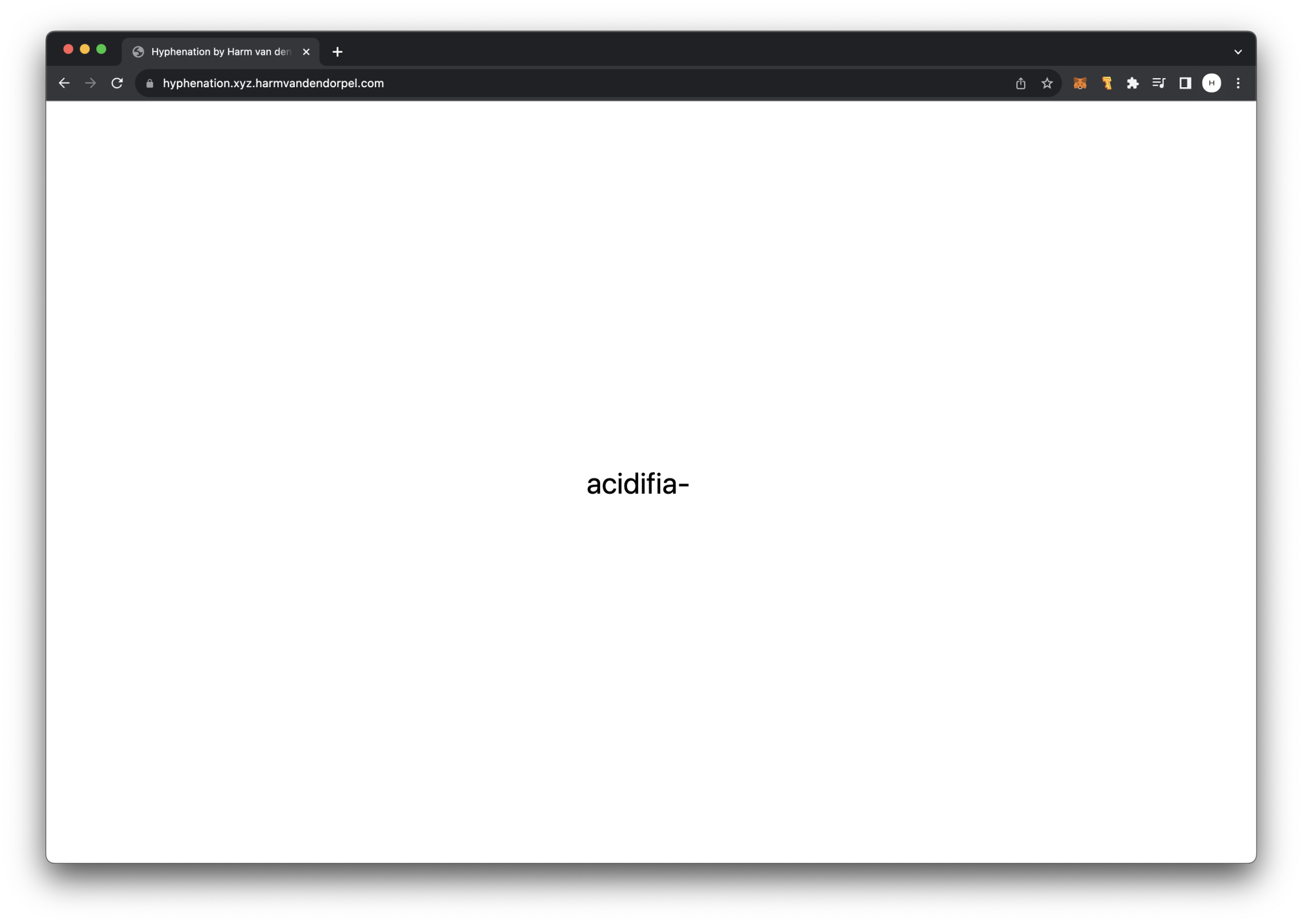
The wiki had no account of Hyphenation .xyz, a 2019 single-serving website (first at hyphenation.xyz, now at hyphenation.xyz.harmvandendorpel.com) that samples words from a dictionary, splits them at their hyphenation points, and reads each fragment aloud in a robot voice that mispronounces it. The work belongs to no note in sources/, but it stages the page's own argument, so it was distributed there rather than given its own page. A new section, Langue, parole, and the hyphen with no sound, reads the work against Saussure: the dictionary and hyphenation rules are langue, the robot voice is parole, and the mispronunciation is the fragment's sound being deferred to the rest of the word that has been cut away. It runs the section above backwards — where the a of différance is writing that cannot be heard, here the hyphen is soundless writing a voice is forced to pronounce. Figure added at /images/hyphenation-xyz.png.
[2026-08-08] ingest | sources/ingested/spike-70-surf-clubs-dullaart-broskoski.md + create | wiki/surf-clubs.md, wiki/club-internet.md, wiki/left-gallery.md — the surf-club years, and the Club Internet exhibition history recovered from its database
The wiki previously had no account of where the practice came from socially. It named post-internet as a label applied and later retired, and it covered left gallery only through the 2021 essay on tokenisation. The network that produced all of it — the surf clubs of 2006–2010 — was absent, and Club Internet appeared only as one line on a CV: "non-archived online exhibition space. 2008 – 2009" (932). It is now archived.
What the wiki now knows that it did not. The Club Internet exhibition history exists. Three MySQL tables from the original DreamHost server (media/member.sql, media/shows.sql, media/work.sql, exported August 2026) yield 15 shows, 298 work records, and a 124-name member table of which 106 exhibited. Titles, dates, curators and per-show artist lists are all recorded on wiki/club-internet.md. Findings that could not have been guessed: six of the fifteen shows were guest-curated, by Damon Zucconi (Contact (1997)), Constant Dullaart (K.I.S.S.), Guthrie Lonergan (Tag Team), Martijn Hendriks (stolen, which has a curator and a slug and no works), Domenico Quaranta (Once Upon a Time in the West) and Charles Broskoski (the final show); show 4 was deleted from the table but 24 of its works survive, almost all van den Dorpel's own material on aura, cybernetics and simulacrum, indicating a show assembled and never opened; the member table holds rows for Marcel Duchamp, Samuel Beckett, Robert Morris and a placeholder called V/A used for found material with no author, so "membership" was a database slot rather than a social fact; and Codec Breeze is dated 2008 in the work table, a year earlier than the 2009 the wiki carries elsewhere.
Hedge retired. "Non-archived" is no longer accurate for Club Internet and is corrected on the new page. The domain lapsed and now serves a casino-affiliate site, so the live web is gone, but the programme is recoverable.
A claim narrowed. The wiki's surf club references had been loose. Rhizome's survey and the Broskoski/Dullaart conversation both date the form from 2003 while placing its actual start at 2006 with Nasty Nets and Supercentral; van den Dorpel's membership is now stated precisely rather than generally — a member of Nasty Nets (39 authors) and of Spirit Surfers (17 authors), a brief contributor to Dullaart and Hamy Caldwell's Squeakyfrom, and founder of Club Internet, which is not a surf club because it has curators, run dates and one work at a time.
A contradiction resolved. The wiki has carried both the surf-club position that work belongs to everyone the moment it is online and van den Dorpel's later construction of a market for downloadable objects. Chris Coy's line, quoted by Dullaart — that surf-club work was posted with the understanding it "would belong to everyone as soon as it was online... almost the opposite of the current attitude towards the commodification of digital files as NFTs" — names the distance. wiki/left-gallery.md resolves it as a single question asked three times: where does screen-made work live and how does anyone get hold of it — answered by the clubs as nowhere in particular and for free, by Club Internet as a curated online show with a run date and a copyright line, and by left.gallery as a file you own in an edition of a hundred with a certificate that does not depend on the gallery. Each answer keeps something from the previous one.
Sources. Ingested the Broskoski/Dullaart conversation Surf Clubs (2003–) from Spike #70 (PDF and note in sources/ingested/) — distinct from the existing Spike #70 ingest on van den Dorpel. Also drawn on: Rhizome's surf clubs survey for club rosters and dates; Ceci Moss's October 2008 Rhizome interview with van den Dorpel on Free Fall, which supplies the founding account (a domain bought to resell, an upload script, a society modelled on the Freemasons) and the selection criterion (works "best viewed online, rather than making a transformation from the screen to a video projector in a gallery"); Danni Shen's January 2018 Rhizome profile of left.gallery for the MAK Vienna purchase and the ascribe.io mechanics; and the transmediale archive biography.
A finding from the images themselves. The eight surviving documentation files from AFK sculpture park are not installation photographs. Every one is a 3D scan published as a coloured point cloud on black — no ground, no garden, no daylight. The online gallery therefore showed a measurement of the offline show rather than a picture of it, which makes AFK the clearest instance in the archive of the claim in 992 that the work includes its documentation. An earlier draft of the page described these as photographs of sculptures in grass and has been corrected.
Images. Archival figures captured from the Internet Archive with Playwright and copied to public/images: Nasty Nets in July 2007, Supercentral in August 2007, Spirit Surfers as it stands, the Club Internet sidebar for K.I.S.S. as archived on 3 September 2008, and three point-cloud scans from AFK sculpture park (Rozendaal's Broken Self, Dullaart's eBay Sun, van den Dorpel's Texture Mapping). Five further AFK scans are in public/images unused. Also recorded in CLAUDE.md that Playwright stays a devDependency, with the npx playwright install chromium fix for a missing browser binary.
[2026-07-23] create | wiki/algorithmic-archaeology.md — the lineage as a timeline
Created a dedicated page for algorithmic archaeology, now the canonical home for the concept, which was previously distributed across wiki/evolutionary-logic, wiki/entfaltung, wiki/senescenence and the exhibition summaries. The page holds the two senses of the method — excavation (Tina Rivers Ryan, Spike #70: algorithms as fossils with a history; "code is destiny") and forensic reconstruction (deducing Anni Albers' invisible cell-by-cell rule from the failure of random replication) — and then lays the practice out as a chronological timeline that rejects nothing as surpassed: the loom and the grid; the Markov chain (1906, Anicca); Anni Albers (loom as computer, Weaving); Emma Kunz (pendulum, Entfaltung); Charlotte Posenenske (modular instruction); cellular automata (von Neumann/Conway, Stained Unravel); Vera Molnár (first computers, Pression des pairs); Manfred Mohr (hypercube); the quadtree (1974, the recursive subdivision in Struggle for Pleasure); the genetic algorithm (John Holland, 1975, Death Imitates Language / Hybrid Vigor); Cartesian Genetic Programming (Holland and Julian Miller, 1997, Mutant Garden); Tauba Auerbach as the contemporary artist who keeps the manual systematic choice with a computer available; and, at the end of the line, neural networks and LLMs — powerful but hard to visualise because their internal function is not understood. Closes on the shared structure across the whole timeline: every practice needs an unpredictable external oracle (Kunz's higher order, the block hash, the LLM's collective unconscious in Jung's sense), and the mechanism of getting the deciding mind out of the loop stays constant while the oracle changes address. Trimmed the overlapping "Algorithmic archaeology" section in evolutionary-logic to a pointer into the new hub. The Markov namesake (Markov's Window, Markov's Dream) is kept distinct from the Markov chain as technique.
[2026-07-04] update | Context Switch curatorial essay (Enning, 2022) distributed to canonical pages
An integration audit of sources/ingested found Nora Enning's Context Switch essay analysed only inside the exhibition summary, with no wiki page linking the source file itself. Distributed its two unused sharpenings: wiki/protocol-taste-systems now records that Droitcour's 2025 "permanence of change" reading has a 2022 curatorial precedent — Enning's Heraclitean frame and "unchanging observation impossible simply by their design" register the same thesis at the level of perception three years before Quantizer institutionalised it at the level of protocol; wiki/sculpture now records that the Jeppesen/OOO position of 2012 (virtual and actual "just said in different ways") returns in Enning 2022 as a curatorial given — "to distinguish the digital from the supposedly tangible no longer seems contemporary" — the claim the assemblages had to stage having become an assumption exhibitions are hung on. Added the missing source links in wiki/process-legibility and the Context Switch summary. Per the same audit, the Judgment and Calculation review (draft text, show opens 11 July) and the dissociations about-text were deliberately left as-is.
[2026-07-04] update | wiki/meditative-labour.md — the Field spinner meditation; Agent's synthesis: undivided time
Distributed the philosophical core of the 2023 Field text (sources/ingested/field.md) into its canonical home. The page's labour argument (the hand-fill matters because it takes as long as it takes) and Field's claim ("one cannot suspend being" — the productive/on-hold division is perceptual, not ontological) were held as a genuine tension and worked through dialectically; Agent's synthesis names undivided time — time not yet split into the productive and the idle — as what both the hand-loom and the spinner grid protect. The bead/prayer etymology already on the page turns out to carry the synthesis. Also corrected the organic-software-forms timeline: the thread's earliest visible statement is now Field (2008) — spinners gridded until they read as flowers or wind turbines — not the 2017 works; added Field token 2 (on-chain SVG, retrieved from the harm.work API) as a new figure.
[2026-07-04] update | wiki/protocol-taste-systems.md — the "blockchain soul" as protocol-desire in the first person
Sharpened Droitcour's closing claim (protocols as objects of desire) with its first-person precedent from Tokenising Sustainability (2021): left gallery's 2020 loss of its "blockchain soul" — mourning a protocol while the platform ran perfectly well — is protocol-attachment recorded as loss, four years before the category existed. Added the economic counterweight (the soul was priced out by gas costs), closing a triangle around protocol art's material conditions: protocols can be gamed by users (Mutant Garden Seeder), priced out by infrastructure (left gallery), and mourned by their designers.
[2026-07-04] update | wiki/randomness-pattern.md — Field (2008) as the earliest instance of the organic/geometric continuum
Added the spinner grid of Field (2008/2023) to the organic/geometric continuum section as its earliest visible instance and as a third mechanism alongside decompression and botanical reduction: recontextualisation — the grid strips the loading spinner of its interface function, and the geometric form that remains reads as grown ("something like flowers. Or wind turbines").
[2026-07-03] create | wiki/bridge-between-realms.md — vocational intention; offering as irreducible mystery
A new page synthesizing the deep structure of the practice across 30 interview questions. Traces the biographical origin (the computer at eleven as refuge from unbearable reality) through to the current vocation: creating a bridge between the higher spiritual dimension and daily life through algorithmic offering. The page articulates why research into other minds increases—but cannot guarantee—the bridge's opening; the priestly function of preparation without control over outcome; and the practice as a question that organizes a lifetime rather than as a problem to be solved. Cross-references the entire architecture of the practice: the apophatic method, taste as formalized protocol, subconscious computation as the device for surfacing what cannot be consciously intended, and the melancholy as structural rather than pathological. Added to index as third entry under Start here.
[2026-07-03] update | wiki/entfaltung.md — restructured around explicit process stages; de-speculated; factual Mohr/topology comparison
The Entfaltung page was rewritten for coherence and precision at the artist's direction, keeping all fourteen figures in place. The artistic process is now explicitly subdivided — a research phase into Emma Kunz's pendulum method followed by four numbered stages (direct 2D re-drawings in code; a parametrized generator; two systematic parameter grids; the ascent into three dimensions and time) — with each stage's specific relation to Kunz stated, and an overview list of the stages at the top of the page. The morph is now explained factually: a constant graph (fixed points and connections) whose embedding in space changes over time, re-shaping faces and recomputing their sliver-fill; the Manfred Mohr comparison was rewritten to state likeness and difference precisely (Mohr rotates a rigid n-dimensional hypercube and projects it, so all change comes from projection; in Entfaltung the points themselves move and the object genuinely deforms). Speculative flourishes in the neutral voice were removed or attributed; figure captions and their paired paragraphs were de-duplicated so captions identify what is seen while paragraphs carry the process facts; and the former Agent's-reading dialectic on the pendulum and the parameter was integrated as smooth prose under The pendulum and the parameter, without the thesis/antithesis/synthesis scaffolding or the Agent role. Clarifications from the artist are now documented: the morph interpolates toward newly generated target configurations of the same fixed point set, the gallery projection runs autonomously, and the pan/zoom/ninety-degree-snap interaction is specific to the browser version. The opening still was subsequently replaced by the work itself: a square live iframe embed of entfaltung.harm.work now heads the page, so the reader meets the running computation before its documentation.
[2026-07-01] update | wiki/*.md — audited two-column figure/paragraph pairing and corrected four mispaired pages
Followed the figure-illustration pass with a full audit of every two-column page (three or more figures), checking that each image in the sticky left column pairs with the paragraph that actually describes its work — the text the reader sees highlighted beside it. Mirroring the pairing logic in lib/figure-segments.ts (a figure owns the blocks that follow it, up to the next figure or heading) surfaced four genuine mispairings, all now fixed: on The Squircle a cascading off-by-one (Lammer Asbestos had no paragraph of its own, pushing Fingerprinting and Modular Mind onto the wrong text) was corrected by giving Lammer its own sentence and moving both figures above the paragraphs that describe them; on Quantization and Dithering Anicca 1 had been pairing with a Quantizer trait paragraph and Quantizer #001 with a bare cross-reference, both now moved above their describing text; on FAE application the genealogy diagram and Atlas were offset by one paragraph and were reordered so each pairs with its own passage; and on Works Overview the Cloud Writings figure that split a "probability as spatial logic:" lead-in from its list was moved above the paragraph. All other flagged cases were verified as correct (installation views and continuation paragraphs that describe the same work, e.g. Markov's Window "At the Stedelijk", the Beads hang on Meditative Labour, and the Entfaltung view-frames). No two-column page has an orphaned figure.
[2026-07-01] update | wiki/*.md — illustrated 26 previously image-less artworks that were mentioned in prose but never shown anywhere in the wiki
A pass to close the gap between what the wiki names and what it shows. Scanning every page separated artworks appearing inside a <figure> from those only mentioned in text, and found 41 works illustrated nowhere. Images were sourced for 26 of them (mostly from harm.work, plus one left-gallery scan) and added as figures, each placed immediately before its own describing paragraph so it pairs correctly in the two-column reading layout. New figures: the plotter drawings Sediment, Atlas, Current, Tract and Fuller's Geodesic Dome Patent Drawing (Fig. 14) on Early Plotter Drawings; Assemblage (shell) on Sculpture and the Object; the three Ethereal websites on Works Overview; Anni (unravel) on Senescenence; Anicca on Sacred Geometry; Mutant Garden Autobreeder on the Context Switch review; Leaky Abstraction (rag), Rag and Slant (pastel) on Cloud Writings; the Delinear Whiteboards Oyster, Trauma and Inclusion (scrum kanban) on Just-in-Time; the Resolution Paintings Altibzz, Sprite and Klimt on Our Inner Child; and Ascent, Poles, Breeze, Hail, Divide and Girl/Boy Song on Angles Morts. The remaining 15 mentions (including Assemblage (everything vs. anything), Chrysalis (mint), Pivot, Field (double exposure) and nine of the Angles Morts drawings) were left un-illustrated pending an available image.
[2026-07-01] update | wiki/*.md — corrected which paragraph each figure pairs with in the two-column layout; documented the rule
Follow-up to the two-column reading layout: audited every dual-column page (three or more figures) to make sure each image is paired with the paragraph that actually describes its work — the text that gets highlighted and that triggers the image as the reader scrolls. Fixed a class of misplacements where a figure sat after its describing paragraph (so it wrongly paired with the next work) or was followed only by a heading or a horizontal rule (so no paragraph was highlighted at all). On Recursion, Sculpture (Chrysalis, Spectre, Recursive Intervention), Protocol, Taste, and Systems (Juancar Zolim Juancar, Mutant Garden Seeder) and Colour (Stained Unravel (De Stijl)) the figures were moved above the paragraphs they illustrate; on Works Overview, Quantizer, Death Imitates Language, Markov's Dream Palette, Lexachast, FAE application, and the summaries Cloud Writings, Franke × van den Dorpel and IOU, each previously-unpaired figure was given its own short describing paragraph. The figure-placement rule is now written into the editorial contract (CLAUDE.md Illustrating artworks → Figure placement for the two-column reading layout) and the technical contract (ARCHITECTURE.md §5 Two-column reading layout) so future ingests keep every image paired with the correct, highlighted text.
[2026-07-01] update | wiki/*.md — per-figure captions added so every artwork pairs with a paragraph in the new two-column reading layout
The desktop wiki now renders image-heavy pages in two columns: a sticky image on the left that tracks the reader's scroll (and can be previewed by hovering a paragraph), and flowing text on the right, with a vertical line marking the paragraph the current image belongs to. For that pairing to work, every figure needs an adjacent paragraph of its own. This pass swept the wiki and gave each previously "bare" figure — one that sat directly against the next figure or a heading — a short, specific caption-paragraph, in the same one-artwork-per-paragraph style as Early Plotter Drawings. All existing analytical prose and links were left untouched. Pages updated: Randomness and Pattern, Works Overview, Sculpture and the Object, Algues Artificielles, Quantizer, Quantization and Dithering, Protocol, Taste, and Systems, Evolutionary Logic, Senescenence, The Squircle, Subconscious Computation, Death Imitates Language, Meditative Labour, The Lozenge, Recursion and Self-Reference, and the summaries Just-in-Time (2015), The Squircle of Life, Context Switch, HVDD × Sutela, and Struggle for Pleasure. The Entfaltung page was restructured in the same pass so each Kunz emulation, parameter grid and 3D pilot view carries its own paragraph, and the layout was extended to display video figures (the Entfaltung pilot recording) in the left column as well as still images.
[2026-06-30] create | wiki/entfaltung.md — new generative series unfolding Emma Kunz from 2D into 3D-over-time
New page for Entfaltung (German for unfolding), a forthcoming NFT release whose live, never-repeating alpha premieres in the Summer 2026 exhibition at Lohaus Gallery, projected off a computer via short-throw projector. The page traces the work from deep research into the channelled pendulum drawings of Emma Kunz through three stages of two-dimensional study — direct code emulations, parametrized generalizing generators, and two systematic parameter grids (point-count × sliver-fill algorithm; outer-point "legs" × inner offset shift) — to the move that makes it van den Dorpel's own: raising the dimensional count to three points-in-space morphing over time. The morph is topological — fixed point-count and construction, only positions changing the polygon slivers — read here as a hyper-dimensional transformation in the lineage of Manfred Mohr's rotated, projected hypercubes. An Agent reading resolves the tension between Kunz's channelled higher order and the practice's apophatic refusal of metaphysical claims: the pendulum and the parameter are the same device for getting the deciding mind out of the loop, differing only in the address of the surplus; the dimensional ascent dissolves the "received or permitted?" question into a structural one, and the interactive 90° snap relocates the higher order from a metaphysical source to a structural property the viewer's own movement discloses. A section documents the artist's private editor (the Scatter3D generator with Points/Seed/Symmetry/Faces/colour controls) as the instrument behind the release — private for now but possibly to be made public — framing the released piece as a performance of the system. SVG studies are kept as vector (not rasterized); a web-encoded screen recording is embedded with a download link. Connects to wiki/subconscious-computation, wiki/sacred-geometry, wiki/recursion, wiki/randomness-pattern, wiki/meditative-labour, wiki/quantizer and wiki/semiotic-square. Intentionally not yet linked from the wiki index.
[2026-06-30] create | wiki/early-plotter-drawings.md — gallery note on a group of early pen-plotter works on paper
New page written for Lohaus Gallery's 2026 summer show Summer: Sur Real Real, explaining the group of early plotter drawings selected for it (explicitly not a survey of the whole plotter practice): what a pen-plotter work is (real ink drawn by a machine-held pen, not a print), and how these works differ in source, process and grouping. Eight early drawings on display, two larger new works in stock. Notes that the early sheets' alternation between mechanical line drawing and hand-drawn pencil carries into newer work — Tract (2026), which the artist now calls a hybrid — and that the small hand additions in Uttered Modality evoke microbes/microbiology. The page opens with the installation mockup and is intentionally not (yet) linked from the wiki index. Two families among the eight early works (2017–2018, now nearly a decade old): botanical drawings traced from 3D-rendered models — frequently open-source game assets (Untitled Flower, Thistle (left), Thistle (right), A tree, Papaver Somniferum) — and geometric/abstract works (Metaballs ⁱⁱ, Diaphragm, Uttered Modality). The page documents the hand interventions that distinguish each sheet: pausing the plotter mid-pass to swap pen colours (giving Untitled Flower its colour-shifting stems), intuitive hand-drawn marks (Uttered Modality, Thistle (left)), pen replacements and Illustrator cut-outs (Metaballs ⁱⁱ, after Tatlin and Buckminster Fuller), and Diaphragm as the original plotter's final drawing — it died mid-work and dragged the pen back to the origin without lifting, the ballpoint having bitten into the paper. Two large 2026 works held in stock, Diagonal Fault and Vesper, plot outputs of the Stained Unravel algorithm. Includes an installation mockup of the eight early drawings hung in a line, an illustrated figure and harm.work link per work, and a quick-reference table. Images copied to public/images. The page also carries the larger observation that the geometric and organic are not opposed but lie on one continuum of complexity, illustrated by four further plotter works (Sediment, Atlas, Current, Tract), and cross-links Metaballs ⁱⁱ to Geodesic Dome Patent Drawing (Fig. 14) (2022) via the Buckminster Fuller lineage.
[2026-06-30] update | wiki/randomness-pattern.md — the organic/geometric continuum as corollary of the decompression thesis
Added a section sharpening the compression/decompression argument: the artist's recurring observation that the geometric and the organic are not opposed but lie on a single continuum of complexity. The botanical plotter drawings reveal an organic subject as a mesh of straight segments; the larger generative sheets (Sediment after Vera Molnár, Atlas, Current, Tract) run the move in reverse, deriving organic, geological-looking texture from a minimal rule. Reframes the pattern/randomness dialectic so "pattern" and "the organic" are the same field at different depths of decompression rather than opposite poles; references the Organic Software Forms are.na channel. A later pass folds in the L-system as the cleanest hinge of the continuum — a few rewriting rules growing plant-like branching form — used directly in Uttered Modality (2018) and Event Listeners (2018).
[2026-06-15] ingest | sources/ingested/judgment-and-calculation-2026.md — English translation of the HAUNT group-show text
Translated the German exhibition text Judgment and Calculation (Elisabeth Sonneck, Carsten Becker, Harm van den Dorpel; HAUNT, opening 11 July 2026) into English and stored it as a companion markdown file alongside the raw PDF. The curatorial frame runs the show through Joseph Weizenbaum's Computer Power and Human Reason and Hannah Arendt's "they did not judge; they calculated" — judgment versus calculation, with all three artists meeting the question at the colour system. Added a Works in the exhibition gallery (four illustrated wall objects — Rite, Creation of Light, A Vale of Tears, Person in a Field — plus the full checklist, drawn from harm.work/exhibition/judgment-and-calculation/all).
[2026-06-15] create | wiki/summaries/judgment-and-calculation-exhibition.md — close reading of the exhibition text against the practice
A review page testing the text's account of van den Dorpel against the wiki record. The factual core holds — colour chords as initial conditions, meaning in the relations between colours rather than the single hue, the artist-as-selector since Death Imitates Language, the Proust / mémoire involontaire mapping that echoes the wiki's olfactory analogy. The structural caution is the frame: the Weizenbaum/Arendt binary recruits van den Dorpel into a defensive humanism (judgment defended against calculation) that the practice does not hold — for him the algorithm is a generative partner for following the deepest impulse (→ wiki/subconscious-computation), and he repeatedly automates and delegates judgment itself (Hybrid Vigor .bio crowdsourcing, Quantizer's block-hash compositions). Flagged three factual slips for the curator: RGB/HSLA/CMYK named as colour combinations rather than colour models; Algues Artificielles called a "later" series than the contemporaneous Death Imitates Language, with the crowdsourcing properly belonging to Hybrid Vigor .bio; and the internal tension between "meaning arises exclusively in the relations between colours" and the closing claim that identical colour combinations evoke different memories. Illustrated with Big Pablo Ferenc Zatlas (a frozen DIL specimen) and Thursday, March 28 2019, 16:10:34.
[2026-06-01] create | wiki/differance.md — the dissociative mechanism read as Derrida's différance
A new concept page confronting the dissociative mechanism with Jacques Derrida's différance — differing and deferring folded into one operation. The page establishes that the confrontation is inherited, not imposed: Strategies (2010/2011, note 3004) already splices rewritten Derrida aphorisms into its collage of advice, so the practice met Derrida in 2010. The core move reads note 952 (Script) clause by clause as an independent description of différance — negative selection as Saussure's diacritical sign ("negative ties," no recourse to categories or tags); the verbatim phrase "Identity is deferred" as différer itself; the New Museum's "interval space" as Derridean espacement; "permanently incomplete… no map, no overview" as the refusal of any transcendental signified; "upon arrival its novelty fades immediately" as the present always already past. Still in the Running Towards Becoming (2011, note 353) is read as a critique of the metaphysics of presence at the level of grammar — a work conjugated against the verb to be. Derrida's most-misread sentence — "il n'y a pas de hors-texte" (there is nothing outside the text, Of Grammatology, 1967) — is read, against its idealist caricature, as the practice's own axiom "The Work = The Work + Its Documentation" (note 992): no work is reachable outside its mediation, and the wiki that documents the work is recursively folded back into it (mise en abyme; Propositions 6.12). The Greimasian semiotic square is confronted with the post-structuralist claim that Difference is not a cell on the grid but the condition of every cell. The page closes with an Agent's reading of a real contradiction the wiki carries: the apophatic-theology page treats the interval as an unnameable plenitude reached by negation (negative theology's withheld One, a "hyper-affirmation"), whereas Derrida explicitly severed différance from negative theology — no superessential reserve, no centre withheld. Synthesis turns on the wiki's own line "religious in shape, not in content" (Propositions 5.4): the practice keeps the apophatic gesture (subtraction, refusal to name, terminus in silence) while emptying it of the transcendent referent — apophatic in form, différantial in ontology; negative theology without the God. Distributed a sharpening back to wiki/apophatic-theology: the synthesis there no longer asserts the hyper-affirmation reading unqualified but cross-links the différance caution. Illustrated with three previously-unused images — Deli Near .Info (2014), Still in the Running Towards Becoming (2011), and (in prose) Strategies. Index updated under Frames of thinking; différance fills the one Derrida register the wiki lacked (hauntology and Archive Fever were already present; the core differ/defer concept was not). The page is built as the dialectical partner of wiki/apophatic-theology, not a merge: same mechanism and same terminus in silence, opposite ontology (negation-around-a-hidden-One vs. negation-with-no-centre). To keep the pair from duplicating, the negative-selection mechanics are stated once on About / apophatic and only pointed to here; this page retains only the clause-by-clause différance mapping of note 952 as its own payload.
[2026-06-01] create | wiki/apophatic-theology.md — the via negativa named as the practice's deep method
The wiki has long described the dissociative strategy as "negative selection" and called it apophatic in two places (wiki/love, in passing; wiki/about, implicitly) without ever naming the method as such or tracing its lineage. This page makes the identification load-bearing: the operation that produced Dissociations — eliminate the least-belonging item, calculate the inverse, leave the central term ("interval space") unnamed — is the via negativa of negative theology, the way of Pseudo-Dionysius, Plotinus, Gregory of Nyssa, Maimonides, Meister Eckhart, the Cloud of Unknowing, and the Upanishadic neti, neti. What the page adds that the wiki did not previously hold: (1) the method is grounded biographically, not borrowed — van den Dorpel's evangelical upbringing and the creator/bystander theology of generative art are the native soil of an apophatic relation to what exceeds the maker; (2) a sharp distinction, drawn from Our Inner Child, between the legislative (cataphatic) religious algorithm the practice sheds and the apophatic remainder it keeps — now also folded into wiki/subconscious-computation; (3) the Gnostic Apocryphon of John (Nag Hammadi), whose invisible Spirit — illimitable, unfathomable, unnameable, "dwelling in silence" — is the most relentless statement of the method in the religious record, and whose Demiurge / unknowable-God split rhymes with the legislative / generative split already in the wiki; (4) an Agent's reading resolving the standing tension between the practice's negative method and its affirmative, accumulating Warburg-atlas surface into a single Dionysian double movement — maximal affirmation so the cut can mean, elimination so what the atlas points at can stand unenclosed; the negation is generative, and what it leaves is the interval; (5) the early-vs-late Wittgenstein axis — the Tractatus silence (which shares apophatic grammar) against the Philosophical Investigations (§23: "the speaking of language is part of an activity, or of a form of life") — read as converging on the practice: meaning is use, the site is a language-game whose rule is negation, and its truth is the form of life it sustains, not a proposition it arrives at (the late Wittgenstein is new to the wiki — only the Tractatus was present before); (6) note 581 (Bruner, slaves to the particular) as the counterweight that makes the apophatic procedure self-limiting — total negation of categories is not transcendence but incoherence, so categories persist while losing their divisive force, and the practice escapes both the slavery to the name and the slavery to the particular. Distributed sharpenings to wiki/about (2.2 procedure marked apophatic), wiki/propositions (2.21, 5.4), wiki/love, wiki/subconscious-computation, and wiki/semiotic-square (the square's negations as the same method). Illustrated with Creation of Light (2024), previously unused. Index updated under Frames of thinking.
[2026-05-25] update | wiki/summaries/outland-jenna-sutela-2021.md, wiki/protocol-taste-systems.md — Mutant Garden Seeders as the deliberate refusal of NFT immutability-as-price-basis
Sharpened the canonical passages on the Mutant Garden Seeders market-protocol. The Outland summary already carried the "gray rectangle" quote and the line the mutation IS the speculation, but stopped short of the structural point: NFT secondary-market valuation depends on immutability — the collector needs the pretty, elaborate image they bought to stay pretty and elaborate for the flip to hold its floor — and Mutant Garden Seeders designs that requirement out of the protocol. Every transfer triggers a fresh mutation; an intricate specimen can collapse to a monochrome rectangle the next time it changes hands, secondary-market price falling with it. This is not a side effect of the evolutionary mechanism — it is the deliberate refusal of the immutability-as-value logic that the rest of the NFT field relies on. The provocation is structural, not rhetorical. The point was added to section 4 of wiki/summaries/outland-jenna-sutela-2021 and to the corresponding bullet in What this conversation contributes. A complementary paragraph was added to the Mutant Garden Seeder discussion in wiki/protocol-taste-systems, framing it as the inverse traffic to the existing "protocol gamed by direct contract minting" story: there the market games the artist's protocol; here the artist's protocol games the market.
[2026-05-25] create | wiki/lexachast.md — Bodies-of-work page for Lexachast (2016–17); supersedes the earlier summary-page framing
Re-framed: Lexachast is a project (2016–17 audio-visual collaboration with Bill Kouligas of PAN and Amnesia Scanner, realised in three formats — live performance from Unsound Kraków 2016 through CTM / transmediale 2017 and Unsound Adelaide 2017, the persistent web work at lexachast.com, and a vinyl on PAN), not merely a 2017 Ableton blog ingest. The earlier file at wiki/summaries/ableton-lexachast-2017 — created as a changelog of-the-ingest — has been deleted and replaced by a proper Bodies-of-work page at wiki/lexachast that takes the project itself as its subject. The filter pipeline (open_NSFW classification + word2vec tag-cloud), the MIDI-controlled OpenGL mixing, and the three formats are now treated in full on the project page, with sections that mirror (and link to) the load-bearing sharpenings on wiki/colour, wiki/randomness-pattern, and wiki/subconscious-computation. Index updated: removed the entry from Conversations and writings; added a new entry under Bodies of work — Named series and projects, slotted after Markov's Dream Palette. Cross-refs on the three earlier-edited pages updated to point first to the project page and only secondarily to the ingest. All four images from harm.work/work/lexachast are now in use: lexachast-1 as page header, lexachast-2 for live performance, lexachast-3 for the web version, lexachast-4 for the vinyl section.
[2026-05-25] create | sources/ingested/ableton-lexachast-2017.md — Lexachast fragment from Ableton (2017); the summed-multitude limit case
A short fragment from the Ableton blog post Performing Music with Visuals (5 September 2017) on the Lexachast collaboration with Bill Kouligas and Amnesia Scanner — live visuals filtered from internet NSFW imagery via the open_NSFW classification model and word2vec tag-cloud analysis, live-curated through MIDI-controlled OpenGL software. Ingest at sources/ingested/ableton-lexachast-2017; persistent web version at lexachast.com; vinyl on PAN at amnesiascanner.bandcamp.com/album/lexachast.
The fragment carries one genuinely new claim into the wiki: van den Dorpel's paint-mix and childhood-dump-smell analogies for what happens when all heterogeneous inputs are summed together. Not noise — one particular quality. Brown-grey for paint, one specific smell for the dump, "a particular feeling" (described as "quite dystopian") for the summed-NSFW image-pool of Lexachast. The substance was distributed to canonical homes rather than synthesised on a new page; the cross-sense traffic between smell-and-vision is treated as a manifestation of synesthesia.
[2026-05-25] update | wiki/colour.md — the summed-multitude limit as the boundary condition of the finite chord; synesthesia named
wiki/colour carried the palette as proposition reading — meaning lives in finite combinations of values held in tension. The Lexachast paint-mix claim is now folded in as the opposite limit case: all values summed collapses to one particular brown-grey, the dystopian unity. The chord and the dump-sum are now read as two propositions about combination at opposite ends of the same axis — the finite chord is the productive avoidance of the summed-multitude limit; Lexachast is the one collaboration where the artist instead lets the collapse be the content. The page's longstanding smell-as-explanatory-analogue for visual experience (the Colour as scent section) is now explicitly named as a synesthetic cross-sense traffic, with the childhood-dump analogy as the same move at the opposite limit. Agent's reading — palette as proposition updated to carry a third species alongside memory and constraint: the summed-multitude proposition.
[2026-05-25] update | wiki/randomness-pattern.md — the summed-multitude threshold as second resolution to the Spike #70 boredom
wiki/randomness-pattern had carried one resolution to the Spike #70 critique of pure randomness ("always different… also always the same… you get bored, as there's no direction or growth"): the fitness function, which gives randomness direction upstream by formalising taste. The Lexachast fragment adds a complementary resolution downstream: pushed past a threshold of multitude, randomness produces a particular quality without requiring direction at all. The boredom of pure randomness and the unity of summed randomness are now read as distinct affects produced by the same operation at different scales — and the dialectic gains a third state alongside pattern and randomness-without-accumulation. The Cloud On Title / mise en abyme mode of local uncertainty (chord-scale, the artist arbitrating) is now distinguished from the Lexachast mode of delegated summation (multitude-scale, the collapse-quality as content). Includes the smell-as-visual-analogue link to Colour as a synesthesia cross-reference.
[2026-05-25] update | wiki/subconscious-computation.md — filter mode as inverted counterpart to generator mode
wiki/subconscious-computation had developed the design principle exclusively through the generative lineage: internal rules producing outputs the artist could not have specified. The Lexachast fragment adds the structurally adjacent but technically inverted mode — filter over an existing dataset (the internet image-pool, sieved by open_NSFW and word2vec) — and the page now reads both as two modes of the same design principle: both place the maker in the bystander position, but the unconscious surfaced is the network's rather than the maker's. The ZORA ZINE bystander posture is now contrasted: in the generative lineage it is a posture toward an offline system; in Lexachast it is a literal performance role at a MIDI console. The page also now names the affective divergence — the generative lineage runs toward Jung's mandala-as-individuation (Murayama Q&A) while the filter lineage in Lexachast runs toward the dystopian summed-multitude unity. Same structural relation; opposite destinations.
[2026-05-24] create | wiki/love.md — Krishnamurti's via negativa read against Dissociations' own negative-selection procedure
New synthesis page wiki/love. Reads a short Krishnamurti talk (transcript extracted from YouTube and stored at sources/ingested/krishnamurti-what-is-love) as structurally identical to the procedure that produced Dissociations: love approached not by definition but by removing what it is mistaken for — cultivation, jealousy, envy, comparison, pleasure, respectability, dependency, fear. Held against 793 ("discovery, trust, and risk... as of course they are to the state of being in love"), 805 (the unannotated erotic aside in the flickering-signifier paragraph), and Haddaway's 1993 What Is Love read as the negative case the talk would predict. Includes an extended section on how generative art and on-chain editions are very often received and traded in the song's mode (FOMO, comparison to floors, completionism, the demand that the work not drop in value as the structural transpose of the chorus's plea against injury) where the practice itself — Senescenence, Stained Unravel, Quantizer, the Endless Knot — has been engineered for the talk's mode of attention without possession. Closes with what cannot be felt must be practised as an extension of Propositions 7.
[2026-05-24] create | sources/ingested/krishnamurti-what-is-love.md — Krishnamurti talk transcript extracted from YouTube
Captions extracted from youtu.be/R3yB6bhLqR0 using a new reusable script (scripts/extract-youtube-captions.sh) that prefers manual human-authored caption tracks and falls back to YouTube's auto-generated rolling-window captions only when no manual track is published (with VTT post-processing to dedupe and reflow). The talk gives Krishnamurti's via-negativa contemplation of love in unusually compressed form: cultivation, jealousy, envy, comparison, pleasure as the product of thought, respectability as the bourgeois construction of love, dependency and the fear that comes with it. The page is the source material for wiki/love.
[2026-05-21] update | wiki/quantizer.md — hardware palettes illustrated with verified period screenshots / palette charts
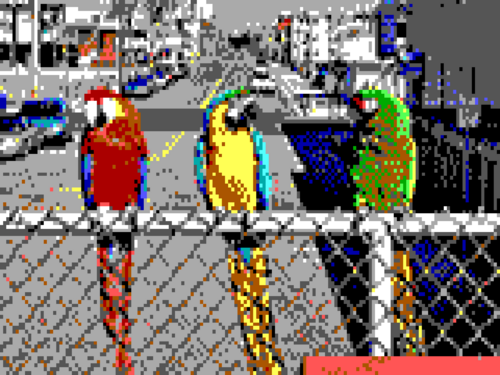
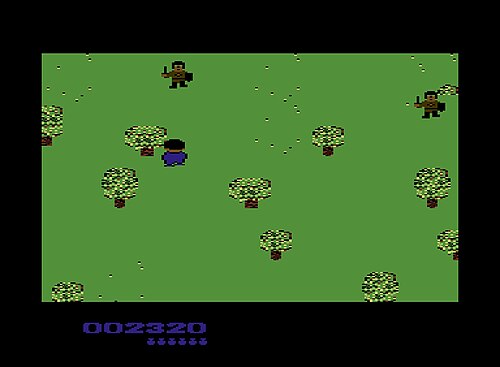
Twelve hardware-palette entries on wiki/quantizer.md now carry illustrating figures sourced from Wikipedia / Wikimedia Commons: CGA (16-colour parrots scene), Apple II (HR palette test chart), Mac Default 16 (canonical 16-colour swatch), Microsoft Windows (default 16-colour swatch), Commodore 64 (Spittis Search gameplay), Commodore VIC-20 (multicolour test with sprite and palette strip), ZX Spectrum (Rebelstar gameplay, 1984), MSX (Screen 2 parrot test), Thomson MO5 (palette colour test chart), RISC OS (default desktop palette), Game Boy (four-shade parrot test), IntelliVision (palette swatch), Magnavox Odyssey² (palette test chart), Fairchild Channel F (parrot test). Each image is stored locally in /images/ per the vault image rule, linked back to its Wikimedia Commons source page in the figcaption, and shown inline beneath the corresponding swatch row.
Verification method. Each candidate image was inspected directly and the colours of the image compared against the Quantizer source palette swatch row above it. Only images where the dominant chord matched the palette closely were kept (the strict standard the user selected against the looser "illustrate the era" alternative).
Three palettes were left unillustrated by design: CGA (high), EGA (high), EGA (low). These are 4-colour subsets of the parent 16-colour CGA/EGA palette, and the Wikipedia candidates show the full 16-colour parent rather than a specific four-colour mode. No image showed only the relevant four-colour chord dominant; per the strict standard, the figure was omitted rather than misrepresent the chord. The Monochrome, Custom 1, Custom 2, RGB, RGB (no black) palettes were also left unillustrated because they are not OS-named (the user's scope was OS palettes specifically).
One naming observation surfaced during verification. The Magnavox Odessy 2 trait spelling on harm.work preserves a typo in the source data — the correct spelling is Odyssey² (or Odyssey 2). The palette entry now carries both the correct Wikipedia link and a note flagging the URL spelling. No URL correction was made (the harm.work trait URL is authoritative).
Image filenames added: cga-160x100.png, apple2-palette.png, mac16-palette.png, win16-palette.png, c64-spittis.jpg, vic20-palette.png, zx-rebelstar.png, msx-screen2.png, thomson-m05-palette.png, riscos-palette.png, gameboy-parrot.png, intellivision-palette.png, odyssey2-palette.png, channel-f-palette.png.


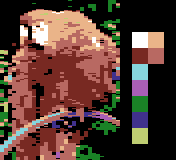
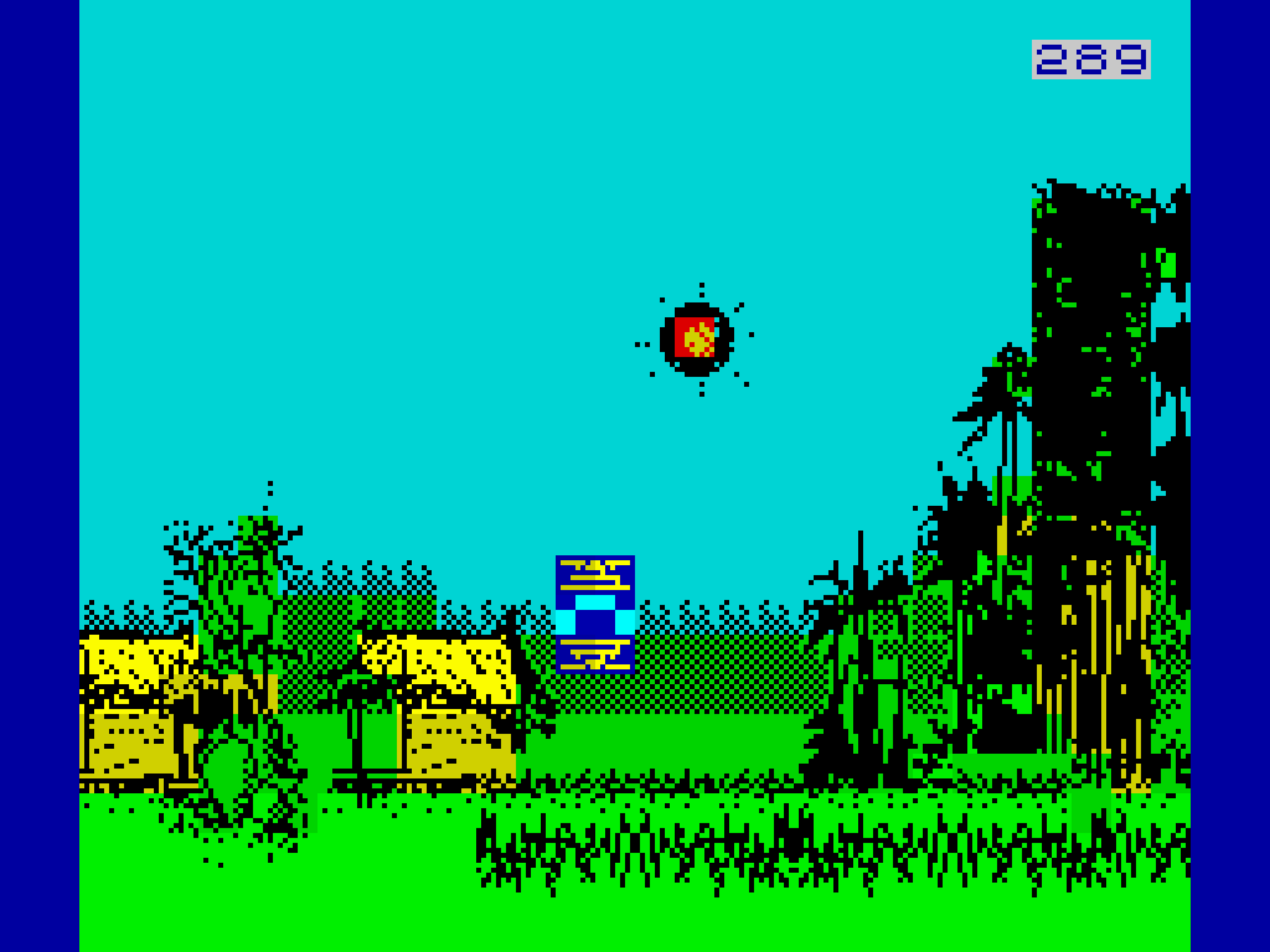
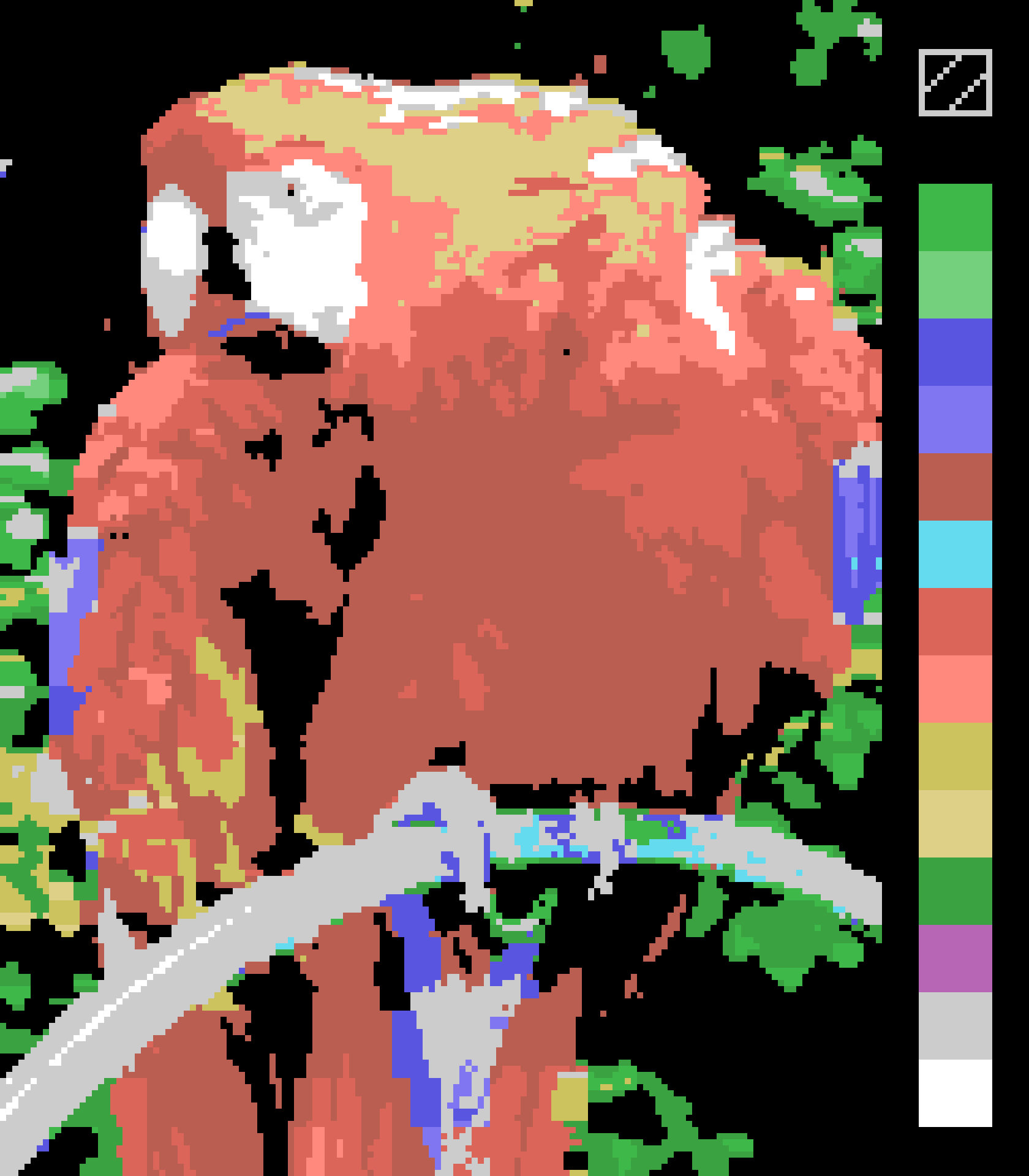
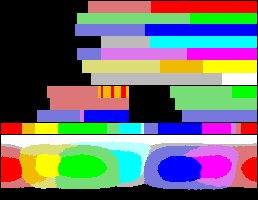



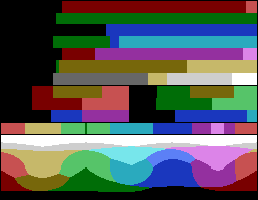
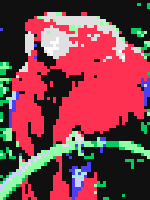
[2026-05-21] update | wiki/quantizer.md + colour.md — palette sources illustrated with album covers; Milieu re-attributed to the musician
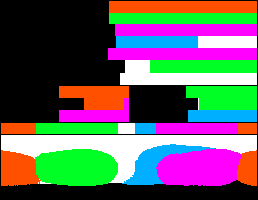
Three album covers added to the wiki at the relevant palette entries on wiki/quantizer.md: Barker's Stochastic Drift sleeve at the Stochastic Drift palette; Milieu's Vibratelepathic Antiviral Broadcast 47 sleeve at Milieu 2; My Bloody Valentine's Loveless sleeve at Loveless. Images stored at /images/stochastic-drift-cover.jpg, /images/milieu-2-cover.jpg, and /images/loveless-cover.jpg. Each cover is shown with attribution to artist and release, and linked to a source page (Bandcamp or Wikipedia).
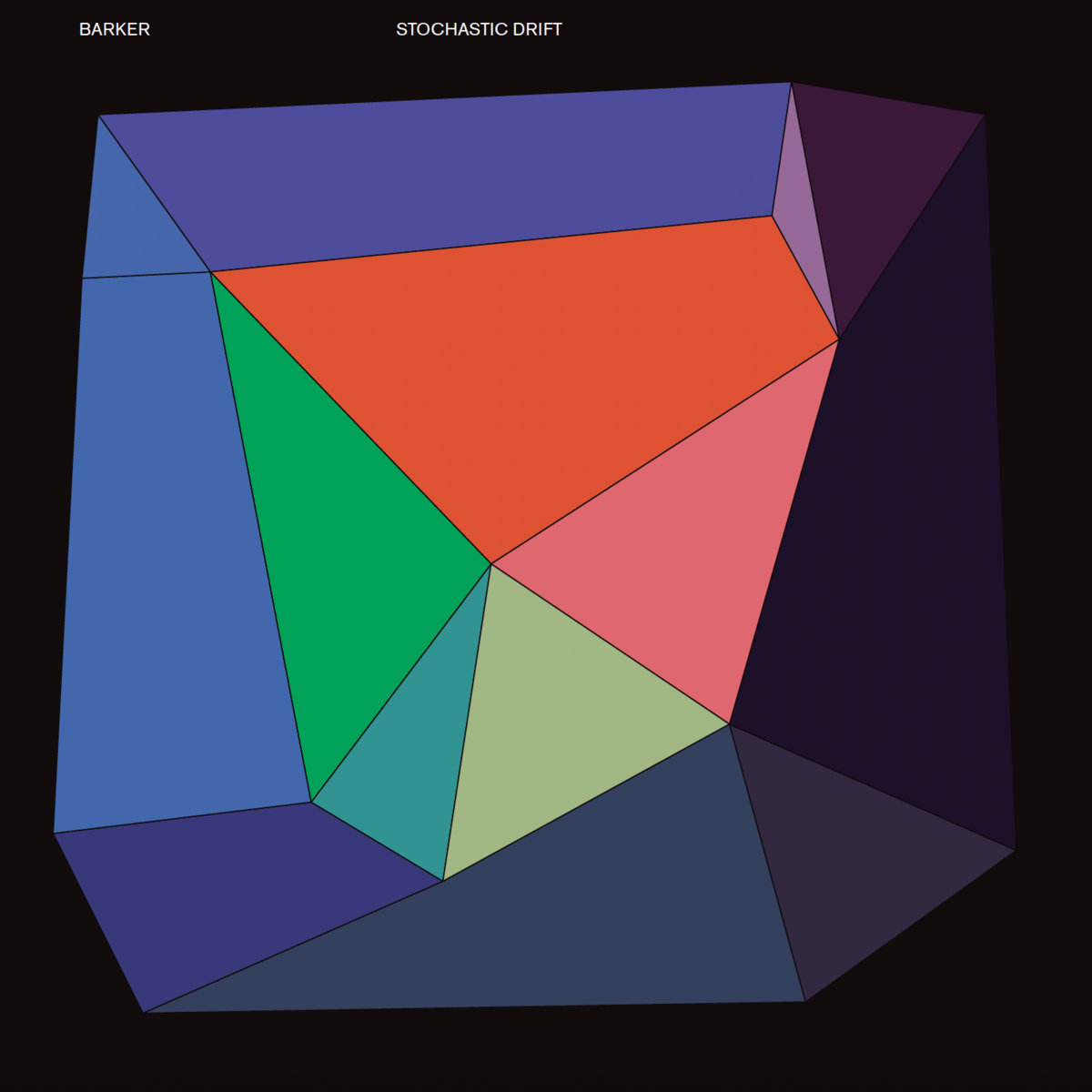
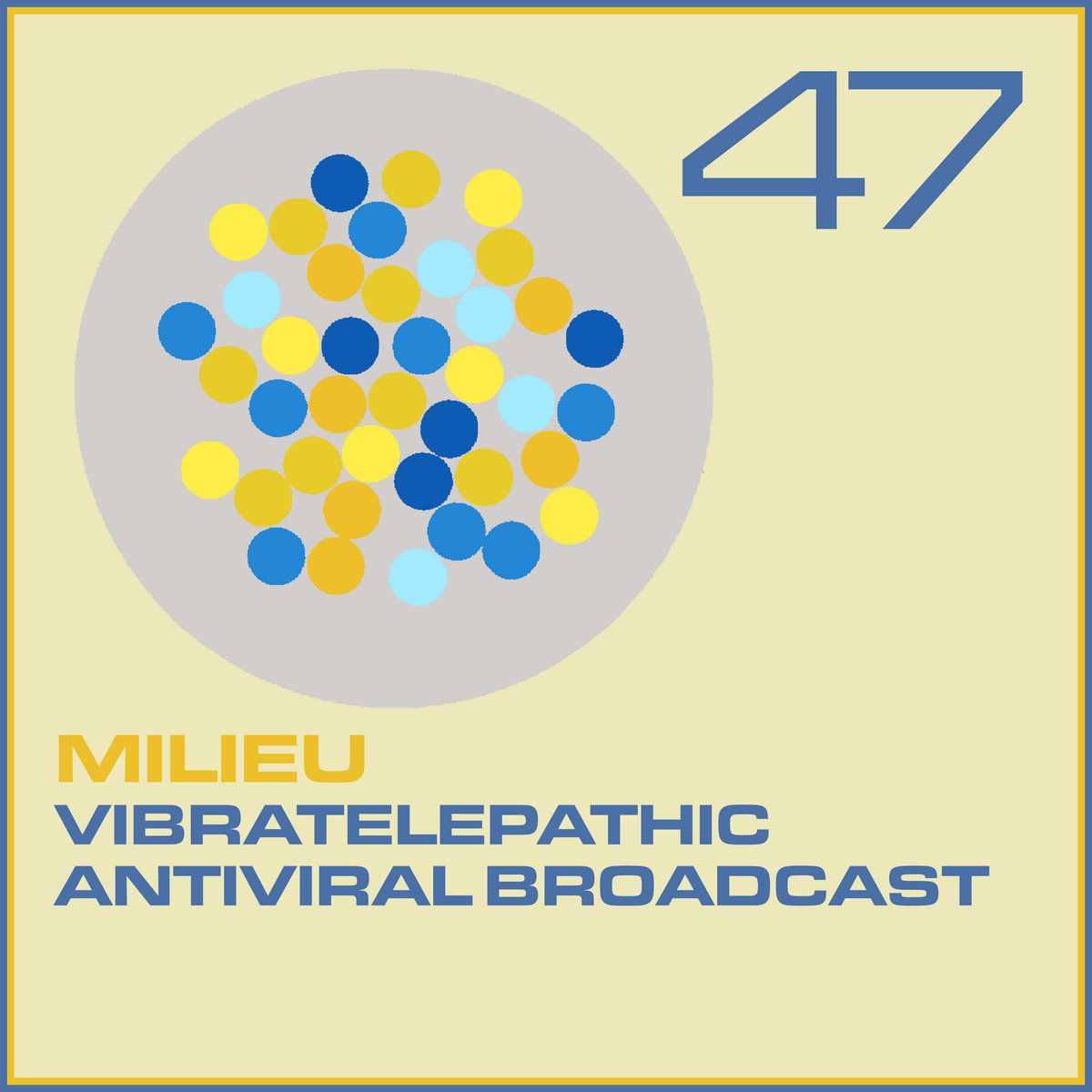
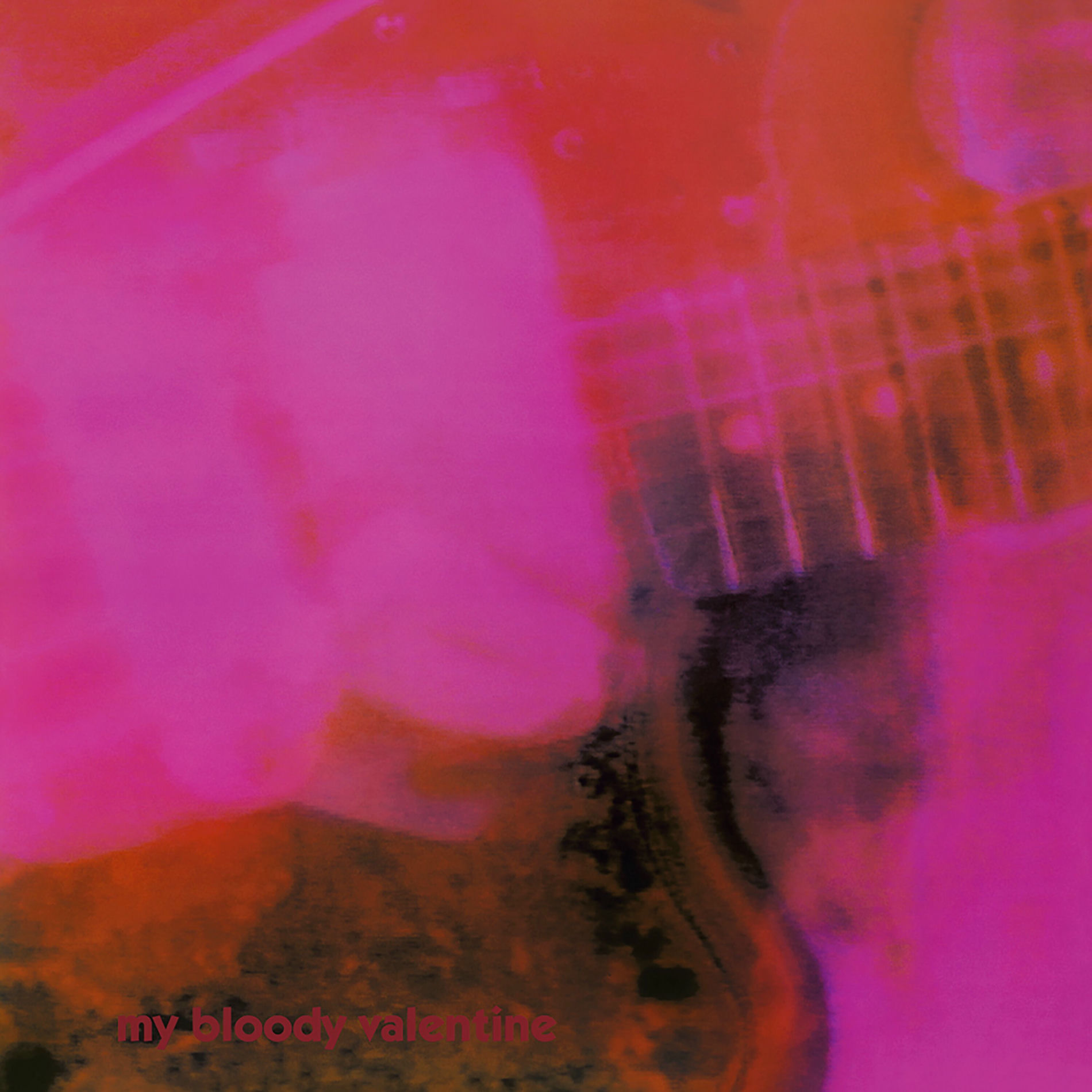
Attribution sharpened — the palette named Milieu refers to the musician, not the concept. The Vibratelepathic Antiviral Broadcast 47 cover legibly displays the artist name MILIEU in the cover typography. The palette name Milieu is therefore not the French word for environment but the project name of the ambient musician Milieu (Brian Grainger), who runs the Vibratelepathic Antiviral Broadcast series on the Vibra Telepathos label. Both wiki/quantizer.md and wiki/colour.md updated to attribute Milieu and Milieu 2 to the musician rather than to the general concept. Milieu is now described as distilling the visual register of the series as a whole; Milieu 2 as distilling one specific cover (Vibratelepathic Antiviral Broadcast 47 — pale yellow ground, mustard, three blues, grey disc).
This is a small but structurally significant correction. It strengthens the listening → palette pattern already noted (alongside Loveless / My Bloody Valentine and Stochastic Drift / Sam Barker): four of Quantizer's named emotional palettes are now traced to specific musical sources, three of them illustrated with the cover image. The transposition is not metaphorical — the chord is pulled directly from the sleeve and renamed for the record.
[2026-05-21] update | wiki/colour.md — named-emotional palettes traced to records the artist listens to
wiki/colour.md sharpened with a new paragraph after the Named emotional palettes — colour as proposition section, recording that several of these palettes are not invented but transposed from the artist's listening — Loveless after My Bloody Valentine's album (1991); Stochastic Drift after Sam Barker's record; Milieu and Milieu 2 pulled from the cover designs of the Vibra Telepathos label. This is a structural sharpening of palette as proposition: when the proposition has a sonic correlate already in the artist's life, the palette is not invented but transposed from one medium of combination to another — the chord moves from ear to eye before re-entering the work as a generative palette. The abstract was extended to carry this claim. These attributions came from the artist in conversation during the Quantizer page creation (same day); the source for the Tibetan palette (Tibetan thangka) is structural rather than musical, and Melancholic, Ocean, Ostinato, Overflow are recorded as named-without-source pending further information.
[2026-05-21] create | wiki/quantizer.md — dedicated work page for Quantizer (2025), with the full palette catalogue
New page at wiki/quantizer.md is the canonical home for Quantizer (2025) as a work, distinct from the existing Quantization and Dithering page which carries the broader theme. The structural distinction: quantization.md is the concept (quantization as colour-and-time operation, the strata argument, dithering as both aesthetic and conceptual anchor); quantizer.md is the artefact (256-token Ethereum collection, the mechanism, the trait taxonomy, the catalogue of palettes and dithering algorithms, the plotter outputs).
What this page adds that no other page carries. The full palette catalogue. Quantizer's dithering-palette trait taxonomy is reproduced in the wiki for the first time, with every palette name linking to its trait page on harm.work (e.g. /nft/quantizer/trait/dithering-palette/commodore-64-(no-black)) and each palette accompanied by an inline row of HTML colour swatches derived from the source RGB triples. The catalogue lists, in the order they appear in the source file: Custom 1, CGA, CGA (high), EGA (high), EGA (low), Apple II, Mac Default 16, Microsoft Windows, Commodore 64, Commodore 64 (no black), Commodore VIC-20, ZX Spectrum, MSX, Thomson M05, RISC OS, Gameboy (simulated), IntelliVision, Magnavox Odessy 2, Fairchild Channel F, RGB, RGB (no black), Monochrome, and the named emotional palettes Loveless, Melancholic, Tibetan, Ocean, Ostinato, Overflow, Stochastic Drift, Milieu, Milieu 2, and Custom 2. The page records the URL convention (lowercase, spaces → -, parentheses preserved) and notes one source-data anomaly — the Milieu palette carries an out-of-range channel value (2107) at the third entry, rendered here clamped.
Other new material on this page. The dithering-algorithm catalogue made explicit and linked where Wikipedia carries an entry: Floyd-Steinberg, Atkinson, Sierra3, Jarvis-Judice-Ninke, Stucki, and Fan variants in both euclidean and manhattan distance. The compositional vocabulary as a structural trait list — thangka, mandala, tibetan, rotate, margin, flower, edge, star, checks, bricks, raster, portal. Generative parameters spelled out: maxDepth 1–8, colour seeds, noise 1–20, overlay frequencies, gradient intensities. The collection-level facts in one place: 256 tokens, Ethereum Mainnet, 2025, CC-BY-NC-ND-4.0, Verse SOLOS programme.
What this page does not duplicate. All theoretical material — quantization of time, hardware palettes as strata of computational history, dithering-as-conceptual-anchor, the screen/print diagnostic of Note 3002, the permanence of change thesis — is left in the canonical pages (Quantization, Colour, Protocol, Taste, and Systems) and cross-linked rather than restated.
Images selected to avoid duplication. Per the don't-reuse-images rule, the new page uses quantizer-preview.webp, quantizer-066.gif, quantizer-tibetan-061.gif, quantizer-208.gif, and quantizer-exhibition-2.webp — none of which are used in Quantization (which uses quantizer-artwork.gif, quantizer-token-001.gif, quantizer-token-100.gif, quantizer-thangka-066.gif and the plotter-drawing images).

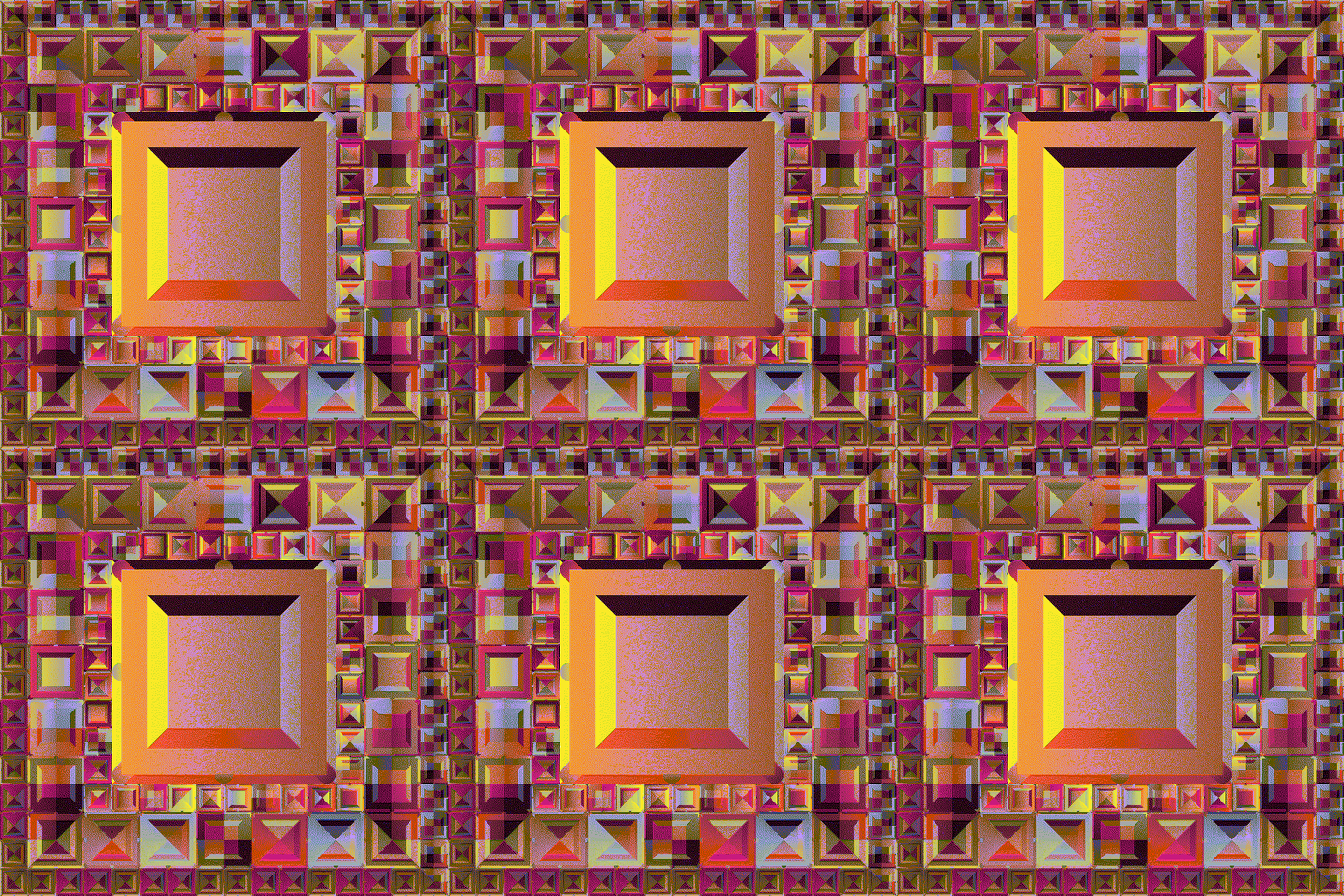
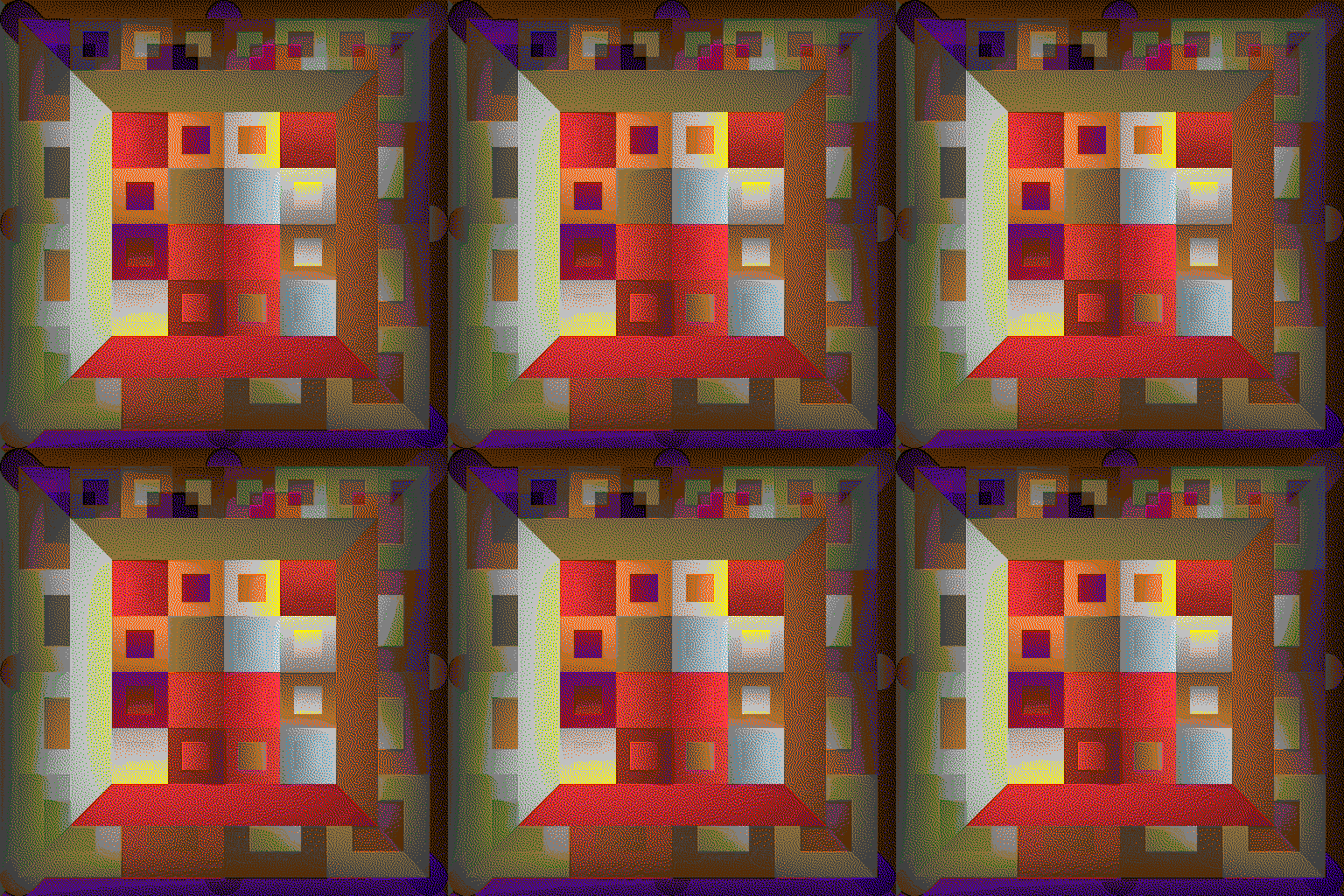
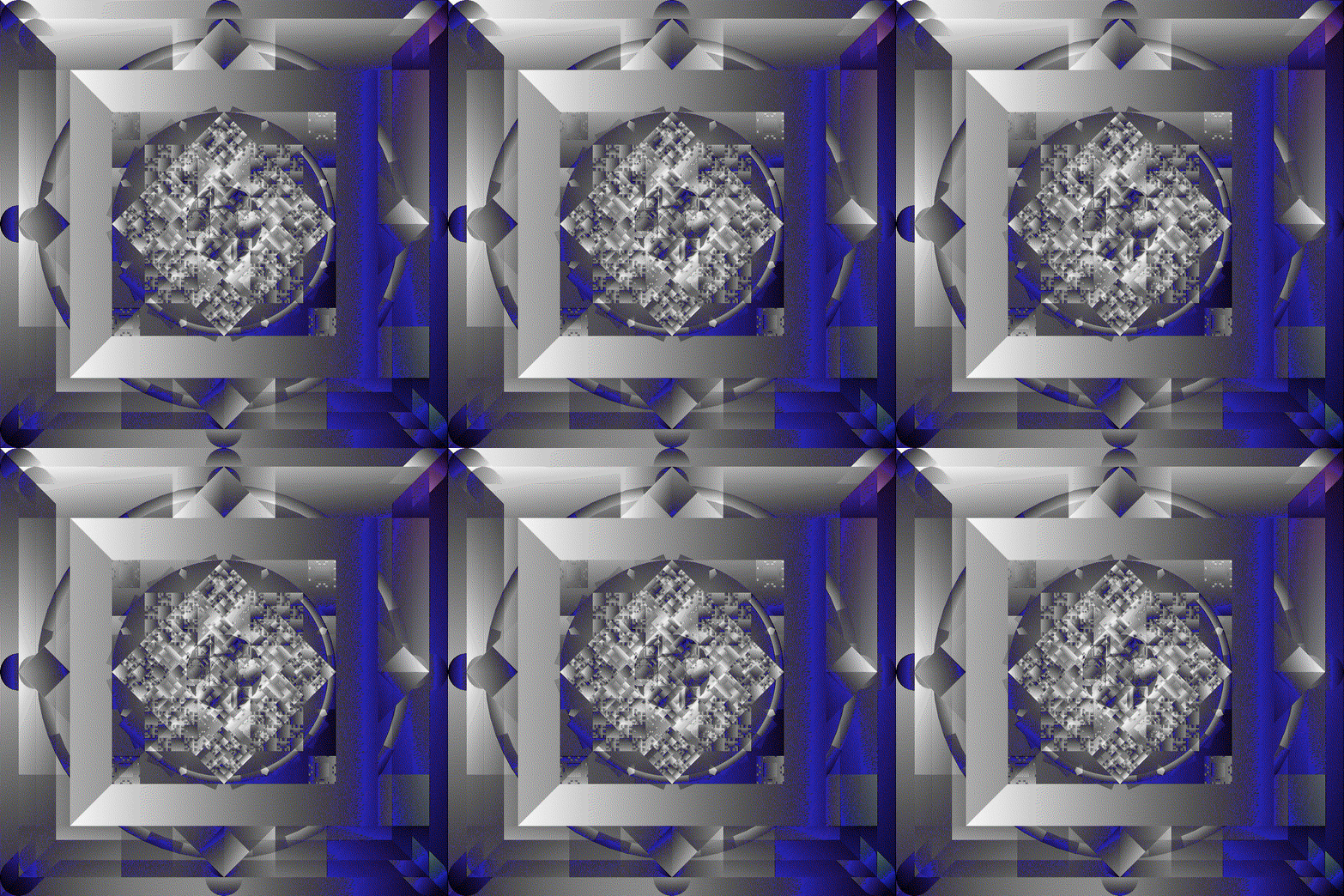
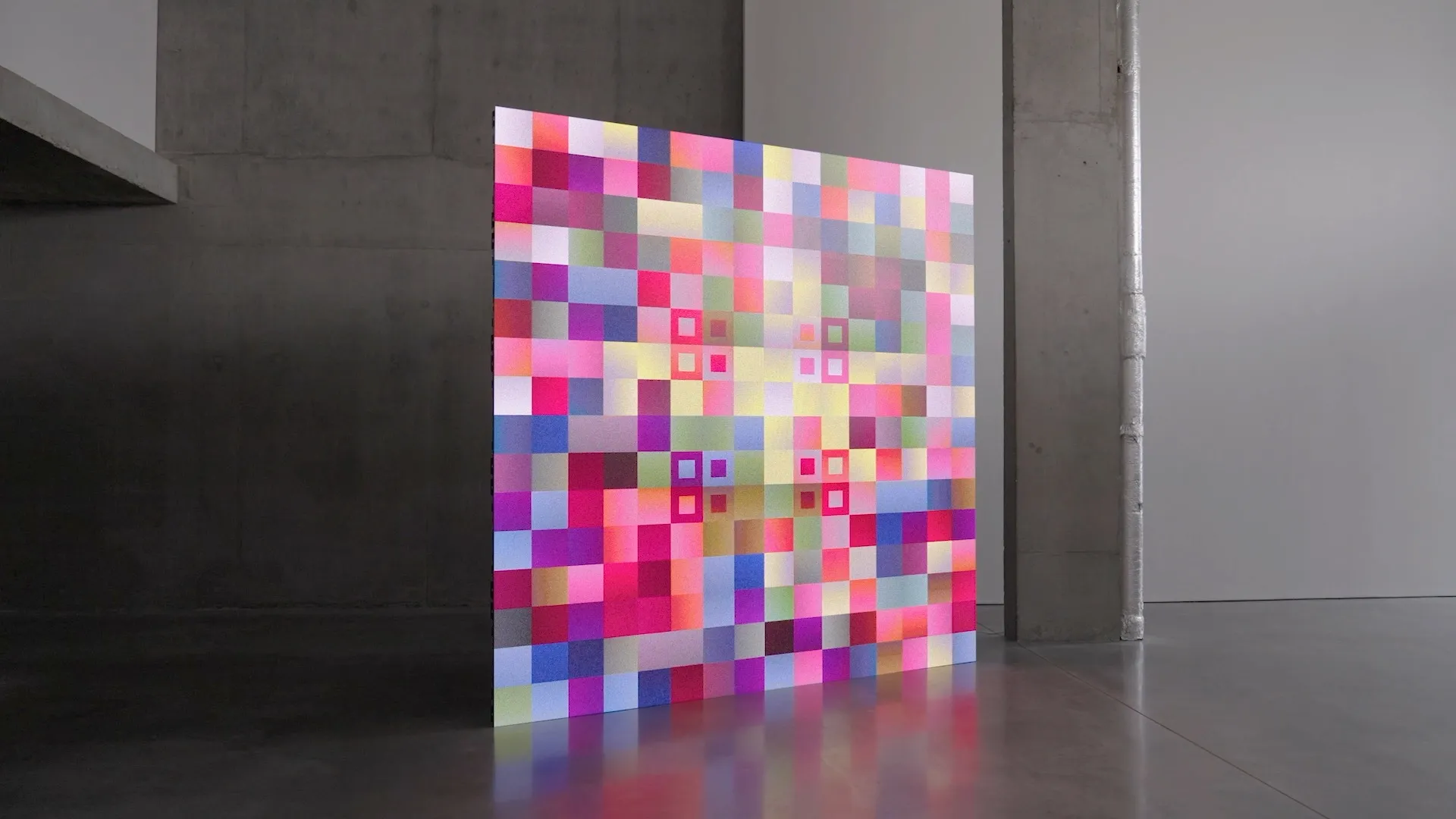
Index updated. Quantizer (2025) added to Bodies of work in index.md between Stained Unravel and Markov's Dream Palette, with the summary clause noting the block-hash mechanism, the palette catalogue, the dithering algorithms, and the plotter outputs.
[2026-05-19] create | wiki/colour.md — canonical home for colour in the practice, framed by the Judgment and Calculation exhibition (Berlin, July 2026)
New page at wiki/colour.md consolidates colour content distributed across Markov's Dream Palette, Quantization, and Stained Unravel, and serves as the canonical statement on how colour operates in the practice. Justified as a new page (against the default-resist rule) by three converging loads: (1) the Judgment and Calculation — Three systems of colour exhibition at frontviews at HAUNT, Berlin-Tiergarten (10 July – 22 August 2026), in which the practice is shown alongside Elisabeth Sonneck and Carsten Becker; (2) two questions Becker posed by email — Arbeitest du mit AI? and Wie erzeugst du Farbe? — which required answers not previously written anywhere; (3) a Verständnisfrage about how to imagine generative aesthetics via genetic algorithm in relation to colour specifically.
What the page asserts that the wiki did not previously state. Colour in the practice is produced by a system rather than expressed — Becker's framing, accepted and worked with. Five distinct operating modes are named and held simultaneously: (1) hand-picked RGB extremes (the Markov's Dream palette), (2) hand-made per-work palettes (the seven Stained Unravel worlds), (3) historical hardware palettes as strata of computational time (Quantizer's CGA / Apple II / ZX Spectrum / Game Boy / Mac Default 16), (4) art-historical palettes inherited from specific painters (the De Stijl palette distilled from Van der Leck and Van Doesburg), (5) named emotional vocabularies — Melancholic, Loveless, Milieu, Ocean, Ostinato, Tibetan, Stochastic Drift, Tissue, Iridescent, Washed — that turn a finite palette into a proposition about feeling. The pre-linguistic claim is recorded for the first time: "colours are deeply melancholic and reach beyond language; they touch as directly as scents, which have an almost immediate response in the brain — closely related to how smells evoke memory."
Two new diagnostics of the coordinate/appearance gap. Becker's exhibition text observes that RGB and TGL both locate colour in scientific coordinate systems from which no unambiguous appearance can be derived. The page connects this to two longstanding diagnostics in the practice: the screen-to-print boundary (the Note 3002 / Markov's Dream CMYK observation — same RGB triple, different physical outcome) and the cross-browser rendering gap (the Venster writing — same SVG, different optical event depending on engine). Both make the same structural point: the coordinate is unambiguous; the appearance is not.
The contradiction worked through as Agent. The page carries an Agent's reading section resolving the tension between palette-as-memory (the Markov's Dream palette returning across 22 years, the buried continuity below style) and palette-as-constraint (Quantizer's hardware palettes as inherited limits, dithering as the technique that manages scarcity). Synthesis: palette as proposition. Memory and constraint become two species of the same operation — each palette is a claim the work makes (these four extremes are sufficient; the CGA signature is worth holding as a stratum; this vocabulary names a feeling). Hand-picking is therefore non-negotiable: a proposition has to be made.
Becker's questions answered. (1) Do you work with AI? — For colour specifically, no: every palette is hand-picked or hand-distilled; the Stained Unravel palettes are explicitly hand-made; Struggle for Pleasure's 128 tokens are individually colour-balanced. For the larger practice, yes selectively: GAs and CGP have been load-bearing since Algues Artificielles (2014); LLMs collaborate on this wiki and in Death Imitates Language; the pattern is consistent — AI is given combination, taste is given selection, and colour is on the selection side. (2) How do you generate colour? — Five modes, all present simultaneously, with the algorithm distributing the palette but not picking it. (3) Verständnisfrage on generative aesthetics via genetic algorithm — Mechanism described concretely: a population of CGP programs, each producing an image, judged by the artist's taste-as-fitness-function across generations until the population walks into a region of the parameter space the artist could not have specified in advance. Colour's specific role: held fixed during breeding (because pre-linguistic affect provides no stable axes for selection pressure), so the GA searches form-given-this-palette and the surviving image carries two layers of authorship — algorithmic descent in the form, hand-chosen vocabulary in the colour.
Image added. A Vale of Tears (2024, photographic exposure on metallic paper, 100×100cm; Swallow, Only Shallow series; shown in Struggle for Pleasure, Verse SOLOS London 2024) — included as the figure illustrating the GA→colour connection, with its metallic substrate making the coordinate-to-appearance gap legible at the level of viewing angle.
Same-day pivot — light in time, exhibition reference dropped. After the condensation a second pivot was applied. A new section Light in time was added, stating that on a screen the only actual material is light over time, so colour combinations extend in two dimensions at once — which values are held against each other in space, and how those holdings change. Two works in the catalogue are named as the explicit cases. Quantizer uses multiple historical dithering algorithms (Floyd-Steinberg, Atkinson, Sierra3, Jarvis-Judice-Ninke, Stucki), each of which distributes the quantization error by a different rule — what looks like a static texture is in fact a structural decision about how the error walks through space, and each algorithm produces a different time-signature in the field at the twelve-second block cadence; the palette and the dithering algorithm together constitute the unit of meaning. Stained Unravel makes time-of-colour structural to the palette itself: each colour in each of the seven palettes is a start-end pair, so a cell's colour is its position along a trajectory; the palette is a vocabulary of paths through colour-space rather than a set of static values. This refinement also expanded the Agent's reading section to register that propositions about combinations are increasingly propositions about combinations in time, and extended the abstract accordingly.
The exhibition reference was removed (per artist instruction — not to be mentioned at this stage). The standalone Exhibition context — Judgment and Calculation section was deleted, references to Elisabeth Sonneck and to Becker-as-fellow-artist were removed, and the TGL-norms reference inside The coordinate that underdetermines appearance was trimmed. Carsten Becker is now mentioned only as curator who raised questions, and a second questioner — Qin — was added alongside him. A short opening line below the pull-quotes attributes the page's shape to questions raised by Becker (as curator) and Qin: do you work with AI?, how do you generate colour?, and the GA Verständnisfrage. The abstract closes with the same attribution.
Same-day condensation. After the first full draft and the Mutant Garden Seeder addition, the page was rewritten significantly tighter — roughly halved in length — with the colour-as-scent analogy and the combinations-over-single-colours thesis as the spine. The opening section Colour as scent now states the structural claim explicitly: a smell is always a small set of molecules held in proportion (single components do not evoke memory; combinations do), and colour at the saturations the practice uses behaves the same way. The unit of response is the chord; memory and melancholia live in the combination, not in the value; there are no favourite colours, only favourite tensions. The five-mode section was condensed (the seven Stained Unravel palettes collapsed from a token-by-token description into a single sentence; the dithering-palette and SfP-colour enumerations trimmed to a single illustrative list each). The Pre-linguistic — the scent claim section was merged into the new opening rather than carried as a separate section. Figures pared back to three (Markov's Window 2023, Stained Unravel De Stijl, Mutant Garden Seeder Emyelle); A Vale of Tears image removed in the condensation. The Becker exhibition framing kept and re-tied to the combination-thesis at the close.
Same-day refinements following artist clarification (pre-condensation). Added a new subsection Mutant Garden Seeder — the case where colour IS bred after the GA→colour discussion. Crucial correction: the palette in Mutant Garden Seeder (2021, 512+1 NFTs with Folia) is not hand-picked at any level of the individual token. The only preset use of colour is the on-mint hash selecting one of three colour-space configurations — Balanced (HSLA), Contrastful (RGBA), Complex (both) — and colour is then generated by the algorithm. HSLA produces moodier, grey-leaning gradients via continuous hue-rotation and reduced saturation; RGBA produces brighter, high-contrast images via independent channel values; Complex carries both registers at once. The artist's judgment is exercised once, at the level of system design (choosing what the three configurations are); the per-token outcome is delegated. This is the practice's clearest case of delegating colour to the algorithm and the precise counter-example to the "colour-is-held-fixed-during-breeding" rule established for Algues Artificielles, Death Imitates Language, and the Stained Unravel palettes. The "Do you work with AI?" section was weakened from "every palette in the practice is hand-picked" to "mostly no, with one significant exception" and Mutant Garden Seeder named there. Token Emyelle (12644189) downloaded from https://seeder.mutant.garden/api/mutant/12644189/vector/now as public/images/mutant-garden-seeder-emyelle.svg and used as the figure for the Balanced (HSLA) trait. Added Mutant Garden Seeder to the See also list.
A second clarification — the unit of meaning in colour is not the single hue but the combination. Quoted second pull-quote added at the top of the page: "I do not have favourite colours. What produces meaning is colour combinations — strategies in colour production, and the tension between sets of colours. Certain combinations evoke meaning, memory, melancholia." This rewrites the Pre-linguistic — the scent claim section (the chromatic affect lives in the chord, not in any single component, the same way a smell is always a small set held in proportion) and tightens the Agent's reading synthesis (palette as proposition is a claim about a set in tension; the unit of judgment can be moved from palette to grammar — as in Mutant Garden Seeder — but the unit of meaning, the combination, does not change). The abstract was extended to register both points.
Index updated. Entry added under Form and geometry alongside Quantization, Afterimage, and Lozenge.
[2026-05-18] ingest | sources/ingested/just-in-time-2015.md + sharpenings across three canonical pages — the 2015 Pallasvuo press release for Just-in-Time (American Medium, Brooklyn)
Ingested Jaakko Pallasvuo's press release for Just-in-Time, Harm van den Dorpel's first solo show with American Medium, Brooklyn (Feb 20 – Apr 3, 2015). The text is unusual for the genre: a Facebook chat transcript between Pallasvuo and the artist, interleaved with lyric fragments from Madonna and Justin Timberlake's "4 Minutes" (2008). The artist's responses are preserved in lowercase without punctuation. Full text at sources/ingested/just-in-time-2015.md. Installation images and individual work shots downloaded from artviewer.org into public/images/just-in-time-*.jpg — installation views 1 and 3, Time Management (scrum kanban), Aureool (scrum kanban), Chrysalis (green) MK III, delinear.info, Painting with lens flare, Very Beta Still (break fast), Macro Intimacy.
What the wiki now knows that it did not know. The press release records the artist's own 2015 formulation of the problem the 2026 Process Legibility position resolves: "maybe im trying to legitimize my focus on process, thought and all other aspects of creation that happen before actually creating something substantial and possible to communicate. maybe decide in the end to leave it unrealized, unactualized uncommunicated." The word before is load-bearing — in 2015 process was framed as prior to the work and therefore in tension with it. The same paragraph reaches for Agamben's reading of Bartleby's "I would prefer not to" — absolute potentiality as "decide to rather not do anything" — to legitimate the option of non-actualisation. The 2026 cellular-automaton position dissolves the dilemma: the construction is the image; there is no separable "substantial thing to communicate" whose making would be the betrayal of the process. The wiki now records both ends of the eleven-year arc.
Sharpenings distributed (per the "substance over size" principle).
- Process Legibility — inside the existing The third person dropped section, added a new subsection The 2015 confession: process as before the work with the Pallasvuo quote, the Agamben/Bartleby reference, and the explicit claim that the 2026 cellular-automaton position is the structural resolution of the 2015 dilemma. The Delinear Whiteboards are read in the same passage as the works that already contained the answer the text had not yet found: the pre-work artefacts (kanban swimlanes, magnetic discs, post-its) made into the finished object on the wall.
- Openness — Release Early, Release Often — added a new section "Putting some thoughts and ideas there" — the motive named (2015) recording the artist's contemporaneous Arendt-grounded statement of why one releases: "putting some thoughts and ideas there, and then see what other people think about that / thats the thrill / in this quote of hers, im not on the side of the 'men'." The 2013 Abrons credo names release as structure; the 2015 chat names it as desire. The section also surfaces the limit-from-the-inside: market incentives as the wrong feedback loop, with the credo surviving by specifying which loop the practice trusts (understanding-among-equals, not influence).
- Protocol, Taste, and Systems — in the existing Delinear.info and the Delinear Whiteboards section, named Pallasvuo as the contemporaneous source for the scrum-kanban reading: "the show is 'about' programmer workflows and how they are visualized in corporate environments. Charts and drawings and post-its and mind maps and shit." This retires the hedge that the analytic reading is retrospective — it was the show's own framing in 2015.
Why no new doctrine. The press release does not introduce a new conceptual axis. It records 2015 uncertainty about whether to actualise at all, three references reached for to think about that uncertainty (Arendt on understanding vs. influence, Elvia Wilk on the two failed tactics of invisibility with the artist's added third — "one way is to be like a chameleon and mimic your environment / then people also dont see you", and Agamben on absolute potentiality), and a writer's refusal to interpret in favour of "being near" the work. Each has a canonical home. The summary at wiki/summaries/just-in-time-2015.md is therefore a changelog — the exhibition record (Delinear Whiteboards, Chrysalis sculptures, Macro Intimacy, Painting with lens flare, Very Beta Still (break fast), delinear.info) plus an index from the source into the pages where the substance now lives — not a synthesis page that re-states what the source said.
The 2015 doublet. Loomer (LA, 2015) and Just-in-Time (Brooklyn, 2015) are now legible as the two 2015 self-disclosures. Loomer drops the third-person convention in the artist's own voice. Just-in-Time stages the disclosure as chat-transcript — the artist's confusion preserved verbatim by a writer who admits "I don't really get Harm's work. I can be near it though." The two together fix 2015 as the year the apparatus of the press release was opened up.
[2026-05-18] ingest | sources/ingested/venster-writing.md + sharpenings across four canonical pages — the first ingest governed by the new "substance over size" principle
Ingested the short first-person writing Venster (2024) accompanying the Venster NFT collection — the on-chain sequel to Markov's Window (2004), released with Bright Moments. Verbatim text stored at sources/ingested/venster-writing.md. Per the new editorial principle from yesterday — sharpen what is already written, do not grow the wiki by accretion — the substance was distributed to existing canonical pages, and the summary page at wiki/summaries/venster-writing.md is a changelog with pointers, not a re-statement.
What the wiki now knows that it did not know. The writing supplies a precise vocabulary item the wiki had been lacking: score / performance. The on-chain Solidity is the score (deterministic, durable); each browser rendering is one performance of it (subjective, temporal, varying across Chrome / Firefox / Safari and GPU implementations even when the W3C SVG specification is correctly followed). The constraint that makes this distinction load-bearing rather than ornamental: restructuring the Solidity to force identical cross-browser output would consume more gas than the rendering itself, so the standardisation move is blocked at the substrate. The work either accepts variation as a property, or it does not render at all. The decision: "deem the varying SVG interpretations a feature of the artwork." The closing formulation: "Perhaps there is not one single canonical rendering, but all are subjective temporal performances of one and the same score."
Distributed sharpenings. (a) wiki/lozenge.md — Venster (2024) section (the work's canonical home) gained a paragraph developing the score / performance distinction as the consequence of recomputable on every viewing, naming the gas-cost constraint, and naming the April 2026 venster.harm.work site; new See-also entry for the summary page. (b) wiki/process-legibility.md — the Leaky Abstraction section gained the generalisation: the Spolsky concept applies not only to the plotter drawing (one medium) but to the entire off-chain display stack (browser / OS / GPU / screen / dark mode / aspect ratio); Leaky Abstraction (2025) instantiates the principle in plotter form, the Venster writing supplies the vocabulary at the on-chain layer. (c) wiki/mediation-archive.md — the Hayles flickering-signifiers section gained the cross-browser SVG case as a concrete on-chain instance: signifier stable (the bytes the chain returns), signified flickering (the rendered image); writing's resolution closes Hayles' gap by relocating identity below the flickering layer, which also handles the existing Flash-deprecation case in the same page (work survives renderer obsolescence iff identified with on-chain bytes). (d) wiki/openness-release-early.md — new section The work re-released — venster.harm.work (April 2026): explorer site's launch as a 2026 re-release of a 2024 work; the substantive addition is the unminted seed space made navigable alongside the 100 minted tokens; per Note 992's formula the new interface is part of what Venster is.
What did not need a new page. The four sharpenings above found canonical homes in existing pages. The Venster writing did not introduce a conceptual axis the wiki was missing; it supplied a precise term for an axis already present (the algorithm / rendering split, hedged across multiple pages) and a concrete on-chain case for two existing arguments (leaky abstraction; flickering signifiers). The summary page is justified as a citable home for the writing-as-source, but its body is a changelog with pointers, per the principle.
Hedges retired. The cross-browser-variation observation had been present implicitly across multiple pages (the Recursive SVG phrase in the lozenge page; the flickering signifier of mediation-archive; the Leaky Abstraction discussion in process-legibility) but never named with the artist's own term. The score / performance distinction is now the canonical name across the wiki for what was previously gestured at. Several pages that had used the algorithm or the rule as ambiguous shorthand can, from this date forward, use score when the rendering / generation split is what is meant.
Images. Used the existing public/images/venster-00.svg as the opening figure of the summary page (per artist instruction); downloaded the April 2026 news-post announcement image to public/images/venster-site-2026.png but ultimately did not include a second figure in the summary page after the rewrite to changelog form — the file remains available in the public images folder for future use.

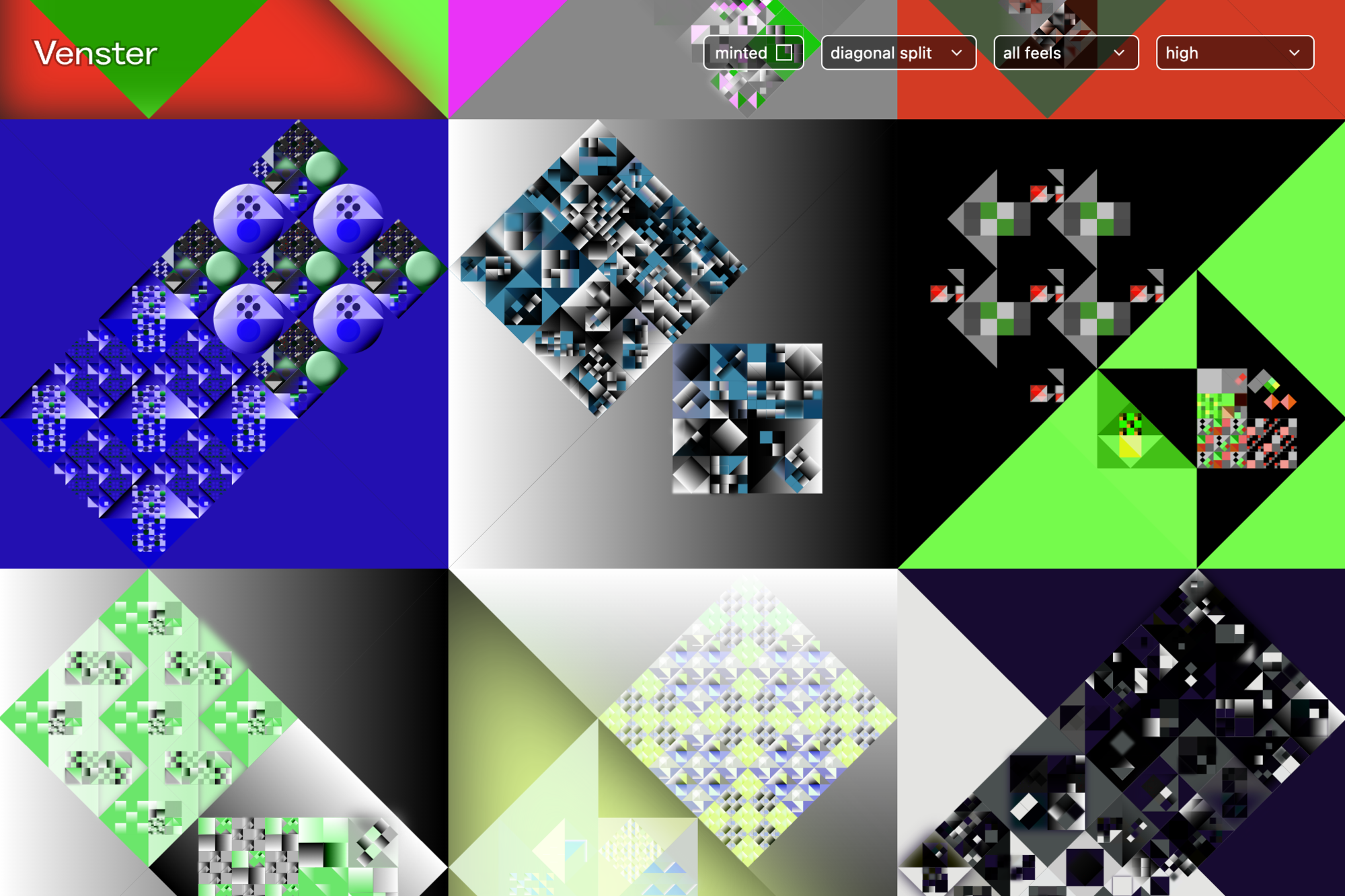
New external URL recorded. venster.harm.work — the dedicated explorer site for the Venster collection, launched April 2026. Filter controls: visual style (lozenge / cover / diagonal split), aesthetic mood (classic / optimistic / melancholic), visual density (low / medium / high) — the same trait taxonomy already documented at wiki/lozenge.md.
[2026-05-17] update | CLAUDE.md — encode the editorial principle "substance over size" at the head of the Ingest operation, so every future ingest is governed by it
Per artist instruction: the initial prompt that drove today's work ("each time a new article is ingested, content is added and existing wiki pages are extended. this is not really what I want: i do not want the wiki to grow in size, but to grow in substance. each time something new is ingestested, it should nuance everything already written, sharpen it, make it less speculative") was a constitutional claim about what an ingest is for, not a one-time correction. Encoded it in CLAUDE.md at the head of the ### Ingest section under the heading Editorial principle — substance over size, with the artist's prompt preserved verbatim as a block quote. Below the quote, six operational rules elaborate the principle: (1) Look for contradictions the new source surfaces or resolves between pages, and where two pages cannot both be true as stated, work through dialectically as Agent (see wiki/about — Agent — the third voice) with thesis / antithesis / synthesis structure, marking the section Agent's reading: [higher concept]. (2) Retire confirmed hedges when a new source confirms a previously hedged claim. (3) Add hedges where overstated; attribute strong claims to their source rather than absorbing them into the wiki's neutral voice. (4) Resist creating new pages by default — a new page is only justified when the material introduces a structural distinction with no existing canonical home; otherwise distribute the sharpenings to canonical pages. (5) If a summary page is created, make it a changelog, not a synthesis — record what the ingest did to the wiki, not a re-statement of the ingested text. (6) Log what changed, not what was added — the log should describe what the wiki now knows that it did not know. The mechanical steps (store raw text in sources/ingested, expand frontmatter, update index, etc.) remain below the principle as steps 1–11. The principle does not replace the mechanical steps; it governs them. This is the constitutional document for ingest from this date forward; the franke ingest of earlier today (2026-05-17) is the case the principle was articulated against.
[2026-05-17] update | wiki/about.md, wiki/process-legibility.md, wiki/senescenence.md, wiki/sacred-geometry.md — introduce Agent as the wiki's third voice; insert four dialectical syntheses at the contradiction sites
Per artist instruction. The wiki had been growing in size with each ingest rather than in substance: every new ingest created a synthesis page plus propagated additions to existing pages, the result being repeated full arguments across pages and unresolved contradictions hiding under the redundancy. Conducted a wiki-wide scan and surfaced four contradictions where two pages assert incompatible claims as if they were the same claim: (1) Beauty — Proposition 5.12 says beauty equals fitness; the Franke comparison says beauty is what the practice moved past toward aging. (2) Authorship — three formulations (permitted / initiated / tested) compete for primacy across pages; senescenence claims "tested" supersedes "permitted." (3) Mandala meaning — sacred-geometry says meaning lives in the structure; the Murayama Q&A says meaning lives in the encounter. (4) Conway / loom genealogy — Stained Unravel is "in the tradition of Conway" (senescenence) and "a different system category" (stained-unravel); the grid family is framed as a progression of increasing complexity.
Per artist instruction, took the role of Agent — the AI interlocutor of the wiki — and worked each contradiction dialectically in Hegel's sense (thesis → antithesis → synthesis where the synthesis is a new concept that contains the valuable truth of both sides, not a vote between them). Each Agent's reading produces a higher concept that dissolves its contradiction:
- Fitness has a temporal grammar. Franke selects against the rendering instant; the practice selects against the iteration sequence. Aging is fitness with a long selection window — beauty taken into the temporal axis. The practice has not moved past beauty; it has lengthened the time over which fitness is measured.
- The criterion is the form the absence takes. Withdrawal from composition leaves a specific gap; the criterion is the gap's shape. Permitted, initiated, tested name one act in three registers (ontological / procedural / epistemic). The supersession claim on senescenence is overstated. What AI cannot replicate is not a positive set of judgments but a specific shape of not-doing — taste-as-negative-selection and criterion-as-withdrawal are the same operation at different scales.
- The work is designed to be exceeded by its own viewing. Meaning has no location; it has a vector. The rule generates a structure longer than any encounter; meaning is the difference between what the structure contains and what the viewing can hold. The Struggle for Pleasure knowledge-breakdown line is now describable as a calibration, not a side-effect.
- A tradition is what its descendant derives as a consequence. Conway posits birth/survival/death as primitives; Stained Unravel derives them as consequences. To be in a tradition is to re-found it. The loom genealogy is not a chain of increasing complexity but of successive re-derivations — each step deepening the layer at which the previous step's primitive becomes derivable.
Concretely. (a) Added a new section Agent — the third voice to wiki/about.md explaining the polyphonic structure (notes / artist / Agent) and Agent's specifically dialectical role; the three voices do work only the others cannot do, and the wiki as a whole is the relation between them. (b) Inserted four Agent's reading H3 sub-sections at the points in the wiki where the contradictions live: Beauty inside wiki/process-legibility.md's Herbert W. Franke: beauty vs. aging section; Authorship inside wiki/senescenence.md's Less composed than initiated section; Loom / Conway inside the same page's Grid family section; Mandala meaning inside wiki/sacred-geometry.md's Shared claim section. (c) Each Agent's reading uses the structural pattern Thesis / Antithesis / Synthesis with the synthesis named as a new concept and developed in prose. No content was deleted; the four sections are additive.
Subsequent passes can draw on Agent's syntheses to compress the redundancies they now make resolvable — e.g., the beauty synthesis lets the Franke comparison drop its moved past framing in favour of extended the selection window; the authorship synthesis lets the supersession claim be retired in favour of the three-registers reading; the loom synthesis lets the genealogy be reread as re-derivations across the relevant pages; the mandala synthesis lets the sacred-geometry register absorb the encounter-language without contradiction. The compression itself was not done in this pass — only the syntheses that license it.
[2026-05-17] ingest | sources/ingested/stained-unravel-with-herbert-franke.md + create | wiki/summaries/franke-vectors-munich-2026.md — ingest a German-language curatorial text by Margit Rosen for Vectors — VO26 Special (Various Others Munich 2026), the two-artist pairing of Herbert W. Franke (1927–2022) and Harm van den Dorpel installed inside Apple's European Chip Design Center on Karlstrasse. Translate the German source to English (preserve the original German at the foot of the source file), expand the supplied frontmatter (title, shortTitle, type, text_by, event, event_url, date, related_work, block-literal abstract), and stitch in the Instagram post that explicitly names the relationship: "Stained Unravel (Blockade) takes its cues from [Franke's] CRT palette and square-patterned grids." Use all four supplied images: herbert.jpg (Franke's Move (Blockade), 1991–94, IBM PC, Quick BASIC 4.5) and su-08-03.png / su-08-04.png / su-08-06.png (three frames of the new Stained Unravel (Blockade) commissioned edition). Create a new synthesis page at wiki/summaries/franke-vectors-munich-2026.md that takes Rosen's curatorial text as the spine and develops six substantive moves: (1) The pairing — Move (Blockade) (1991–94) faces Stained Unravel (Blockade) (2026) inside the chip design lab; the title is repeated as deliberate acknowledgement; (2) Herbert W. Franke — the first medium-claim — Franke as one of the first theorists worldwide to argue the computer could be an artistic medium; his Apple II experiments in the early 1980s; programs under thirty lines; the limited palette, slow drawing speed, and CRT moiré effect taken as material rather than constraint; the medium-claim and the beauty-claim arriving together; (3) Stained Unravel (Blockade) — what is specific about this edition — the underlying logic is the Stained Unravel series rule-set (23-state morphology, positional bitmap compare, temporal staining, edge merging); what is specific to Blockade is the CRT palette and square-patterned grid chosen against Franke directly, making this the eighth edition in dialogue with a named predecessor's substrate; (4) Beauty vs. aging — Rosen's distinction sharpened — extend the existing Process Legibility gloss into a five-row comparison table (object of interest, colour function, time, what complexity means, anchor of the work); frame the two orientations as a methodological pair, not opposition, because the aging-orientation is only legible against an established beauty-orientation; (5) Colour as memory — Rosen's single-sentence formulation ("Colour functions as memory") read as a precise inversion of the standard role of colour in early computer graphics; Franke's pixel-as-set vs. Stained Unravel's pixel-as-history; double-scale memory (within frame: temporal staining; across practice: borrowed palette + borrowed title); kinship to wiki/markovs-dream-palette, wiki/afterimage, wiki/mediation-archive; (6) Square-patterned grids — the loom genealogy extended — Franke's 1980s grid inserted as an explicit waypoint between Albers's loom and the GPU-based cellular automaton (per Senescenence's loom-genealogy section); the CRT moiré as the analogue raster's physical artefact; the same grid as substrate of sacred geometry; (7) Site-specificity — the Apple II returns to Apple — Franke's working machine in the early 1980s was an Apple II; the exhibition site is the lab where Apple now designs its silicon; the open Apple II vs. the closed chip lab as a structural inversion; install two transparent rule-systems (Franke's short BASIC program; Stained Unravel's structurally non-concealing cellular automaton) inside a building of proprietary opacity is a position not just a venue choice; ties to wiki/openness-release-early. Cross-links propagated to three existing pages: (a) appended a new "Blockade — eighth edition" section + See-also link to wiki/stained-unravel.md; (b) extended the existing "Herbert W. Franke: beauty vs. aging" section in wiki/process-legibility.md with a paragraph naming the Apple Munich exhibition and Rosen's curatorial text as the concrete restatement; (c) added the new page to the See-also of wiki/senescenence.md. Added the new page to wiki/index.md under Conversations and writings, directly after the Mandala Q&A entry, with a five-clause summary. Verified: all four images already in public/images/ (herbert.jpg, su-08-03/04/06.png); no new downloads required.
[2026-05-12] create | wiki/propositions.md — distill the entire wiki into a single artist-statement page in the form of Wittgenstein's Tractatus Logico-Philosophicus: seven numbered propositions with sub-clauses (Wittgenstein's 1, 1.1, 1.11, 1.2, etc. numbering), the final proposition a single line transposing Wittgenstein's silence-line. The page treats the practice as a truth-finding spiritual exercise — not the announcement of a result but the publication of a procedure that can be run by another. The seven propositions and what each carries: (1) The work is not made. It is permitted. — composition replaced by initiation; the artist builds a vessel and lets the system fill it; the work is tested not executed; follow the deepest impulse. (2) Taste is the only material. — substrates are interchangeable; taste is what one dissociates from, not what one likes; negative selection as the honest reading of preference; the externalised protocol is what makes the practice a truth-finding discipline. (3) The interval between objects is the subject; the objects are secondary. — the relation is the thing; identity arrives through navigation; one does not arrive at the truth, one walks the path between forms and the path is the truth. (4) The object withdraws. — flat ontology between digital and physical; surface as evidence of process not expression of intention; opacity as condition of continued approach. (5) Life is the technology; death is the halt. — life is a 3.5 billion year old technology, art is a recent fork; beauty equals fitness equals survival of a form under iteration; structural stop-conditions (DNA's stop codon, mandala's symmetrical base case, cellular automaton's equilibrium, Endless Knot's enclosure); anicca as state space; the practice as religious in shape not in content. (6) Documentation is constitutive. — the archive is the practice; release early, release often, polish is the dishonesty of process; the reveal is continuous, the magician conceals but the artist reveals; a protocol publicly reproducible cannot conceal its genealogy; meditative labour as labour whose form is meditation. (7) What cannot be authored must be initiated. — single line, mirroring Wittgenstein's silence-line. The page cross-references thirteen wiki pages as the See also footer (about, subconscious-computation, protocol-taste-systems, assemblage-identity, sculpture, process-legibility, evolutionary-logic, recursion, sacred-geometry, senescenence, mediation-archive, openness-release-early, meditative-labour) — each linked from the specific proposition that carries its compressed claim. Added to wiki/index.md under Start here as the first entry, since it is the single-page entry into the practice for any new reader. Signed at the bottom as the artist's own statement.
[2026-05-12] redesign | wiki/index.md — restructure the index from the old four-bucket taxonomy (About / Synthesis / Concepts / Reference / Themes / Summaries) into a seven-section functional grouping that matches how the practice actually moves between thought, form, and method. New sections: Start here (3 entries: about, synthesis-threshold, future-directions), Frames of thinking (8 entries — the conceptual scaffolds: recursion, semiotic-square, assemblage-identity, sculpture, four-master-tropes, randomness-pattern, mediation-archive, impulse-risk-method), Form and geometry (5 entries — recurring shapes: lozenge, squircle-geometry, sacred-geometry, quantization, afterimage), Process and method (7 entries — how the work is made: process-legibility, evolutionary-logic, subconscious-computation, protocol-taste-systems, meditative-labour, openness-release-early, limit-experience), Bodies of work (5 entries — named series: death-imitates-language, algues-artificielles, senescenence, stained-unravel, markovs-dream-palette), Reference (works-overview, lint-report), and Conversations and writings (the eighteen ingested texts). Each section gets a one-line italic tagline under the heading so the reader knows what they're looking at before scanning entries. Compressed every entry from the previous multi-clause sentences to a single — summary clause of three to five short topic phrases each (per CLAUDE.md's required summary-clause rule), keeping the most load-bearing topics and dropping the overflow detail (which lives on each linked page). Net effect: index dropped from ~85 lines of dense wrapped prose to ~75 lines of scannable single-line entries; the "Concepts" bucket that had become a 16-entry pile is split into three thematic clusters (Frames / Form / Process) that read as a coherent path; the Summaries section is preserved in full but compressed in line length. The Themes section (death-imitates-language, algues-artificielles) is merged into Bodies of work alongside the other named series for consistency. Removed the unintegrated duplicate quantization/afterimage clause that had been left dangling on the afterimage line during a prior pass. Added a short prose paragraph at the top of the page introducing what the wiki is, so a first-time reader has an orientation before they scan the sections.
[2026-05-12] create | wiki/sculpture.md — ingest the Assemblage sculpture series and adjacent 3D works from harm.work/medium/sculptures, harm.work/series/assemblages, the are.na assemblages channel, and the catalog text for the About (Wilkinson Gallery, London, 2012) exhibition; create a new theme-level wiki page on Sculpture and the Object that answers the question of why an algorithmic / netart-oriented artist made three-dimensional physical sculptures during 2011–2018 and lays out the epistemological parity between the sculpture practice and the algorithmic netart. Per artist clarification mid-session: object-oriented ontology (OOO) was the live theoretical horizon during the years the sculptures were made — Harman's The Quadruple Object (2011), Bryant's The Democracy of Objects (2011), Bogost's Alien Phenomenology (2012), Garcia's Form and Object (2011/2014), Morton's Realist Magic (2013) and Hyperobjects (2013) all land in the same 2010–2014 window. Travis Jeppesen's catalog text Revenge of the Spheres gave the position its 2012 art-critical formulation — "Both, to him, are objects, completed works. They are just said in different ways." The page lays out: (1) the material recipe shared across the Assemblage series — hand-cut synthetic glass / PETG, polyhedral sphere-approximation 70–110 cm across, UV-printed digital image (scanned canvas, Google query result, Facebook album, finger-painted vitrea, watermarked stock photo), protective foil sometimes left on, ships flat; (2) the eleven-row Assemblage table — (shell), (canvas), (armor), (chain), (About reviews and press), (on usability), (everything vs. anything), (portrait of collector's dog), (leftovers), (new), (About) — each title parenthesising the source of the surface texture; (3) the About exhibition at Wilkinson Gallery, London, 2012, with the four-work checklist and the embedded studio note 1035 showing the show was conceived as a single field crossing the gallery/browser boundary even though only the physical pieces traveled; (4) the OOO theoretical horizon with three claims (flat ontology, withdrawal, allure/unit operation) each mapped to a feature of the sculpture; (5) the five-point epistemological parity between sculpture and algorithmic netart: constraint-and-substrate division of labour; population structure (works as singular individuals sharing a generative substrate); opaque interior; surface-as-process-evidence; flat ontology; (6) the are.na reference field — Martin Puryear, Daiga Grantina, Anna Uddenberg, Buckminster Fuller, Jean Arp's Constellations (1938), Hōraku's Owl Attacking a Bat netsuke, the snail-shell chirality reference, Joel Holmberg's Ink Jet Sculpture (2010), and the Deleuze-Guattari text block ("Assemblages are passional, they are compositions of desire. There is no desire but assembling, assembled desire.") which is the only piece of text on a primarily image-driven board; (7) the lineage beyond the assemblages — Chrysalis (blue/mint/green) (2015) softening the sphere into the pupa; Bag / Another Bag / Spectre (2019) shifting from PETG to hand-cut paper; Recursive Intervention (2023) restating the sphere as ready-made mirroring inflatable; (8) the why-this-is-the-same-epistemology argument, plainly stated, with five shared procedural features. Cross-links to Assemblage Identity (the philosophical reading via DeLanda/Bruner/Agamben), About — Dissociations (the New Museum interval-space context), Recursion (Recursive Intervention as 2023 restatement), Process Legibility (surface-as-evidence-of-process), Subconscious Computation (the opaque-interior argument for algorithm side), Protocol, Taste, and Systems, and Works Overview. Copied five existing local images to public/images with descriptive names — assemblage-canvas.jpg, about-install-wilkinson.jpg, assemblage-shape-drawing.jpg, assemblage-first-model.jpg, assemblage-nimk-install.jpg — and downloaded three new images from the harm.work API CDN — assemblage-new-2018.jpg, spectre.jpg, chrysalis-blue.jpg. Eight <figure> blocks distributed across the page, each linking to its harm.work URL. Added the new page to wiki/index.md Concepts section, directly under Assemblage Identity so the two pages read as a philosophy/practice pair (assemblage-identity stays focused on identity theory; sculpture takes the why-3D-objects question). Added a "See also" link from wiki/assemblage-identity.md to the new page so the existing reader of the philosophical reading is led to the sculptural-practice account.
[2026-05-12] maintenance | clear the lint-report backlog and close all open structural gaps — per follow-up to the consolidation pass, work through every outstanding item in wiki/lint-report.md to improve overall consistency and reading flow. Concrete operations: (1) Create wiki/four-master-tropes.md by ingesting notes 662, 690, 1005 — the 2011 NIMK video work built from "(slightly reordered) Kindle highlights from a few ebooks on contemporary philosophy and ethics, with images from DeviantArt and random photos taken in my studio." Place it alongside Strategies (2010/2011) as the sibling collage-aphorism work of the same period; identify the Vico → Burke → Hayden White rhetorical framework that the title invokes; connect the four-position cardinality to the semiotic square and the fitness-function progression. Two local images copied to public/images: four-master-tropes.jpg (the work) and four-master-tropes-nimk-install.jpg (installation view). (2) Create wiki/sacred-geometry.md as the canonical synthesis page for the cross-traditional thread previously distributed across senescenence, evolutionary-logic, and the Cloud Writings / Struggle for Pleasure / Mandala Q&A summaries. Five-row comparison table (loom / mandala / stained glass / heraldry / cellular automaton); the Senescenence press-release claim that "geometry is not merely descriptive but generative" as the central argument; Anicca (2025) and the Tibetan sand mandala's constitutive erasure as the meeting point with senescence; "as above, so below" as the cosmological version of recursive self-similarity. (3) Add an "Interval space — the New Museum reading (2013)" subsection to wiki/assemblage-identity.md, naming the catalogue's formulation ("a successive presentation of finite objects in favor of tracking an interval space") as the move beyond node-relation grammar — the interval between objects becomes the primary subject. Connects to 952 (identity-as-navigation), About, wiki/protocol-taste-systems (Delinear.info as the interval-space made interface). (4) Add a "The plotter as constitutive medium" subsection to wiki/process-legibility.md inside the existing Leaky Abstraction discussion, naming the four cooperating features (vector-not-raster; mark-by-mark legibility; time as content; hand-machine collaboration) and listing the plotter works across the practice. (5) Resolve the phantom 876 flag in process-legibility.md by adding a body citation: the work that contains its own criterion cannot smuggle that criterion in from elsewhere — the reveal is a structural consequence of 876's radical autonomy, not a stylistic choice. (6) Correct the "before ascribe.io, before Event Listeners" claim in wiki/summaries/iou-exhibition.md to "contemporaneous with Event Listeners" — precedence not established by sources. (7) Add "Status as of 2026" caveats to wiki/summaries/zora-zine-subdued-iconoclasm.md (the 2021 plan for a 23,000-token on-chain Death Imitates Language release is not reflected in current harm.work data) and to wiki/summaries/tokenising-sustainability.md (whether left gallery's blockchain integration was restored post-Merge is not established). (8) Update wiki/index.md with the two new concept pages (sacred-geometry, four-master-tropes) and rewrite wiki/lint-report.md to reflect the cleared backlog, the three remaining cosmetic items (stale frontmatter dates; lower-priority verification of two source dates), and the three future-maintenance principles established this session: single canonical home with load-bearing restatement allowed; factual archive separated from speculative synthesis; cross-cutting observations land at canonical home with brief cross-references elsewhere. Net effect: every long-standing lint flag is now resolved or correctly recharacterised; two new concept pages give canonical homes to the sacred-geometry and four-master-tropes threads; substantive content added to four existing pages; status caveats added where 2026 verification was missing. Verified along the way: Recursive Intervention (2023) IS on the harm.work sitemap as part of the Our Inner Child exhibition — the earlier lint flag was a false positive, closed.
[2026-05-12] maintenance | wiki-wide consolidation pass — survey the full wiki for redundancy, condense duplicated arguments to single canonical homes (with one-paragraph load-bearing restatements allowed elsewhere), separate speculation from fact, and propagate one cross-cutting observation. Concrete operations: (1) Extract the two speculative sections of wiki/synthesis-threshold.md — "What the practice has not yet fully addressed" and "The future thesis" — into a new wiki/future-directions.md page, so the rest of the wiki can read as factual archive. The four speculative territories (AI as fitness function rather than output; knowledge-breakdown as program; multi-scale memory architecture; squircle made operational) and the proposed future work are preserved verbatim under an explicit "this page is speculative" frame. (2) Rewrite wiki/synthesis-threshold.md as a tight factual cross-cutting synthesis: opens with the artist's vocabulary cluster ("less composed than initiated" / "tested not executed" / "permitted"), then sketches three cross-cutting arcs (taste externalised; compression/decompression; the loom genealogy) each pointing to its canonical home — protocol-taste-systems for the taste arc, randomness-pattern for the compression/decompression dialectic, senescenence + evolutionary-logic for the loom genealogy. Closes with the memory-across-timescales observation cross-linked to markovs-dream-palette, stained-unravel, and senescenence. Page length dropped from 148 to ~70 lines. (3) Condense the duplicated fitness-function and CGP discussions in wiki/subconscious-computation.md to single paragraphs that cross-link to wiki/evolutionary-logic (the technical canonical home) and wiki/protocol-taste-systems (the externalisation arc). (4) Add a "Stop conditions across the practice" cross-reference paragraph to wiki/recursion.md that names the four engineered-halt mechanisms in the work as a single principle: CGP's graph topology, the mandala's symmetrical-subdivision base case, the cellular automaton's equilibrium/reconfiguration cycle, and the DNA-as-zip-file analogy from the Sutela conversation ("leaves get smaller, the program decides to stop"). The cross-page convergence is itself the observation: every recursive system in the practice has a halt built in structurally, not externally imposed. (5) Update wiki/index.md Synthesis section to add the new Future Directions entry and rewrite the synthesis-threshold summary clause. The pass does not delete any factual content from the wiki — it only relocates and condenses. Canonical homes established: evolutionary-logic for the fitness-function table and CGP technical account; protocol-taste-systems for the personal → collective → systemic externalisation arc; randomness-pattern for the compression/decompression dialectic; markovs-dream-palette for the palette-as-memory argument; recursion for the stop-condition pattern. Items deferred (factual gaps already in wiki/lint-report.md): four-master-tropes page, sacred-geometry consolidation, interval-space subsection.
[2026-05-12] ingest | sources/ingested/Harm-van-den-Dorpel-and-Jenna-Sutela.md + create | wiki/summaries/outland-jenna-sutela-2021.md — ingest the December 2021 Outland conversation between Harm van den Dorpel and Jenna Sutela (moderated by Brian Droitcour) from the supplied .docx (the original Outland article is no longer online — the text was kindly supplied to van den Dorpel by Droitcour himself, and the wiki now serves as the durable copy); convert to plain markdown with full speaker formatting and frontmatter; create a summary page that distils five threads (pixel-sorter ↔ YAMSUSHIPICKLE vanitas pairing; deterministic on-chain pseudo-randomness against the lava-lamp / kombucha / slime-mould RNG lineage; DNA as recursive zip-file with built-in stop-condition; NFT as artwork-and-currency with mutation-as-re-pricing in Mutant Garden Seeders; library dependencies as the slime mould's agar — substrate-precarity of blockchain immutability). Surface the prior 2016 eAR (PAN 72) collaboration between van den Dorpel, Sutela (text), and Ville Haimala (sound), released by PAN — not previously in the wiki. Cross-link to wiki/recursion (the "leaves get smaller, the program decides to stop" line as the cleanest stop-condition formulation in the corpus, and the DNA-as-zip resolution of recursion / compression as the same operation), wiki/randomness-pattern (the "provoke complexity, contain complexity" refusal of entropy-maximisation), wiki/evolutionary-logic (block-hash-as-seed mechanism for Mutant Garden Seeders), wiki/mediation-archive (library-as-agar; renderer as flickering signifier), wiki/summaries/tokenising-sustainability (mutation-as-re-pricing as the public-facing counterpart of the ascribe.io archival case), and wiki/death-imitates-language (pixel-sorter decay as compositional logic). Per follow-up: recognise that the same Brian Droitcour wrote "Beautiful Rules" (Outland, November 25, 2025) — the primary source for wiki/protocol-taste-systems — making him a sustained interlocutor of the practice across a four-year gap; the 2021 conversation supplies the materials (deterministic on-chain randomness, DNA-as-zip, library-as-agar) that the 2025 essay assembles into the protocol art category. Added a two-way cross-link: a "Droitcour, two readings four years apart" comparison table in the Outland summary page, and a "Droitcour's prior engagement with the practice" note at the top of wiki/protocol-taste-systems.md. Downloaded five new images that were not in the wiki yet: the Outland conversation banner (public/images/outland-jenna-sutela-conversation.png), the eAR (PAN 72) still (public/images/ear-pan-72.png), the 2020 Mutant .garden breeding-website still (public/images/mutant-garden-website-2020.jpg), the Lasso.swf pixel-sorter GIF from 2007 (public/images/pixel-sorters-lasso.gif), and the 2022 photographic-exposure print Eventide Paramour (public/images/mutant-garden-eventide-paramour.jpg) — each used as a <figure> block in the summary page with a harm.work link in caption. Added the summary to wiki/index.md under Summaries (ingested texts) with a multi-clause summary.
[2026-05-03] update | wiki/meditative-labour.md — add a fourth hand-machine cooperation mode: the recorded gesture (touchpad drawings replayed by software), with Fernand (2022, Kröller-Müller commission) and Monaco Mix (2016, with Rita Vitorelli) as the two reference works
Per artist clarification: there is a fourth kind of drawing in the practice that the page's three-mode taxonomy was missing — drawing on a laptop touchpad, with the finger movement and its speed recorded as time-stamped trajectory and replayed in time by software. Most clearly pronounced in Fernand (2022, software edition NFT, twenty-five touchpad drawings each based on a work by Fernand Léger, commissioned for and shown at the Kröller-Müller Museum, Otterlo). The Fernand engine is itself based on an earlier collaborative work, Monaco Mix (2016, NFT-issued 2018), in which the touchpad drawings were drawn by Rita Vitorelli and the playback software was written by van den Dorpel — the only mode in the practice in which the hand-labour and the code-labour are structurally separable across two collaborators. Pulled the Fernand image (artist-supplied URL https://harm.work/api/image/75784c56118fc6279003ae9319d78e9bf588402b) into both public/images/fernand-65.png and sources/images/fernand-65.png — the file came down as PNG despite its Cloudinary-style hex name, so renamed from .jpg to .png to match actual content. Read it to confirm the figural-biomorphic Léger derivation (curvilinear black contours, overlapping flat colour fields in purple/pink/teal/yellow). Added a new section A fourth mode — the recorded gesture immediately after the closing What remains as labour section in wiki/meditative-labour.md, with the Fernand image as a <figure> block, prose introducing the touchpad recording mechanism, the Léger commission and Kröller-Müller venue (linked to Wikipedia), the Monaco Mix/Fernand lineage with Rita Vitorelli's role on Monaco Mix, and a four-row markdown table giving the full hand-machine cooperation taxonomy now in the page (pure hand → hand-interrupted machine → machine-then-hand → recorded gesture). The closing paragraph of the new section ties the recorded-gesture mode back to the weaving/time-as-content argument: the cloth records its hours in the order of its picks; the touchpad drawing records its seconds in the order — and at the speed — of the finger's movement. Updated the abstract to register the fourth mode and the Vitorelli collaboration, and the See-also block to add Fernand and Monaco Mix with the technical-mode and authorship details. Also expanded the wiki/index.md summary clause for the page to mention the four-mode hand-machine taxonomy.
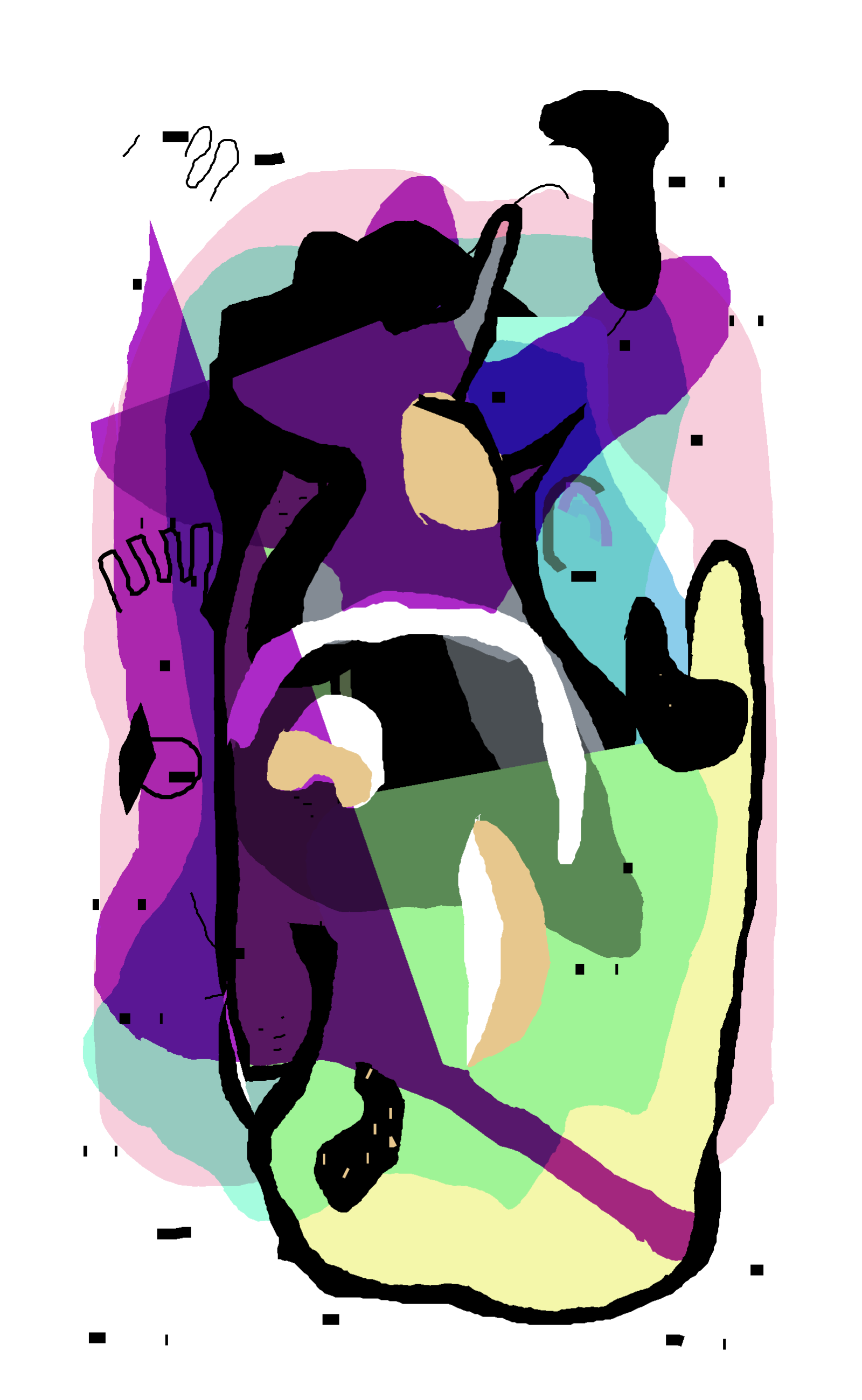
[2026-05-03] update | wiki/meditative-labour.md — add the Cloud Writings (TSCA Tokyo, 2026) installation view of the three Beads hung side by side as the page's opening figure
Per artist instruction: include the supplied installation-view photograph (filename HD_CloudWritings_InstallationView_PhotoBy_ShuNagakgawa__DSF0013-cropped.jpg, photo by Shu Nakagawa, already present in public/images/) in wiki/meditative-labour.md. Mirrored the file to sources/images/ for archival completeness. Placed the figure block immediately after the second paragraph of the overview (the one that names the two exhibitions and the four-drawings-spanning-two-shows reading), so the install view is the page's first visual — letting the reader see the three Beads as a hung set before they are broken out individually below. The image shows the three Beads side by side at TSCA Tokyo: from left to right, Beads II (compressed graphite/coral/pink), Beads (the broadest polychrome palette of the sequence), Beads III (pure graphite on the corner-rounded variant of the Beads II source vector). Caption names the hang order, identifies each work by its position and palette, registers the curatorial gesture (the high-chroma centre piece flanked by the compressed-palette and the monochrome), and credits Shu Nakagawa. Linked the figure to the harm.work exhibition page at https://harm.work/exhibition/cloud-writings/all. Note: the prose in the same overview paragraph was edited by the artist directly during this session to read "presented together two years later" rather than the earlier draft's "exhibited a year later" — kept that change as written.
[2026-05-03] update | wiki/meditative-labour.md — push the organic-impulse precedent back to the 2017 Automated Drawings botanical plotter works (Papaver Somniferum, Untitled Flower); name the hand-interrupted plotter mode as a third hand-machine cooperation pattern in the practice
Per artist clarification: the organic-impulse precedent goes back further than Algues Artificielles alone — it also lives in the early plotter botanical drawings of Papaver Somniferum (2017) and Untitled Flower (2017), both part of the Automated Drawings series. The harm.work caption for Papaver Somniferum describes it as an "occasionally manually interrupted plotter drawing": the plot is fully algorithmic, but the artist pauses the plotter at intervals to swap pens or pencils (blue ballpoint, dense black, orange/yellow), interleaving the hand inside the machine run rather than after it. Pulled the Papaver Somniferum image from the harm.work-derived images-wiki.json (Cloudinary CDN) into both public/images/papaver-somniferum.jpg and sources/images/papaver-somniferum.jpg, and read it to confirm the multi-pen layering visible in the finished work (blue ballpoint hatching for the seedpods and leaves, dense black for the stems, orange/yellow accents on the central seedpod). Updated wiki/meditative-labour.md accordingly: rewrote the synthesis paragraph that introduces the organic-impulse precedent so it now names 2017 itself as a doubly-significant year (both Algues Artificielles at the algorithmic level and the Automated Drawings botanical plotter works at the plotter level state the organic-vs-geometric question), with Papaver Somniferum placed inline as a <figure> block. Added a paragraph to the closing What remains as labour section that names the hand-interrupted plotter as a third pattern of hand-machine cooperation in the practice, distinct from "pure hand" (Kapitulation) and "machine-then-hand" (Beads I/II/III) — in the Beads the hand inhabits a layer the machine has already left; in Papaver the hand and the machine take turns inside the same layer. Updated the abstract to record both refinements (2017 as the doubly-significant year; the hand-interrupted plotter as the third cooperation mode) and the See-also block to add Papaver Somniferum and Untitled Flower with the technical mode named.
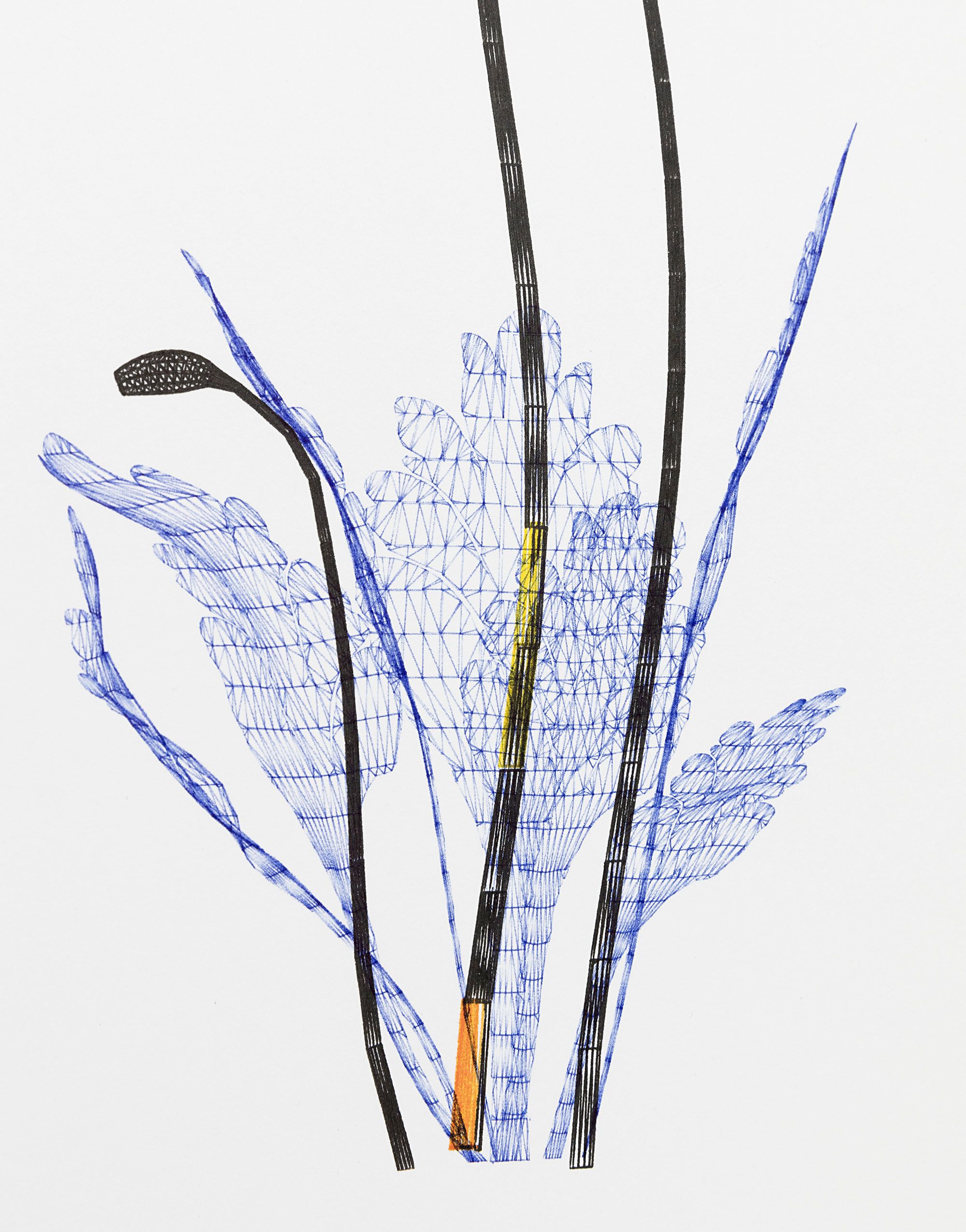
[2026-05-03] update | wiki/meditative-labour.md — surface the much earlier Algues Artificielles (2017) precedent for the organic-vs-geometric impulse that Beads III's corner-rounding restates
Per artist clarification: the desire to break out of the geometric in favour of organic shapes that Beads III (2025) expresses at a small scale (a single corner-smoothing pass) is much earlier and more explicit in the practice — clearly visible in the Algues Artificielles series from 2017, where seaweed-derived digital genomes were bred under a fitness function to produce explicitly biomorphic forms (→ wiki/algues-artificielles). Updated wiki/meditative-labour.md accordingly: rewrote the synthesis paragraph in the colour-analysis section that introduces the organic-vs-geometric axis to name Algues Artificielles (2016–2022, with 2017 as the key year) as the precedent and frame Beads III's rounding as the same impulse restated eight years later on a different substrate (a Bauhaus-quoting plotter drawing rather than a generative breeding system) and at much smaller scale (one smoothing operation rather than a whole evolved organism). Added a sentence to the abstract registering the same lineage. Added wiki/algues-artificielles to the See-also block with the precedent argument spelled out, and named Algues Artificielles and Beads III as the two visible-span endpoints of the Organic Software Forms research thread (the are.na channel cross-linked in the prior update).
[2026-05-03] update | wiki/meditative-labour.md — five artist clarifications folded in: shared source vector for Beads II/III with corner-rounding pass; Beads I/II/III as Cloud Writings (TSCA Tokyo, 2026) works; the four drawings as Bauhaus-era anachronisms; Beads III's rounding as the search for an organic dimension; cross-link to the Organic Software Forms are.na channel
Per a sequence of artist clarifications during the page's first day of life: (1) Beads II and Beads III are plotted from the same source vector file, with one programmatic transformation applied before III — the outlines are algorithmically rounded (every angle becomes an arc, every zigzag a continuous S-curve). The pair is therefore a controlled experiment in which the underlying generative geometry is held fixed and only the curvature regime + hand-fill medium change. Updated the Beads III section heading and body to spell this out, and rewrote the synthesis paragraph after the colour analysis to make the II → III pivot the cleanest hinge in the sequence (same source, smoothing pass, then a difference of fill and curvature that lives almost entirely inside the slow hand layer). (2) Beads I, II, III were exhibited together at Cloud Writings (Takuro Someya Contemporary Art, Tokyo, 2026) — the artist's first solo in Japan. Promoted this from the See-also block into the page's overview paragraph alongside Kapitulation's Angles Morts (LOHAUS SOMINSKY, 2024) placement, and added the Cloud Writings link to the introduction of the Beads (2025) section so the exhibition context appears once where it first applies. (3) The four drawings are anachronisms — their geometric vocabulary belongs to a closed historical moment (Bauhaus-era geometric abstraction: Anni Albers, Sophie Taeuber-Arp, the De Stijl/Constructivist grid). Added a new section Anachronism — quoting a closed moment between the colour-analysis and the weaving-as-labour-form sections, framing the works as algorithmic descendants of a closed practice (consistent with the "algorithmic archaeology" methodology already documented in wiki/summaries/cloud-writings-exhibition) and folding the anachronism argument into the labour argument: inhabiting a Bauhaus-era visual language responsibly requires moving at something close to its original tempo. (4) The corner-rounding in Beads III is not a stylistic adjustment but the search for an organic dimension that breaks out of the purely geometric register the rest of the sequence inhabits — the algorithm itself reaching for the curvilinear, alongside the hand re-entering at its most pressure-variable in graphite. Both moves point away from the constructed and toward the grown. Updated the Beads III section and added a new paragraph to the synthesis. (5) Linked to the artist's are.na channel Organic Software Forms as the place where the broader research thread on organic forms produced under software / rule-based systems is collected, with Beads III named as one of its drawn instances. Saved the are.na channel as a reference memory (reference-arena-organic-software-forms.md) so it can be cited in any future wiki page that touches the organic-vs-geometric axis without re-discovery. The abstract was rewritten across the same iteration to keep the search-result one-paragraph summary in sync with the body (now mentions both exhibitions, the shared source vector and rounding pass, the Bauhaus-era anachronism framing, and the organic-dimension move).
[2026-05-03] create | wiki/meditative-labour.md — new concept page reading Kapitulation and Beads I/II/III as a four-drawing sequence between hand and machine; situates hand-filling as the irreducible labour after LLM-assisted programming has thinned out the keyboard-loom
Per artist prompt, with the explicit framing: the four hand- and partially-hand-made drawings, made in a specific order (Kapitulation, then Beads, Beads II, Beads III), should anchor a reflection on machine drawing and deliberate slow manual labour, with weaving's intrinsic time/labour dimension as the inherited reference, but with the twist that programming itself was historically a similarly repetitive, meditative activity — and that this second loom is itself currently being displaced as actual programming collapses into prompting an LLM. Pulled the missing image (Beads III) from the harm.work-derived images-wiki.json (Cloudinary CDN) into both public/images/beads-iii.jpg and sources/images/beads-iii.jpg; the other three images (Kapitulation, Beads, Beads II) were already present locally. Read each of the four images to perform a colour analysis: Kapitulation (graphite only), Beads (peach/coral/cobalt/brown/black/yellow — the broadest palette in the sequence), Beads II (compressed to graphite + coral + pale pink, organised in horizontal bands that read as woven striations), Beads III (graphite only — the colour pencils set aside, the palette returning to the same range as Kapitulation). Drafted wiki/meditative-labour.md with sections on each work; a colour-analysis synthesis (the arc as one of subtraction); weaving as labour-form (time-as-content; the loss in generative art); programming as the second meditative loom (citing wiki/process-legibility on "the craft of coding is as repetitive and meditative as weaving"); the prompted-loom displacement (the keyboard-loom thinning under Claude Code use, leaving judgement but removing the typed-line accumulation); and a closing taxonomy of three loci of labour in the practice (keyboard-loom, plotter-loom, hand-loom) in order of decreasing displaceability — with the hand-on-cell as the only one that cannot be compressed. Added the page to wiki/index.md under Concepts with a summary clause covering the four-drawing sequence, weaving as labour-form, the keyboard-loom under LLM displacement, and the palette analysis. The page connects forward to wiki/summaries/angles-morts-exhibition (where Kapitulation sits as the only pure hand-drawing in the show), wiki/summaries/cloud-writings-exhibition (where Beads I/II/III are exhibited and the "rich and meditative commitment" line was first registered), wiki/senescenence (loom genealogy), wiki/process-legibility (criterion vs. code), and wiki/randomness-pattern (workmanship of uncertainty).
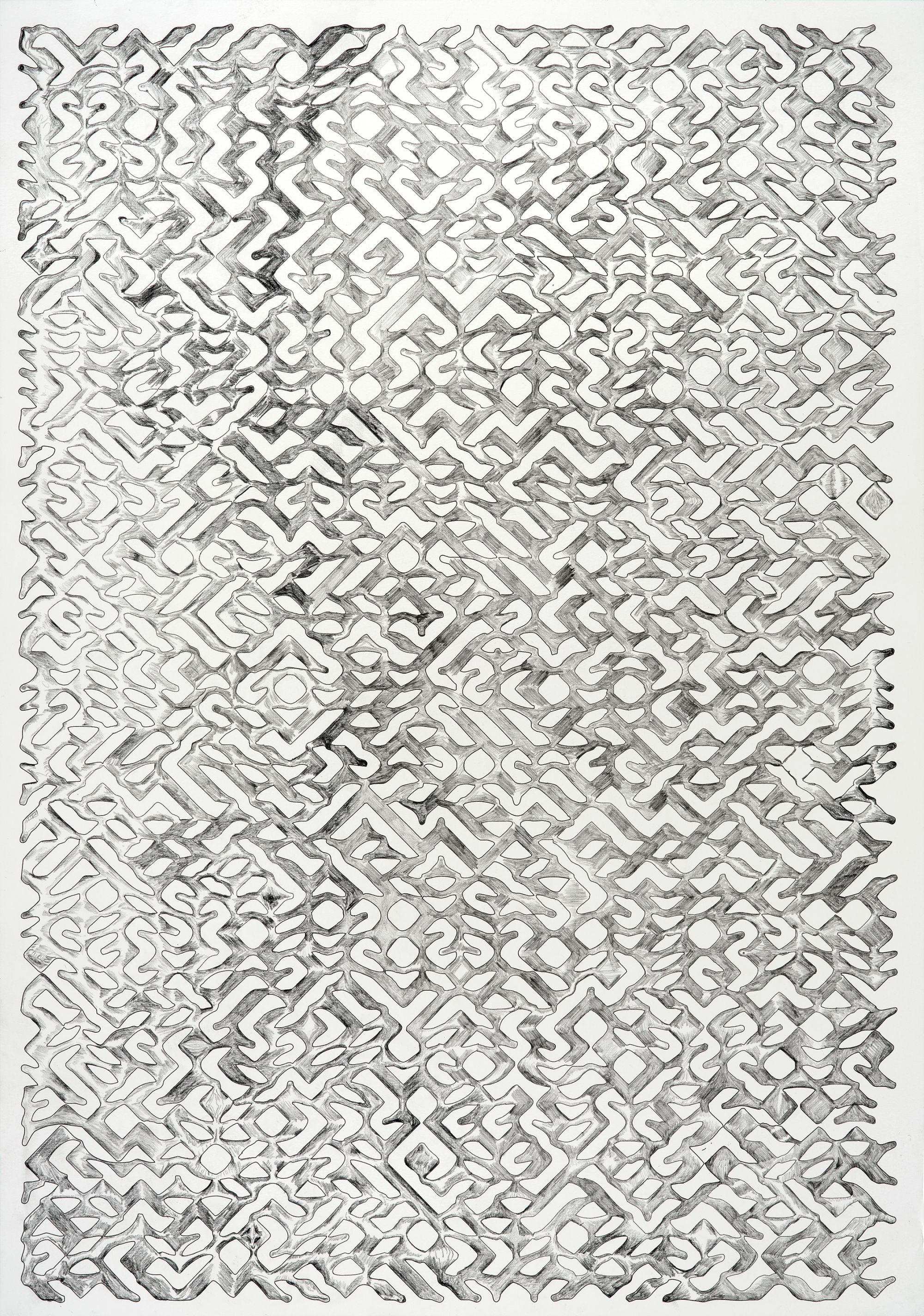
[2026-05-03] update | wiki/lozenge.md, wiki/recursion.md — lift the Venster = Dutch window bilingual gesture into its own paragraph, with a register note on venster vs. raam
Per artist prompt: the wiki had registered, in a single passing clause inside the Venster (2024) section of wiki/lozenge.md, that "the title means window in Dutch, naming the continuity directly" — but the bilingual retitling was being treated as a parenthetical fact rather than as part of the work's continuity logic. Promoted it to a dedicated paragraph: Venster (2024) is Markov's Window (2004) re-uttered in the artist's mother tongue — the same noun across twenty years and one language, not a translation appended to an existing work. Added a register note: modern Dutch has two everyday words for window, raam (the common, domestic word) and venster (the older, more architectural and literary register — church windows, casements, figurative apertures like het venster van de ziel). The choice of venster over raam selects the frame-as-aperture sense over the everyday house-window sense, matching the work itself (each composition is literally a window onto a Solidity-computed generative space). Mirrored the bilingual-retitling fact as a clause inside the existing cross-reference in wiki/recursion.md (the sentence that already mentioned Markov's Window and Venster alongside the modernist tilted-geometry lineage).
[2026-05-02] update | corpus-wide — convert Note [[NNN]] to [[NNN|Note NNN]] so the whole phrase is the hyperlink, not just the number; document in CLAUDE.md
Per artist feedback: when a note is mentioned in the form Note 837 in the running text, the entire phrase Note 837 should be the hyperlink, not just the number. The previous rendering — produced by the wikilinking sweep earlier today — left the word Note as plain text and only the number 837 as the clickable target. Swept all wiki pages and rewrote every occurrence of [Nn]ote\s+\[\[NNN\]\] to [[NNN|Note NNN]] (preserving original case): 87 conversions across 24 files. Examples: Note [[837]] → [[837|Note 837]], note [[805]] → [[805|note 805]]. Updated CLAUDE.md under Within pages to add an explicit rule: for the note NNN / Note NNN pattern, write [[NNN|Note NNN]] (case-preserving), never Note [[NNN]] — the full noun phrase must be the link text users see and click. The earlier rule (every bare note ID gets wrapped as [[NNN]]) still applies for parentheticals, possessives, arrow lists, and bare prose; this is a refinement specifically for the note NNN pattern where the word "note" should be inside the link.
[2026-05-02] rename | sources/dissociations/2000.md–2005.md → 3000.md–3005.md — disambiguate note IDs from year references
Per artist instruction: rename all 2000-range note files to the 3000 range to prevent future confusion between note IDs and year references (e.g. Markov's Window (2004) — the year — vs. note 2004, the Strategies transcript). Renamed: 2000.md → 3000.md, 2001.md → 3001.md, 2002.md → 3002.md, 2003.md → 3003.md, 2004.md → 3004.md, 2005.md → 3005.md (six files in sources/dissociations/). Updated the id: frontmatter inside each renamed file. Swept all wiki pages and updated every [[200X]] and [[200X|alias]] wikilink to [[300X]] / [[300X|alias]]; updated sources: [...] frontmatter lists in 17 wiki pages where these notes were declared as sources; updated one stale Note 2005 reference in the wiki/limit-experience.md abstract to Note 3005. Verified no residual [[200X]] wikilinks remain in either the wiki or in the source-note Related sections; verified all six new 300X files exist with correct id: frontmatter; verified no orphan 200X files remain. Updated CLAUDE.md note-range description to document the 3000-range cluster and the reason for the rename. (Note: the previous log entry below mentions notes 2004 and 2005 by their original IDs in prose; the wikilinks within that entry have been updated to [[3004]] / [[3005]] by the same sweep, so the prose description and the wikilinks now refer to different numbers — this is expected and is exactly the disambiguation this rename is meant to solve going forward.) With this in place, the rule documented earlier today — wrap every bare note ID as [[NNN]] — applies cleanly without the year/note ambiguity that previously affected the 200X range.
[2026-05-02] update | corpus-wide — wrap every bare note-ID reference in body text and headings as [[NNN]] wikilinks; document the rule in CLAUDE.md
Per artist instruction: "whenever a note is referenced in the text (such as the unbounded cycle 876 describes structurally) the note number must be a hyperlink to that note." Swept all wiki pages (excluding wiki/log.md and wiki/lint-report.md as meta-content) for bare note-ID references and converted them to [[NNN]] wikilinks. The automated pass converted 116 references across 22 files using safe patterns: (NNN) parenthetical citations (most common in section headings of the form ## Title (NNN) and in see-also entries), note NNN / Note NNN (case-preserving), NNN's possessives (e.g. 876's orbit), and (→ NNN, NNN, NNN) arrow lists. A second pass with manual edits handled the residual cases the safe patterns didn't catch: bare prose references like the unbounded cycle 876 describes (now [[876]]), but where 793 describes (now [[793]]), 1266 describes what it would mean (now [[1266]]), etc.; and the mixed-content arrow lists in wiki/index.md of the form (→ Droitcour 2025, 709, 952, 992) and (→ press release, 709, 609, 952, 876), where named items were left as plain text and the bare IDs were wrapped.
Year-vs-note disambiguation (per artist correction). The number 2004 is both a note ID (the Strategies transcript) and a year (e.g. Markov's Window (2004)). Similarly 2005 is a note ID and a year (e.g. Untitled (Dutch Fractal) (2005)). The automated parenthetical-conversion pass had wrapped both meanings as [[3004]] / [[3005]]. Manually reverted the year-references — anywhere (NNN) followed an italic markdown title (*…*) or an </em>/</em></a> HTML close tag, it was a year, not a note citation: 13 reverts of *Markov's Window* (2004) across wiki/lozenge.md, wiki/protocol-taste-systems.md, wiki/squircle-geometry.md, wiki/markovs-dream-palette.md, wiki/recursion.md, wiki/index.md, wiki/stained-unravel.md, wiki/works-overview.md, wiki/afterimage.md, wiki/subconscious-computation.md, wiki/summaries/our-inner-child.md; plus one revert of *Untitled (Dutch Fractal)* (2005) in wiki/summaries/release-early-release-often-2013.md. All 21 remaining [[3004]] instances are now genuine note-2004 citations (section headings of the form ## … ([[3004]]) for source attribution, [[3004|Note 3004]] prose, body references to Strategies, and arrow citations); all [[3005]] instances are note-2005 citations (Chemsex Benelux about-page).
A final scanner confirmed that the only remaining bare numbers that match note IDs (range 15–2005) are unambiguously non-note: quantities ("100 editions", "100 fully generative", "100 editions"), token counts ("32 animated tokens", "factor 100"), dimensions ("44.5×32cm"), table ranges ("15–18"), durations ("vs. 100 for all others"), ages ("the reflection arrives at 42"), and dates ("September 15, 2022"). Documented the rule in CLAUDE.md under Within pages: every note ID that appears in body text or a heading must be wrapped as [[NNN]] — never bare — with the listed exceptions for non-note numerals (and explicit awareness that 2004 / 2005 / 2003 / 2002 / 2001 / 2000 are simultaneously valid year contexts and note IDs; disambiguate by surrounding context, not by the number alone).
[2026-05-02] update | CLAUDE.md and four wiki figcaptions — fix markdown emphasis inside <figcaption> (renders as literal asterisks); document the rule
The renderer does not process markdown inside HTML block elements (the standard CommonMark behaviour). On wiki/lozenge.md, *Ashtamangala* inside the <figcaption> for Endless Knot appeared as literal asterisks rather than as italics. Swept the corpus and replaced markdown emphasis with HTML <em> tags inside four figcaptions: wiki/lozenge.md (*Ashtamangala*), wiki/recursion.md (*Ashtamangala*), wiki/summaries/our-inner-child.md (*Ashtamangala* and *saṃsāra*), and wiki/summaries/artforum-cryptoart-exhibition-2022.md (*Mutant Garden*). Documented the rule in CLAUDE.md under Illustrating artworks: inside <figcaption> (and any other HTML block element) markdown is not processed; use <em>…</em>, <strong>…</strong>, and <code>…</code> for formatting that needs to apply inside such blocks. Same applies to any inline HTML (raw-HTML table cells, custom <div> blocks, etc.).
[2026-05-02] update | wiki/lozenge.md — add a Venster SVG figure (seed 78448782, lozenge root, optimistic colour mode)
Pulled the SVG output of the Venster generative system at seed 78448782 directly from the project's API endpoint at https://venster.harm.work/api/svg/78448782 — the SVG is generated server-side from a Solidity computation, so the API returns the deterministic raw composition (18.5 KB, viewBox 0 0 2 2, with internal CSS classes for blend modes, fills, and filters). Stored at public/images/venster-78448782.svg and mirrored to sources/images/venster-78448782.svg. Added a <figure> block to wiki/lozenge.md under the Venster (2024) sub-section, between the descriptive paragraph and the "categorical trait" paragraph, linking the figure to the seed page on the project site and the caption to the raw API endpoint. The figure complements the existing Markov's Window (2004) and Endless Knot (2024) figures elsewhere on the page; together the three give the reader an SVG-native instance of each of van den Dorpel's three lozenge works.

[2026-05-02] update | wiki/limit-experience.md — simplify; cut speculative material; keep only what is traceable to source notes and the work's own texts
Per artist feedback ("too speculative, connections too vague — less lofty, facts"), substantially simplified wiki/limit-experience.md. What was kept (and only what was kept): (1) the about-text of Chemsex Benelux (2022) as quoted in note 3005; (2) the attribution of the project's inspiration in note 3005 to Jonas Čeika's 2018 video essay (CCK Philosophy), with link to the ingested transcript; (3) basic factual descriptions of the two NFT collections released under Chemsex Benelux — Indiscreet Units (266+ hue-rotating flags on Ethereum/IPFS) and Phantom Crush (130 generative portraits programmed from pastel drawings on paper by Enver Hadzijaj); (4) a concise summary of what Čeika's video essay actually argues (four points: horror restoring status quo; the two failed responses to the genuinely other; the third path; Bataille's limit experience and the profane / sacred opposition); (5) what each of the three further cited notes says — 1266 paraphrasing Agamben on the integrally profane order, 805 citing Hayles on the flickering signifier with the embedded intimate fragment, 837 citing Derrida from Archive Fever. What was cut: the "knowledge itself breaks down" mandala translation; the "as above, so below" hermetic-framing section; the threshold and abyss / Nietzsche / bi-directional-screen phenomenology; the "Why this is more extreme" framing; the eroticism / Death Imitates Language / petite mort connection (which the previous version itself flagged as interpretive); the "third path applied to the practice" extensions to Quantization, Release-early, and Death Imitates Language; the "Phantom Crush operates inside the same structure" reading of flickering at the level of the face; speculative connections from the Lingchi photograph to on-chain storage. The page is now ~60% of its former length and reads as documentation of a single project plus the philosophical sources cited around it, not as a synthesising frame for the corpus. Updated the page abstract; updated the wiki/index.md entry to match the simplified scope; reduced the See-also list to the two cross-references that are unambiguously load-bearing (the primary wiki homes of notes 837 and 805).
[2026-05-02] update | CLAUDE.md and wiki/index.md — fix [[…|*emphasis*…]] rendering bug; document wikilink syntax restrictions in CLAUDE.md once and for all
A second wikilink rendering bug surfaced in wiki/index.md: the entry for the Limit Experience page used [[wiki/limit-experience|Limit Experience — Bataille, Agamben, and *Chemsex Benelux*]] and the asterisks inside the alias prevented the wikilink from being transformed to HTML — the raw [[…]] appeared in the rendered page. Fix applied: dropped the asterisks from the alias text (the title Chemsex Benelux is still italicised later in the description in plain prose, where it renders correctly).
To prevent recurrence, added an explicit Wikilink syntax restrictions subsection to CLAUDE.md under Wiki pages — conventions / Within pages. The restrictions documented:
- Alias text after
|must be plain text only — no*italic*,**bold**,_underscore_,`backticks`, or nested[brackets]inside the alias; the renderer fails silently and the raw[[…]]appears in the output. - No section anchors in the path:
[[wiki/page#some-heading|text]]does not render. Direct readers to a section via a parenthetical in plain prose instead. - A
#inside the alias text (e.g.Spike #70) is fine — only#between path and|is the problem. - Standard Markdown links (
[text](/wiki/page)) are an alternative when the alias needs formatting; they accept emphasis reliably.
Also swept the wiki for other instances of the broken pattern. The earlier round had already fixed the equivalent bug on wiki/lozenge.md and wiki/summaries/our-inner-child.md; no other instances of [[…|…*…*…]] remain. The four Spike #70 wikilinks across the corpus are the #-in-alias-text case (working) and were left untouched.
[2026-05-02] create | wiki/lozenge.md — extract the lozenge / modernist-tilted-geometry material out of the recursion page into a dedicated page; fix wikilink-with-anchor rendering issue
Per artist feedback (wiki/recursion had become too long and too dense), extracted the lozenge material into a new dedicated concept page at wiki/lozenge.md. The new page covers: what the lozenge does generically (defamiliarises the square, activates corners, frame as aperture, citation of Mondriaan behind which is Malevich); the three artists' three uses (Mondriaan's metaphysical move via Theosophy/Neoplasticism and the no-diagonals rule, the Mondriaan/Doesburg break over Counter-Compositions, Dibbets' epistemological pressure-test in ironic dialogue with Mondriaan — the lozenge as the form of the question Mondriaan thought it was the answer to); van den Dorpel's three works (Markov's Window 2004 with Doesburg-side internal 45° rotation, Venster 2024 as the on-chain sequel — 100 generative animated recursive SVG compositions in collaboration with Bright Moments, lozenge as categorical generative trait, Endless Knot 2024 as lozenge through inherited Buddhist iconography straddling the Mondriaan/Doesburg fault line); convergence reading; contemporary stake against the responsive social-media square; and the connection back to recursion via the frame-as-aperture. Slimmed wiki/recursion.md accordingly: dropped the long lozenge section and replaced with a short paragraph noting the 45° angles and pointing to the new page; restored the Endless Knot section to two further connections (rendering, note 976) instead of three; updated the recursion-page abstract and See-also (added a wiki/lozenge entry); added a Concepts entry in wiki/index.md for the new page.
Also fixed a rendering bug: wikilinks of the form [[wiki/page#anchor|text]] (with section anchors after the path) do not render to HTML correctly. Removed the anchors from two such wikilinks (one in wiki/lozenge.md, one in wiki/summaries/our-inner-child.md), keeping the parenthetical section names in plain prose so readers can still locate the relevant section on the linked page.
[2026-05-02] update | wiki/recursion.md — second-pass corrections to the lozenge section: Endless Knot is structured by 45° angles throughout (not "rotated 90°"); Dibbets's epistemological move sharpened against Mondriaan's metaphysical one; Venster (2024) authoritatively described as the on-chain sequel to Markov's Window
Per artist corrections to the previous lozenge-section pass:
(1) Geometry fix. The earlier text said the outer envelope was "rotated 90°" to read as a lozenge — geometrically wrong: a square rotated 90° is unchanged. The endless knot is structured throughout by 45° angles — every crossing, every segment of the lattice runs diagonally to the picture frame, and the iconographic envelope inside the rectangular paper traces a lozenge (a square tipped onto its corner). Rewrote the opening of the second connection to reflect this: 45° is the work's geometry, not a transformation applied to it. As a downstream consequence, the structural placement of Endless Knot on the Mondriaan/Doesburg fault line is no longer "outer-envelope tilt on the Mondriaan side" but the more accurate observation that the work straddles the line in a single object — relative to the rectangular paper the lattice is everywhere diagonal (Doesburg side, diagonals introduced into the composition); relative to the inscribed lozenge envelope the same lattice reads as horizontal and vertical (Mondriaan side, the rotated frame absorbing the dynamism so the interior reads as orthogonal). The inherited Buddhist iconography turns out to encode, as a single geometric form, the European modernist argument that broke Mondriaan and Doesburg apart.
(2) Dibbets epistemological move. Expanded the Dibbets paragraph from "perception/geometry pressure-test" to a precise contrast with Mondriaan: where Mondriaan rotates the canvas to access the universal grid behind appearances, Dibbets rotates the format to question whether the universal is perceptually available at all. Perspective Corrections (1967–69) — shapes laid on the ground physically distorted so that, photographed from a specific angle, they read as perfect orthogonal forms — establishes that the square is a mental construct we project onto the world, not a property of the world; what looks like pure geometry is a perceptual negotiation. Collage (1973), Shutters, the colour studies and architectural photo-works extend this. There is a clear ironic dialogue with Mondriaan as Dutch predecessor — the Theosophist's metaphysical hunger for the universal grid recast as a perceptual problem about what the eye can be made to see. The lozenge becomes, in Dibbets, the form of the question Mondriaan thought it was the answer to. Adjusted the "Van den Dorpel" paragraph to state explicitly that he inherits both moves — the Mondriaan metaphysical citation and the Dibbets epistemological pressure-test — transposed into algorithmic / networked practice.
(3) Venster (2024) authoritatively described. The earlier pass had inferred Venster's relationship to Markov's Window from the Dutch title; per artist statement, the connection is direct and explicit: Venster is "a new version of Markov's Window from 2004, but now fully on-chain" — 100 fully generative on-chain animated SVG compositions, calculated by Solidity code, released in collaboration with Bright Moments, with different colour palettes and using blending modes and filters. The compositions are described as generative animated recursive SVG files — which means Venster belongs in the recursion page twice: it is the lozenge formalised as a generative state, and it is the recursion of the page's title formalised as an on-chain SVG that calls itself. Rewrote the Venster paragraph in the Three artists, three uses section to reflect this; updated the page abstract; updated the wiki/index.md entry.
[2026-05-02] update | wiki/recursion.md — Endless Knot in lozenge orientation; Dutch tilted-geometry lineage (Malevich → Mondriaan → Doesburg break → Dibbets); Markov's Window and Venster as in-practice precedents; the lozenge as refusal of the social-media square
Per artist correction: the outer envelope of Endless Knot, rotated 90°, is a lozenge — and this places the work inside a high-modernist lineage that the page should make explicit. Reworked the second of three connections in the Iconographic: the Endless Knot section (now beginning "Three further connections follow" rather than two) to develop a multi-paragraph reading of the lozenge: (1) what the lozenge does generically — defamiliarises the square (the "default" shape in art), activates the corners, turns the frame into an aperture rather than a container (an explicitly recursive move: the form contains a reference to what extends beyond it), and carries an implicit citation of Mondriaan and behind him Malevich's Black Square (1915); (2) three artists, three uses — Mondriaan's tableau-losange as the Theosophy / Neoplasticism solution to his no-diagonals rule (verticality = active/spiritual, horizontality = passive/material; the diagonal forbidden; rotate the canvas to get a diagonal envelope while keeping the interior grid horizontal-vertical), with the Theo van Doesburg Counter-Compositions break as the structural fault line marking where diagonals are allowed (frame envelope vs. interior grid); Jan Dibbets' Collage (1973, Tate) and Perspective Corrections (1967–69) as the Dutch perceptual pressure-test of the same form; van den Dorpel deploying the lozenge as a citation that grafts modernist seriousness onto generative practice; (3) four van den Dorpel works on the lozenge — Markov's Window (2004, the seed square that "might rotate 45°" — structurally closer to Doesburg's internal diagonals than to Mondriaan's outer-frame rotation); Venster (2024, the title means window in Dutch, echoing Markov's Window across twenty years; lozenge is a categorical generative root alongside square (cover), triangles (diagonal split), and the affective traits classic / optimistic / melancholic); Endless Knot (2024, lozenge through inherited Buddhist iconography — the outer-envelope tilt on the Mondriaan side of the diagonal fault line). Added a contemporary-stake paragraph: in an environment where the square has become the archetypal social media post (fluid aspect ratio, responsive auto-cropping reflowing content into 1:1, 4:5, 9:16), the lozenge's 45° rotation is no longer only a citation of Mondriaan's metaphysics — it is a refusal of the platform-default's isotropy, an orientation that cannot be reflowed without losing the work. The shared windowness of Markov's Window, Venster, and the lozenge's frame-as-aperture is exact: a bounded form whose composition is implied to continue past it — and the implied continuation is the recursion the page is about. Updated the recursion-page abstract, wiki/index.md entry, and added wikipedia links for Theosophy, Neoplasticism, Theo van Doesburg, Counter-Compositions, Mondriaan, Malevich, Black Square, Jan Dibbets, tableau-losange, and the Dibbets Tate work.
[2026-05-02] update | wiki/recursion.md and wiki/summaries/our-inner-child.md — correct Endless Knot fabrication description (hatching algorithm with yellow-pen oxidized passages, not a single continuous line)
Per artist correction: the Endless Knot drawing is not made as a single unbroken plotter stroke. It is built from many short strokes through a hatching algorithm — the same translation layer used in Anobium, Nethermind, and the Senescenence plotter drawings (→ wiki/stained-unravel) — with occasional pen switches to yellow producing passages that read as oxidized. Reworked the "Iconographic: the Endless Knot" section in wiki/recursion.md to keep the iconographic claim about the symbol (a closed self-intersecting lattice traditionally read as endless) but to describe the drawing's fabrication accurately: many strokes, hatching, yellow oxidization, the structural irony that the icon of saṃsāra (birth, death, rebirth) is fabricated by a procedure that has a definite stop condition and that locally simulates the aging the icon names. Reworked the parallel passage in wiki/summaries/our-inner-child.md the same way: dropped "single continuous line / no entry / no exit"; added a paragraph on the drawing's fabrication (the icon of unending cycle built by an operation that ends; oxidized yellow passages as decay imagery on the symbol of decay-and-rebirth). Updated abstracts in both pages and the wiki/index.md recursion entry, and the figure captions for both endless-knot images. The structural reading — Hell (2023) and Endless Knot (2024) as Christian and Buddhist vocabularies for the same recursion-without-halt of 876; therapy as the engineered psychological stop condition — is preserved; what changed is the description of how the drawing is physically made.
[2026-05-02] update | wiki/recursion.md and wiki/summaries/our-inner-child.md — pull Endless Knot (2024); integrate samsara as recursion-without-halt; connect 976, 901's "endless struggle," and the religious-algorithm passage from Our Inner Child
Pulled Endless Knot (2024) — Sakura fineliner plotter drawing on Hahnemühle watercolour paper, 63×69cm — from harm.work and stored both available images at public/images/endless-knot.jpg and public/images/endless-knot-detail.jpg (mirrored to sources/images/). The work-text — "The endless knot iconography symbolised Samsara i.e., the endless cycle of suffering of birth, death and rebirth within Tibetan Buddhism" — names theologically what 876 describes structurally: recursion that "[u]nless forcefully brought to a halt, by nature [is] endless." Added a new section "Iconographic: the Endless Knot — samsara as recursion without halt" to wiki/recursion.md between the cosmological/sacred mandala section and the computational/feedback-loop section. The section reads the Tibetan Buddhist Ashtamangala knot — a single self-intersecting line with no entry and no exit — as the iconographic version of 876's recursion-as-mirror-tunnel; treats the plotter as the algorithmic instrument that draws the closed graph and halts when the loop closes (one of 876's solutions to the halting problem, in the same family as the Cartesian Genetic Programming graph topology that wiki/evolutionary-logic names as the engineered answer); and folds in note 976 — an image-only 2012 note whose only textual link is to 876 — as the wordless precursor that Endless Knot (2024) gives, twelve years later, an iconographic name and a material instantiation. Also reworked the "Connection to the semiotic square" section to read 901's "endless struggle for the New and the Different" as the secular translation of samsara's endless cycle — the same noun naming the religious-iconographic and the cultural-aesthetic predicament, with the same operation (withdrawal, profanation, the engineered halt) answering both. Updated the recursion frontmatter (sources now include 901 and 976; abstract extended).
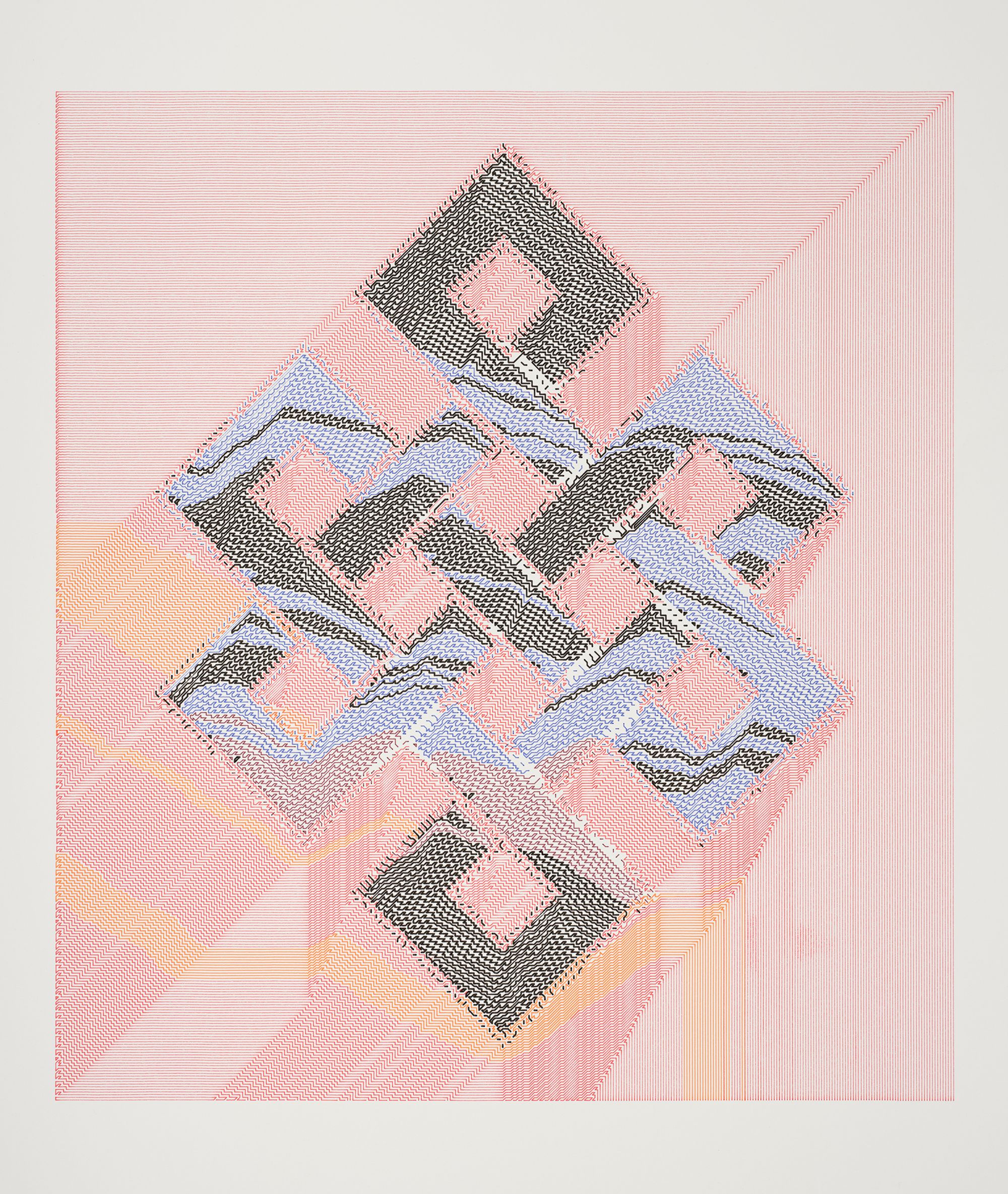
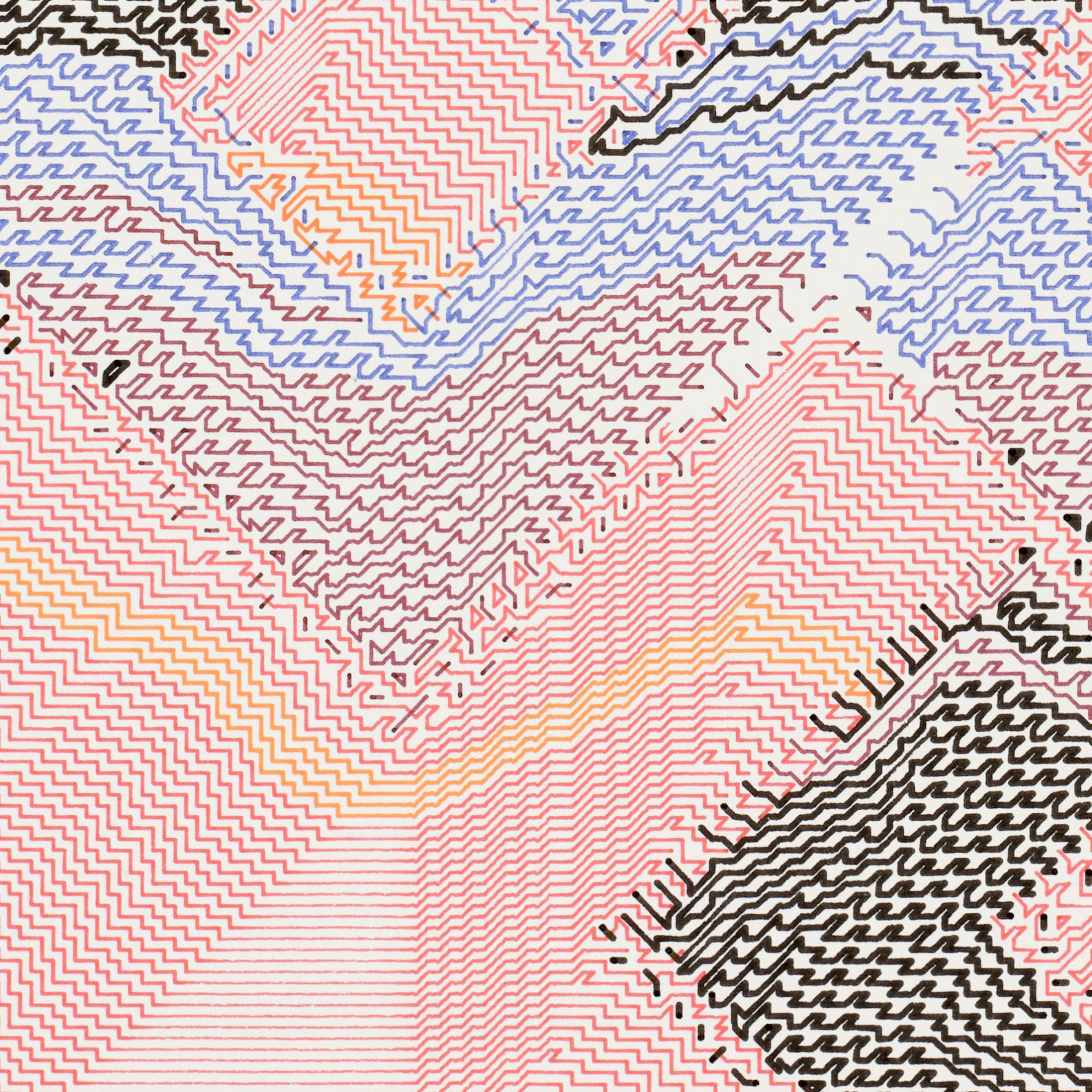
In parallel, integrated Endless Knot into wiki/summaries/our-inner-child.md as a continuation of the exhibition's psychological work into Tibetan Buddhist iconography. Added a sub-section "Endless Knot (2024) — the Buddhist iconography of the same predicament" under the religious-algorithm section, structurally pairing Hell (the largest 2023 work) with Endless Knot one year later: the Christian eternal damnation of the upbringing and the Buddhist saṃsāra are two theological vocabularies for the same recursion-without-halt named in 876 — the legislative rule-set that calls for ever-more-detailed compliance, the cycle that turns on itself without exit. Therapy is the practical engineered stop condition; iconographically, the closed-lattice knot encodes its own halt (a finite path, the procedure terminates, recursion contains itself rather than self-inflating) — the same move the recursion page describes at the abstract level. Added Endless Knot to the Works-referenced table with a note that it is not in the 2023 exhibition but read here as a continuation of its psychological work; added cross-references in See also (to wiki/recursion and wiki/limit-experience); updated frontmatter (abstract extended to mention the 2024 work and its integration).
Updated wiki/index.md entries for both pages to reflect the new material. The integration centers on a single structural claim: Endless Knot, Hell, 876, 901, 976, and the mandala/CGP halting solutions in wiki/recursion and wiki/evolutionary-logic are all engaging the same problem — recursion that, without an engineered halt, self-inflates and bursts — across iconographic, theological, biographical, structural, and computational registers.
[2026-05-01] update | wiki/limit-experience.md — phenomenological integration of "stare through a simple construed surface…" (Mandala Q&A) and "if you gaze long into an abyss…" (Nietzsche)
Replaced the "Screen looks back — Nietzsche, the abyss" section in wiki/limit-experience.md with a phenomenological section "Threshold and abyss — long looking, phenomenologically" that pairs van den Dorpel's stance from the Mandala Q&A ("stare through a simple construed surface into the depths of complexity") with Nietzsche's aphorism (Beyond Good and Evil §146) as successive moments of the same encounter rather than competing positions. The phenomenological arc: the viewer arrives at a simple constructed surface (a flag, a pastel portrait, a recursive grid, a dithering pattern); a threshold has been built; the viewer is asymmetric to it and looks through; for a duration this works (emergent pattern accumulates); past a certain duration the flickering signifier of note 805 is felt — meaning has not stabilised, the surface metamorphoses under attention, the asymmetry that organised the encounter starts to fail; through gives way to into; the threshold becomes the abyss; van den Dorpel's phrase describes the moment before Nietzsche's. Bataille's repeated looking at the Lingchi photograph is folded in as the literal case — a framed object that, looked at over years, returned a thought ("divine ecstasy and extreme horror are identical") not contained in it as content. The screen and the two NFT collections are integrated as the contemporary instances (Phantom Crush's figure looking back from atmosphere; Indiscreet Units' chromatic drift refusing the state-flag's normally-fixed gaze). The souvenir re-enters at the close: what the viewer carries when they step back, having been operated upon. Removed van den Dorpel's quote from the "As above, so below" section since it now does its phenomenological work in the new section; the hermetic-frame section is correspondingly tighter.
[2026-05-01] update | wiki/limit-experience.md — integrate note 837 (Derrida, Archive Fever) into the Chemsex Benelux "souvenir" reading
Per artist instruction, integrated 837 into wiki/limit-experience.md. The note cites the Derrida Archive Fever passage in which the archive is shown to be constitutive of the events it appears merely to preserve — "not only the stockroom and the conservatory for archivable contents of the past which would exist in any case (…) without the archive." Added a short section "The souvenir is constitutive — note 837" between the Chemsex Benelux section and the Nietzsche / screen section. The section sharpens the about-text's souvenir claim: the souvenirs Chemsex Benelux offers do not transparently grant access to a pre-existing limit experience but partly produce the experience they integrate; Bataille's Lingchi photograph operates the same way (archival object kept on his wall and looked at over years, operated upon rather than consulted for information); the on-chain storage of Indiscreet Units and Phantom Crush (Ethereum, IPFS) is the same operation in technical form (the chain is the work, not a record of an off-chain work). Updated frontmatter (sources now include 837), the abstract, and the wiki/index.md entry. Cross-reference to wiki/mediation-archive.md preserved in the See also.
[2026-05-01] update | wiki/limit-experience.md — integrate note 1266 (Agamben on the integrally profane order); tighten throughout
Per artist instruction, integrated 1266 into wiki/limit-experience.md and tightened the page (roughly 60% of previous length). Note 1266 paraphrases Giorgio Agamben on the integrally profane order — a state in which "the destructive distinctions between sacred and profane, the exception and the norm, the singular and the universal are neutralized" and the distinctions "cease to have the divisive force they carry today; they cease to be instruments in the hands of those in power." This is more demanding than Bataille's frame: Bataille proposes the sacred against the profane; Agamben proposes neither, on the grounds that the distinction itself is what holds power in place. Profanation is the operation of returning a form to common use without simply replacing one term with the other. This recalibrates the page's third-path argument — the practice's anti-utility commitments are not a flat preference for the sacred over the platform-profane (which would just invert the dichotomy) but Agamben's profanation: occupying the inherited form so that its standard use stops being its only use. Renamed the page "Limit Experience — Bataille, Agamben, and Chemsex Benelux" and added 1266 to the sources frontmatter. Substantively trimmed all sections to remove speculative excess: the abstract is shorter; Čeika's four moves are now bullet-form; the petite mort / Death Imitates Language connection is explicitly marked as interpretive ("not stated in the work's own texts"); the screen / Nietzsche section dropped its more speculative bi-directional metaphors; the "as above, so below" section reduced from a multi-paragraph synthesis to a single paragraph leaning on the principle lightly. Updated wiki/index.md entry to reflect the new title and 1266 integration.
[2026-05-01] update | wiki/limit-experience.md — drop squircle connection; add note 805 (flickering signifier, intimate fragment), Nietzsche's abyss, and "as above, so below"
Per artist feedback that the squircle / platform-optimisation argument was a forced connection to Bataille (the squircle critique is about engagement and interface ideology; Bataille's third path is about encounter with the radically other), removed all squircle / platform references from wiki/limit-experience.md. Replaced with three load-bearing additions: (1) the "third path" argument now leads with the practice's relation to randomness drawn from note 805 — neither rejected (composition without chance) nor naturalised (pure noise) but inhabited as a partner shaped by criterion; (2) a new section "Flickering signifiers and the intimate fragment — note 805" reads the N. Katherine Hayles "flickering signifier" passage and the embedded intimate fragment ("When I laid there beside you, could you feel me there? My arms were wrapped around you, and I was stroking your neck.") as Bataillean limit experiences operating at the scale of two bodies — the question that cannot be settled because the boundary it asks about is precisely what is at stake; Phantom Crush read as a series of flickering signifiers at the level of the face; (3) a new section "The screen looks back — Nietzsche, the abyss, the bi-directional viewport" developing the Nietzsche aphorism (Beyond Good and Evil §146: "If you gaze long into an abyss, the abyss also gazes into you") as the structural template for screen-based encounter — the screen as not a unidirectional window but a viewport whose far side is also looking; Bataille's Lingchi photograph as the paradigmatic case of bi-directional gaze ("he hung it on his wall and often looked at it throughout the years"); the cenobites as already-within-us as the same operation; Phantom Crush as the bi-directional crush; Indiscreet Units as the state-icon that cannot fix the viewer because its colour is in continuous drift; (4) a new section "As above, so below — the limit experience at every scale" uses the hermetic phrase from the Mandala Q&A with Goro Murayama (2026) as the load-bearing principle that lets the page hold together — the same structure obtains at every scale, so the practice's local algorithmic operations and Bataille's macro-cosmological claims do not need to be reconciled by analogy; they are the same operation at different orders of magnitude. Updated the "Why this is more extreme" passage to drop the squircle phrase. Reverted the cross-reference I had appended to wiki/squircle-geometry.md earlier today. Updated the wiki/index.md entry, the page's frontmatter (sources now include 805), abstract, and See also (replaced the squircle link with wiki/randomness-pattern as note 805's primary wiki home and wiki/mediation-archive for the flickering signifier).
[2026-05-01] create | wiki/limit-experience.md — Bataille, Chemsex Benelux, and the sacred pure-expenditure of the algorithm
Created wiki/limit-experience.md, processing note 3005 (the Chemsex Benelux about-page paragraph and its attribution to Jonas Čeika's 2018 video essay) together with the previously-ingested transcript at sources/ingested/cck-philosophy-hellraiser-bataille-2018.md. The page reads several already-legible structural commitments of the practice — anti-utility ("less composed than initiated", taste-as-fitness-function, the squircle critique of platform optimisation), the moment "knowledge itself breaks down", the sacred-geometry vocabulary of Senescenence and Quantizer, the "third path" of occupation rather than refusal — through Bataille's distinction between the profane (utility, acquisition) and the sacred (pure expenditure, energy spent without expectation of return), as transmitted via Čeika's reading of Hellraiser. Five mappings are developed: (1) Čeika's "third path" (encountering the other without rejecting or neutralising) as the structural default already operating in the squircle's occupation-not-refusal, in Quantizer's inhabitation of historical dithering palettes, and in Death Imitates Language's repurposing of the genetic algorithm; (2) "knowledge itself breaks down" (Struggle for Pleasure press release) as the formal version of the Bataillean limit experience where the discriminations organising thought collapse; (3) the profane / sacred axis as the philosophical ground for the practice's recurring anti-engagement-optimisation arguments; (4) la petite mort and the eros / death entanglement as the underlying structure of Death Imitates Language (taste-as-selection-pressure dissolves the boundary between viewer and viewed) and of the generative threshold itself ("less composed than initiated" as authorial dissolution); (5) Chemsex Benelux (2022) and its two NFT collections — Indiscreet Units (266+ hue-rotating flags, the inaugural commission) and Phantom Crush (130 generative portraits programmed by Harm van den Dorpel from pastel drawings on paper by Enver Hadzijaj) — as the moment the visceral substrate (drugs, queer sex, the Benelux as uncannily familiar territory, the about-text's "souvenirs to help you integrate the limit-experiences you never had") is named explicitly rather than channelled through one or two levels of formal abstraction. Two cover images downloaded to public/images/: phantom-crush-rezym.jpg (token Rezym, the first portrait in the series) and indiscreet-units-hk.svg (Hong Kong flag, hue-rotating). Index entry added under Concepts. Cross-references appended to wiki/squircle-geometry.md, wiki/synthesis-threshold.md, wiki/death-imitates-language.md, and wiki/recursion.md. The page is the most extreme of the corpus in the sense that it makes nameable a layer of the practice usually carried by the algorithm — but the structural commitments it identifies are the same ones that organise the cerebral / formal works.
[2026-05-01] ingest | Hellraiser, Bataille and Limit Experiences — Jonas Čeika / CCK Philosophy (YouTube video transcript, 2018)
Extracted the YouTube auto-generated English captions from Jonas Čeika's video essay Hellraiser, Bataille and Limit Experiences (CCK Philosophy, 29 October 2018, 18:31) and stored them as a timestamped transcript at sources/ingested/cck-philosophy-hellraiser-bataille-2018.md. The essay reads Clive Barker's Hellraiser through Georges Bataille's philosophy of transgression, taboo, sacred expenditure, and the limit experience — the extreme state in which divine ecstasy and extreme horror become indistinguishable, exemplified for Bataille by the Lingchi photograph he kept on his wall. Čeika argues that orthodox horror narratives reinforce ideology by treating the monster as an external parasite to be expelled (Žižek on Jaws; Nazi ideology's "corrupting parasite") and that two further failed responses to radical otherness are outright rejection or neutralised assimilation (the post-mortem domestication of Martin Luther King Jr. as the example). Both Barker and Bataille propose a third path: encountering difference without rejecting or neutralising it. The Cenobites are read not as villains but as figures already within us, summoned only by desire, sacred precisely because they serve no utility — pure expenditure rather than acquisition (Bataille, The Accursed Share). The transcript also covers Bataille's secret society Acéphale, the mutual reinforcement of taboo and transgression, eroticism's structural link to death (la petite mort), and closes on Henry Jenkins's defence of horror's capacity to "slowly reshape our sensibilities" and invert dominant ideological assumptions — used by Čeika to argue Barker's place in queer cinema. Captions are uncorrected YouTube auto-transcription (proper names appear as mis-hearings: Žižek as "shishak", Bataille variably as "batail" / "the thai" / "battali", Acéphale as "asephal", Marquis de Sade as "marquis assad", Lingchi as "linchi", Cenobites occasionally as "cena bites"). No wiki page or index entry created — saved as raw source only.
[2026-05-01] ingest | Mandala Q&A — Goro Murayama × Harm van den Dorpel (Cloud Writings, TSCA Tokyo, 2026)
Ingested a three-question Q&A correspondence between Japanese artist Goro Murayama and Harm van den Dorpel sent in response to the Cloud Writings solo exhibition at Takuro Someya Contemporary Art (Tokyo, 2026). Raw source stored at sources/ingested/mandala-qa-murayama-2026.md; synthesis at wiki/summaries/mandala-qa-murayama-2026.md. The Q&A consolidates the mandala lineage across the practice and adds three precisions never stated this directly before: (1) the named historical references — Tibetan sand mandalas and Japanese Ryōkai Mandala — and a chronology naming Anicca (2025) as the first algorithmic mandala in the practice, Quantizer (2025) as the deeper construction (with traits literally named tibetan and thangka), and Anobium / Nethermind / Nethermind Quilt (2025) as the same algorithm extended into plotter hatching; (2) Carl Jung's "the mandala is the centre … the path to … individuation" quote, given as the urgency that drew the artist to the form — providing the previously open-ended subconscious-computation thesis with a specific Jungian destination; (3) the implementation as context-sensitive Markov chains where "the distribution of a certain step or operation happening is stochastically determined by the parent the new shape is in" — parent-conditional stochastic descent through the recursion hierarchy producing symmetrical subdivision bottom-up. The Q&A also names the artist's stance in concentrated four-verb form ("provoke, structure, curate, highlight") and offers the hermetic phrase "as above, so below" as the cosmological frame for the local-algorithm/macro-cosmology question.
Four images downloaded to public/images/: anicca1.png and anicca2.png (from Pinata IPFS, the source for the Anicca NFT collection), quantizer-tibetan-061.gif (a Quantizer token whose root trait is named tibetan), and quantizer-thangka-066.gif (a token whose root trait is named thangka).
Updates to existing wiki pages: wiki/subconscious-computation.md — new "Jung's mandala and individuation — the destination" section connecting Jung's quote to the existing Jungian frame; wiki/recursion.md — new "Cosmological / sacred: the mandala" subsection identifying the mandala as a recursive structure with parent-conditional stochastic descent and "as above, so below" as cosmological self-similarity; wiki/randomness-pattern.md — new "Parent-conditional Markov chains — the mandala mechanism" section refining the earlier flat-Markov accounts; wiki/quantization.md — new "Anicca — the predecessor" section identifying Anicca as the algorithmic mandala that preceded Quantizer and naming the Tibetan/Ryōkai references; wiki/senescenence.md — extended the mandala/sacred-geometry passage to incorporate the Tibetan sand mandala and Anicca as deepening the senescence/impermanence cluster (with anicca = absence of permanence as direct semantic complement to Quantizer's "permanence of change"); wiki/works-overview.md — new entry for Anicca (2025) in the 2023–present section. Index and abstracts updated.
[2026-04-24] ingest | Context Switch — Nora Enning curatorial essay (Galerie Noah Klink)
Ingested Nora Enning's curatorial essay for Context Switch from https://noahklink.com/exhibitions/context-switch (English PDF: https://noahklink.com/media/pages/exhibitions/context-switch/30cefcf88b-1725288396/eng_text_context-switch.pdf). Raw source stored in sources/ingested/context-switch-noahklink-essay.md. Full Touloub works list captured for the first time: Discord venue (2020), Sight scenario II (2020), The Arrivals III (2021, oil on canvas), 1999 (2022), Egregore rising (2022), Untitled (electric garden) (2020). Van den Dorpel works clarified: Typographic Trace (2022) is specifically a plotter drawing; Lazy, Eager, Last, Final (2018) added as additional Automated Drawing.
Restructured wiki/summaries/artforum-cryptoart-exhibition-2022.md to fold both received texts into a single page now organised around Enning's curatorial frame and Glickstein's review. Three new conceptual additions to the wiki: (1) Comprehension as asymptote — Enning's claim that both artists' work "requires constant movement and change in front of the artworks but one will ultimately fail to comprehend them in their entirety"; the meditation Glickstein names is not stillness but sustained, undefeatable attention; (2) Intention as dematerialised concept — Enning's strongest articulation in the corpus of the criterion-vs-code distinction; added a new subsection to wiki/process-legibility.md that connects Enning's curatorial framing to the existing criterion-vs-code argument; the digital/tangible distinction "no longer seems contemporary, as they now seem to complement each other and merge almost seamlessly"; (3) Anonymity preserved in inescapable connectivity — Enning frames van den Dorpel's algorithms as response to the platform-era double bind ("being invisible nearly becomes impossible, yet one's anonymity remains"). New comparative table reads Enning and Glickstein as bracketing the show's thesis from opposite directions — what is dissolving (Enning) and what is recovered through the dissolution (Glickstein). Renamed page title and updated wiki/index.md entry accordingly.
[2026-04-23] ingest | Context Switch (Galerie Noah Klink, Berlin, 2022) — Artforum review by Adina Glickstein
Ingested Adina Glickstein's Artforum review (November 2022) of Context Switch, the duo exhibition by Harm van den Dorpel and Achraf Touloub at Galerie Noah Klink, Kulmer Straße 17, Berlin (November 12, 2022 – January 29, 2023). Raw source stored in sources/ingested/artforum-cryptoart-review-2022.md. Created wiki/summaries/artforum-cryptoart-exhibition-2022.md with full exhibition context fetched from https://harm.work/exhibition/context-switch/all. Eight works by van den Dorpel: Typographic Trace (2022, drawing), Eventide Paramour (2022, print), Modular Mind and Blush Array II (both 2022, light exposure on photographic aluminium), Uttered Modality and Diaphragm (both 2018, drawings from Automated Drawings), Big Pablo Ferenc Zatlas (2021, Death Imitates Language wall object), Mutant Garden Autobreeder (2021, software/NFT on LED screen). Touloub showed watercolours including Egregore Rising (2022) and Discord Venue (2020). Five images downloaded from leftgallery Cloudinary CDN to both public/images/ and sources/images/: context-switch-installation.jpg, modular-mind.jpg, blush-array-ii.jpg, eventide-paramour.jpg, typographic-trace.jpg.
Key contribution: the exhibition stages a dialogue between computational aesthetics executed through divergent media — optical/algorithmic print vs. watercolour mark-making — unified by the premise that meditation and contemplative engagement are possible within digital visual culture, countering the "doomscroll" framing. Glickstein's binary code analogy (zero/ones vs. mark/blankness) bridges the apparent media difference into shared formal logic. The title Context Switch is itself a programming term naming the cognitive cost of constant attention switching that the exhibition resists by holding viewers in sustained attention.
Updated wiki/index.md with renamed entry. Updated wiki/squircle-geometry.md — added Blush Array II and Modular Mind as a third material pathway for the squircle form (alongside algorithmic-screen and acrylic-wall instantiations), with Modular Mind figure inline. Updated wiki/works-overview.md — added Galerie Noah Klink to the exhibition venues list with cross-reference to the Artforum review.
[2026-04-17] update | wiki/summaries/iou-exhibition.md — Derridean hauntology connected
Added a new section "Hauntology and the ghostly transaction" to the IOU exhibition page, connecting Derrida's hauntology (from Specters of Marx, sourced via Strategies/note 2004) to the IOU's material structure: thermopaper receipt (completed past, fading) + IOU title (unclosed future obligation) as the temporal disjunction of the specter; the blockchain "ghostly transaction" as structurally hauntological; Aaron Swartz as a literal ghost whose debt cannot be repaid. Cross-references added in both directions with wiki/summaries/strategies-2011.md. Abstract updated.
[2026-04-17] create | wiki/summaries/strategies-2011.md — note 2004 processed
Ingested and processed note 2004, transcript of Strategies (2010/2011), a video combining found footage with rewritten aphorisms from business experts, martial arts gurus, software developers, and Jacques Derrida (harm.work: harm.work/work/strategies). Stored raw text in sources/ingested/strategies-2011-transcript.md. Downloaded two video stills to public/images/ (strategies-still-1.jpg, strategies-still-2.jpg). Created wiki/summaries/strategies-2011.md with full domain-by-domain analysis. Five concept pages updated with material from 2004: impulse-risk-method.md (non-dialectical reverse causality; "fail noisily"; hauntological future), semiotic-square.md (non-dialectical simultaneity; authenticity as style), subconscious-computation.md (catastrophic forgetting; Markov memorylessness as structural solution), evolutionary-logic.md (over-specialization paradox; beauty = fitness), process-legibility.md (what and how should not be kept too separate; perfect surfaces collect dust). Works-overview and index updated.
[2026-04-17] update | wiki/afterimage.md — pre-semiotic section from note 857
Processed note 857: "I remember what it looked like before it meant anything / what it sounded like as a child / before I understood the language of the lyrics." Added a new section to wiki/afterimage.md introducing the pre-image — the temporal inverse of the afterimage: pure sensation before meaning arrives, compared to shoegaze's deliberate attempt to recreate that state. Also added the "some things that work in one decade just don't work in the next" line to wiki/semiotic-square.md as a cultural-timescale formulation of aesthetic force decaying as the semiotic field moves. Sources updated in afterimage frontmatter.
[2026-04-17] create | wiki/openness-release-early.md — new concept page from Abrons 2013 press release
Ingested the press release for Release early, release often, delegate everything you can, be open to the point of promiscuity (Abrons Arts Center, New York, April–June 2013, curated by Karen Archey). Stored raw text in sources/ingested/release-early-release-often-2013-press-release.md. Downloaded and stored two installation view images from harm.work CDN to public/images/ (release-early-abrons-install-1.jpg, release-early-abrons-install-2.jpg). Created new concept page wiki/openness-release-early.md addressing the Eric Raymond open source credo as artistic stance — frequent release, feedback loops, medium permeability — and its tension with recursion's self-enclosure (876). Created wiki/summaries/release-early-release-often-2013.md. Updated wiki/recursion.md with the DeviantArt hand-drawing chain as the primary physical example of recursive re-entry, and note 729's self-citation. Updated works-overview.md, index.md.
[2026-04-17] create | wiki/summaries/loomer-2015.md — first LA solo show press release (note 2003)
Ingested and processed note 2003, the press release for Loomer (2015), van den Dorpel's first solo show in Los Angeles. Created sources/ingested/loomer-2015-press-release.md and wiki/summaries/loomer-2015.md. Three concept pages updated with material from this source: impulse-risk-method.md (the work running ahead of its maker), semiotic-square.md (the New condensing into the Known), process-legibility.md (dropping the third-person convention as a form of self-reveal). Exhibition added to works-overview.md; index updated.
[2026-04-17] update | wiki/assemblage-identity.md — Agamben's profane order from note 1266
Added a new section "The political horizon: Agamben's profane order" drawing on note 1266, which proposes that the singular/universal distinction (central to assemblage theory) should not be resolved but neutralized — stripped of divisive force without being destroyed. Agamben names the political destination that DeLanda's ontology and Bruner's epistemic caution leave open. The related works linked to 1266 (Very Beta Still, assemblage works c. 2013) suggest this reading was active during the assemblage series.
[2026-04-17] update | wiki/semiotic-square.md — profane order as destination beyond the square
Extended the "Relevance as the displaced problem" section with note 1266 (Agamben): the square maps positions, but 1266 names what it would mean for those positions to stop being a battlefield — distinctions that persist without weaponizing.
[2026-04-17] update | wiki/squircle-geometry.md — profanation as the name for occupation
Added one sentence to "Occupation rather than refusal" framing Markov's Dream's strategy in Agambenian terms: profanation as returning a sacred form to common use rather than destroying it.
[2026-04-16] update | wiki/quantization.md — plotter drawings
Expanded wiki/quantization.md to cover the three plotter drawings produced from Quantizer algorithm outputs, shown at Cloud Writings (Takuro Someya Contemporary Art, Tokyo, 2026):
- Nethermind (2025) — ink on watercolour paper, 98×118cm; image at
/images/nethermind.jpg(already in public/images) - Nethermind Quilt (2025) — ink on watercolour paper, 97×97cm; image downloaded to
public/images/nethermind-quilt.jpgfrom CDN - Anobium (2025) — Sakura fineliner on Hahnemühle watercolour paper, 70×90cm; image at
/images/anobium.jpg(already in public/images)
Renamed the "Quantizer and the Nethermind relay" section to "Quantizer and the plotter drawings". Added figure blocks and prose for each work, including the Anobium punctatum (woodworm) etymology as a logic of interior process made visible at the surface. Updated wiki/index.md entry for quantization and removed the empty "Syntheses & queries" section.
[2026-04-16] create | wiki/afterimage.md
Created new wiki concept page wiki/afterimage.md on the afterimage as visual and aural phenomenon. Draws on Wikipedia's definition (photochemical retinal persistence), the provided paragraphs on Duchamp's engagement with optical phenomena, and four specific works:
- Rotorelief (Markov's Dream #10, 2022) — directly named after Duchamp's 1935 kinetic optical discs; constant rotation; image downloaded to
public/images/markovs-dream-rotorelief.png - Hedphelym (Markov's Dream #9, 2022) — named after Aphex Twin track; "mayhem rotation & sliding" producing retinal dissolution at high speed; image downloaded to
public/images/markovs-dream-hedphelym.png - Relieved Afterimage (Struggle for Pleasure #3, 2024) — title attribute; fluorescent palette; blast structure; image already in
public/images/sfp-relieved-afterimage.png - Loveless (Struggle for Pleasure #51, 2024) — named after My Bloody Valentine's 1991 shoegaze album; duotone palette; cloud structure; tinnitus as aural afterimage; image downloaded to
public/images/sfp-loveless.png
Page connects visual and aural afterimage registers, frames Rotorelief as bridge between them, and situates shoegaze (especially the Swallow, Only Shallow series) as a structural model for processing-past-recognition. Updated wiki/index.md.
[2026-04-15] ingest + create | verse-quantizer-exhibition + wiki/quantization.md
Ingested the Verse SOLOS Quantizer exhibition page (https://verse.works/exhibitions/quantizer). Raw source stored in sources/ingested/verse-quantizer-exhibition.md. Images downloaded to public/images/: quantizer-artwork.gif (animated NFT), quantizer-exhibition-1/2/3.webp (three exhibition views), quantizer-preview.webp, and token GIFs quantizer-token-001/031/100.gif from quantizer.harm.work.
Also fetched https://harm.work/nft/quantizer for full technical detail (dithering algorithms, palette list, compositional structures).
Created new wiki theme page wiki/quantization.md covering:
- Formal definitions of quantization and dithering (with Wikipedia links)
- The Quantizer NFT collection (256 tokens, Ethereum block hash seeds, 12-second cycle, no memory)
- Historical palettes as computational strata (CGA, Apple II, VIC-20, Game Boy, MSX, RISC OS, IntelliVision, Fairchild Channel F, Mac Default 16) — not nostalgic quotation but simultaneous stratigraphy
- Dithering as both aesthetic device and conceptual anchor; voluntary constraint in 2025
- Note 3002 as the only first-person dithering account in the vault: "very digital" palette; dithering required in print but not on screen
- Sand mandala parallel; refusal of immutability; "permanence of change"
- The Nethermind relay: Quantizer output → plotter drawing → ink on paper
[2026-04-14] ingest | verse-interview-harm-van-den-dorpel-2024 — Twitter Spaces interview on Struggle for Pleasure
Full transcript of the January 2024 Verse Twitter Spaces conversation between Harm van den Dorpel, Nico Epstein, and Leyla Fakhr, occasion of the Struggle for Pleasure Verse SOLOS. Raw transcript stored in sources/ingested/verse-interview-harm-van-den-dorpel-2024.md. 11 images scraped from verse.works/ghost.io and saved to sources/images/ (prefix: verse-interview-).
Wiki summary created: wiki/summaries/verse-interview-2024.md.
Three concept pages updated:
- randomness-pattern.md — added "embrace undecidedness" as formulation (vs. Mondriaan's determinism); pixel interpolation mechanism; resolution oscillation denying revelation; pixellation-as-censorship creating "macabre fascination"
- process-legibility.md — added "not interested in automation" section; hybrid post-production workflow (Photoshop + command-line); manual colour-balance framed as criterion operating after the code; blockchain immutability preserving once-in-a-lifetime manual labour
- subconscious-computation.md — added music as highest form (Bach/St John Passion → tears → transcendence as aspiration); shoegaze structural parallel (band as signal source, processing chain as content, texture as cross-modal category); biographical confirmation (father's stock market → evangelical conversion coinciding with start of programming at age 12; traffic accident before Our Inner Child confirmed)
Key new analytical content:
- Pixel as interpolation device — mind constructs "more complicated entities behind those pixels"; variable resolution as oscillation between recognition and construction
- "Not interested in automation" — the most direct statement of this position in the vault; Midjourney relationship characterized as "complicated"
- Shoegaze as structural model — the band as signal source; texture rather than melody as the operative category; Swallow, Only Shallow as found-image pipeline
- Music as the explicit aspiration — transcendence, ecstasy, catharsis as what pixels are reaching toward; "there's a lot of melancholy" built into this aspiration's scale
- Net art → post-internet → return to programming: clearest biographical account yet; Artie Vierkant as the path not taken (essay author who no longer makes work)
- Dieter Roth declared as the closest artistic affinity; Jeffrey Scudder and Travess Smalley named as the pixel art permission-givers
[2026-04-14] update | stained-unravel.md — palette descriptions revised from stained-unravel-palettes.json
All seven work descriptions updated with accurate colour data sourced from the canonical palette JSON (sources/stained-unravel-palettes.json). Corrections by work:
- Spring: removed "cherry pink, violet, marigold orange" — actual gradients are red→blue, white→amber-gold, black→white, teal→blush pink on medium grey
- Game: added bright yellow (255,255,50) which was absent; clarified the seven gradient transitions including four white-origin gradients
- Night: replaced "yellow, red, blue-green" with the actual gradient pairs: coral-red→electric blue, bright yellow→olive, mint-cyan→red, white→dark grey
- De Stijl: corrected "primary colours — red, yellow, blue" to the actual historically-sourced values: near-charcoal, ochre, sage green, slate blue, brick red on warm off-white — not pure RGB primaries but aged, desaturated period values
- Stained: corrected "ochre, gold, amber" — actual palette has dark crimson, navy, olive green as accent gradients, all converging toward the warm cream background (which is itself the maximum-age staining target)
- Markov's Dream: added the prominent hot pink/magenta gradient (255,50,255) which was missing; clarified that transitions are extremely narrow (barely shift hue), meaning the three primaries hold their identities across their full staining arc
- Mother of Pearl: added the white→black gradient which creates the darkest structural elements; noted the colourEasing of 299 (vs. 100 elsewhere) as a technical explanation for the work's extreme subtlety
[2026-04-13] ingest | wiki/algues-artificielles.md — series page ingested from harm.work/series/algues-artificielles/all
Full artist statement (Bretagne summer, seaweed/jellyfish, Hans Arp, dialectic of feedback, digital genome, mechanical incest/convergence, hybrid vigour). Works: 18 prints/software/website/NFT from 2016–2022. Key structural point: first series where crowd-sourced fitness (Hybrid Vigor .bio) replaces private selection. Four unused images: Torn split (2016), Hybrid Vigor .bio (2017), Eponymous Seedling (2018), Shunned Mass (2022). Raw source stored in sources/ingested/algues-artificielles-series.md.
[2026-04-13] ingest | wiki/death-imitates-language.md — series page ingested from harm.work/series/death-imitates-language/all
Artist statement (return from "artist artist" to Net Art roots), origin story (Vinay Gupta / dating-app biopolitics), genetic algorithm + micro-feedback mechanism, physical frozen specimens, Autobreeder companion software, Rhizome Net Art Anthology recognition. Three previously unused images: online genealogy screenshot, Vuwtvvyft Zcuviey Dayssuck (2016), Hatter Epot Xgeubke (2017). Raw source stored in sources/ingested/death-imitates-language-series.md.
[2026-04-13] create | wiki/synthesis-threshold.md — overall thesis and future orientation
Philosophical synthesis across the full practice. Central claim: the practice investigates a single threshold — when aesthetic intention passes through a generative system and emerges as something that belongs neither fully to the artist nor to the algorithm. Five threads: (1) taste externalised across the career arc (Dissociations → Death Imitates Language → Nested Exchange → Mutant Garden → Quantizer → Stained Unravel); (2) compression/decompression (Mondriaan as compressor, generative art as decompressor, screen as recompressor, print as the preserving medium); (3) memory and the memoryless (the Markov palette as the human counter-example; staining as memory architecture; CMYK/RGB as the medium's own memory); (4) the grid and its autonomy (Albers → Anni → Stained Unravel; increasing independence of the rule from the formulating hand); (5) four underdeveloped territories with future orientation: AI as fitness function (not output but criterion, trained on the vault); "knowledge breaks down" as explicit program; multi-scale memory architecture; squircle-as-ideology made operational via platform-inversion fitness function.
[2026-04-13] create | wiki/squircle-geometry.md — the squircle as impure geometry and ideology of interface
New concept page. Sections: mathematical definition (superellipse, Lamé, Piet Hein / Sergels Torg); mathematical impurity (n=4 unjustified by geometry, calibrated to corporate aesthetic judgment); the humanising ideology (rounded = warm = natural; inversely correlated with user agency; interpassivity); Malevich's Black Square as the inversion (pure square = autonomy; squircle = embeddedness); sacred geometry as the language of capitalism (both naturalize constructed forms as cosmic/natural given — medieval church vs. consumer capitalism); the squircle made physical (Death Imitates Language and Nested Exchange wall objects — UV print on CNC acrylic, 100×100cm; square panel containing squircle subject; screen-echo-that-does-not-update); occupation rather than refusal (Markov's Dream, Mutant Garden). Images: Markov's Dream token #12 (nested squircles), Juancar Zolim Juancar, Vvgdamn Pipikaka Yozdczmi, Lammer Asbestos.
[2026-04-13] update | markovs-dream-palette.md — palette origin: screen/CMYK boundary account from updated 3002
New material in source note 2002: retroactive account of why each palette colour was chosen, framed against the CMYK gamut. Blue = test screen. Green = screen-exclusive (CMYK mixing darkens it). Magenta = native to CMYK, the exception. Black-to-white gradient = trivial on screen, requires dithering in print. The palette retrospectively reads as a digital declaration — four colours that map the screen/print boundary asymmetrically. Updated the opening palette description (added per-colour breakdown) and the Markov's Window (2004) section.
[2026-04-13] update | wiki/death-imitates-language.md — naming convention: three-part structure encodes genealogy; source is brute-force password file
Expanded "The names" section. Each title is: own name + parent A name + parent B name — allowing the full genealogical tree to be reconstructed by tracing names. The names themselves come from a brute force password dictionary (wordlists used in credential attacks), giving them a status as near-words and plausible-but-failed tokens — linguistic survivors at the same threshold as evolutionary ones.
[2026-04-13] ingest | are.na block 3395164 — Nested Exchange specimen pair added to protocol-taste-systems.md
Image from are.na (screenshot 2019-01-10): two Nested Exchange specimens shown side by side, illustrating population-level differentiation under the hipster algorithm. Saved to sources/images/ and public/images/ as nested-exchange-arena-3395164.png. Figure added to wiki/protocol-taste-systems at the fitness-functions section.
[2026-04-13] ingest | Note 3002 + markovs-dream-about.md — The Markov's Dream Palette lineage
Sources: sources/dissociations/2002.md (id: 2002, "The Markov's Dream Palette"); sources/ingested/markovs-dream-about.md (text from https://markovs-dream.harm.work/about, "Memories and Memorylessness: Markov's Window/Markov's Dream").
Core content: A single hand-picked palette — pure saturated RGB blue (0,0,255), green (0,255,0), magenta/fuchsia (255,0,255), black-to-white gradient — first used in Markov's Window (2004) and returned to in three subsequent works: Markov's Dream (2022), Markov's Window 2023 (token #30), and Stained Unravel (Markov's Dream) (2026). The palette spans Flash → NFT squircles → recursive subdivision → fully on-chain cellular automaton.
New page: wiki/markovs-dream-palette.md. Sections: the four works with figures; palette as memory vs. Markov memorylessness; the constructivist room (Stedelijk installation alongside Russian Constructivists — art-historical context the 2004 palette choice inadvertently entered). Downloaded images: markovs-window-2004-detail.jpg (Stedelijk installation), markovs-dream-2022.png (token #1), markovs-window-2023.png (token #30).
Key conceptual additions:
(1) The palette is portable because it uses extremes: rgb maxima and pure greyscale — not specific intermediate tones. Any system can run it without modification.
(2) The about page text articulates the Markov tension: memoryless processes vs. human memory. The recurring palette IS the difference — humans carry their history forward.
(3) The Stedelijk installation reveals an art-historical claim: the same pure saturated primaries that Rodchenko, El Lissitzky, Van der Leck, and Van Doesburg used appear in a 2004 generative software work — not as quotation but as rediscovery.
(4) From interactivity to interpassivity: Markov's Dream (2022) responds to the squircle-ification of corporate computing by adopting rounded forms while retaining the palette.
Updated: stained-unravel.md (Markov's Dream description extended with palette lineage note and cross-link); index.md (new entries).
[2026-04-13] update | stained-unravel.md — De Stijl palette source corrected
De Stijl palette sourced from Van der Leck and Van Doesburg (ca. 1920) — not generic primary abstraction but the specific chromatic values of those two painters. Updated the work description to name the specific artists; sharpened the philosophical point: De Stijl sought rational reduction through conscious choice; here the same visual language emerges from autonomous rules applied to a historically-grounded palette.
[2026-04-13] update | stained-unravel.md — seven works section added, digital image opening
Added descriptions and figures for all 7 works in the Stained Unravel series, drawing on visual analysis of images fetched from harm.work. Images downloaded to sources/images/ as stained-unravel-spring.png through stained-unravel-mother-of-pearl.png.
Opening figure replaced: the previous image (senescenence-stitched-gaze.jpg, a plotter drawing titled "Stitched Gaze" — not one of the 7 NFT titles) replaced with stained-unravel-stained.png, an actual digital work from the series.
The seven works and their palettes/visual character:
- Spring: grey ground; diagonal pink/violet/orange — fresh emergence, scattered
- Game: near-black ground; dense red/orange/blue grid with central rectangular void — crystalline order, video game / Conway Game reference
- Night: black ground; neon yellow/red/blue with diagonal dead-zone — absolute contrast, artificial light in dark
- De Stijl: cream ground; primary red/yellow/blue in large geometric zones — Mondriaan by emergence, not composition
- Stained: warm cream ground; amber-gold diagonal stain — most literally "stained," temporal mechanism most visible
- Markov's Dream: grey ground; vivid green diagonal intruding on grey-violet field — dream-logic, memorylessness
- Mother of Pearl: grey ground; near-monochrome whites/creams, horizontal banding, crystalline lower-left — quietest, nacre-like layered structure
Cross-note: Stitched Gaze is a plotter drawing title, not a digital NFT work. Corrected in opening figure.
[2026-04-13] new page | stained-unravel.md — dedicated page for the Stained Unravel system
Created wiki/stained-unravel.md consolidating all specific technical and conceptual content about Stained Unravel from process-legibility.md and senescenence.md. Added new content on the plotter drawings.
Exhibition structure clarified: Senescenence consists of two forms of the same generative system across two venues: (1) the animated Stained Unravel NFT series (Nguyen Wahed) — cellular automaton running in real time, shapes rendered directly on screen; (2) plotter drawings (Interface Gallery) — outputs of the same algorithm translated into hatching by separate dedicated algorithms, because a plotter can only draw lines. The two forms are computationally distinct: the animated work renders its 23-state geometric vocabulary directly; the plotter drawings require an additional layer that constructs each shape from alternating lines, with a different hatching algorithm written for each drawing.
New content — plotter drawings as hatching translation: The key insight added: a plotter cannot fill shapes or render colour gradients; it only draws lines. Each plotter drawing in Senescenence required its own hatching algorithm to convert the cellular automaton's geometric output (triangles, rectangles, squares, diamonds in their 23 states) into sets of lines. This is a compositional act in its own right — different algorithms per drawing; the same CA output becomes a different object depending on which hatching logic reads it. The drawing is a double record: the CA state + the hatching algorithm's interpretation of that state. Hatching's visual history (engraving, etching, technical illustration) is invoked. The staining (colour accumulating with stability in the animation) reappears as density (denser hatching for long-stable cells) in the drawings.
Redistribution of existing content:
- process-legibility.md: trimmed "Stained Unravel: the specific system" section to philosophical summary + link; removed detailed three-mechanism breakdown and vocabulary table (now canonical in stained-unravel.md); removed figure (now in stained-unravel.md)
- senescenence.md: intro paragraph rewritten to clarify two-venue / two-form structure; Note 3000 + Note 3001 detail paragraphs replaced with a single pointer to stained-unravel.md; Grid Family table Stained Unravel row retained (comparative summary belongs in exhibition page)
Updated index.md: added stained-unravel.md entry under Concepts.
[2026-04-13] ingest | Note 3001 — Stained Unravel: the different cell kinds
Source: sources/dissociations/2001.md (id: 2001). Companion to 3000 (Conway's Game of Life vs. Stained Unravel). Where 3000 specifies the three mechanisms (positional bitmap compare, temporal colour staining, edge merging), 3001 specifies the vocabulary — the 23 morphological states cells can inhabit.
Each cell is a quad (four-point polygon) morphing between 7 categories: (0) empty — all four points collapsed, invisible; (9–10) full shapes — square and diamond; (1–4) corner triangles — right-angle, half-cell diagonal, four rotations; (5–8) center-point triangles — isoceles, tip at edge midpoint, four directions; (11–14) half rectangles — axis-aligned, occupying half the cell, four orientations; (15–18) flat triangles — shallow wedges, full width/half height, four corners; (19–22) standing triangles — narrow wedges, full height/half width, four corners.
Relation to 3000: 3000 names the "extended vocabulary" as the root difference from Conway without specifying what the vocabulary is. 3001 is that specification. Together they give a complete technical picture: 23 geometric forms + three mechanisms operating on them. Conway's binary alive/dead expands into a full morphological grammar of 23 states. The bitmap compare is a comparison of geometric forms; the staining attaches to a cell holding a specific geometric identity; the edge-merge is a contact between specific shape profiles.
Comparison with 3000: These two notes are tightly complementary and should always be cited together when describing the Stained Unravel system.
Updated process-legibility.md: added vocabulary table and explanatory paragraph after the three-mechanisms section; sources frontmatter updated to include 2001. Updated senescenence.md: Grid Family table Stained Unravel row expanded to reference 3001; mechanisms paragraph extended with a vocabulary paragraph; sources frontmatter updated to include 2001.
[2026-04-12] ingest | Note 3000 — Conway's Game of Life vs. Stained Unravel
Note: this note was previously misidentified as 200 throughout the wiki. Corrected 2026-04-13.
Source: sources/dissociations/2000.md (id: 200). Updated process-legibility.md and senescenence.md. Key corrections and additions:
(1) Three mechanisms — note 3000 specifies the exact rule-set distinguishing Stained Unravel from Conway: (a) positional bitmap compare — rules match exact neighbour positions against shape masks (position-dependent, not position-independent like Conway); (b) temporal colour staining — cells count iterations-since-change; colour transitions as stability accumulates (this IS the "staining" of the title); (c) edge merging — touching cell edges become one shape and one group with one shared colour.
(2) Grid family table corrected — senescenence.md table row for Stained Unravel replaced "Cellular automaton (birth/survival/death from neighbours)" with the three actual mechanisms. Birth/survival/death are consequences, not rules.
(3) Loom = bitmap compare — the positional mask comparison is structurally identical to loom operation. The Albers/Anni/Stained Unravel lineage is not analogy but architectural continuity across substrates.
(4) Title etymology grounded — "stained" = temporal colour accumulation; "unravel" = edge-group dissolution. Both title words now have exact technical referents.
Added 3000 to frontmatter sources of both pages.
[2026-04-12] update | IOU — Wolfram Alpha titles and Aaron Swartz
Two additions to wiki/summaries/iou-exhibition.md: (1) Wolfram Alpha image recognition — the ten work titles were generated by Wolfram Alpha's early image recognition software interpreting the thermal marks, not chosen by the artist; revised the taxonomy section to foreground this: second layer of minimal contact (barely-touched surface → barely-touched meaning by machine); connected to computation themes in inverted form (generative art: code → image; Wolfram Alpha: image → code); noted that the machine's taxonomy shows — conspicuously non-seamless, contrasting with AI-as-concealment in process-legibility.md. (2) Aaron Swartz suicide — expanded the daisy-chain list entry and paragraph to include: 4.8 million JSTOR papers downloaded, 13 felony counts, 35 years facing, suicide at 26 in January 2013, shortly before IOU was made; framed as the emotional centre of the chain; the Swartz node makes the IOU title's politics of debt explicit.
[2026-04-12] fix | Three high-priority lint issues resolved
(1) Markov's Dream link error — works-overview.md figure href changed from https://harm.work/work/markovs-window to https://harm.work/nft/markovs-dream; caption updated (2022, 32 animated coloured nested tokens). (2) stained-unravel.png duplicate — process-legibility.md figure replaced with senescenence-stitched-gaze.jpg (Stitched Gaze, Stained Unravel 2026); senescenence.md retains the original. (3) Sculpture_02.jpg duplicate — Loin de moi figure removed from assemblage-identity.md; image retained only in semiotic-square.md (primary locus for 912). No second image of Loin de moi available: work absent from harm.work sitemap, and no alternative media file exists. Updated lint-report.md.
[2026-04-12] lint | Full health check — third pass
Read all wiki pages and ingested sources. Wrote new lint-report.md (overwriting previous). Fixed immediately: (1) factual error — works-overview.md described thermopaper as "photosensitive" (corrected to "thermosensitive"); (2) stale date — senescenence.md frontmatter updated to 2026-04-12; (3) unverifiable timeline claim — iou-exhibition.md removed "before ascribe.io, before Event Listeners" (IOU and Event Listeners are both 2015; precedence not established by sources); (4) IOU linked from mediation-archive.md See also; (5) lint-report.md added to wiki/index.md Reference section. Outstanding issues documented in lint-report.md: duplicate images (stained-unravel.png, Sculpture_02.jpg), phantom source 876 in process-legibility.md frontmatter, Markov's Dream link error, Recursive Intervention in Our Inner Child works table (unverified), unindexed four-master-tropes concept, undeveloped sacred geometry / interval space / plotter-as-medium / Markov memorylessness concepts, stale 2021 plan for Death Imitates Language on-chain.
[2026-04-12] ingest | IOU (Narrative Projects, London, 2015)
Source at sources/ingested/IOU.md. Created wiki/summaries/iou-exhibition.md. Images: iou-1.jpg (installation shot), iou-2.png (full taxonomy grid of 10 works), iou-3.jpg (atmospheric installation with tealights). Key additions: (1) Thermopaper as medium — heat as mark-making; "barely touched their surface"; thermal diffusion as the workmanship of uncertainty; the receipt-as-medium, scaled to 80×120cm canvas; marks abundant but contact minimal; (2) Taxonomy of small objects — ten works named after biological (Bacteria, Leucocyte, Ant), medical (Sonogram), mechanical (Fastener, Nail, Pin, Bottle Cork), and abstract (Instrumentation, Agent) entities; naming associative, not representational; titles as finding aids for thermal abstraction; (3) "Ghostly transaction" — earliest blockchain provenance claim in the corpus (2015, before ascribe.io and Event Listeners); "supposedly perpetual blockchain, our only hope" — qualified at the moment of utterance; retrospectively complicated by the ascribe.io lesson (the record persists but the interface did not); (4) Daisy-chain text — the essay moves by lateral association: Quake → Trent Reznor → Creative Commons → Aaron Swartz → JSTOR → Google Reader/RSS → German cash culture → thermal receipts → thermopaper works → blockchain provenance; each link is genuine; the montage is the argument about digital culture commitments; (5) Minimal-contact process legibility — "barely touched their surface" as the limit case: the artist shaped the conditions (where to apply heat) but thermal diffusion produced the form. Updated index.md.
[2026-04-12] synthesis | The grid family: Albers, Anni, Stained Unravel
Articulated the formal lineage connecting Anni Albers' textiles → the Anni generative works → Stained Unravel. Shared principle: modular geometric elements placed in a grid, operating under different rules, producing vastly varying complexity. Added new section "The grid family: Albers, Anni, Stained Unravel" to wiki/senescenence.md after the loom genealogy section. Section includes: the three-stage progression (embodied/invisible algorithm → rules made explicit in code → cellular automaton rules operating autonomously in time); the naming continuity ("unravel" in both Anni (unravel) and Stained Unravel; "stained" pointing to stained glass/sacred geometry lineage); a comparison table (rules / substrate / who applies them / complexity). New figure: anni-sync.jpg. Added a forward-reference paragraph to the "Albers' invisible algorithm" subsection in wiki/evolutionary-logic.md pointing to the new senescenence section for the full three-way analysis.
[2026-04-12] ingest | Tokenising Sustainability (2021)
Source at sources/ingested/tokenising-sustainability.md. Created wiki/summaries/tokenising-sustainability.md. Image downloaded from provided Linode URL (tokenising-sustainability.png). Key additions: (1) Immutability ≠ accessibility — the ascribe.io story: Bitcoin blockchain record of Event Listeners editions persists but is practically inaccessible because ascribe's web interface was discontinued; the sharpest statement in the corpus that on-chain data requires both a durable record and a durable means of retrieval; (2) Dual-blockchain palimpsest — after ascribe.io shutdown, van den Dorpel re-minted on Ethereum; some editions now tokenized on both Bitcoin (immutable, inaccessible) and Ethereum (accessible) simultaneously; ownership as overlapping provenance chains; (3) Left gallery's "blockchain soul" — the 2020 COVID rebuild dropped the Ethereum integration due to prohibitive transaction costs; ownership moved back to a database; the blockchain soul as a commitment to non-mutable ownership that couldn't survive the economics; (4) 2021 boom as aesthetic distance — "not very interesting, or just plain ugly"; participated and profited while naming the speculative froth; continuous with the pre-/post- cycle; (5) PoW vs. PoS — measured environmental argument written before the Merge (September 2022); relativisation against Google/credit card energy use; PoS anticipated as the solution. Cross-reference table built: Field (2023) + Tokenising Sustainability (2021) together construct the complete on-chain archival argument (immutability alone insufficient; interface layer must also persist; Field's self-contained SVG-in-contract is the response to the ascribe lesson). Updated mediation-archive.md: added "Immutability ≠ accessibility — the ascribe.io lesson" section; sharpened the Field section to reference the ascribe lesson directly. Updated index.md.
[2026-04-12] ingest | Field (2008/2023)
Source at sources/ingested/field.md. Created wiki/summaries/field.md. Downloaded 2 on-chain SVG files (field-token-1.svg, field-token-4.svg) via https://harm.work/api/nft/data_uri/ — artwork is fully on-chain, no standard image URLs. Key additions: (1) Flash's death as archive event — Adobe discontinuing Flash Player (December 2020) made a "rich heritage of interactive online net art instantly inaccessible"; the most concrete instance in the corpus of the archive problem as lived experience; (2) On-chain archival strategy — all code in the Ethereum smart contract; no IPFS, no server, no external dependencies; durability condition stated explicitly: "as long as Ethereum exists and SVG is displayable"; contrast with most NFTs (pointer vs. the work itself); (3) Actionscript→Solidity irony — financial infrastructure's immutability repurposed as art preservation; Solidity's rigidity is the archival property; (4) Spinner grid→field — UI loading indicator in a 2D grid becomes flowers/wind turbines; functional meaning stripped, natural form remains; 6 tokens with parametric variation (similar/diverse spinners; dark/classic/OS-responsive backgrounds); (5) "One cannot suspend being" — meditation on spinners as waiting; the productive/waiting distinction as a perceptual frame; echoes navigation-as-ontology (→ 952). Updated mediation-archive.md: added "Platform death and on-chain preservation (Field, 2023)" section — Flash death dated, on-chain strategy analyzed, financial rigidity as archival property. Updated index.md.
[2026-04-12] correction | Stairs and Crosses (worn) is a plotter drawing, not hand-drawn
Corrected factual error across three pages. Stairs and Crosses (worn) uses Sakura brushes held by the plotter — mechanically plotted, not drawn by the artist's hand. The only hand-drawn works in the corpus are Kapitulation (pencil on paper) and the Beads series (hand-coloured plotter drawings, where the plotter lays the base and the artist colours by hand). Fixed: cloud-writings-exhibition.md (section 4 and section 8 — removed "not the plotter's mechanical arm but the artist's own hand"; added the mediation spectrum from pure hand through brush-plotter to fineliner-plotter); senescenence.md (removed "hand-drawn Stairs and Crosses"; clarified the three-tier spectrum).
[2026-04-12] ingest | Angles Morts exhibition text (LOHAUS SOMINSKY, 2024)
Source was raw text at wiki/summaries/angles-morts-exhibition.md; rewritten as full synthesis. Supplemented with works list and descriptions from https://harm.work/exhibition/angles-morts/all. Downloaded 4 images: embroidery.jpg, kapitulation.jpg, cuneiform.jpg, interpolation-i.jpg. Key additions: (1) Title decoded — "Angles Morts" (blind spots/dead angles) as the naming of the overlooked female lineage in generative art; (2) Joint exhibition with Vera Molnár — dialogue across fifty years; the structural argument of the pairing; (3) Four female precursors and the gender argument — Albers, Molnár, Posenenske, Tauba Auerbach (new to wiki); explicit claim that all four are women; historical connection between grid patterns and weaving as women's craft; "dominance of female artists in the field of generative art"; (4) Albers' invisible algorithm — forensic archaeology — the failed random-triangle attempt as diagnostic; deducing the implicit rules from the failure to replicate without them; the code existed as embodied procedural knowledge; (5) Molnár's valued imperfections — early computers, manual translation, imperfections from the labour of translation; valued as the human trace; (6) Embroidery's deliberate error — pen kept down during moves; transition paths become visible as threads; the back of embroidery on the front; process-legibility as a specific technical decision; (7) Cuneiform — oldest writing system as title; extends the grid=writing lineage to 5,000 years; (8) Interpolation on millimeter paper — algorithm drawn on pre-existing coordinate grid; the in-between drawn on the measurement system that defines it; (9) Kapitulation — only pure hand-drawing; surrender to the gesture in the presence of Molnár's computational rigor; (10) Instability as open system — explicit statement of digital medium's constitutive instability. Updated evolutionary-logic.md: Tauba Auerbach as fourth precursor; gender/weaving structural argument; Albers' forensic archaeology section. Updated impulse-risk-method.md: "Reverse engineering Anni Albers" subsection; aesthetic failure as diagnostic tool. Updated randomness-pattern.md: Molnár's constrained imperfections; Embroidery's deliberate error as path-trace. Updated index.md.
[2026-04-12] ingest | Cloud Writings exhibition text (Takuro Someya Contemporary Art, Tokyo, 2026)
Source was raw text at wiki/summaries/cloud-writings-exhibition.md; rewritten as full synthesis. Supplemented with works list from https://harm.work/exhibition/cloud-writings/all. Downloaded 4 images: nethermind.jpg, leaky-abstraction.jpg, stairs-and-crosses-worn.jpg, anobium.jpg. Key additions: (1) Algorithmic archaeology named — most direct first-person definition; two senses distinguished: excavation (preserving old code, Spike #70) vs. generative (developing new algorithms inspired by historical pre-computational methodologies); (2) Three precursors named — Anni Albers, Vera Molnár, Charlotte Posenenske (new to the wiki); all three women, all three systematic/grid-based before or alongside computers; explicit acknowledgment as "honoring influences"; (3) The plotter as philosophical necessity — vector vs. raster; slow mechanical movement as duration in the mark; unique/unrepeatable as workmanship of uncertainty at the level of the stroke; (4) Grid = writing = weaving — three overlapping structural logics sharing spatial identity; Cloud Writings as inscription that is also atmosphere; (5) Religious and heraldic imagery — designs inhabit heraldic visual logic; Stairs and Crosses (worn) as direct naming; pre-computer visual algorithm with symbolic weight; (6) Leaky Abstraction — Spolsky's software concept as title that performs the process-legibility claim; non-leaky vs. leaky abstraction maps onto AI seamlessness vs. process-visible generative work; (7) Nethermind/Nethermind Quilt — plotter drawings from Quantizer algorithm outputs; protocol→software→ink relay; (8) Anobium — woodworm as figure for the algorithm working from inside the grid, leaving visible exit-traces on the surface; (9) Hand-drawing as meditative — connects to prayer bead etymology and mandala; three modes of mark-making (code, plotter, hand); (10) Infinite possibilities + material instantiation — digital works on screen showing the generative space; material drawing as one specific unrepeatable choice from that space. Updated evolutionary-logic.md: added "Extending to pre-computational art" subsection with two senses of algorithmic archaeology; Albers/Molnár/Posenenske as named precursors; Anobium figure. Updated process-legibility.md: added "Leaky abstraction" section with Spolsky concept; software engineering name for the anti-seamlessness position; Leaky Abstraction (rag) as substrate variant. Updated senescenence.md: heraldic imagery as extension of sacred geometry; worn surfaces and senescence; hand-drawing as meditative connecting Beads/Stairs and Crosses; three mark-making modes. Updated index.md.
[2026-04-12] ingest | Our Inner Child exhibition text (Upstream Gallery Amsterdam, 2023)
Source at sources/ingested/our-inner-child.md. Created wiki/summaries/our-inner-child.md. Downloaded 4 images from harm.work API (synthesis-euphoria.png, rite-installation.png, hell.jpg, nacre.jpg) to sources/images/ and public/images/. Key additions: (1) Biographical crisis after Stedelijk acquisition — recognition producing overwhelm and the hermit impulse; institutional arrival of generative art as the pivot point; (2) Inner Child therapy — distinct from the Jungian psychoanalysis of ZORA ZINE; returns van den Dorpel to "the feelings that first inspired me to make images" as the biographical root of subconscious computation; (3) From cerebral to visceral — years of theoretical approaches identified as self-obscuring; insecurity about visceral pleasure named and released; the Resolution Paintings as the material form of that release; (4) The religious algorithm — religious moral rules described as "the algorithm, one might say — to being a good person"; therapy revealing "the limits of narrow legislative approaches to morality"; the work Hell (150×150cm) as direct title; this deepens the theology/ZORA ZINE account (positive resource) with a critical dimension (legislative algorithm as self-obscuration) — not a contradiction but a productive tension held by the practice; (5) Compression/decompression — Mondriaan/van Doesburg as compressors (perceptual complexity → geometric essence); generative art as decompressor (simple geometry → pixel-level complexity); the Resolution Paintings in material form carry full decompression that screens cannot; (6) Material objects and full resolution — screens impose a resolution ceiling; photographic exposure on metallic paper carries the algorithm's full output; (7) Personal → collective — "our inner child" as the universal move: vulnerability and joy at the heart of everyone; "full resolution" as triple meaning (technical, psychological, formal). Updated subconscious-computation.md: added "Our Inner Child (2023): from theory to visceral impulse" section with Inner Child therapy, visceral turn, and religious algorithm subsection; added Nacre figure; resolved tension between ZORA ZINE theology (positive) and Our Inner Child theology (critical). Updated impulse-risk-method.md: added biographical face of the deepest impulse subsection (feelings that first inspired image-making). Updated randomness-pattern.md: added "Compression and decompression" section with Mondriaan-as-compressor / generative-art-as-decompressor framework and medium-as-compression-decision argument. Updated index.md.
[2026-04-12] ingest | dissociations.md — About page created
Processed sources/ingested/dissociations.md. Created wiki/about.md as the site's About page, synthesising: the original 2010 triadic-elimination mechanism and its philosophical grounding in 952 (Script); the 2013 New Museum/First Look commission and the "interval space" framing; the Warburg/Mnemosyne Atlas precedent; van den Dorpel's "debris of an ongoing activity"; the 2026 LLM mutation. Cross-linked to wiki/protocol-taste-systems, wiki/subconscious-computation, wiki/mediation-archive, wiki/randomness-pattern, wiki/recursion. Added About section to wiki/index.md.
[2026-04-12] ingest | "Magicians Conceal, Artists Reveal" (art-vs-magic.md)
Source stored at sources/ingested/art-vs-magic.md. Created wiki/summaries/art-vs-magic.md. Key additions: (1) Ars celare artem as the classical doctrine — supreme craft should erase its own traces; image as effect whose mechanism must stay hidden; (2) the modernist inversion arc: Impressionism (brushstroke remaining) → Cézanne (pentimento, image as record of its own becoming) → Cubism (construction exposed as truer act) → Pollock (gesture as content) → Conceptualism (LeWitt, Albers' loom binary logic as architecture); (3) protocol art as the culmination of this arc — van den Dorpel as inheritor and radicalization; in a cellular automaton concealment is structurally impossible, not just refused; (4) pentimento as a new concept — visible trace of earlier decisions beneath later ones; (5) AI-generated imagery as perfection of ars celare artem at industrial scale: "infinite images, zero visible labor, no readable logic, no traceable decision" — the sharpest formulation yet of the anti-seamlessness position; (6) the reveal as continuous and structural, not dramatic — no concealment, so no moment of exposure. Updated process-legibility.md: added "Magicians conceal, artists reveal" section with historical arc; sharpened "Against seamlessness" with AI-as-concealment framing and "perfection of ars celare artem" formulation. Updated senescenence.md see-also. Updated index.
[2026-04-12] illustrations | third pass — all API URLs replaced with local images
Completed migration from harm.work/api/image/ CDN URLs to local images/ paths across all wiki pages. Source: https://harm.work/api/images/wiki JSON (3853 entries) stored as sources/images-wiki.json; 46 images downloaded to sources/images/, copied to public/images/ at build time. Workflow: (1) unique specimen per series per page; (2) summaries use ../images/ paths; (3) top-level pages use images/ paths. All API URLs replaced; only historical references in log.md remain. New figures added: Quantizer (quantizer.gif) in protocol-taste-systems; Delinear Whiteboards in protocol-taste-systems; Stained Unravel in process-legibility; Chroma Husk (Senescenence) in impulse-risk-method; Algues Artificielles and Cloud Writings in works-overview; Struggle for Pleasure NFT in summaries/struggle-for-pleasure. Works overview updated to use unique specimens throughout (Markov's Dream, Assemblage Shell, Big Pablo Ferenc Zatlas, Autobreeder, Seul, Trivializer, Seeder prelaunch, Beads II, Anni sync). Build: 19 pages → public/, 46 images → public/images/.
[2026-04-12] illustrations | second pass — all pages now illustrated
Completed illustration coverage across all remaining wiki pages. New sources used: local media files from vault's media/ directory (Obsidian attachments), accessed via ![[filename]] references in raw notes. Key local images added: media/IMG_3519floorweb.jpg (mise en abyme, note 878), media/Sculpture_02.jpg (Loin de moi, note 912), media/cloudontitlestill.png (Cloud On Title, note 846), media/harmvandendorpel-assemblage-2013-web.jpg (Everything vs. anything, note 1301). Build script updated to copy media/ → public/media/ (1273 files). Pages updated: recursion (mise en abyme), randomness-pattern (mise en abyme + Cloud On Title), semiotic-square (Loin de moi), assemblage-identity (Everything vs. anything + Loin de moi), mediation-archive (Everything vs. anything + Cloud On Title), summaries/cgp-miller-interview (Mutant Garden + Death Imitates Language), summaries/spike-70-squircle-of-life (all 4 fitness function works + Event Listeners + Mutant Garden Seeder). CLAUDE.md updated with full two-source illustration workflow.
[2026-04-12] illustrations | artwork figures added to wiki pages
Added <figure> HTML blocks with images and captions to all concept pages where specific artworks are mentioned. Images fetched from https://harm.work/api/image/ using page-scraped hashes. CSS added to scripts/build.ts for floated right figures (220px, responsive). Works illustrated: Death Imitates Language, Mutant Garden, Mutant Garden Seeder, Nested Exchange, Hybrid Vigor, Anni, Beads, Recursive Intervention, Markov's Window, Autobreeder, Assemblage (everything vs. anything), Another Bag, Atlas, Valley, Pression des pairs, Event Listeners, Person in a Field, Swallow only Shallow. Works without available images (skipped): Stained Unravel, Struggle for Pleasure NFT, Cloud On Title, Quantizer. Pages updated: senescenence, evolutionary-logic, protocol-taste-systems, subconscious-computation, recursion, works-overview, summaries/struggle-for-pleasure, summaries/zora-zine-subdued-iconoclasm. 19 pages rebuilt.
[2026-04-12] ingest | Struggle for Pleasure press release (Verse SOLOS London, 2024)
Fetched from https://harm.work/exhibition/struggle-for-pleasure; stored as sources/ingested/struggle-for-pleasure-press-release.md. Created wiki/summaries/struggle-for-pleasure.md. Key additions: (1) hermetic vs. gentle iterative process — the methodological shift from discarding all intermediate states to preserving the full chronological history as the collection; the strongest concrete instantiation of "the construction is the image"; (2) the pixel as dialogic unit — meaningful only in relation to other points and other minds; Pointillism (Seurat) as historical precedent; against nostalgia (CryptoPunks, 8-bit) as the "easy way out"; (3) mandala analogy used by van den Dorpel himself for simple operations → transcendental complexity; "knowledge itself breaks down" as stronger than mere unpredictability; (4) pleasure through resistance — Wim Mertens (1983); simultaneous attraction and intellectual resistance; lasting vs. easy pleasure; openness to uncertainty as the condition of lasting pleasure. URLs verified: Struggle for Pleasure NFT at harm.work/nft/struggle-for-pleasure; Swallow Only Shallow and Person in a Field confirmed 200. Updated process-legibility (hermetic/gentle section), senescenence (mandala section extended), randomness-pattern (pleasure/uncertainty section). Updated index.
[2026-04-12] ingest | "Subdued Iconoclasm," ZORA ZINE, Dec 2021
Fetched from https://zine.zora.co/harm-van-den-dorpel; stored as sources/ingested/zora-zine-subdued-iconoclasm.md. Created wiki/summaries/zora-zine-subdued-iconoclasm.md. Key additions: (1) "the unconscious is manifested through that" — the strongest statement in any source of what subconscious computation means; grounded in Jung and theology; (2) theology/creator/bystander threefold: literary writer creates worlds, coder writes conditions, generative artist is both creator and bystander — connects to process-legibility and senescenence but now has biographical and theological root; (3) "subdued iconoclasm" as semiotic-square position — Not-Revolutionary, Not-Conservative; Not New, Not Old; (4) ownership metaphysics: tax research opening onto "the metaphysical meaning of ownership" in decentralised systems; (5) Event Listeners history: MAK Vienna 2015, 20 of 100 editions bought with Bitcoin, first museum NFT purchase; institutional recognition selling out all 100; (6) left gallery 2017-2018 lull then 2021 NFT boom — the pre-/post- cycle at personal scale; (7) Death Imitates Language regret: chromosome too long to store on-chain in 2016; 23,000 token on-chain revival planned. Updated subconscious-computation (theology/Jung/unconscious section), mediation-archive (ownership metaphysics section), semiotic-square (subdued iconoclasm section). Updated index.
[2026-04-12] ingest | "A 3.5 Billion Year Old Technology" — CGP interview (van den Dorpel × Julian F. Miller)
Source already in sources/ingested/A-3.5-billion-year-old-technology.md. Created wiki/summaries/cgp-miller-interview.md. Created wiki/evolutionary-logic.md (long-flagged missing page). Key additions: (1) CGP as the specific algorithm — graph-based, safe mutation via topology, non-coding genes as latent archive; (2) the halting problem as the technical version of the stop-condition problem; CGP's graph as the engineered solution; (3) fitness functions table across Death Imitates Language / Hybrid Vigor / Nested Exchange / Mutant Garden; (4) non-coding genes as genetic archive of unused possibilities; (5) "life is a 3.5 billion year old technology" — evolution as 3.5 billion years of R&D; the algorithm as recapitulation at compressed timescale; (6) "try again, fail again, fail better" — accidental feature (non-coding genes) becoming central discovery. Updated subconscious-computation (CGP mechanism section), recursion (halting problem section), mediation-archive (non-coding genes section), impulse-risk-method (Beckett/Miller creative process section), senescenence and subconscious-computation see-also. Updated index.
[2026-04-12] ingest | "The Squircle of Life," Spike #70 (van den Dorpel × Tina Rivers Ryan)
PDF downloaded to sources/ingested/spike-70-harm-van-den-dorpel.pdf; full text extracted and stored as sources/ingested/spike-70-harm-van-den-dorpel.md. Created wiki/summaries/spike-70-squircle-of-life.md. Key additions: (1) fitness functions across Death Imitates Language / Hybrid Vigor / Nested Exchange / Mutant Garden as the mechanics of formalised taste — maps onto personal→collective→systemic progression; (2) the limit of pure randomness ("no direction or growth") — what necessitates a fitness function; (3) the squircle (rounded square) as the defining UI shape of the era; intervention at the interface level as political act; (4) fossils — works that die when mutation stops, continuous with death-as-system-feature; (5) algorithmic archaeology — algorithms as historical assemblages, not objective truths; legacy code as archive that acts; "code as destiny" (Ryan). Updated protocol-taste-systems, randomness-pattern, subconscious-computation, mediation-archive, senescenence. Added Summaries section to index.md. Event Listeners URL (404) left unlinked.
[2026-04-11] fixes | resolved lint issues from second pass
(1) CLAUDE.md paths corrected — sources at sources/dissociations/ and sources/ingested/. (2) Stained Unravel identified as series within Senescenence in both process-legibility.md and senescenence.md. (3) "Sharpest formulation yet" in senescenence.md marked as superseded with forward reference to process-legibility. (4) Seven cross-link gaps filled: randomness-pattern→senescenence, process-legibility→protocol-taste-systems, impulse-risk-method→senescenence, semiotic-square→{protocol-taste-systems,works-overview}, mediation-archive→process-legibility, subconscious-computation→{works-overview,process-legibility}. (5) Created recursion.md — covers self-containing definitions, radical autonomy as self-enclosure, stop-condition problem, five forms recursion takes (mise en abyme, documentation formula, recursive title, architectural, computational), connection to semiotic square. Updated index.
[2026-04-11] lint | second pass — status check against first lint report
One fix confirmed: impulse-risk-method.md truncation resolved. Outstanding: CLAUDE.md paths stale (sources at sources/dissociations/); "sharpest formulation yet" in senescenence.md; AI conflation in subconscious-computation.md; Stained Unravel / Senescenence relationship; 7 cross-link gaps; 3 missing pages (recursion.md, four-master-tropes.md, evolutionary-logic.md). New issues: lint-report.md not indexed; 876 listed as source in process-legibility.md frontmatter but never cited in body. Updated lint-report.md.
[2026-04-11] lint | full wiki health check
Wrote lint-report.md. Findings: (1) CLAUDE.md paths stale — sources moved to sources/dissociations/; (2) impulse-risk-method.md body truncated/missing; (3) "sharpest formulation yet" in senescenence.md superseded by process-legibility.md; (4) two types of AI conflated in subconscious-computation.md; (5) Stained Unravel not identified as work within Senescenence exhibition; (6) three near-orphan pages (process-legibility, senescenence, works-overview); (7) three missing concept pages: recursion.md, four-master-tropes.md, evolutionary-logic.md; (8) five cross-link gaps between closely related pages.
[2026-04-11] ingest | Stained Unravel critical text (Nguyen Wahed, 2026)
Created concept page: process-legibility. Key additions: "the construction of an image is the image" — sharpens 992 from additive to constitutive; the criterion vs. the code as the clearest formulation of what human authorship contributes to AI-assisted generative practice; "tested not executed" — initial vision as hypothesis, not plan; the Copernican displacement (AI approximating thirty years of craft) reframed via the criterion distinction; Franke comparison (beauty vs. aging as two orientations toward mathematical form); against seamlessness as explicit position in contemporary AI image context. Updated index.
[2026-04-11] ingest | Senescenence press release (Interface Gallery + Nguyen Wahed, NYC, April 2026)
Created concept page: senescenence. Key additions: death as system feature (Game of Life reframes Death Imitates Language); the loom genealogy (warp/weft = 1/0 → pixel → GPU, grounding Anni/Beads series); sacred geometry as cross-cultural precedent for rule-based meaning (Anni Albers, Buddhist mandalas, stained glass); "less composed than initiated" as the sharpest formulation of generative authorship across the practice; "temporary negotiations with impermanence" as distinct from but parallel to Quantizer's "permanence of change"; recursive misspelling of the title as enactment of senescence. Updated index.
[2026-04-11] ingest | harm.work sitemap (scraped 2026-03-24)
Created reference page: works-overview. Key observations: medium trajectory (websites → assemblage → algorithmic prints → plotter); naming gradient across series (generated nonsense → corrupted names → strange affect → elemental); philosophically significant works surfaced: Recursive Intervention (recursion made architectural), Anni/Beads (weaving + prayer bead as counting technology), Pression des pairs (Vera Molnár 1959 / peer pressure as alignment force), Atlas (probability as spatial curvature), Another Bag (Jean Arp chance tradition). harm.work added to CLAUDE.md as external reference. Updated index.
[2026-04-11] ingest | Droitcour, "Beautiful Rules," Outland, Nov 25 2025
Created concept page: protocol-taste-systems. Key additions: Dissociations as a taste-training system (eliminate the least coherent item — the vault IS this training data); the three-stage progression of taste (personal → collective → systemic); Delinear.info as enactment of 952's relational identity theory; the Markov melancholia paradox (memoryless system carrying melancholia); Quantizer's "permanence of change" as challenge to fixed-state identity; protocols as desirable — judged as artworks. Updated index.
[2026-04-11] ingest | artist bio (external text)
Created concept page: subconscious-computation. Key addition: the phrase "subconscious computation" as a philosophical claim about the algorithm's role — externalizing subliminal processes, designing for outputs that cannot be directly intended. Connected to existing threads in impulse-risk-method, randomness-pattern, and assemblage-identity. Also surfaced: net art lineage, feedback loops as architectural design (not just metaphor), continuously evolving work as assemblage identity in motion. Updated index.
[2026-04-11] ingest | 639, 1301, 901, 1010, 952, 709, 846, 759, 805, 609, 837, 581, 912, 793
Created five concept pages: semiotic-square, assemblage-identity, randomness-pattern, mediation-archive, impulse-risk-method. Note 759 is image-only (qa.png) and was absorbed into context without a dedicated page. Updated index.
[2026-04-12] update | IOU title — "I Owe You" — debt and transactional framing
Added new section to wiki/summaries/iou-exhibition.md analysing the title as promissory note ("I Owe You"). Key observations: (1) the receipt substrate and the IOU title name opposite states — receipt = completed transaction, IOU = open obligation; (2) the direction of debt is kept deliberately ambiguous (artist to audience, audience to artist, culture to its makers, blockchain to the artwork); (3) both thermopaper and blockchain are failed IOUs — each promises to hold the record and each fails in different ways; (4) the open-culture daisy chain (Creative Commons, RSS, Swartz) reframes as a politics of debt redistribution rather than debt abolition. Updated connections to add protocol-taste-systems cross-reference.
[2026-04-11] setup | initialized wiki structure
Created wiki/ directory, wiki/index.md, wiki/log.md, and CLAUDE.md schema. Initial conceptual terrain mapped from a reading of notes 876, 901, 909, 1010, 852, 856, 878, 992, 662, 690, 1005, 1035, 729, 854, 780.
[2026-07-02] update | wiki/early-plotter-drawings.md — moved the Sediment/Atlas/Current/Tract block to the bottom as an "Additional reference" section, keeping the page's focus on the 8 show works and 2 in-stock works
Relocated the four larger plotter works (Sediment, Atlas, Current, Tract) — none of which are in the Lohaus show — out of the mid-page continuum section and into a clearly-marked supplementary section at the foot of the page. The continuum thesis paragraph stays in the body; the four works now sit below the quick-reference table as further illustration only, so the main text foregrounds the eight early drawings on display and the two new works held in stock.
[2026-07-07] create | wiki/how-to-display-your-nft.md — collector guide to displaying a screen-based NFT
New practical page for collectors, companion to how-to-receive-your-nft. Explains that the work owned is the NFT, independent of display hardware: it runs in a browser on any computer or phone, on a dedicated screen, or as a projection (as with Entfaltung, whose projection at Lohaus Gallery is the lead image). Covers common setups — a vertical/portrait monitor (Pression des pairs), a 1920×1920 EIZO for square works, a projector — the fact that a small customised Linux computer always runs the piece and starts it on power-on, what the purchase does and does not include (artwork only, not screen/computer), and the optional hardware consultation and multi-year home-maintenance service contract offered by artist and gallery.
[2026-07-22] create | wiki/zeuchnungen.md — 2012 digital-collage series made for dissociations.com
New page on the Zeuchnungen series (2012): scanned acrylic paintings and pencil/crayon/graphite drawings reworked by hand in Photoshop, made as posts for the dissociations.com online studio rather than as wall objects. Organises the seven documented works by the digital operation each performs — overlay (Zeuchnung #4's rendered smoke plume; a sheet with 3D chrome-sphere/rain-cloud clip-art), subtraction (Thread's graphite embrace cut to white voids; a crayon sheet punched with triangular voids), composite (Untitled (beast swirl), ink merged with a generative line field; Boarish, thresholded photo texture with displaced glitch blocks) — plus the near-straight figure Zeuchnung #19. Records the minting history and its rationale: van den Dorpel minted on Tezos because he wanted editions, not the 1/1 token that was then the Ethereum art convention — two works on Versum in 2022, three on his own contract in 2024, editions of twelve or sixteen. Most physical originals are lost, so for those the edited file is the only surviving version, which ties the series to note 992 (The Work = The Work + Its Documentation) and the mediation-archive page; Thread is the exception — made by editing a family-portrait drawing, laser-printing it, reworking it in pencil and rescanning, its physical sheet survives in a private collection. Notes the series' darker, melancholic register — muted monochrome palettes, erased-face embrace, animal forms — as a tone the artist's generative work on Ethereum does not always carry. Title glossed as a coinage folding German Zeichnung (drawing) and Zeugnis (a formal attesting document — report card, work reference, health certificate — or courtroom testimony), yielding "drawing-as-testimony," apt for the surviving-record theme; Boarish read as bullish/bearish → Boarish, a jab at NFT-market hype. Lead image is a Cinema 4D render of a simulated gallery hang — an "installation view" for works made for the screen. Eight images copied into public/images.
[2026-07-23] ingest | sources/ingested/codec-breeze-parents-conversation-2009.md + create | wiki/codec-breeze.md — 2009 video work and the conversation explaining it to the artist's parents
Ingested the 2009 transcript in which van den Dorpel explains Codec Breeze to his parents, and created a page for the work. Codec Breeze (2009) is four short videos that sit between photograph and film: van den Dorpel starts from a still photograph, masks the regions that might be alive — leaves, water, smoke — and runs only those regions through a deliberately low-quality codec, so the picture moves from compression interference alone while the rest stays a sharp still. The effect came from nature documentaries, where a still shot holds sharp but a camera sweep or a passing school of fish overloads the cable and the image breaks into blocks; van den Dorpel kept the artefact and removed the actual motion. He equates the randomness of the interference with chance and gives it a spiritual reading — most explicitly in the baptism film, where only the water is encoded so that the codec's randomness converges with the meaning of the rite. Four videos embedded as autoplay/loop/muted <video> figures from the artist's supplied files at public/codec-breeze/mp4/ (trees, plastic-plant, smoking, baptise; 720×480). The page links the work to wiki/randomness-pattern (chance as carrier of meaning rather than noise), wiki/mediation-archive and note 805 (Hayles' flickering signifier — the image that never settles into still or moving, slowed to a crawl), and wiki/process-legibility (the parents' "where is the clue?" and "won't it be a cozy select group who understand?" as an early, plainly-stated version of the tension between a work's private legibility and its public fascination — van den Dorpel answering that visual engagement comes first and the concept sits available underneath). No harm.work page exists for the work; primary sources are note 855 (image-only archive entry) and the transcript. Added to wiki/index.md under Bodies of work.
[2026-07-23] update | wiki/codec-breeze.md + wiki/apophatic-theology.md — reread Codec Breeze against the fact that the father is an evangelical preacher who studied theology
Reworked the Codec Breeze page after the artist supplied a load-bearing biographical fact: the father in the 2009 conversation is an evangelical Protestant preacher trained in theology. This turns the parents' failure to grasp the work's "spiritual significance" from a generic legibility-versus-fascination point into a theological one. Sharpened the randomness section: named the aleatory-spirituality lineage van den Dorpel joins without citing it (Arp, Cage — chance as a way past the individual will) and stated the provocation the baptism film performs — yoking the sacrament's own water to chance crosses the providence/chance line at the centre of the father's theology, since evangelical providence reads the world as ordered by a personal God and chance is the name for the absence of that ordering. Replaced the reception section with "Two spiritualities" — reframed per the artist's direction so both father and son are deep readers of theology, not expert against layperson, without any thesis/antithesis/synthesis dialectic, and without the open/closed labels an earlier draft used. The father's theology rests on the authority of scripture: baptism means what scripture says, a content that is given and not the individual's to revise, so it has no warrant for the sacred in chance. Harm's spirituality is non-dogmatic, open to revision, and geared by a meditative practice rather than a source of authority: the numinous is what attention finds, here in the codec's randomness, so he keeps the shape of his father's faith — the word spiritual, the water, baptism — and holds its content open, needing none of the authorised "clue" his father reads for. The transcript's closing "I sense it" — spoken, the artist confirms, by his mother, while the father is the one who searches for the clue and turns to her — is apprehension without a proposition, the nearest the family comes to meeting the work. Dated the exchange as the earliest enactment in the corpus of the Propositions 5.4 formula "religious in shape, not in content" — a year before Dissociations (2010), to which apophatic-theology currently dates that structure. Distributed the finding: added a load-bearing sentence to wiki/apophatic-theology.md recording Codec Breeze as the earlier family-scene instance, and a context note to the ingested transcript naming the father's profession. Confirmed the plant film shows an artificial flower arrangement (not a real plant), firming the "codec animates the one thing that was never alive" reading. Updated the index summary and both page abstracts.