
Mandala Q&A — Goro Murayama × Harm van den Dorpel
Questions from Goro Murayama (村山 悟郎) in response to van den Dorpel's solo exhibition Cloud Writings at Takuro Someya Contemporary Art, Tokyo, 2026. Replies by Harm van den Dorpel.
Q1 — On specific mandala references
Goro Murayama: Do you use any specific mandalas as references? If so, please tell me.
Harm van den Dorpel: I have primarily looked at Tibetan sand mandalas and Japanese Ryōkai Mandala mandalas. My first attempt to construct them algorithmically was in my work Anicca, of which there are two — see https://harm.work/nft/anicca. I went deeper into their construction later in the NFT series Quantizer, https://harm.work/nft/quantizer; the traits reflect this, and are even named — see for example https://harm.work/nft/quantizer/trait/root/tibetan and https://harm.work/nft/quantizer/trait/root/thangka.
It was in reading Carl Jung that I was made aware of their urgency, for example in this quote:
"I saw that everything, all paths I had been following, all steps I had taken, were leading back to a single point — namely, to the mid-point. It became increasingly plain to me that the mandala is the centre. It is the exponent of all paths. It is the path to the centre, to individuation."
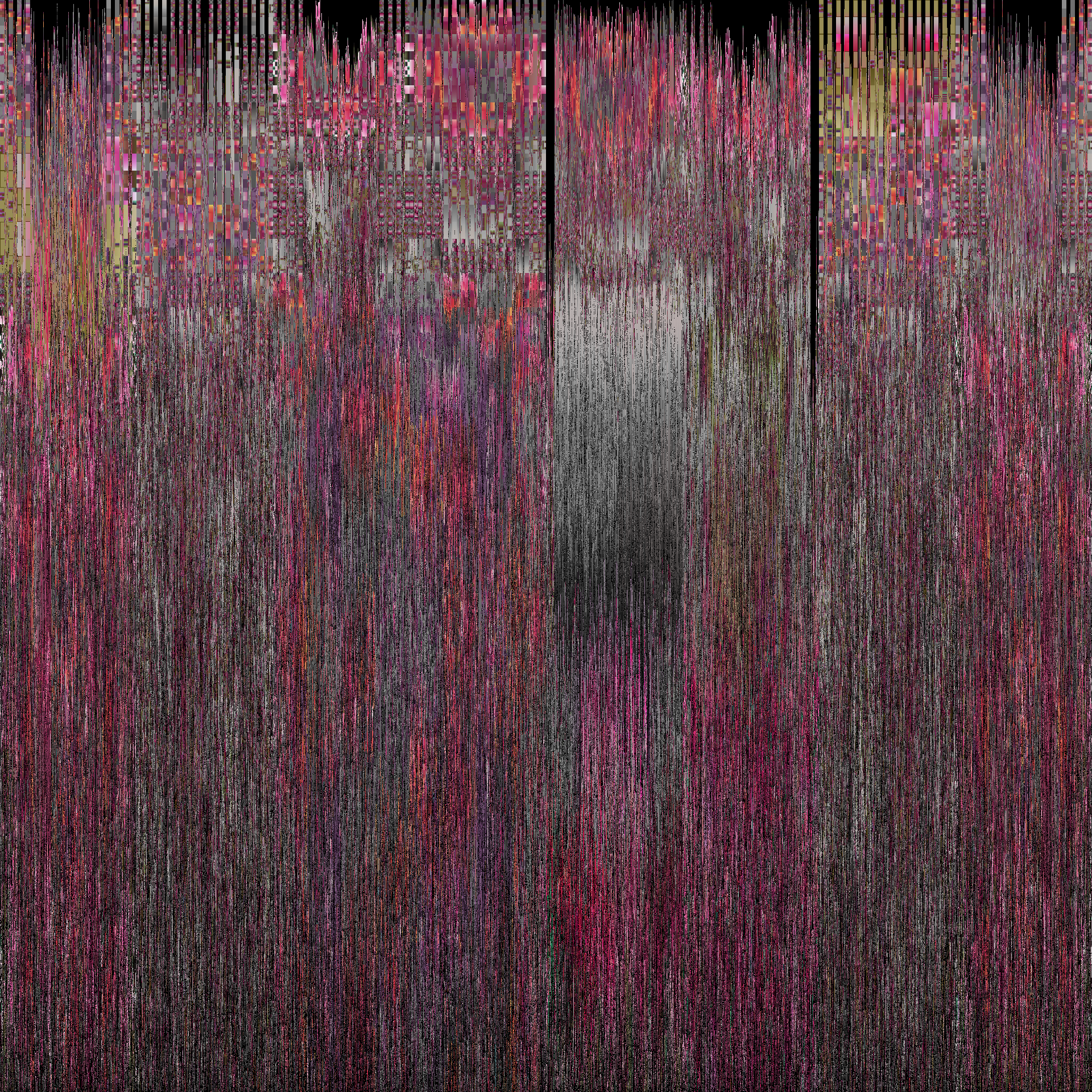
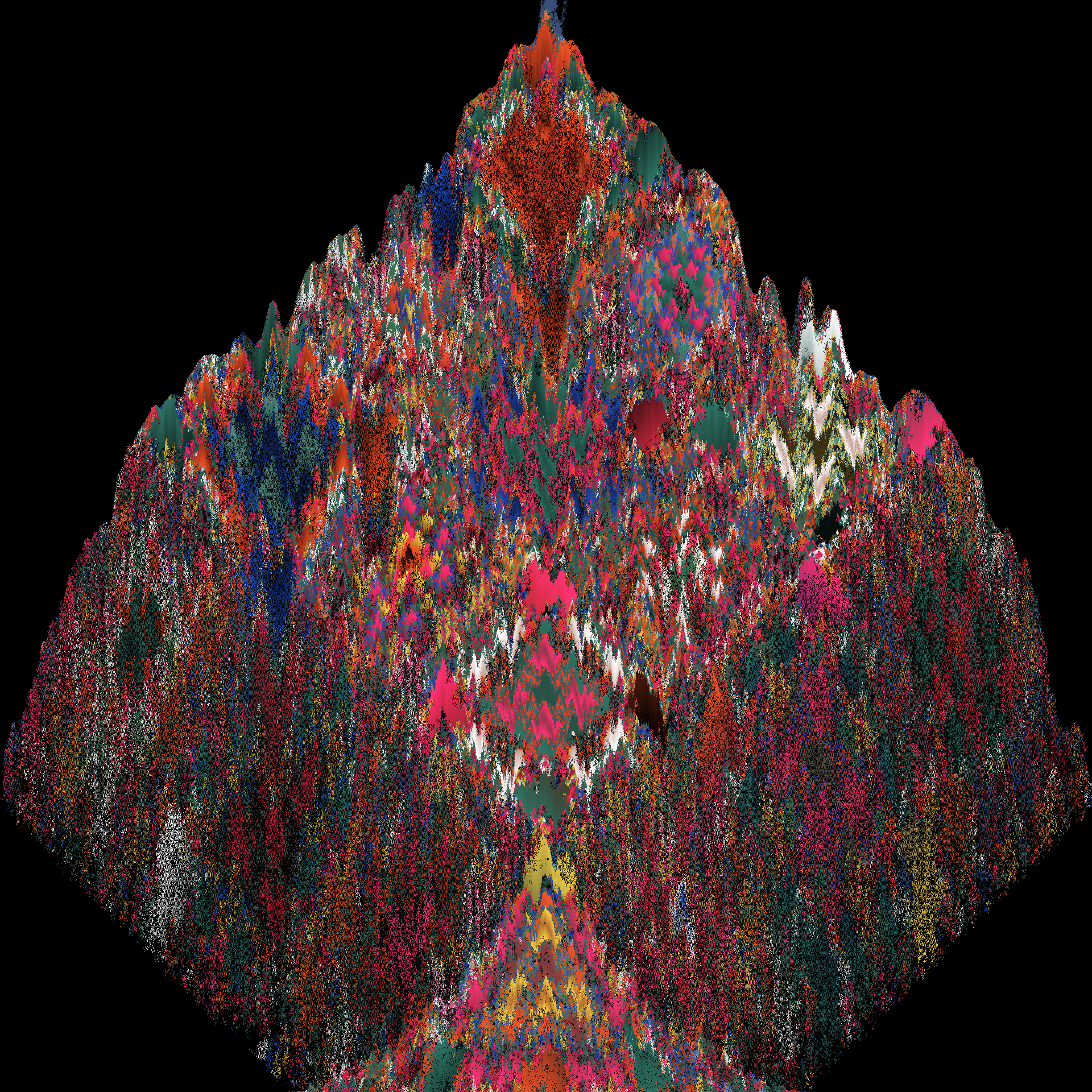
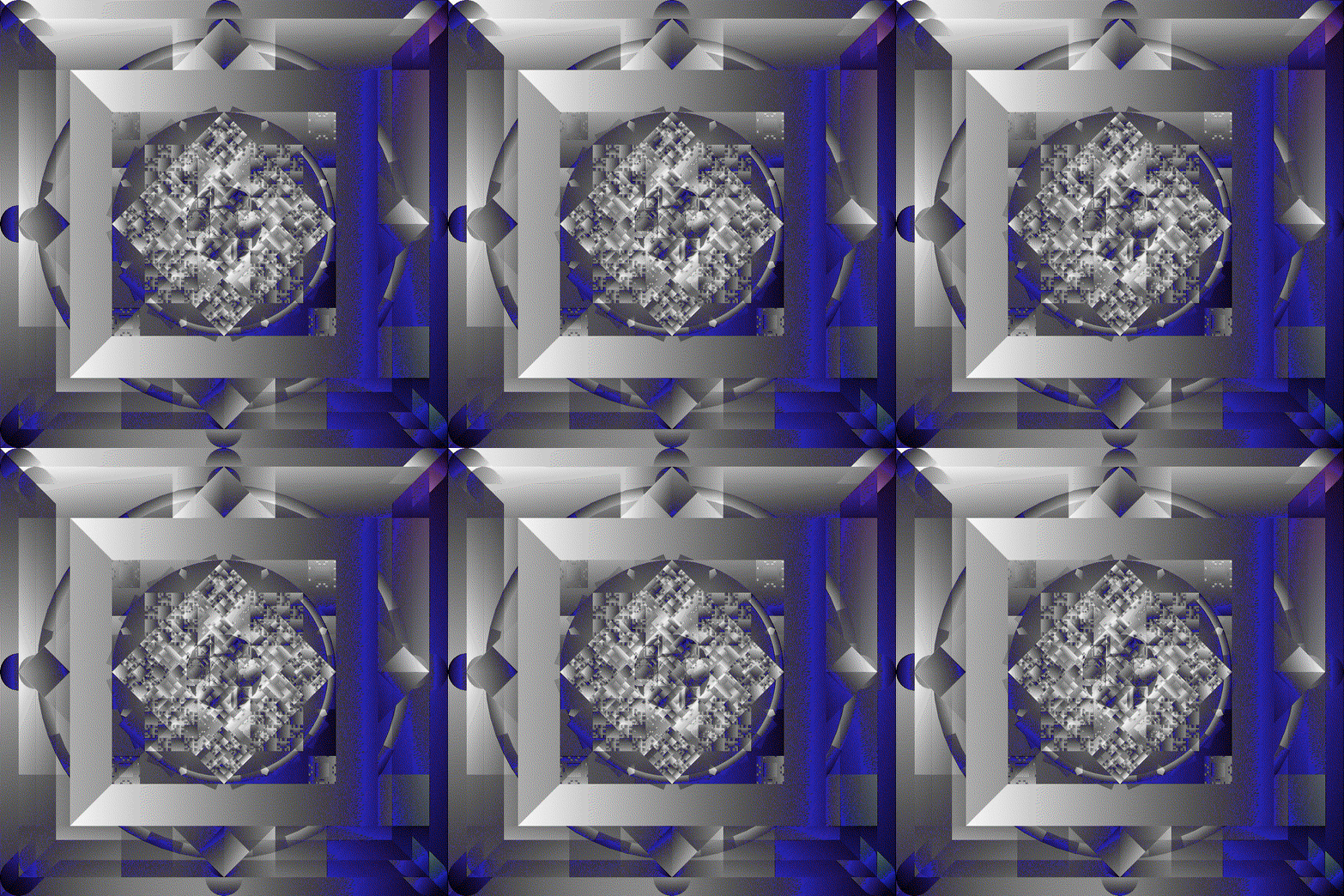
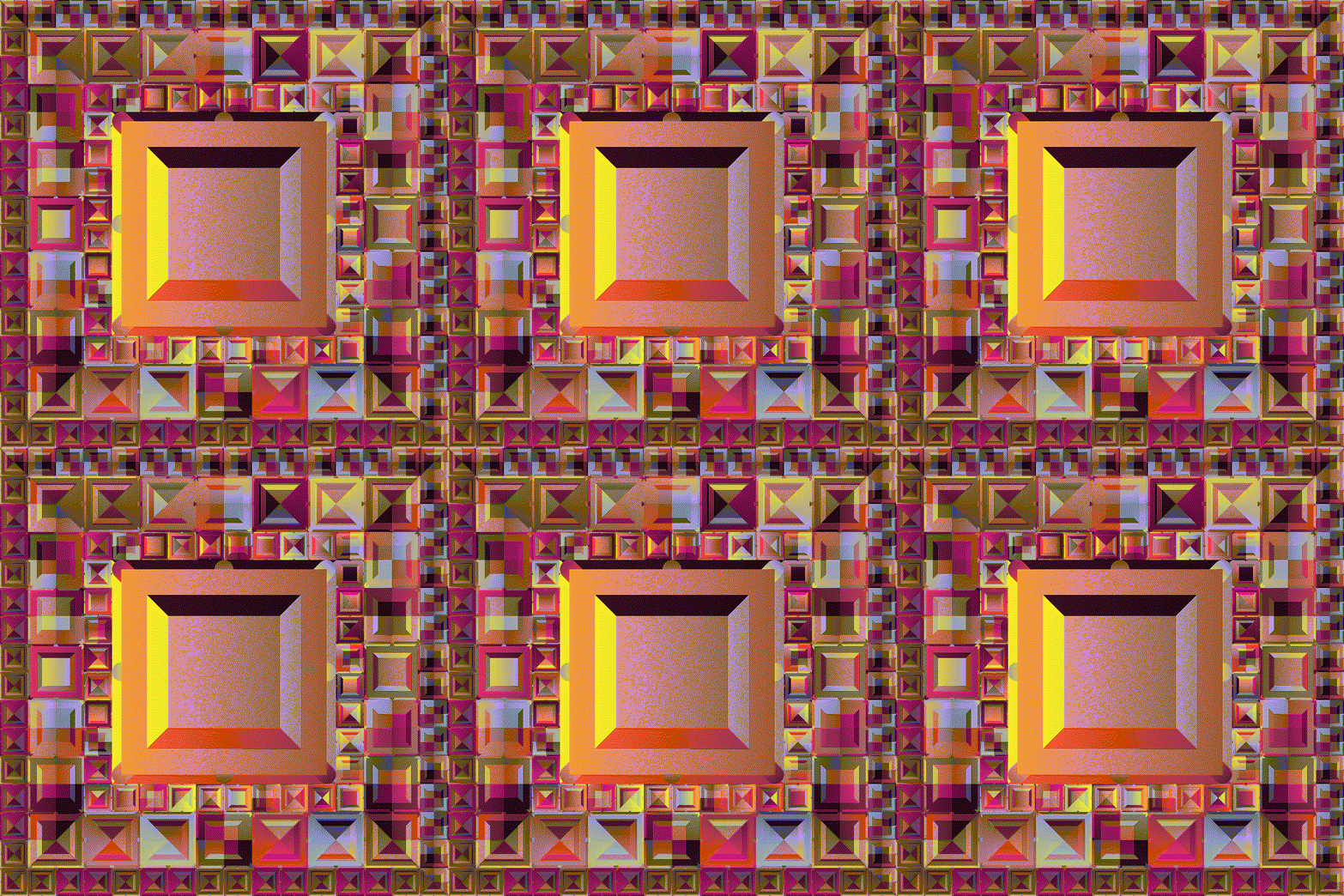
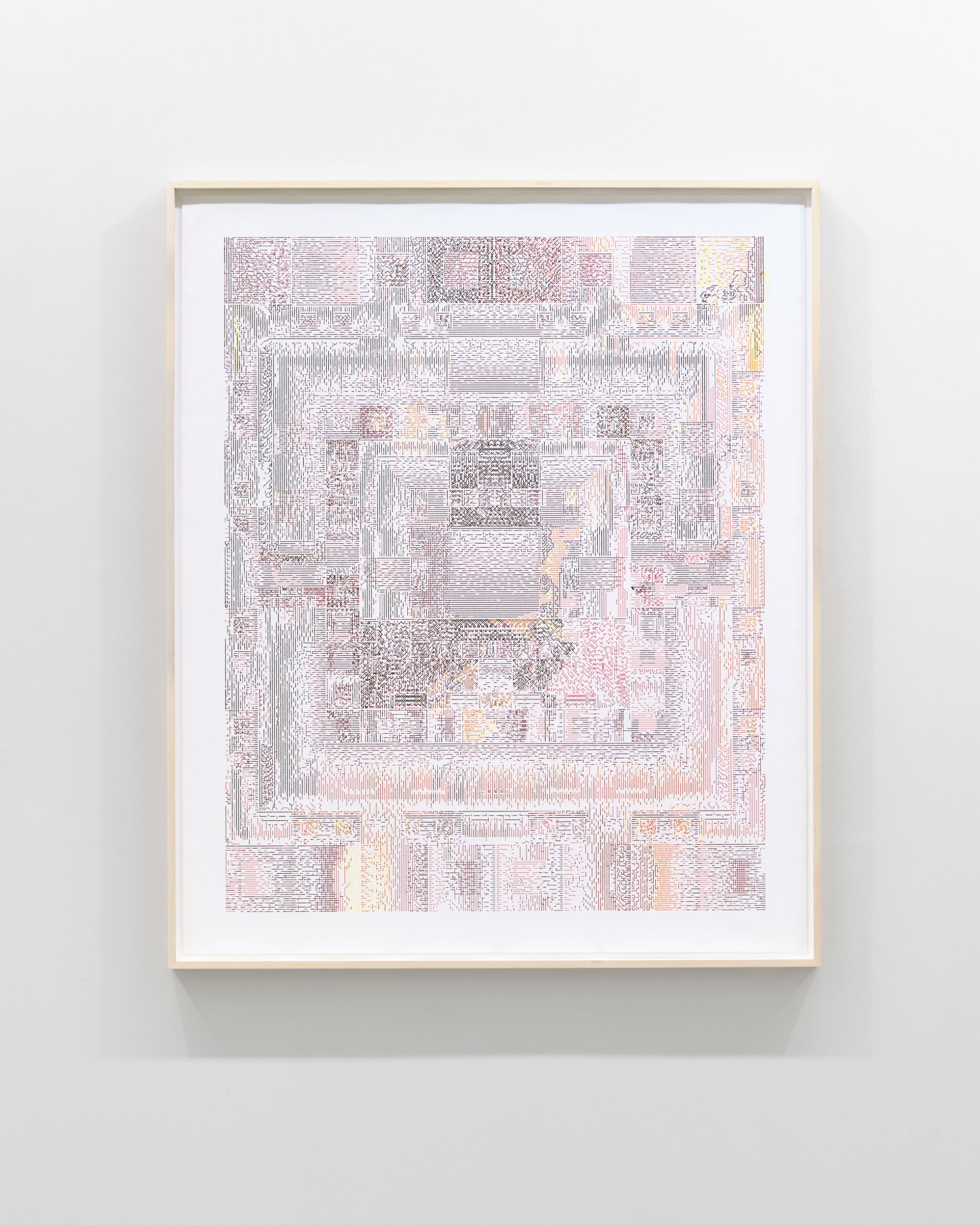
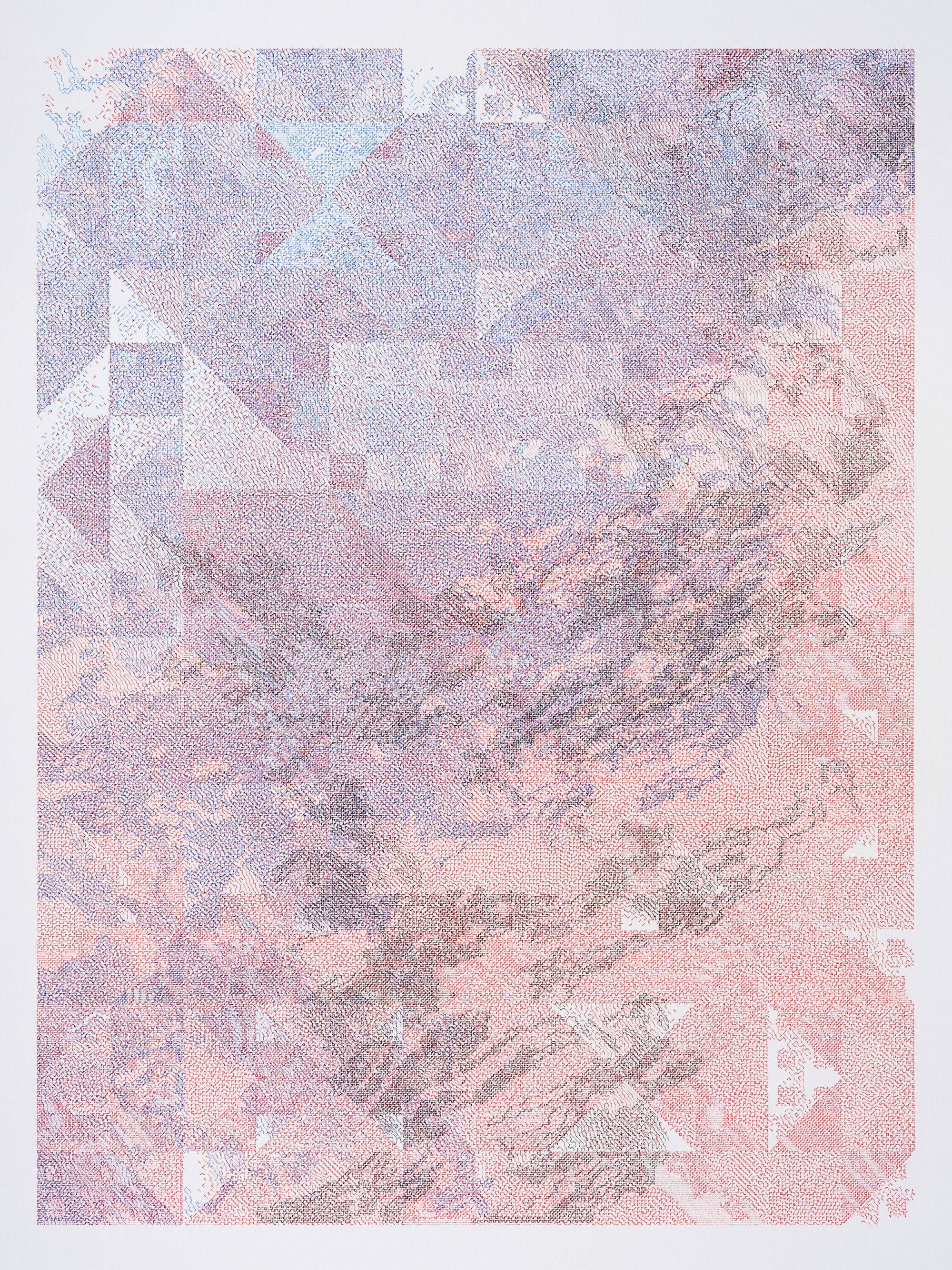
The algorithm from Quantizer I extended to transform surfaces to lines by hatching, into something I could mechanically draw with a plotter. This can be seen in the works Anobium, Nethermind, and Nethermind Quilt.
Q2 — On the algorithm
Goro Murayama: Could you explain the details of the algorithms used in your mandala-inspired works in a bit more detail?
Harm van den Dorpel: Mandalas are often recursive structures. Shapes become containers for multiple, smaller shapes, in careful symmetrical subdivision. They communicate deep spiritual truths using highly structured and organised visual means. That in itself already sounds like generative art. I often use Markov Chains: the distribution of a certain step or operation happening is stochastically determined by the parent the new shape is in.
Q3 — On reconciling local algorithm with macro cosmology
Goro Murayama: I believe many of your works utilize mechanisms that generate patterns through localized algorithms. On the other hand, mandalas can be described as images that apply a macro-scale cosmic view to the human world. If you have any thoughts on how you reconcile these multiple scales, please share them.
Harm van den Dorpel: That is a beautiful observation. I myself generally do not assign a meaning to the outputs of algorithms. Sometimes I title them after creation, based on how they appear to me, but it happens largely beyond me. I provoke the work, structure the process, curate outputs, and highlight particular features that emerged. The hermetic observation "as above, so below" is at work in that I sometimes experience awe by staring through a simple construed surface, into the depths of complexity.
Notable claims
- The works named. Anicca (2025) is identified as the first algorithmic mandala in the practice — situating the mandala lineage within a precise chronology. Quantizer (2025) is positioned as the deeper construction; Anobium, Nethermind, and Nethermind Quilt (all 2025) are described as the same algorithm extended into plotter hatching — a single mandala genealogy traversing screen-based generative tokens, NFT collection, and physical drawings on paper.
- The Quantizer trait names. The trait taxonomy of Quantizer contains categories explicitly named tibetan, thangka, mandala, flower, edge, etc. The mandala vocabulary is not metaphor — it is encoded in the work's own typology.
- Jung as urgency. The Jung quote ("the mandala is the centre … the path to … individuation") is offered as the reason the form was important, not as decoration. This connects the mandala practice directly to subconscious computation's Jungian ground (the unconscious manifested through conditions whose outputs are not fully predictable).
- The mechanism. The Markov-chain implementation is stated for the first time with this precision: "the distribution of a certain step or operation happening is stochastically determined by the parent the new shape is in." Each new shape inherits a probability distribution conditional on its container — a parent-relative state machine, where the symmetrical subdivision of the mandala is generated bottom-up by recursive descent through stochastic transitions.
- Recursion confirmed. "Mandalas are often recursive structures. Shapes become containers for multiple, smaller shapes, in careful symmetrical subdivision." The most direct identification in the corpus of mandala construction with recursion as a generative principle.
- As above, so below. The hermetic phrase (Hermes Trismegistus, Emerald Tablet) names the macro/micro mediation: the local algorithm and the cosmic view do not need to be reconciled, because the same structure obtains at every scale. The artist's position is to "stare through a simple construed surface into the depths of complexity."
- Provoke / structure / curate / highlight. The four-verb description of the artist's stance, given here in concentrated form, names the doubled creator/bystander role developed at length in subconscious computation — but specifies the roles more precisely than any prior account.
Connections to existing wiki pages
- Recursion and Self-Reference — mandalas explicitly named as recursive structures; "shapes become containers for multiple, smaller shapes"; the hermetic "as above, so below" as the cosmological version of recursion's self-similarity at all scales
- Subconscious Computation — Jung's mandala quote as the explicit hinge between the practice's Jungian ground and the mandala lineage; "individuation" as the destination toward which the algorithmic form is directed
- Quantization and Dithering — Quantizer's mandala trait taxonomy made first-person explicit; Anicca as predecessor; the Quantizer→plotter relay (Anobium, Nethermind, Nethermind Quilt) as continuation of the same algorithm into ink
- Randomness and Pattern — Markov-chain "parent-conditional" stochastic descent as the specific mechanism that produces the mandala's symmetrical subdivision; randomness governed by structural inheritance
- Senescenence — the mandala/sacred-geometry register sourced; the Tibetan sand mandala connection to impermanence (Anicca = absence of permanence) deepens the senescence/impermanence theme
- Struggle for Pleasure (2024) — the artist's own earlier mandala remark ("the apparently straightforward components of a mandala") receives its pre-history here: the simple operations producing transcendental complexity were already organised around Anicca's mandala construction
- Cloud Writings (2026) — the Q&A correspondence accompanies the exhibition; the named works in the answer (Anobium, Nethermind, Nethermind Quilt) are all in the show