
Algues Artificielles
Algues Artificielles (2016–2022) is the series in which van den Dorpel first derived a generative system directly from natural observation and then submitted it to a formal breeding mechanism — converting the artist's aesthetic judgment into an explicit fitness function. It sits structurally between Death Imitates Language (artist as sole, private selector) and later work where selection is systematised or crowdsourced.
The series title translates literally as Artificial Seaweeds: the natural form that prompted the code, and the artificial form that replaced it.
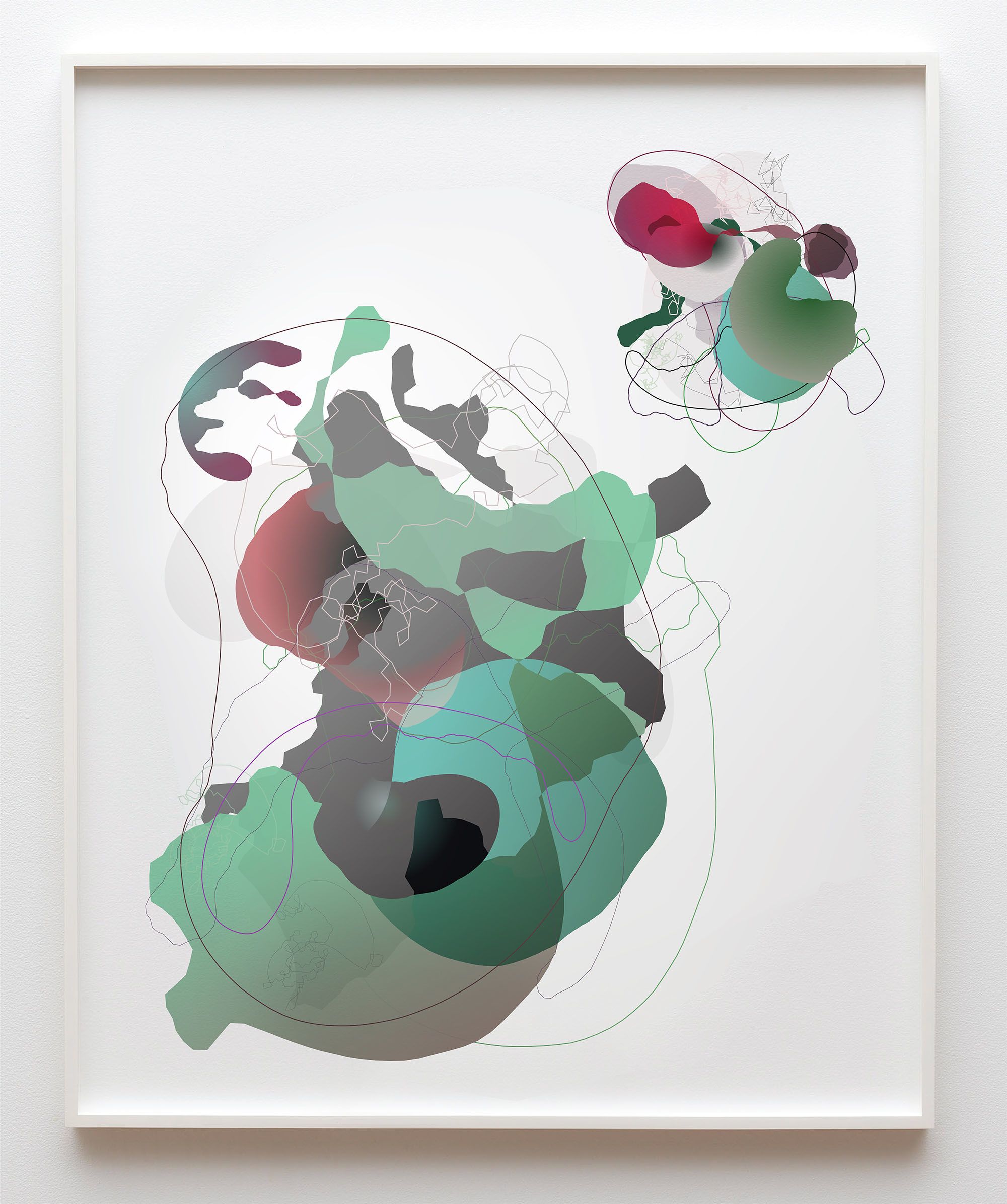
Torn split. One of the earliest prints, pulled from the first generation of the genetic system — the seaweed observation already passed through code into a bred specimen.
Origin: Bretagne, seaweed, Hans Arp
The series began in the summer of 2016, during a family stay by the sea in Bretagne, France. The artist describes watching seaweed and jellyfish wash ashore, forming "shapes and compositions which were always different, but, also, somehow always the same." This paradox — variation within a conserved type — became the problem the system would be built to explore.
A first attempt at simulating the smooth, round curves proved "surprisingly satisfying." The shapes reminded him of the sculptural work of Hans Arp — biomorphic abstraction, organic without being figurative. But pure random generation "was quickly becoming a bit boring": it produced variety without direction. The question shifted: could a feedback process between artist and software "be considered a kind of dialectic"?
This shift — from generating shapes to designing the conditions under which shapes improve — marks the conceptual core of the series and of the broader practice. See Impulse, Risk, and Method on the movement from discovery (pure randomness) to method (constrained, directed variation), and Randomness and Pattern on the distinction between randomness and generative pattern.
Mechanism: digital genome and convergent breeding
The system is precisely described in the artist statement. Every visual property of a drawing — "angles, smoothness, shape, colour, transparency, scale, position" — is encoded in a binary sequence: a digital genome. This genome "hermetically defines the appearance (or phenotype) of each work (or specimen)."
Breeding works as crossover: two selected parent drawings have their chromosomes aligned; genes are drawn at random from either parent. "From this game of recombination, both iterative and diverse offspring emerge."
Each generation, the artist picks two specimens to breed from. Because breeding always occurs between siblings — "a sort of mechanical incest" — the diversity gradually converges. The population narrows toward a local optimum shaped by the artist's accumulated choices. Van den Dorpel names this "hybrid vigour": the process of selecting candidates, examining results, and breeding further to "eliminate or emphasise particular traits."
This is the same convergence logic that governs animal and plant domestication — artificial selection as the model for aesthetic development. For the technical genealogy of this mechanism across the full series (including Cartesian Genetic Programming in Mutant Garden), see Evolutionary Logic.
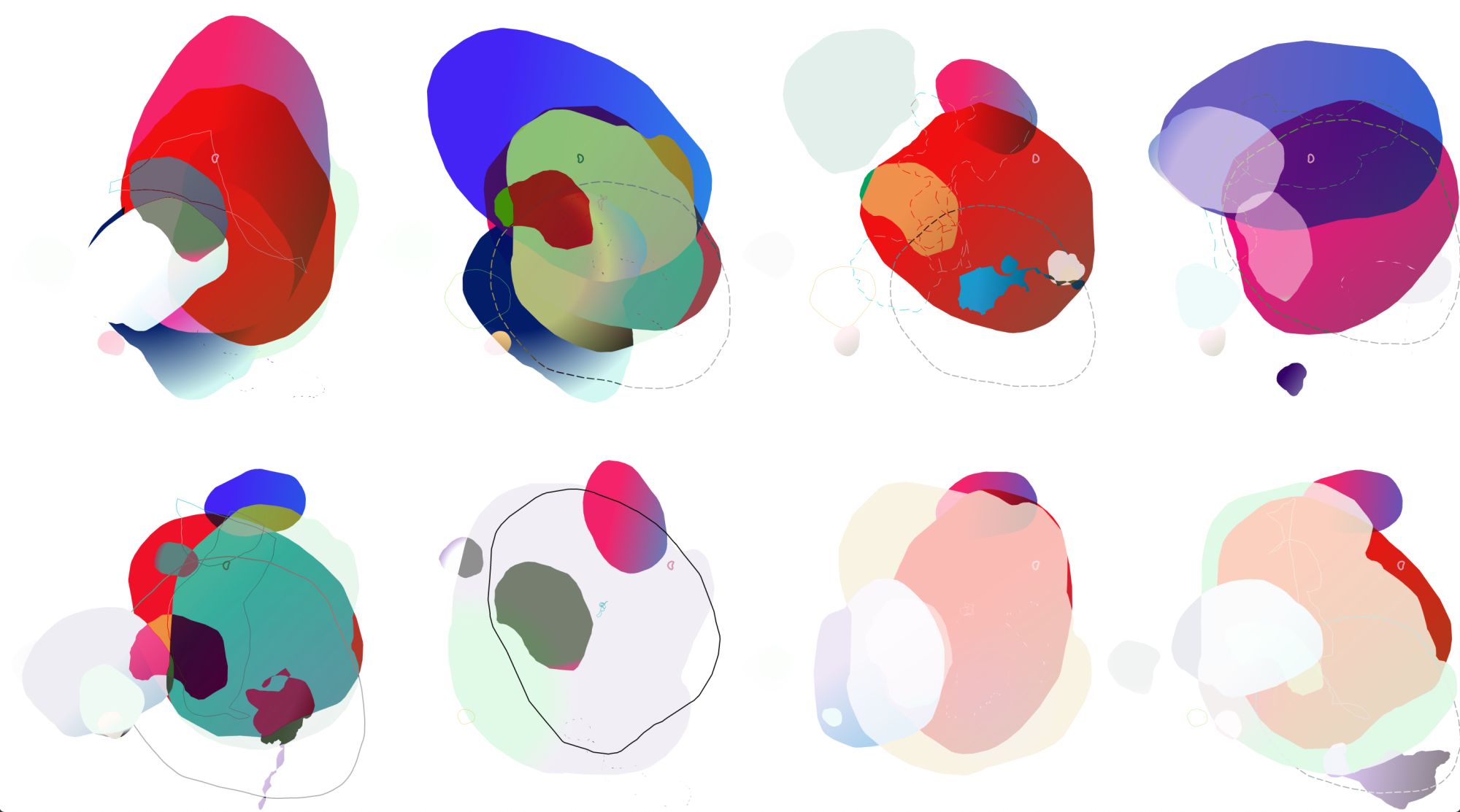
Hybrid Vigor .bio. The public website hands the fitness function to the crowd: anonymous internet visitors replace the artist as selector — the first full externalisation of taste in the practice.
Hybrid Vigor .bio: crowdsourcing the fitness function
The series culminates in a structural inversion: Hybrid Vigor .bio (2017) opens the selection mechanism to the public. The website is "publicly accessible to crowd-source this process in an evolutionarily selective way, using the internet visitor as the fitness function." The artist steps back from the role of selector; the population now evolves under distributed aesthetic pressure from anonymous web visitors.
This is the first instance in the practice where personal taste is fully externalised and collectivised — a step toward the systemic protocols traced in Protocol, Taste, and Systems. The transition mirrors the difference between the closed studio and the open network: from private dialectic to distributed selection.
The companion software Algues Artificielles (2017) — a macOS application — runs the same genetic engine locally, without the crowd. It is the private version of the same mechanism.
The prints: frozen specimens
When a specimen reaches a locally optimal state, it is printed: UltraChrome or Ultrachrome HDR inkjet on Hahnemühle German Etching paper, 80×65cm or 100×80cm (early works). These are the frozen records of evolutionary convergence — a single generation preserved in archival pigment.
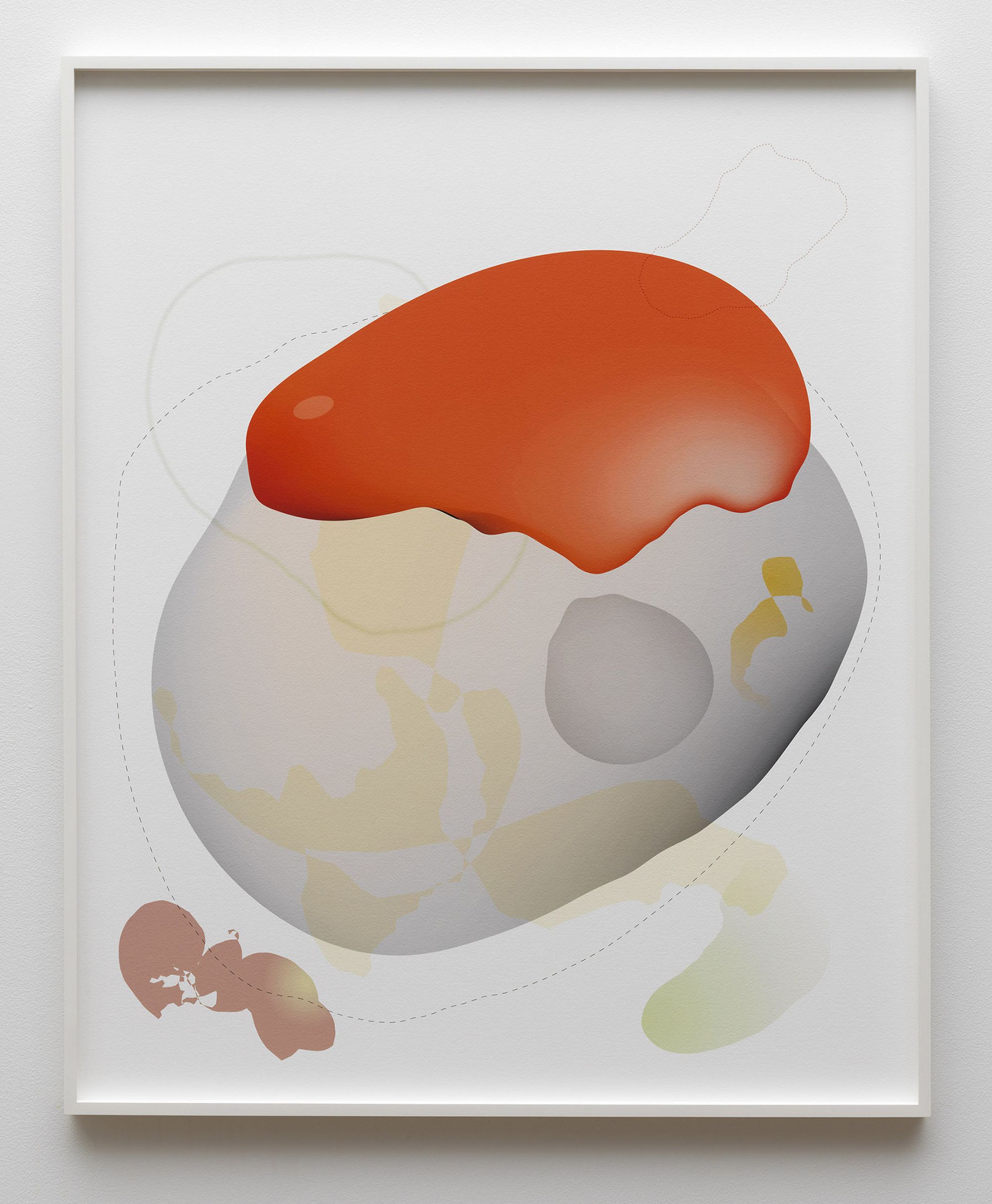
Eponymous Seedling. A specimen frozen at a locally optimal state and printed on Hahnemühle; its adjective-noun title names a compositional state rather than a subject.
The names
The work titles — Torn split, Dechayotic, Adoreway, Bemused Aversatility, Eponymous Seedling, Umbilical Dramatoxin — are English adjective-noun compounds that are grammatically plausible but semantically wrong. Unlike the invented syllables of Death Imitates Language (Vvgdamn, Shtonk), these titles almost mean something. Dechayotic suggests "de-chaotic." Umbilical Dramatoxin is a medical-poetic collision. They occupy the threshold between found language and generated language — just as the images occupy the threshold between observed form (seaweed) and computed form.
This is one register of the "development of meaning in generative aesthetics": meaning emerges at the edge of recognisability, not from pure invention or pure reference.
Shunned Mass (2022)
Shunned Mass (2022) is the NFT extension of the series — a single work minted on-chain years after the main body of prints, extending the series into the blockchain context. Its existence points to the longevity of the genetic system: the algorithm remains generative across a six-year span and across medium formats.
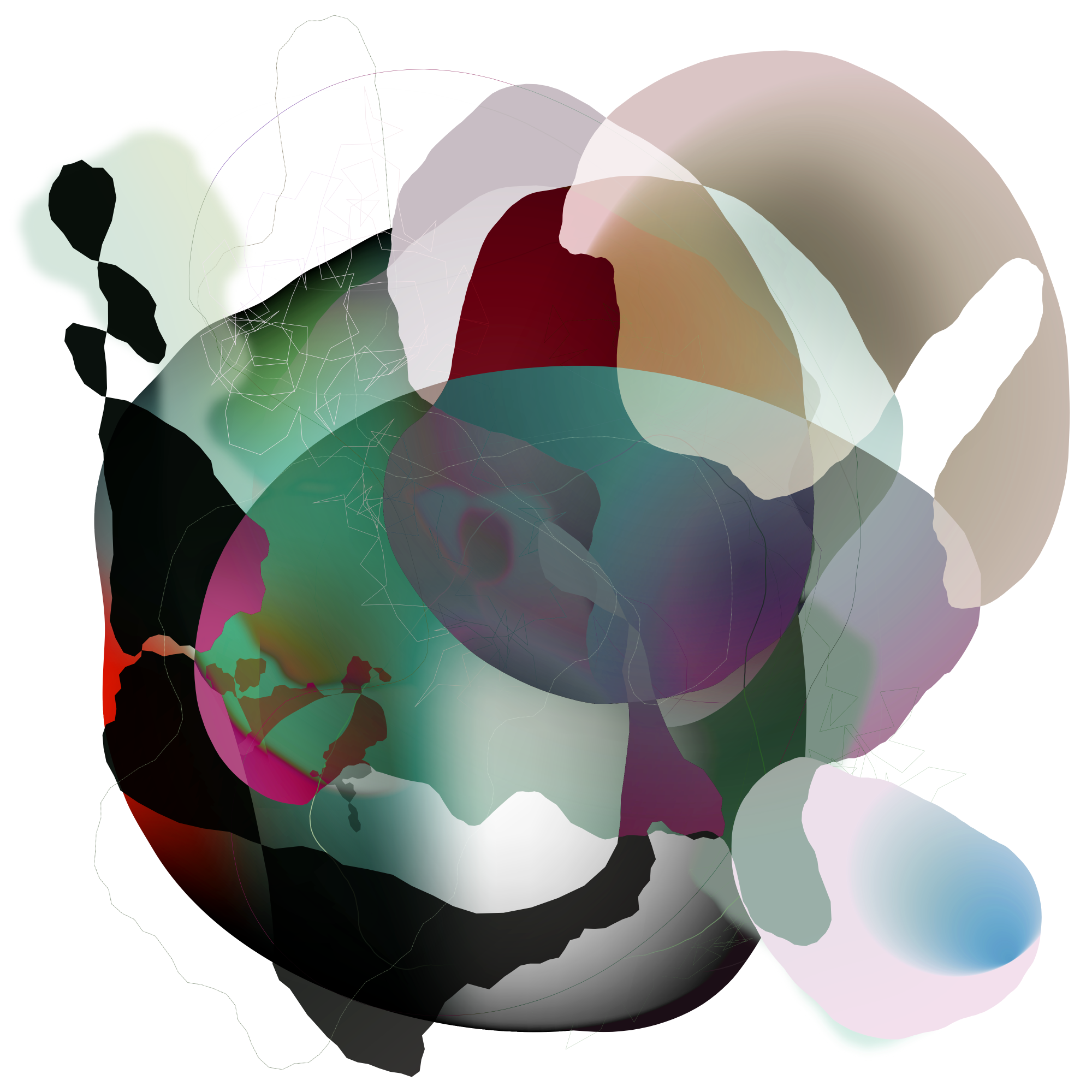
Shunned Mass. The lone NFT extension, minted six years after the first prints — proof that the genetic system stays generative across both a long span and a change of medium.
Connections
- The paradox of the source observation — "always different, but always the same" — maps directly onto the semiotic square's New/Same axis in The Semiotic Square: variation within a conserved type is precisely the structural space the practice works to map.
- The progression from private selection (Death Imitates Language) to crowd-sourced selection (Hybrid Vigor .bio) is the central movement traced in Protocol, Taste, and Systems.
- Hans Arp as reference connects to Randomness and Pattern: Arp's use of chance procedures (According to the Laws of Chance, 1916–17) is one of the key precedents for generative/chance-based art.
- The "digital genome" framework — binary encoding of all visual properties — is technically elaborated in Evolutionary Logic.
- The series is part of the lineage in The Generative Threshold: taste externalised step by step from Dissociations → Death Imitates Language → Algues Artificielles / Hybrid Vigor → Nested Exchange → Mutant Garden → Quantizer.