
Limit Experience — Bataille, Agamben, and Chemsex Benelux
The about-text — note 3005
Note 3005 quotes the about-page of Chemsex Benelux (2022):
"It is not our intention to either condone or judge chemsex, nor to proclaim any position vis-a-vis the politico-economic union of Benelux. It is our desire to induce a state of pleasant disorientation when confronted with an unknown but uncannily familiar territory. We offer souvenirs to help you integrate the limit-experiences you never had."
The note attributes the project's inspiration to Jonas Čeika's video essay Hellraiser, Bataille and Limit Experiences (CCK Philosophy, 2018). Full transcript at sources/ingested/cck-philosophy-hellraiser-bataille-2018.md.
The two NFT collections

Indiscreet Units (2022) is the inaugural collection: 266+ flags in continuous hue rotation, stored on Ethereum and IPFS. The flag — the most codified of identity-signs — never holds its colours still.
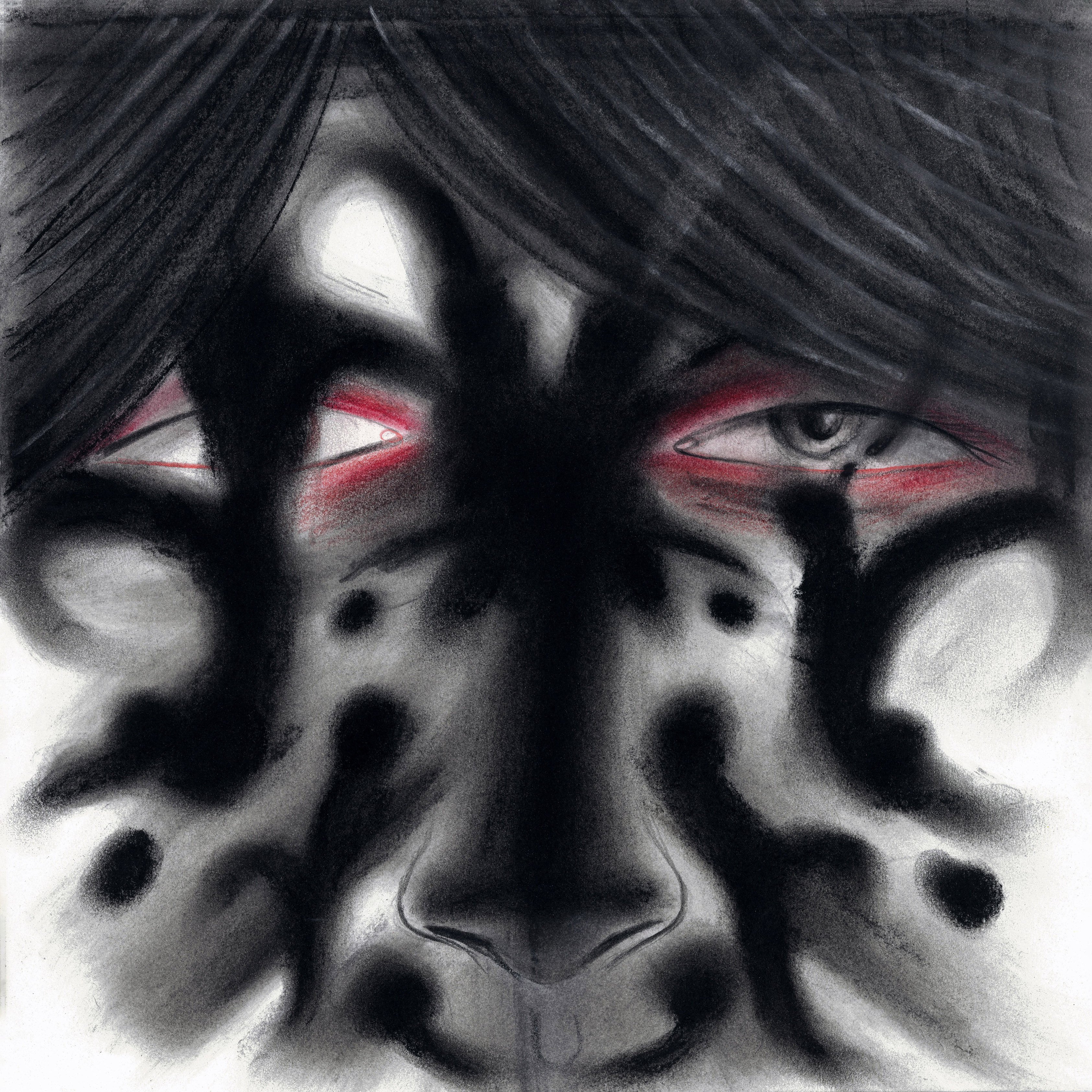
Phantom Crush (2022/2023) followed: 130 generative portraits programmed by van den Dorpel from pastel drawings on paper by Enver Hadzijaj — the hand-drawn portrait passed through a generative engine, the crush rendered as phantom.
What Čeika's video essay says
The essay (transcript ingested) makes four points:
- Most horror restores the status quo. The threat appears as an external parasite, is vanquished, the order is restored. Žižek on Jaws is the example.
- Two failed responses to the genuinely other. Outright rejection (Sade, Nietzsche, MLK while alive — dismissed as subversive) or post-mortem domestication (the radical content stripped, the figure absorbed as harmless icon).
- A third path. Encounter the other without rejecting and without neutralising. The Cenobites (from Hellraiser) are read this way — already within the subject, summoned by desire.
- Bataille's limit experience. The state in which boundaries collapse — pleasure / pain, ecstasy / horror, eros / death. Bataille opposes the profane (utility, acquisition) to the sacred (pure expenditure, energy spent without expectation of return). His example: the Lingchi photograph he kept on his wall and looked at over years.
This is the framework the about-text imports — pleasant disorientation as a calibrated form of the limit experience for a viewer; uncannily familiar territory as the Cenobite-style structure where the taboo is already within; souvenirs to help you integrate the limit-experiences you never had as the work's stated function.
Note 1266 — Agamben on the integrally profane order
Note 1266 paraphrases Giorgio Agamben:
"An integrally actual and integrally profane order in which the destructive distinctions between sacred and profane, the exception and the norm, the singular and the universal are neutralized — and put behind us. They are not to be somehow magically destroyed (…) but instead are to be seen in a new light. (…) Distinctions would continue to exist (…) but they would cease to have the divisive force they carry today; they would cease to be instruments in the hands of those in power."
Bataille proposes the sacred against the profane. Agamben does not propose either side: the distinction itself is what holds power in place. Profanation is the operation of returning the form to common use without replacing one term with the other.
Note 805 — Hayles on the flickering signifier; an embedded intimate fragment
Note 805 cites N. Katherine Hayles. The flickering signifier is a signifier characterised by "unexpected metamorphoses, attenuations, and dispersions" — meaning that does not settle, but is in transit.
Three theoretical paragraphs in the note are interrupted, mid-text, by a single sentence in a different register:
"When I laid there beside you, could you feel me there? My arms were wrapped around you, and I was stroking your neck."
The juxtaposition — the technical-theoretical paragraphs and the intimate fragment in the same note — is the note's distinctive feature.
Note 837 — Derrida on the archive
Note 837 cites Derrida from Archive Fever: the archive is not "the stockroom and the conservatory for archivable contents of the past which would exist in any case (…) without the archive"; archival technology shapes "the very events" it appears merely to preserve. The note is developed in Mediation and the Archive.
The about-text uses the word souvenirs — small portable objects mediating an experience. The Derrida point in 837 bears on this: a mediating object does not transparently transmit a pre-existing event.
See also
- Mediation and the Archive — note 837 in its primary wiki home
- Randomness and Pattern — note 805 in its primary wiki home (the pattern / randomness dialectic)
- sources/ingested/cck-philosophy-hellraiser-bataille-2018.md — Čeika's transcript, the direct theoretical source named in note 3005