
Anicca (2025)
Anicca is, on harm.work, "A series of eventually 8 two-phase animations, inspired by Buddhist sand drawings: an exercise in patience and reflection on impermanence." Two exist, Anicca 1 and Anicca 2, which harm.work dates to March 2025, both issued on the artist's own Ethereum contract. Asked by the Japanese artist Goro Murayama which mandalas he uses, the artist named "Tibetan sand mandalas and Japanese Ryōkai Mandala mandalas" and said: "My first attempt to construct them algorithmically was in my work Anicca, of which there are two" (Murayama Q&A, → Mandala Q&A).
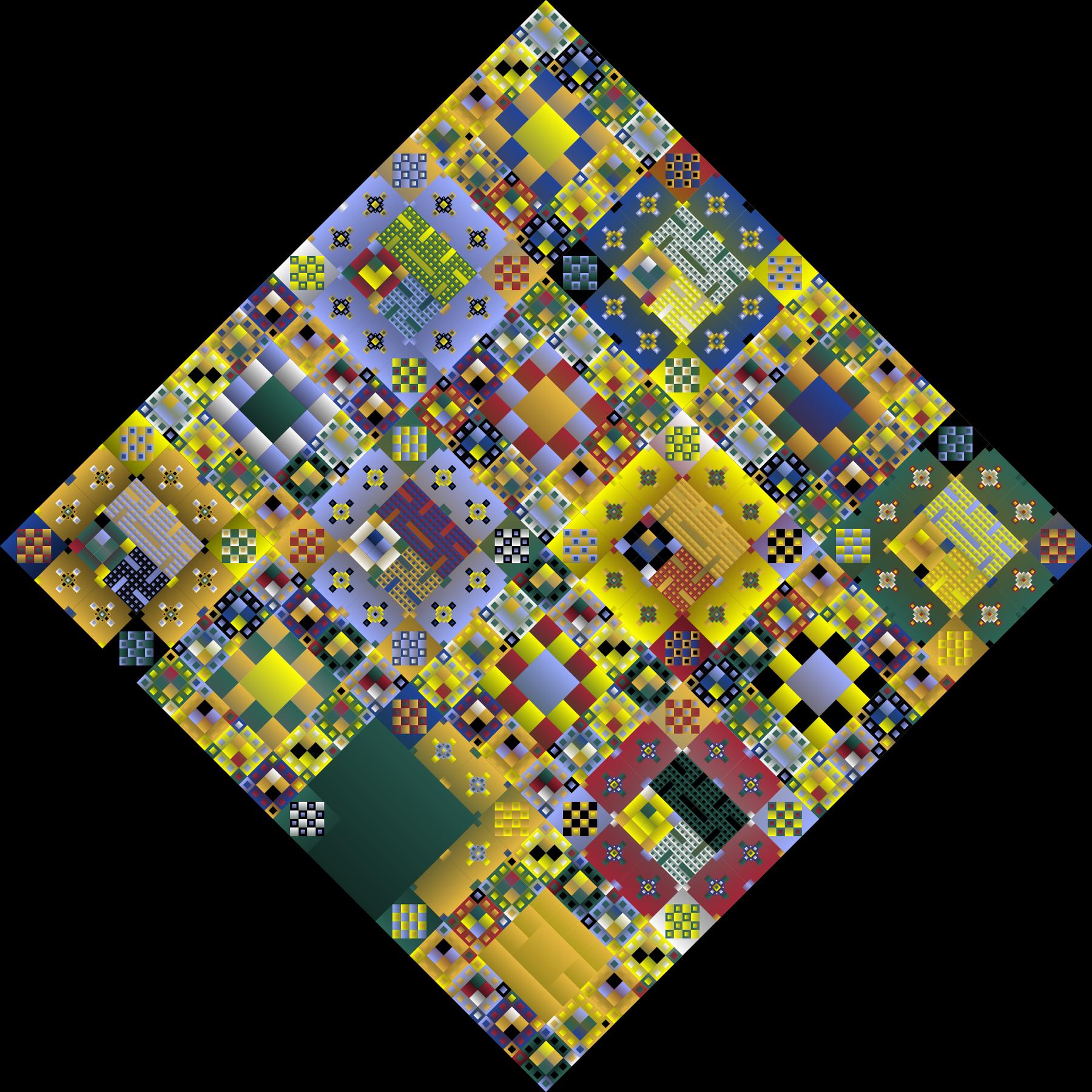
A square stands on its point on black. It is divided into squares, and most of those into smaller squares again, down to tiles a few pixels wide: yellow and blue dominate, with patches of green, red and violet, and many tiles carry a small cross, check or knot. The artist filed this frame in his are.na channel Mandala on 9 May 2025 under the name fall (block). It shows the figure complete, at the end of the first phase.
The word
harm.work explains the title: "The Pali word for impermanence, anicca, is a compound word consisting of "a" meaning non-, and "nicca" meaning "constant, continuous, permanent". While 'nicca' is the concept of continuity and permanence, 'anicca' refers to its exact opposite; the absence of permanence and continuity." Anicca is one of the three marks of existence in Buddhist teaching. The token descriptions read "Harm van den Dorpel ࿇ 2025"; the sign between name and year is the Unicode character TIBETAN SYMBOL RDO RJE RGYA GRAM, the crossed vajra.
Two phases
Each token is a web page that runs in the browser. Watched from the start, a run of Anicca 1 builds a square mandala and then takes it apart.
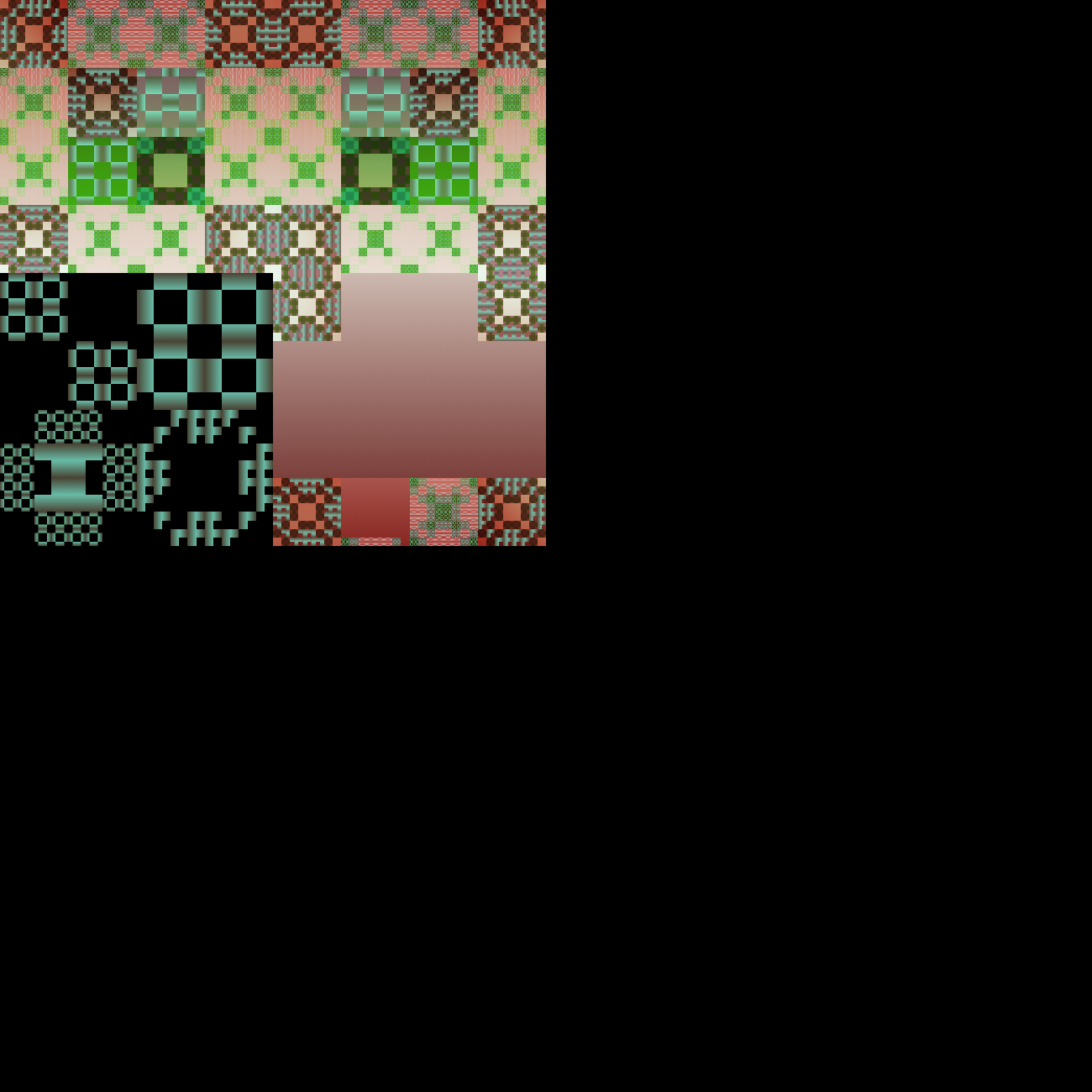
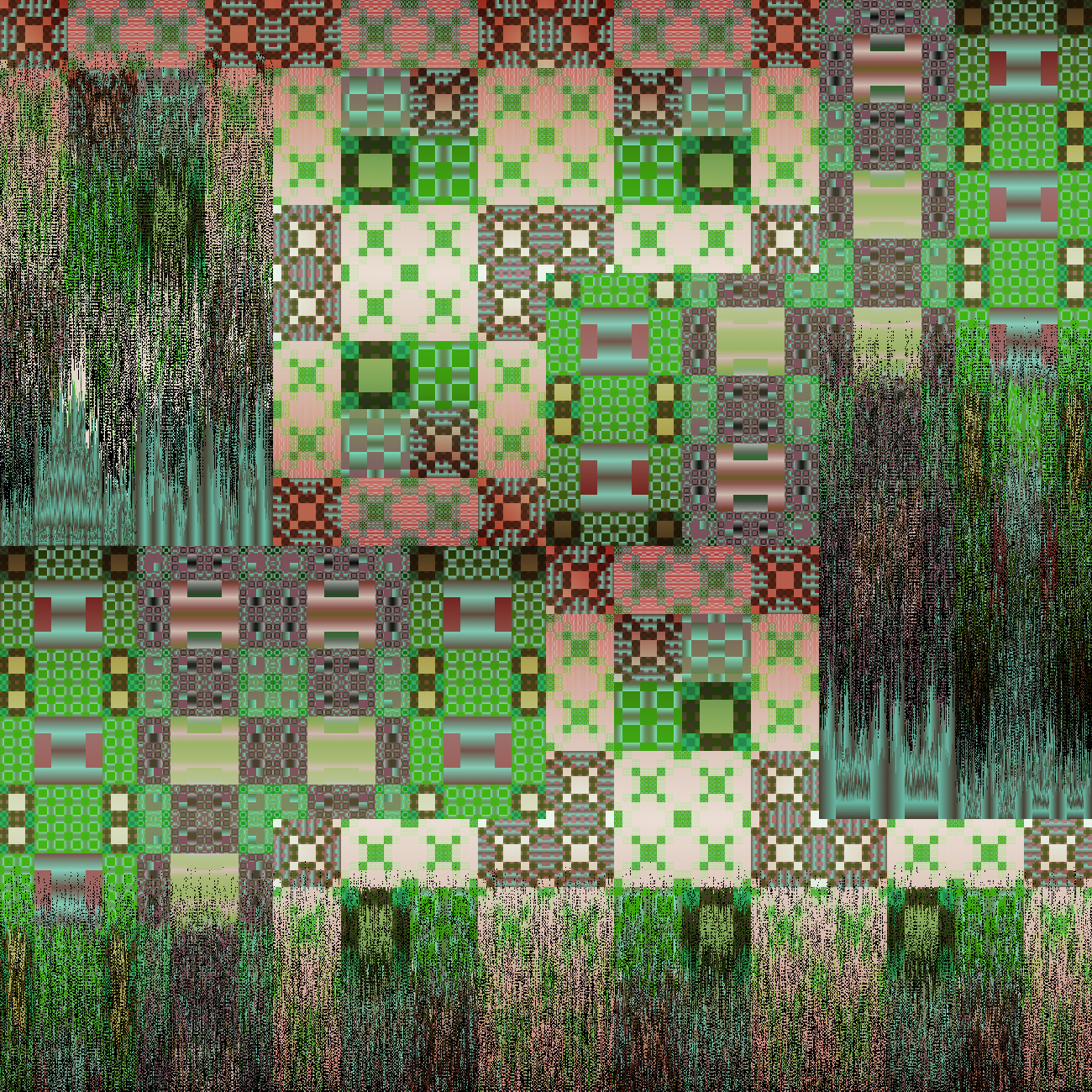
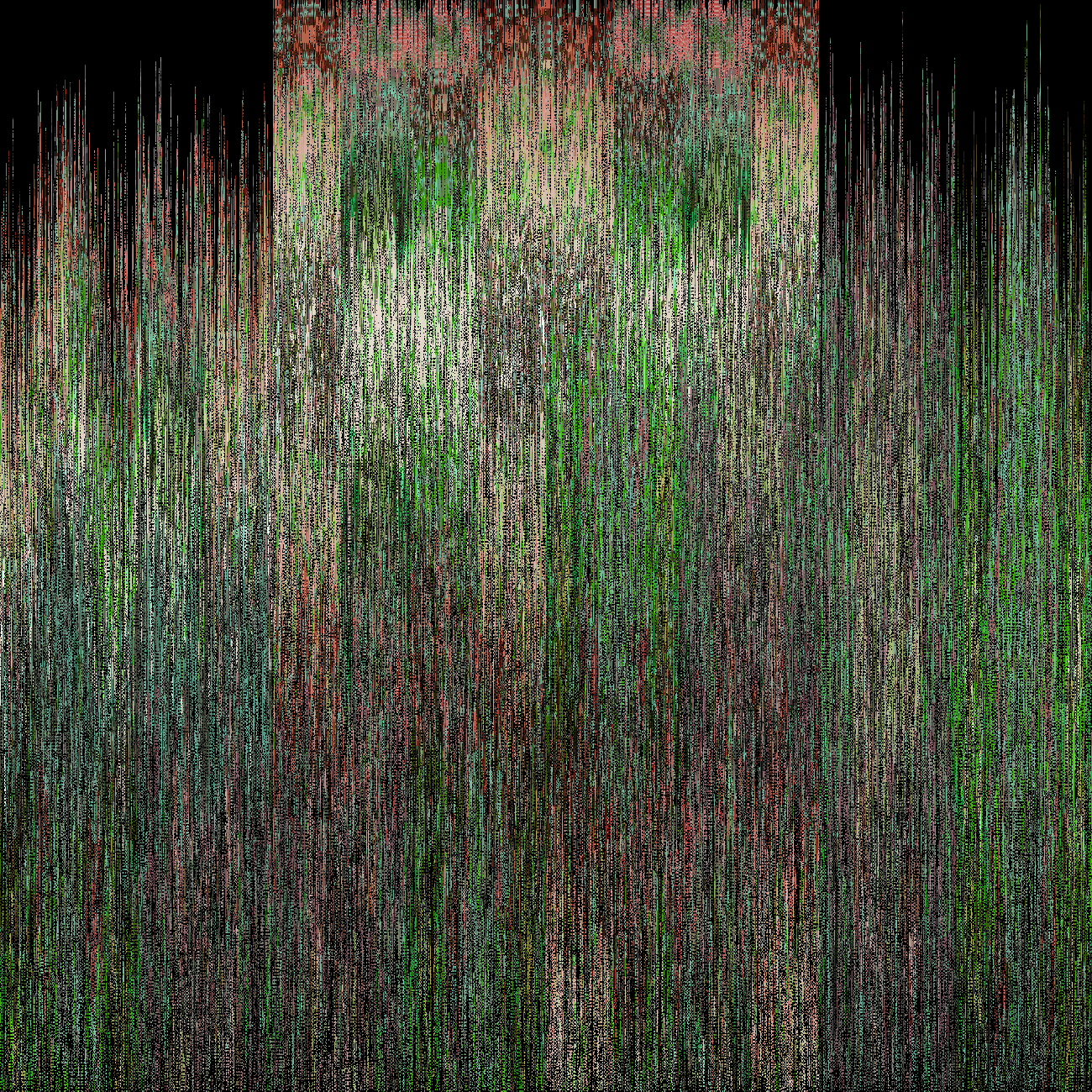
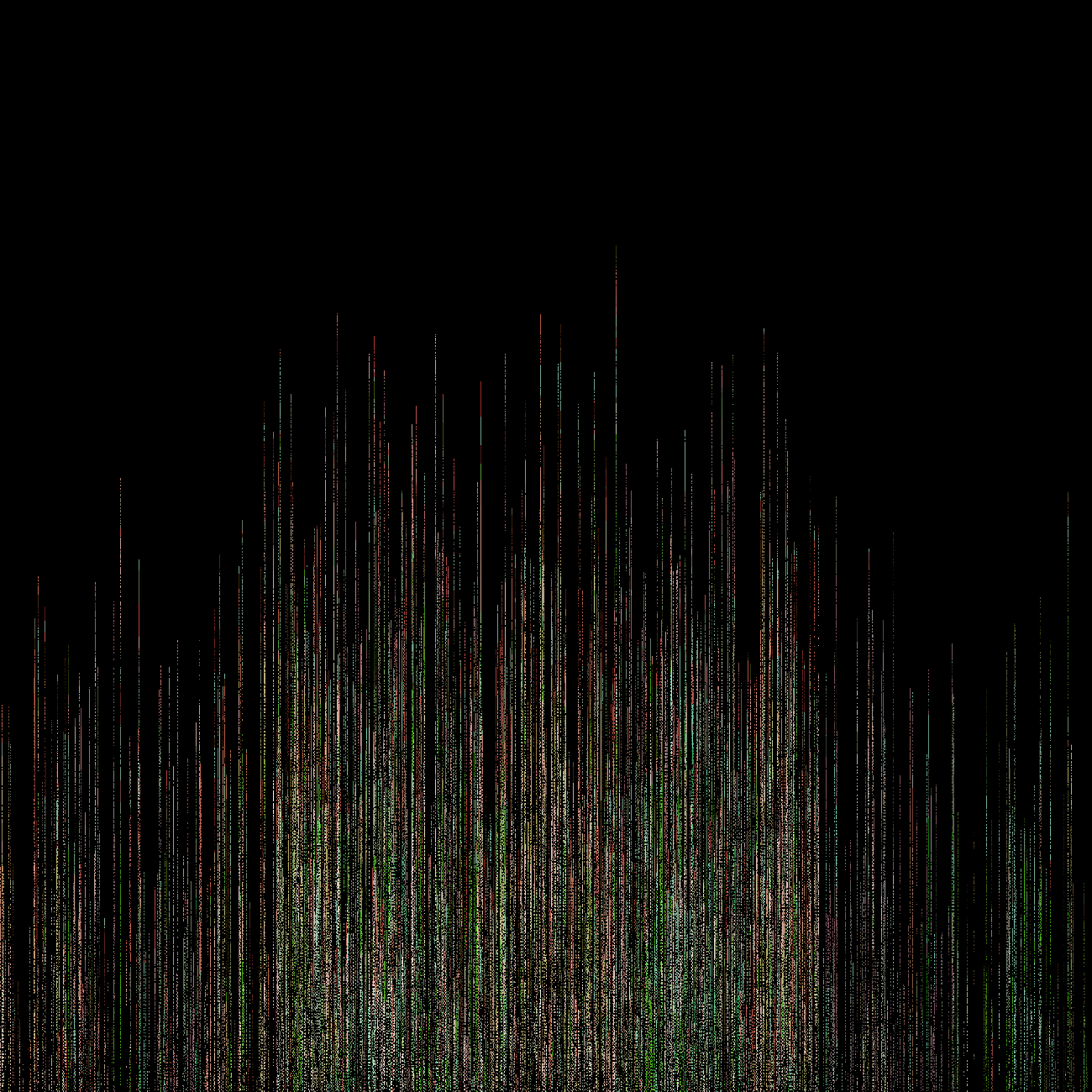
In the run captured for this page (November 2026) the square is built from patterned tiles in green, pink, cream and grey-teal. It does not grow from the centre. The upper left quarter fills first, then the others, each quarter divided into smaller squares and those into tiles, so that the figure appears as nested containers being filled. After about a minute it is nearly complete, and parts of it, at the left and along the bottom, have begun to run. The second phase is a fall: every column of colour slides downward in fine vertical streaks, the pattern dissolves into something like rain or a curtain of threads, the streaks thin, and after four minutes only faint threads are left at the bottom of the screen. In a second run the screen was black after five and a half minutes.
Anicca 2 does the same with a square on its point, here in reds and yellows with green and blue. Its quarters fill one after another, the top first; after two minutes three of the four are built. Once the figure is complete its colours slide down and inward, and what is left is a mountain of mixed colour standing on the bottom edge. It narrows: after seven minutes it is a single peak at the bottom centre, and in another run, which built faster, only a thin flame was left at that point.
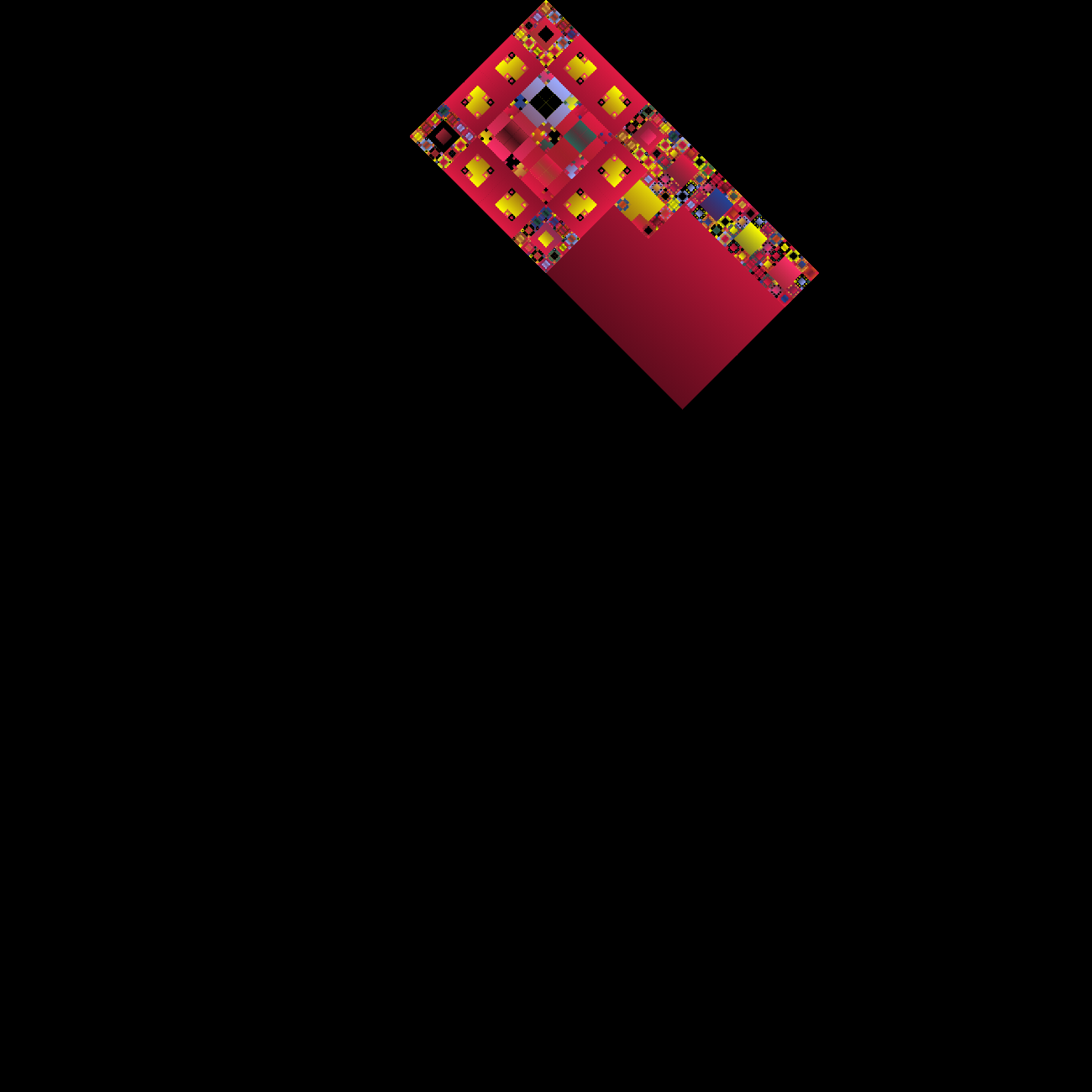
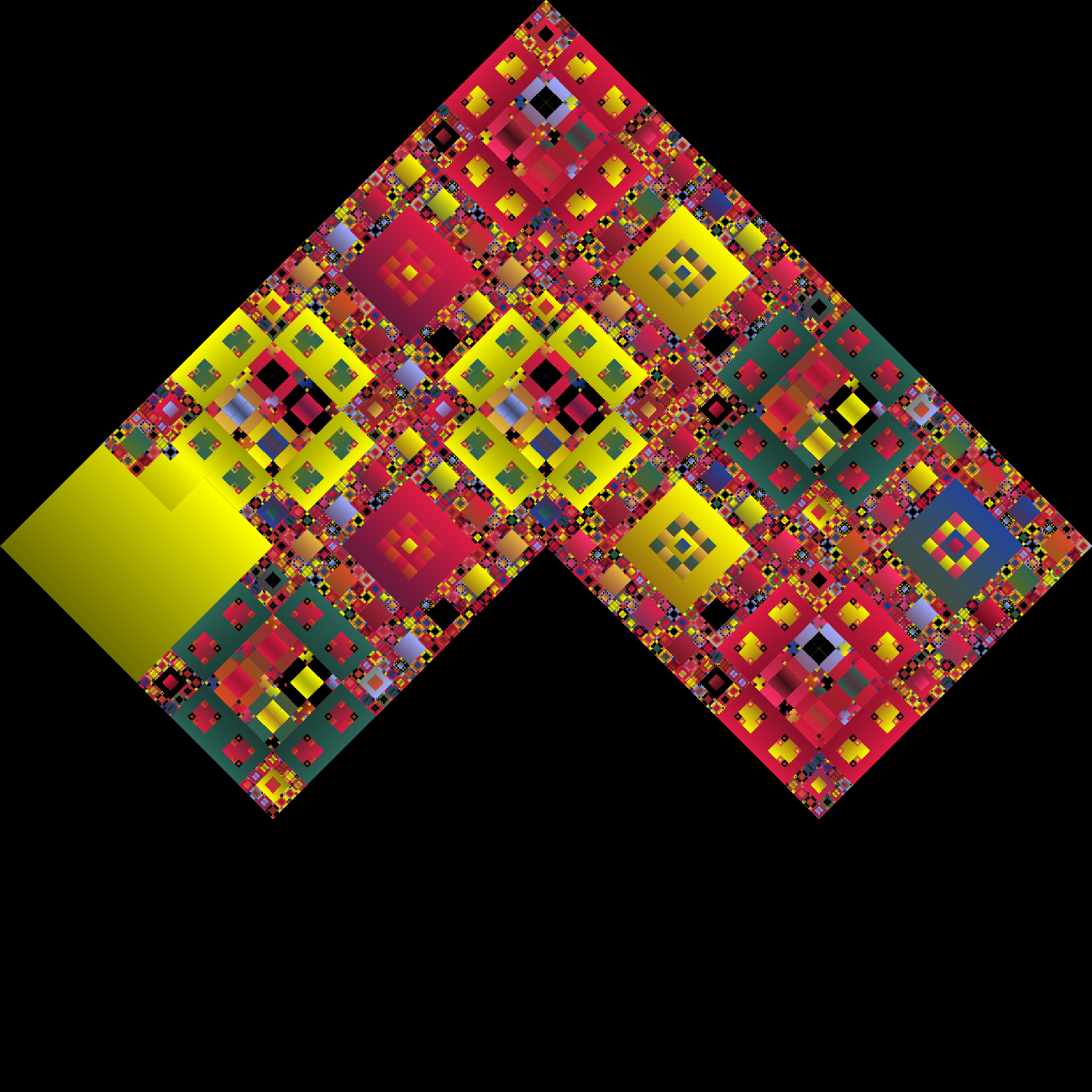
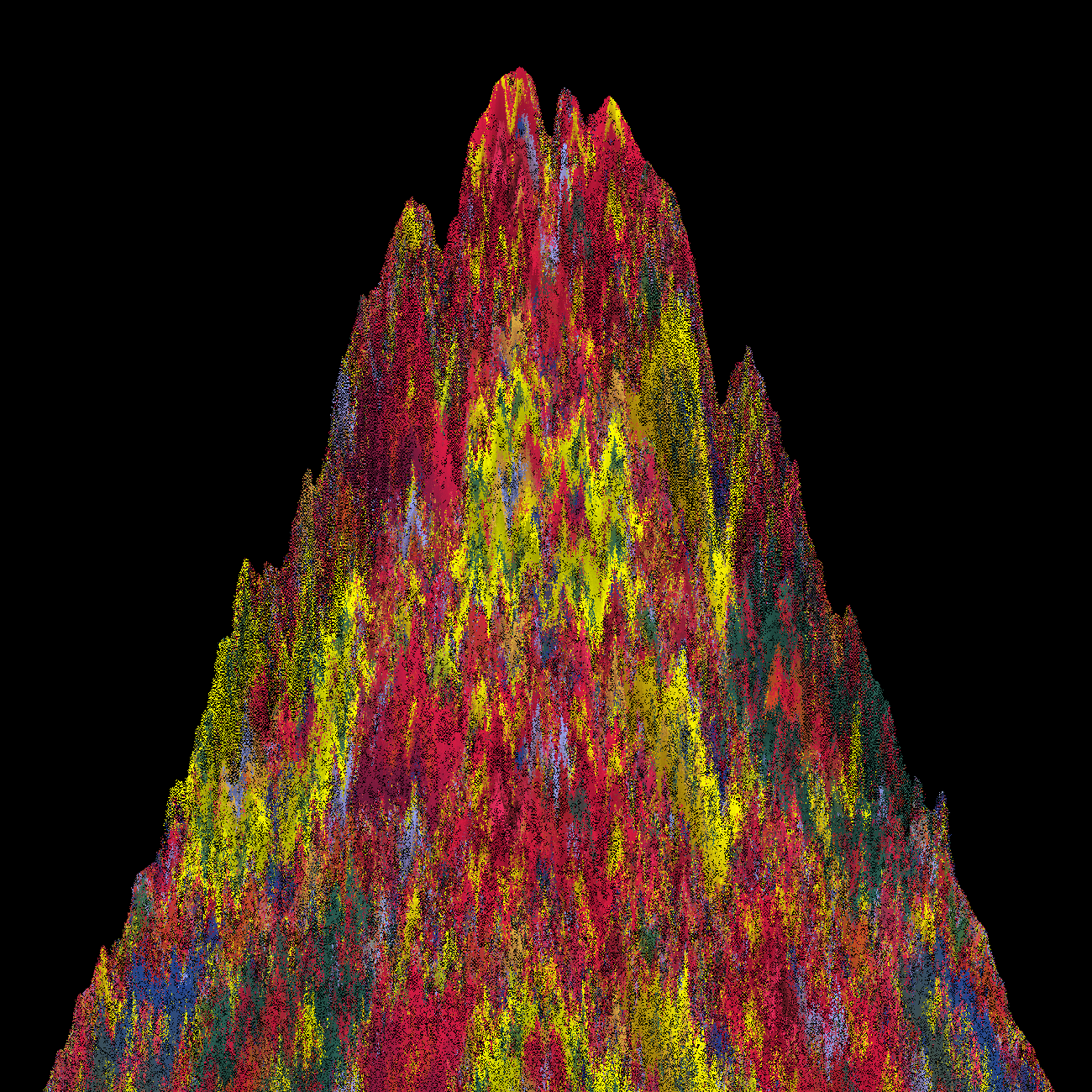
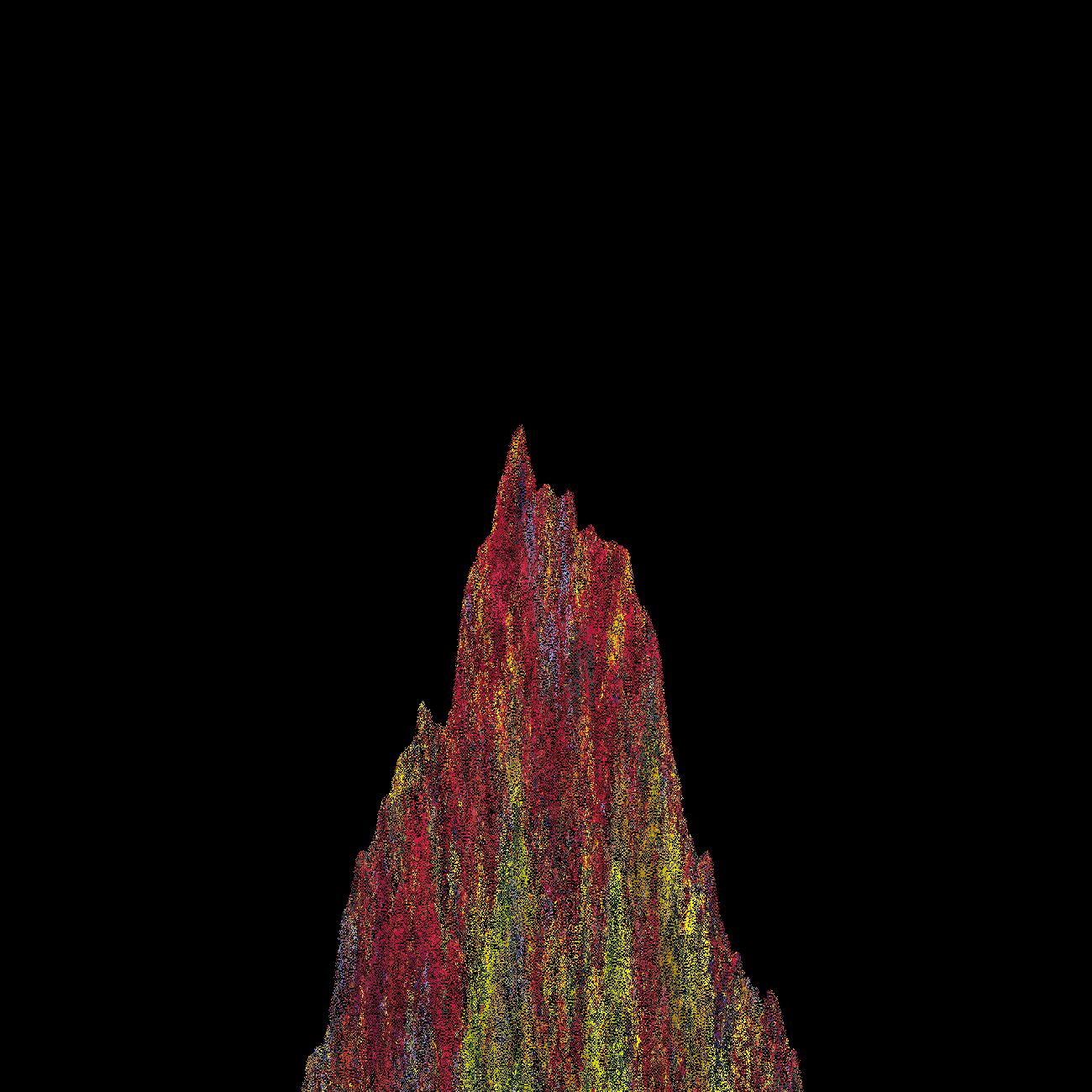
Each run has new colours. The stills elsewhere in the wiki show other palettes from other runs: coral, slate blue, ochre and sage for Anicca 1 on qubibi's hello world, magenta, red and ochre streaks on Mandala Q&A, a diamond in reds and blues dissolving on Sacred Geometry. The timings above come from runs captured for this page and vary from run to run; harm.work gives none.
The sand mandala, and what Anicca changes
A sand mandala is made by monks working in a team, one section at a time, "from the middle outwards"; when it is finished it is dismantled in a set order, "until at last the mandala has been dismantled to show impermanence", and the sand "is collected in a jar which is then wrapped in silk and transported to a river" (Wikipedia). Anicca keeps the two phases, making and unmaking, and the patience: a run takes minutes, and nothing in it can be kept except by a screenshot.
It changes the order of building. The program does not start at the centre. It fills the figure quarter by quarter and subdivides as it goes, which is the construction the artist gives Murayama for his mandala works in general: "Mandalas are often recursive structures. Shapes become containers for multiple, smaller shapes, in careful symmetrical subdivision," and "I often use Markov Chains: the distribution of a certain step or operation happening is stochastically determined by the parent the new shape is in." He does not say which of his works uses which method; what can be seen in Anicca is the containment. Its unmaking is a fall, with no hand that sweeps. In Anicca 2 the fall gathers the colour into a heap at the bottom centre, close to the sand swept together before it goes to the river; Anicca 1 lets it run off the screen. The comparison is the wiki's.
The Verse text for Quantizer (2025) gives the reason the sand mandala matters to him: his "long-standing fascination with impermanence, shaped in part by the Tibetan Buddhist practice of sand mandalas: intricate compositions created over days or weeks, only to be swept away in a ceremonial gesture of release", which he "reinterpreted in the context of Web3 by favouring flux over fixity." In Anicca the sweeping is part of the program.
The Mandala channel, spring 2025
The artist opened the are.na channel Mandala on 18 October 2024 with his own nested compositions of 2017–18 (→ Sacred Geometry). On 16 January 2025 he added Wikipedia's article on the mandala, an introduction from Study Buddhism (block) and a mandala drawn by one of Carl Jung's patients before 1929 (block).
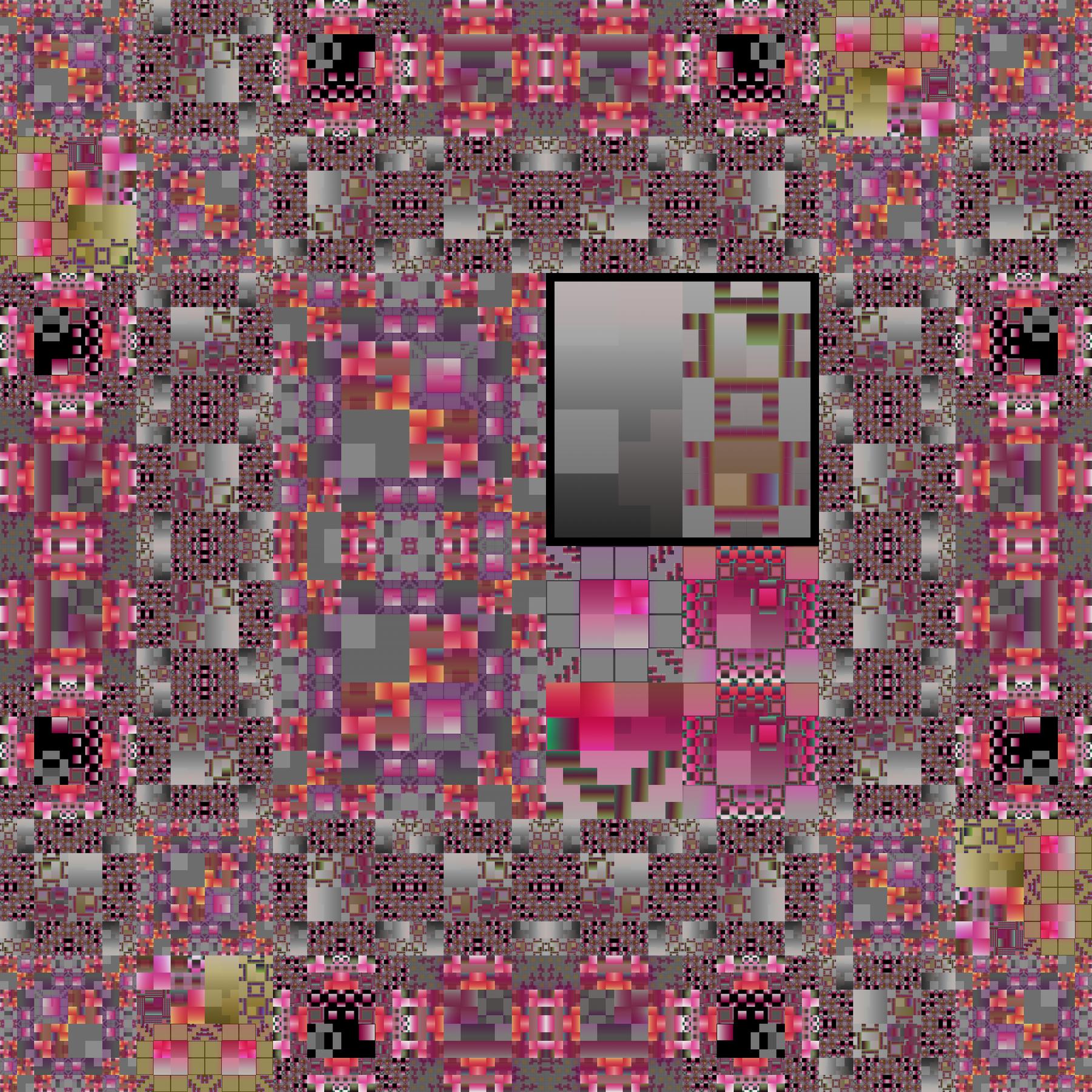
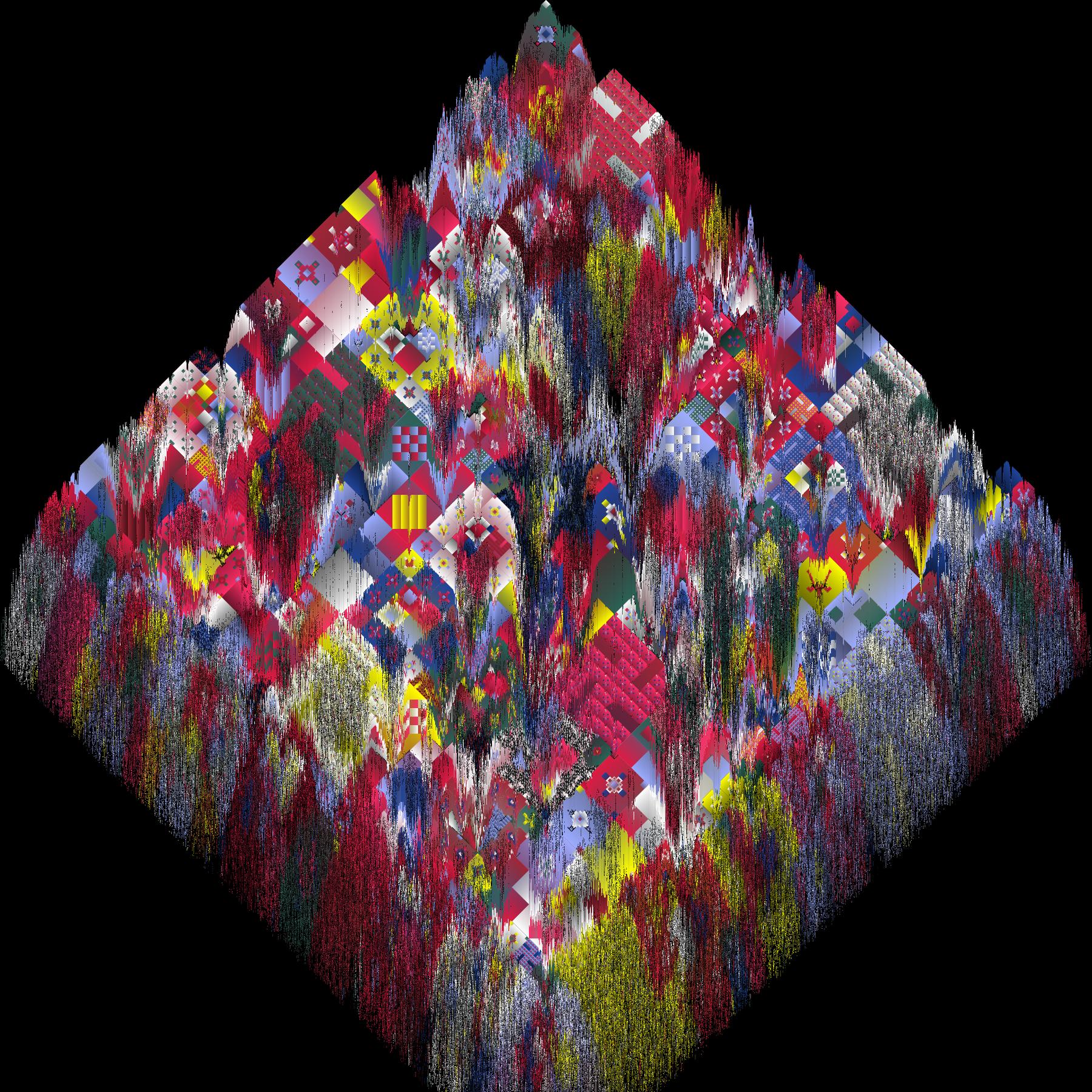
The work itself appears in April. On 11 April he filed three images: a square of pink and grey patterned tiles with a dark square set into it (rose), the same palette run down into streaks (rose2), and a frame of saturated vertical streaks with blocks of pattern at the top (tuyt). On 13 April came "Anicca 2 - work in progress" (block): the diamond in reds, whites, yellows and blues, already breaking into streaks. On 9 May he linked the harm.work page of Anicca 1 and filed fall, and on 16 May the page of Anicca 2, with its own description: "A generative two-phase animation, inspired by Buddhist sand drawings, and this one in particular on the Endless Knot symbol." The Endless Knot, and the plotter drawing of the knot made the same June, are on Recursion and Self-Reference (under Endless Knot (2025)).
In June the channel moves on to Kalachakra and medicine thangkas and a Tibetan map of the universe, in the months before Quantizer (August 2025), whose root traits include tibetan and thangka.
The two tokens
Anicca 1 is the square. harm.work records it as placed through Upstream Gallery. Anicca 2 is the diamond on the Endless Knot, still with the artist and open for inquiry. Their metadata carries only two traits, the series and the index. The other six of the eight first planned will probably not be made: the Quantizer collection took over that role (the artist, November 2026).
Where Anicca leads
The artist calls Quantizer (2025) the place where he "went deeper into their construction" (→ Quantizer, Quantization and Dithering), and he extended the Quantizer algorithm into the hatched plotter drawings Anobium, Nethermind and Nethermind Quilt. Predecessors of Entfaltung counts Anicca among the works behind Entfaltung (2026). Sacred Geometry places it among the traditions the practice names, and Algorithmic Archaeology among the older procedures he reconstructs. The Practice in Propositions turns the title into a principle: "Anicca — impermanence — is not a theme. It is the state space." qubibi's hello world reads it beside Kazumasa Teshigawara's running system through impermanence and ma.
See also
- Mandala Q&A — Goro Murayama (2026) — the artist's account of his mandala works
- Sacred Geometry — the mandala among the traditions the practice names
- Recursion and Self-Reference — the Endless Knot and Anicca 2
- Quantizer (2025) — the mandala taken further
- Predecessors of Entfaltung — Anicca among the predecessors