
Entfaltung on Chain — the 36 Tokens
Entfaltung exists on Ethereum as a collection of 36 tokens. The artist fixed the number in October 2026: "in total there will only be 36 tokens ever." The contract was deployed on 5 October with the Genesis token, Entfaltung (𝛼). Tokens 1 to 24, configured by the artist, were minted between 22 and 25 October, and all 25 are held by his address, entfaltung.eth. Places 25 to 32 are kept for "channelled personal tokens", made later in conversation with collectors, and 33 to 35 for artist's proofs. Each token is named by a single glyph. This page reads the collection from the contract, the token images and the artist's project files (sources/ingested/entfaltung-token-data.md). The series and Kunz's method are on Entfaltung, the drawings on Entfaltung on Paper.
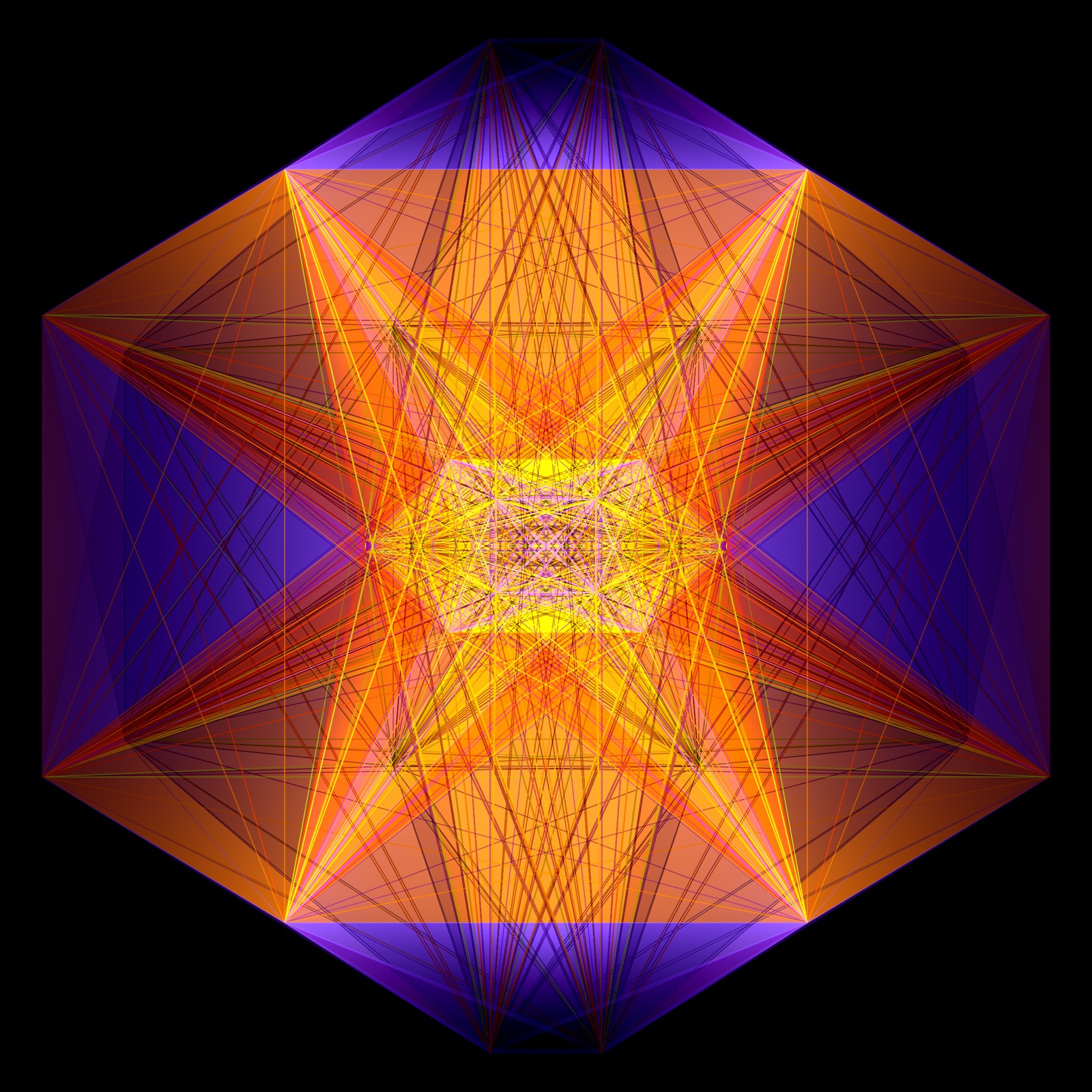
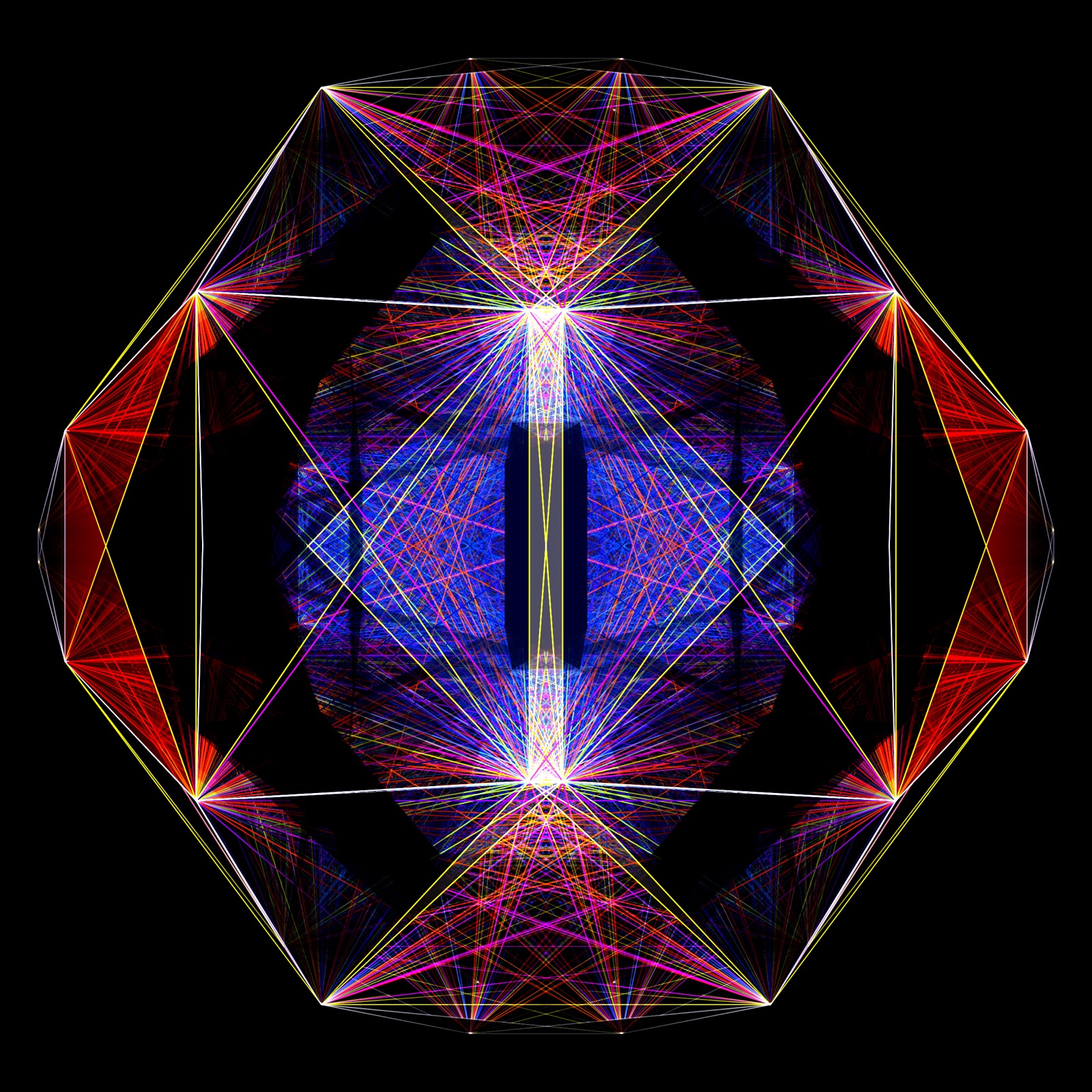
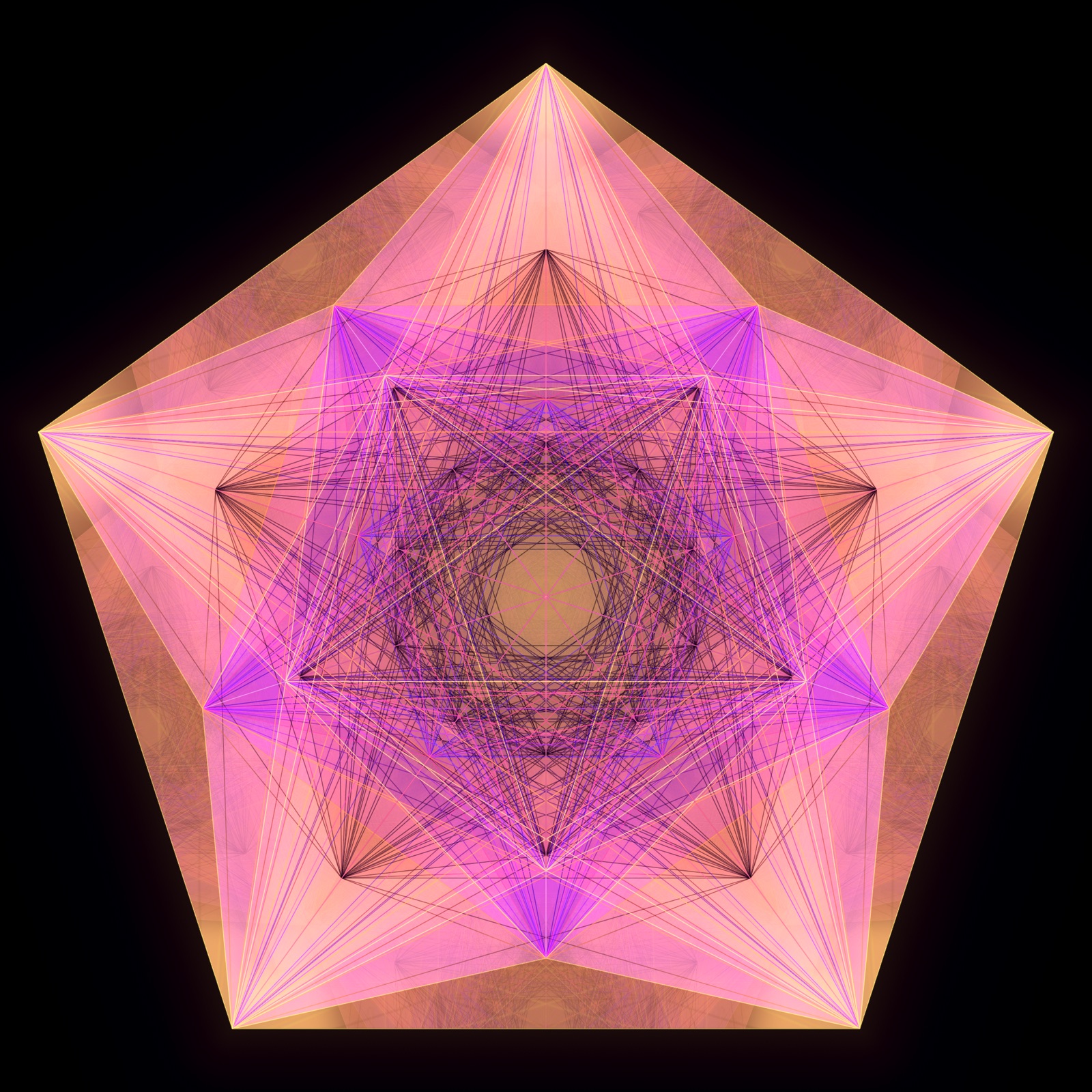
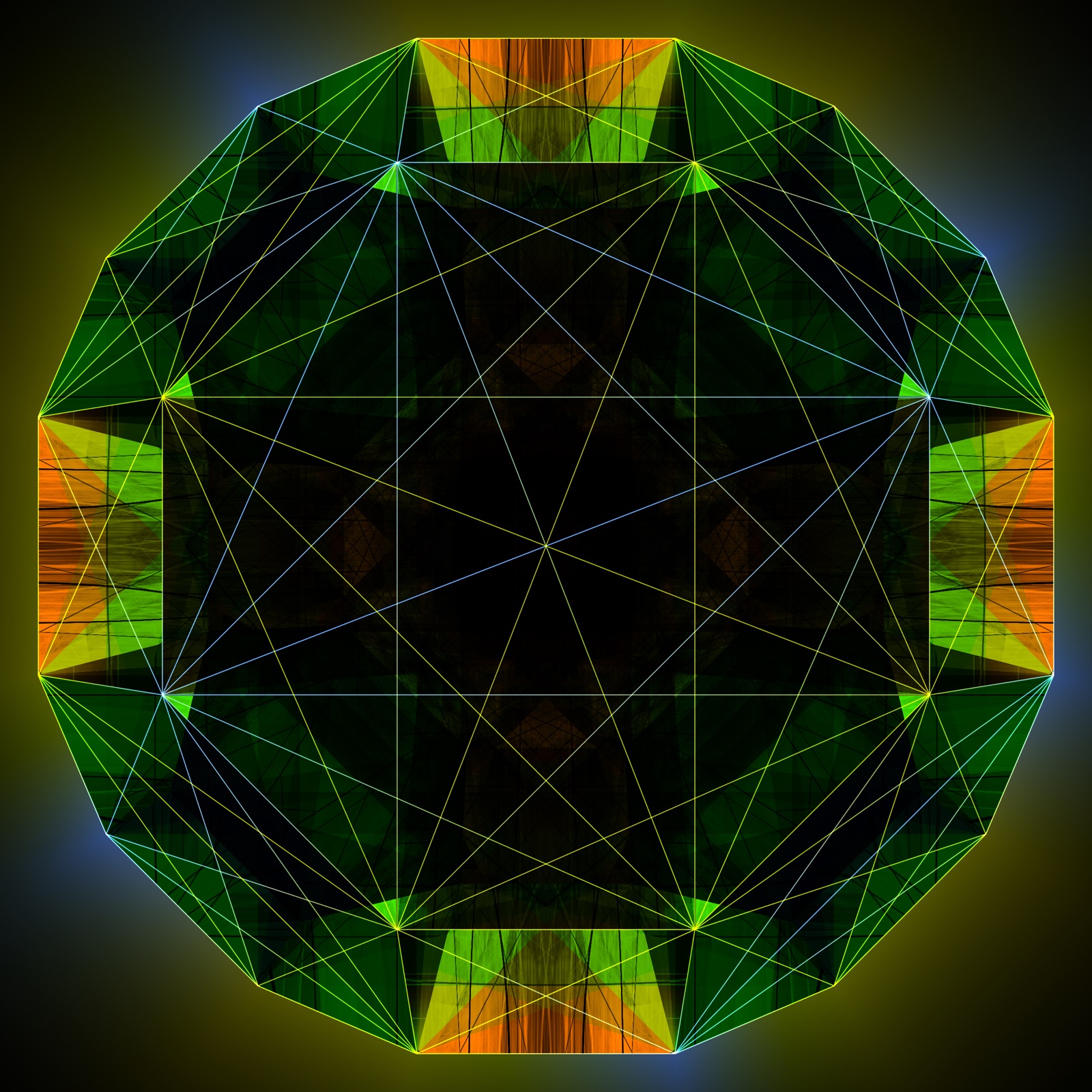
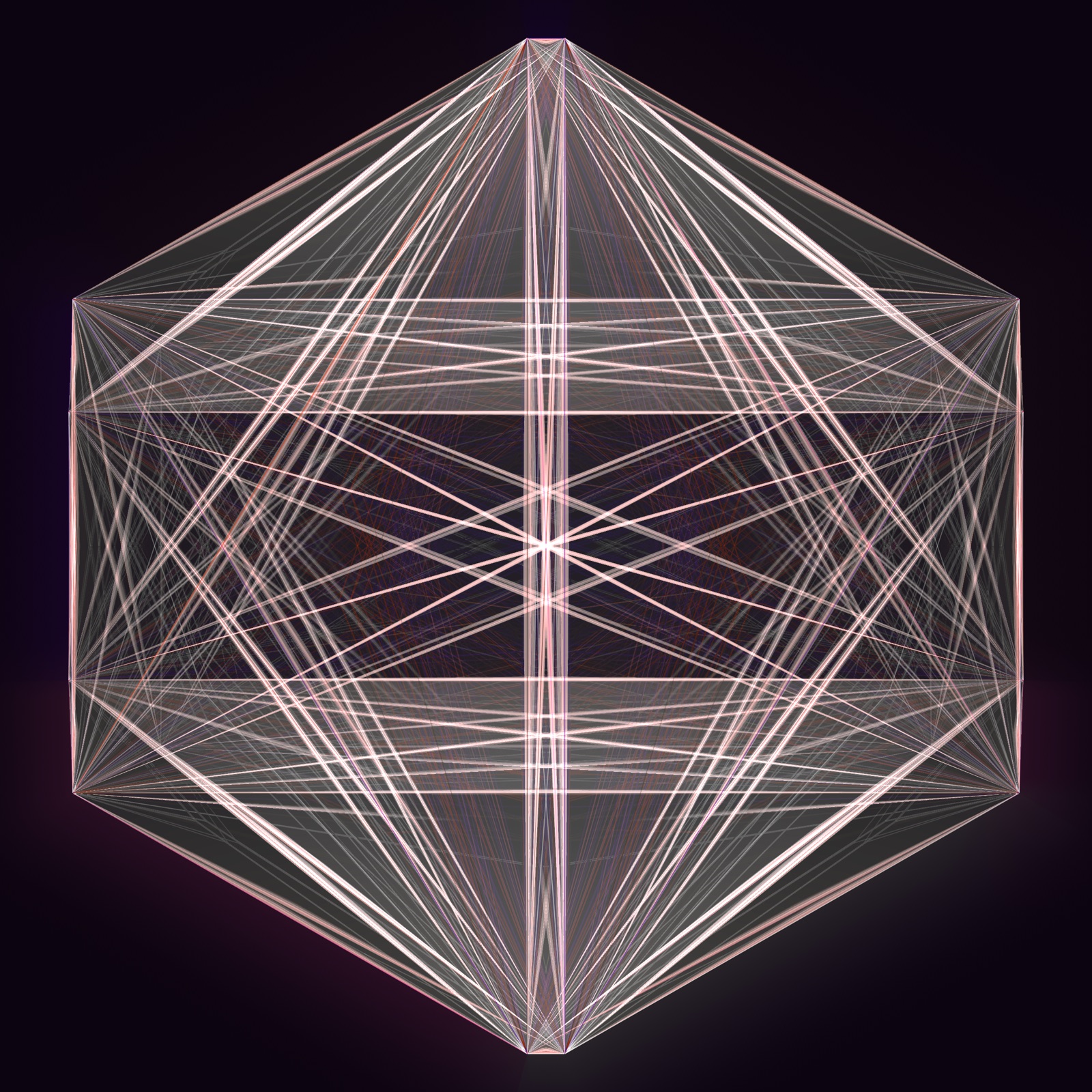
The Genesis token has 48 points: six seeded points, each copied into the eight octants of space. Its faces join every point to its nearest neighbours and take their colour from their size, and its lines are coloured by depth. Seen down one of its axes, as in its token image, the outline is a hexagon with its top and bottom points cut flat, mirrored left to right and top to bottom.
The collection text gives the premise in one sentence: "Kunz let her pendulum decide. In its place I consult the blockchain: each block hash is a swing of the pendulum, the same for every observer and authored by no one." How far the block hash does what the pendulum did is the subject of the reading on Entfaltung (Agent's reading: the pendulum taken apart).
One program, 25 settings
Every token runs the same program, stored on-chain in two pieces: 143 KB of JavaScript with its WebGL shaders, identical in all 25, and the token's own configuration of about a hundred settings, saved from the artist's editor. Ten of the settings are published as traits. The token page loads both, compressed, and computes the figure in the viewer's browser. A still image of each token, 2400 pixels square, is stored on Arweave.
Nothing in the contracts can be locked. The artist decided this during development: "I want the artwork to always be updatable, in any way." The renderer was replaced four times between 22 and 26 October, and several configurations and images were rewritten after their tokens were minted. The only switch that cannot be undone ends the minting. The stance is the one the wiki follows under Release Early, Release Often: a work that keeps being released.
A figure from a few points
Every point of a figure is joined to every other by a straight line. The Connections trait counts these lines, n(n − 1)/2 for n points: 1,128 for the Genesis token's 48. In the plane, all the chords between points on a circle are every star polygon on those points drawn at once, the figures Kunz's Grundformen plate sets out one by one (→ Entfaltung, Kunz's method).
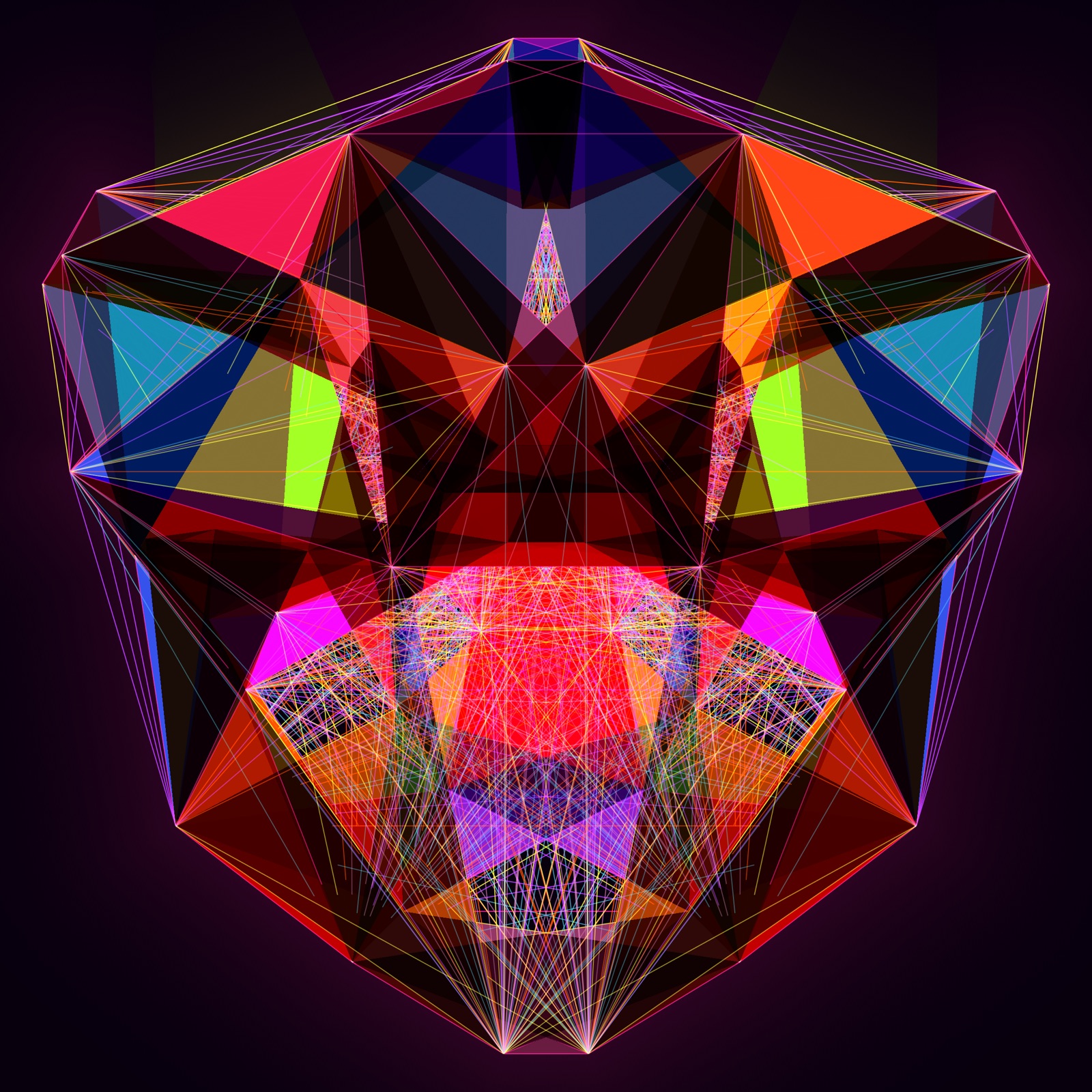
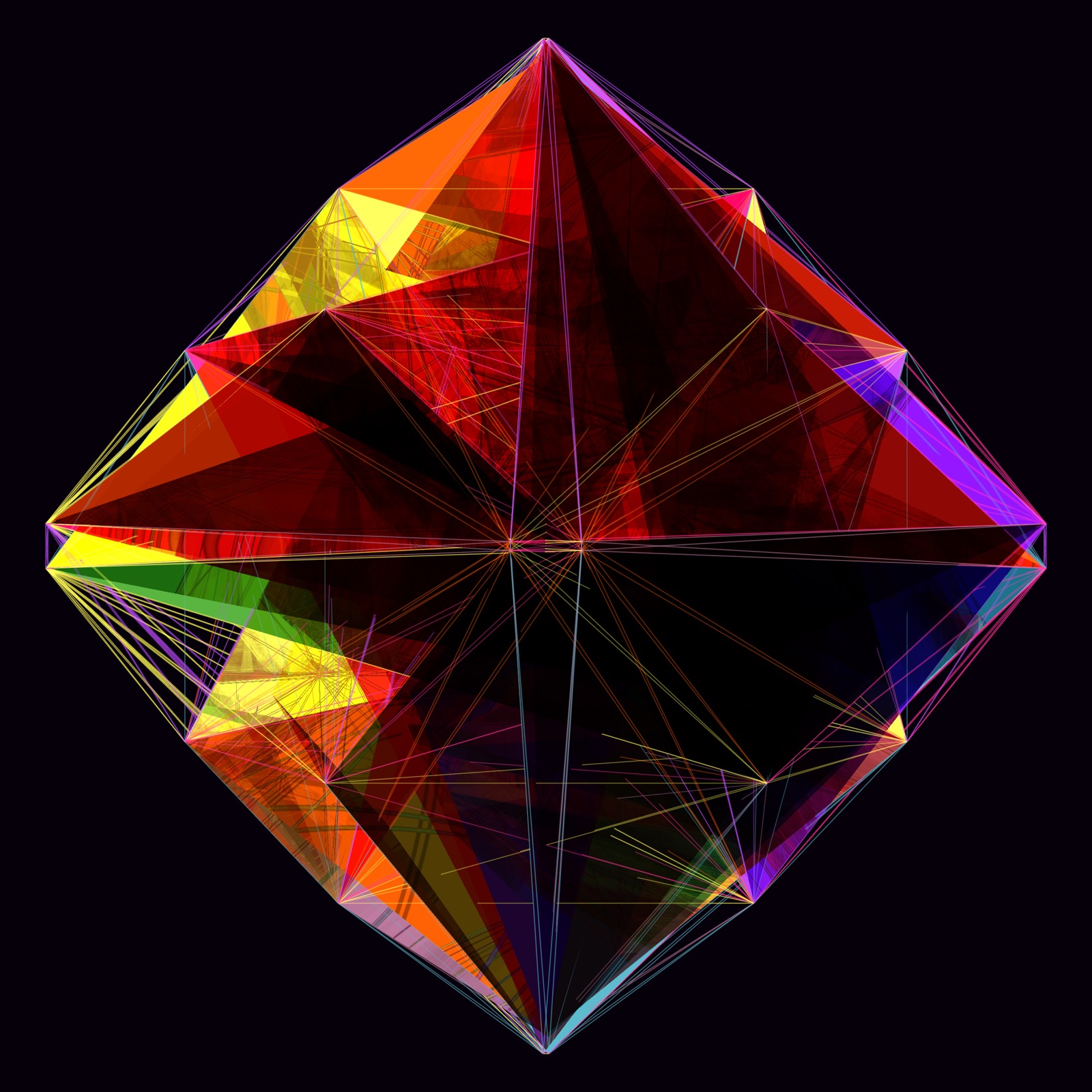
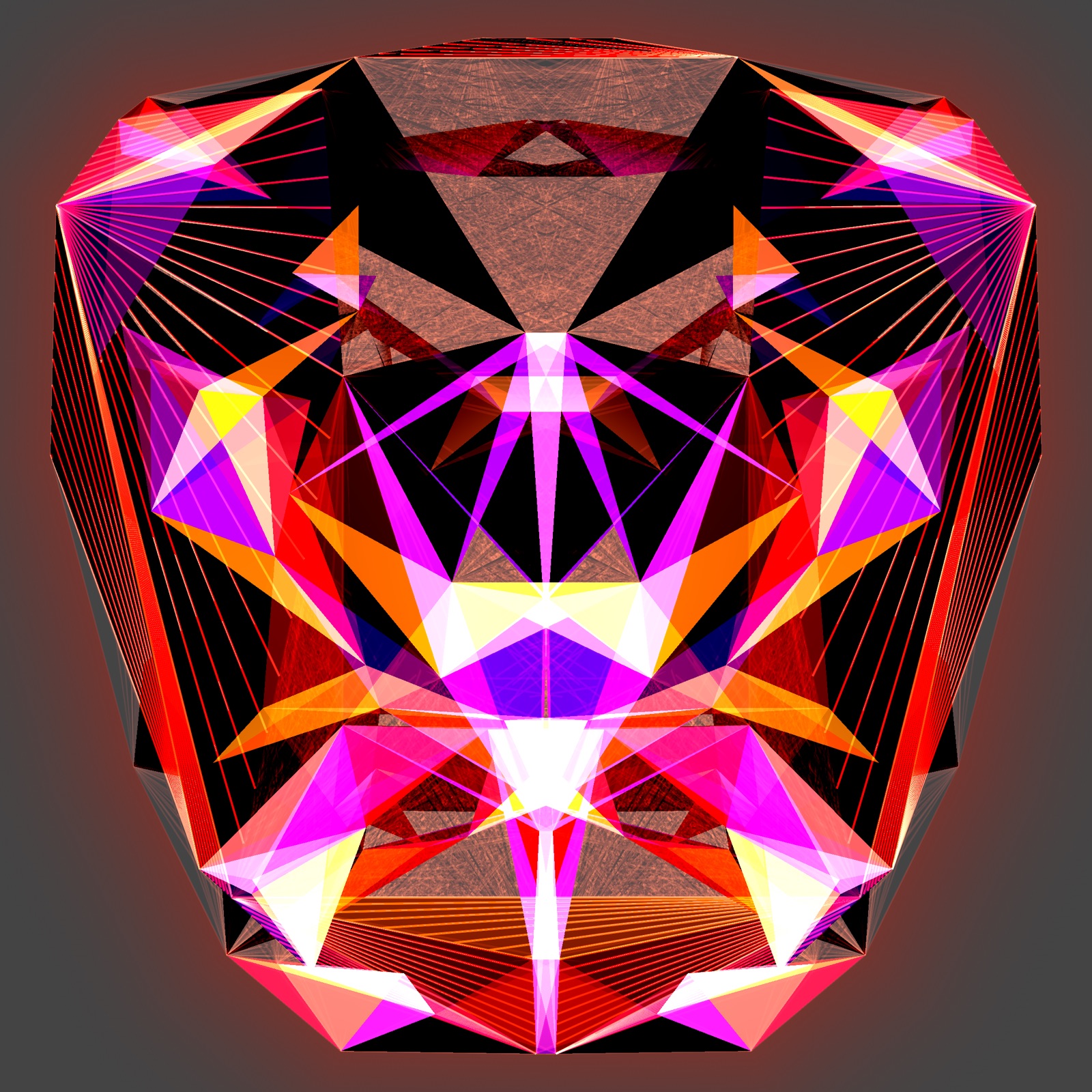
The points come from a symmetry group. A token seeds a few base points and copies each one through every element of its group, so its point count is the number of base points times the number of copies. Mirrored has one mirror plane and makes two copies. Octant has three mirror planes at right angles and makes eight. Pinwheel adds to the octant a three-fold turn about the diagonal of a cube, 24 copies. Cube has the full symmetry of the cube, 48, and icosahedral that of the icosahedron, 120. Polygonal replaces the octant's two upright mirrors with more, three to eight in these tokens, so that the figure seen face-on is a polygon with that many sides. Ten tokens are octant, six polygonal, three mirrored (⁘, ᗢ and ϫ). A mirrored figure that rests with its one mirror plane upright has the left-right symmetry of a face. Anabel Zenith, writing about the tokens before their release, sees faces and masks in some of them and names ϫ (sources/ingested/zenith-terrifying-and-glorious-2026.md).
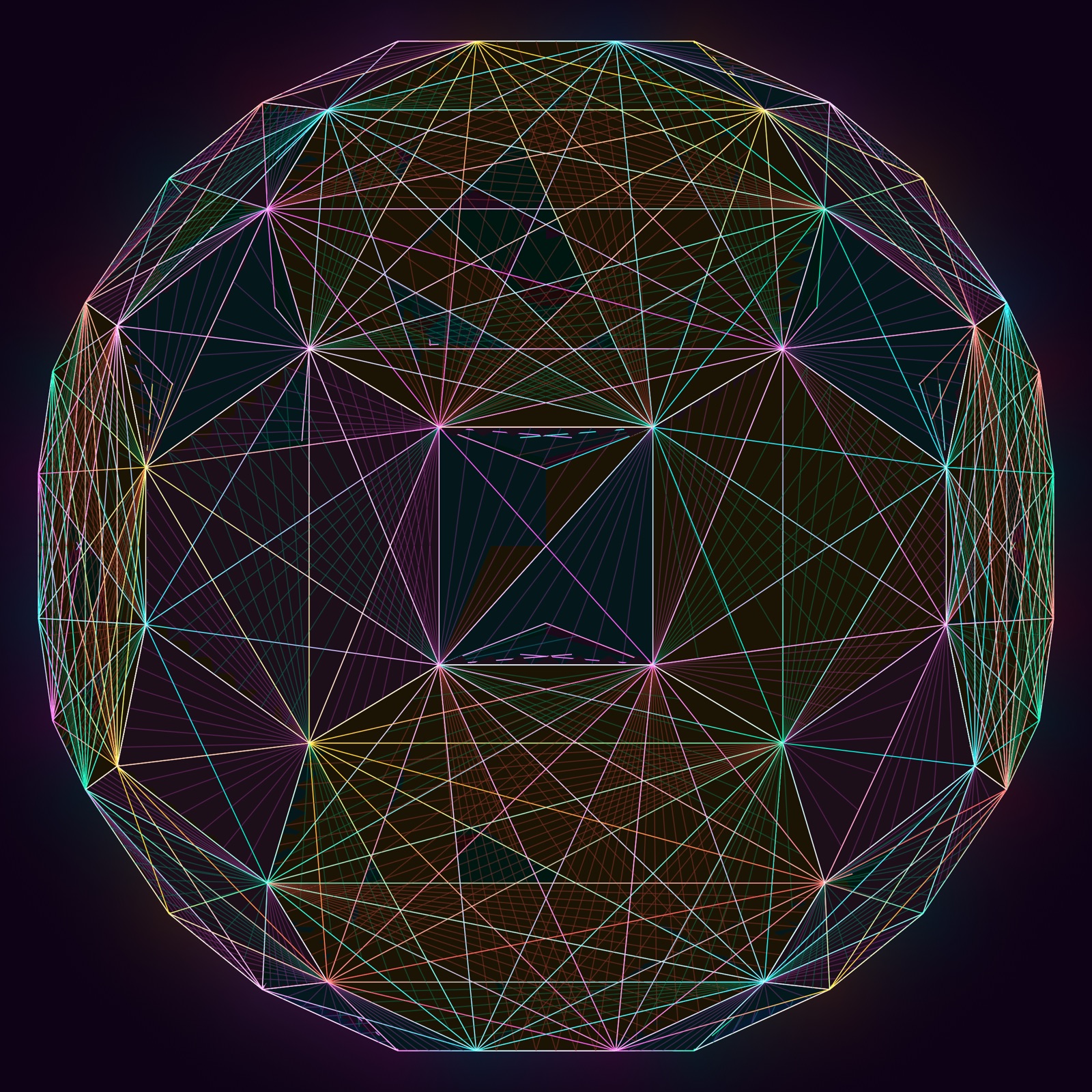
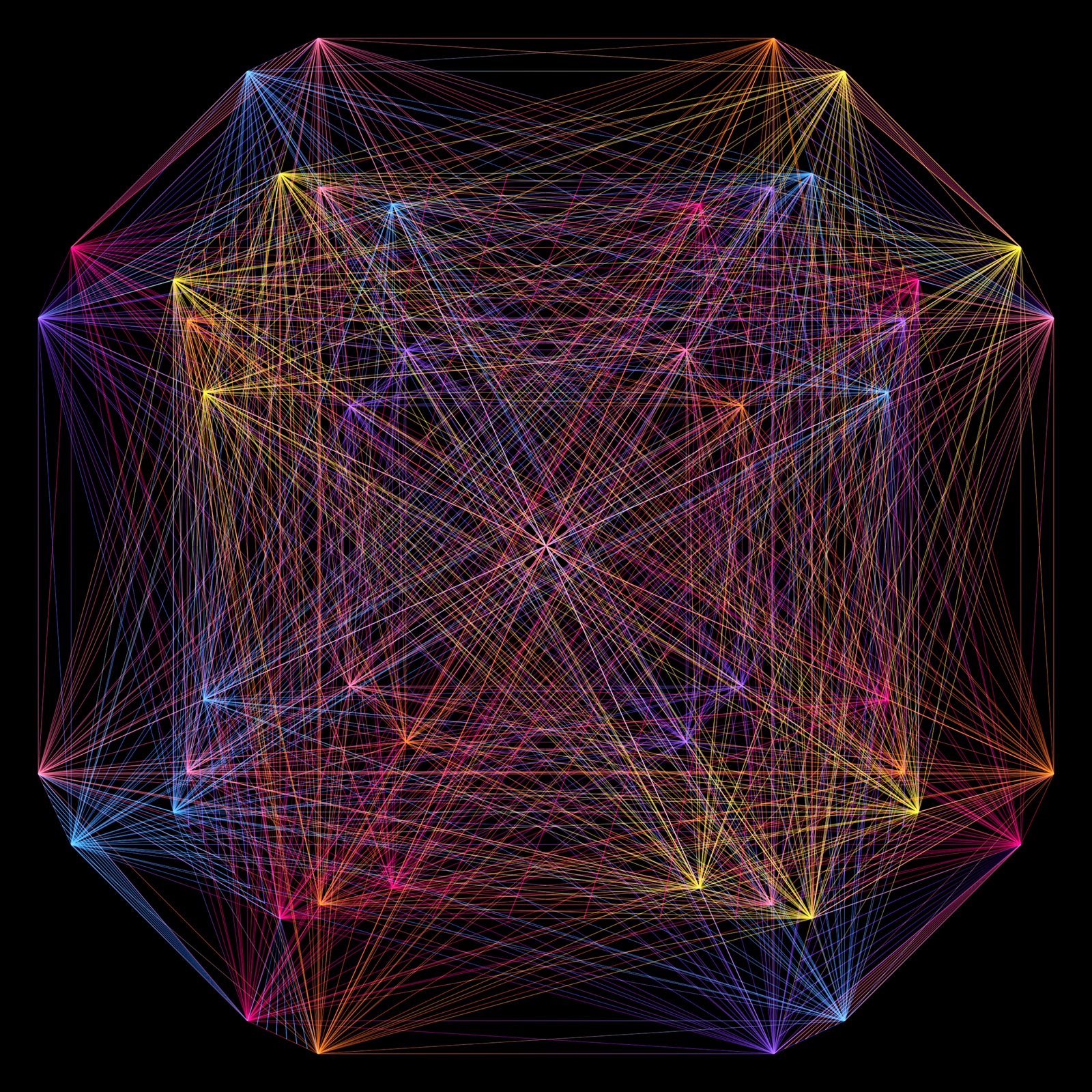
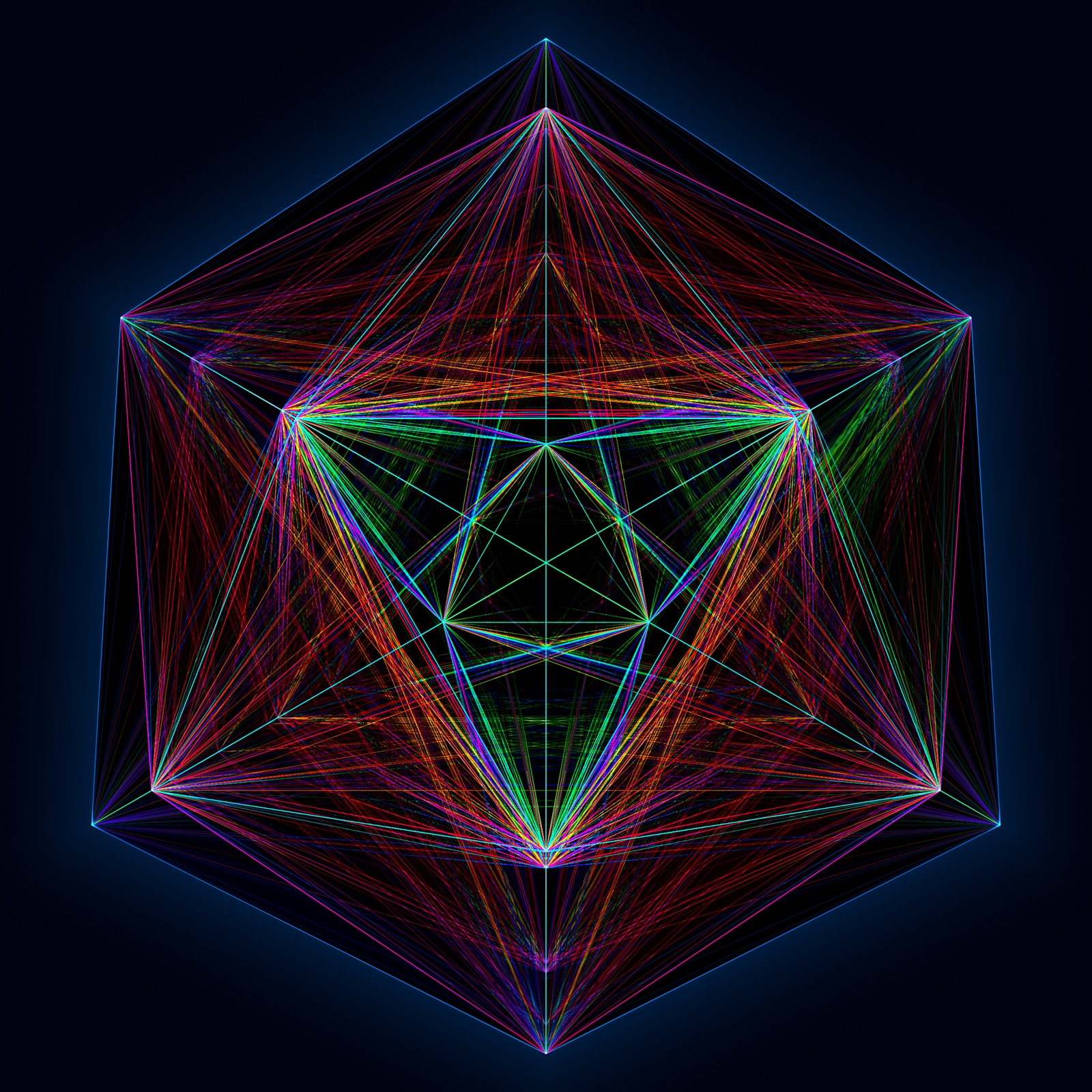
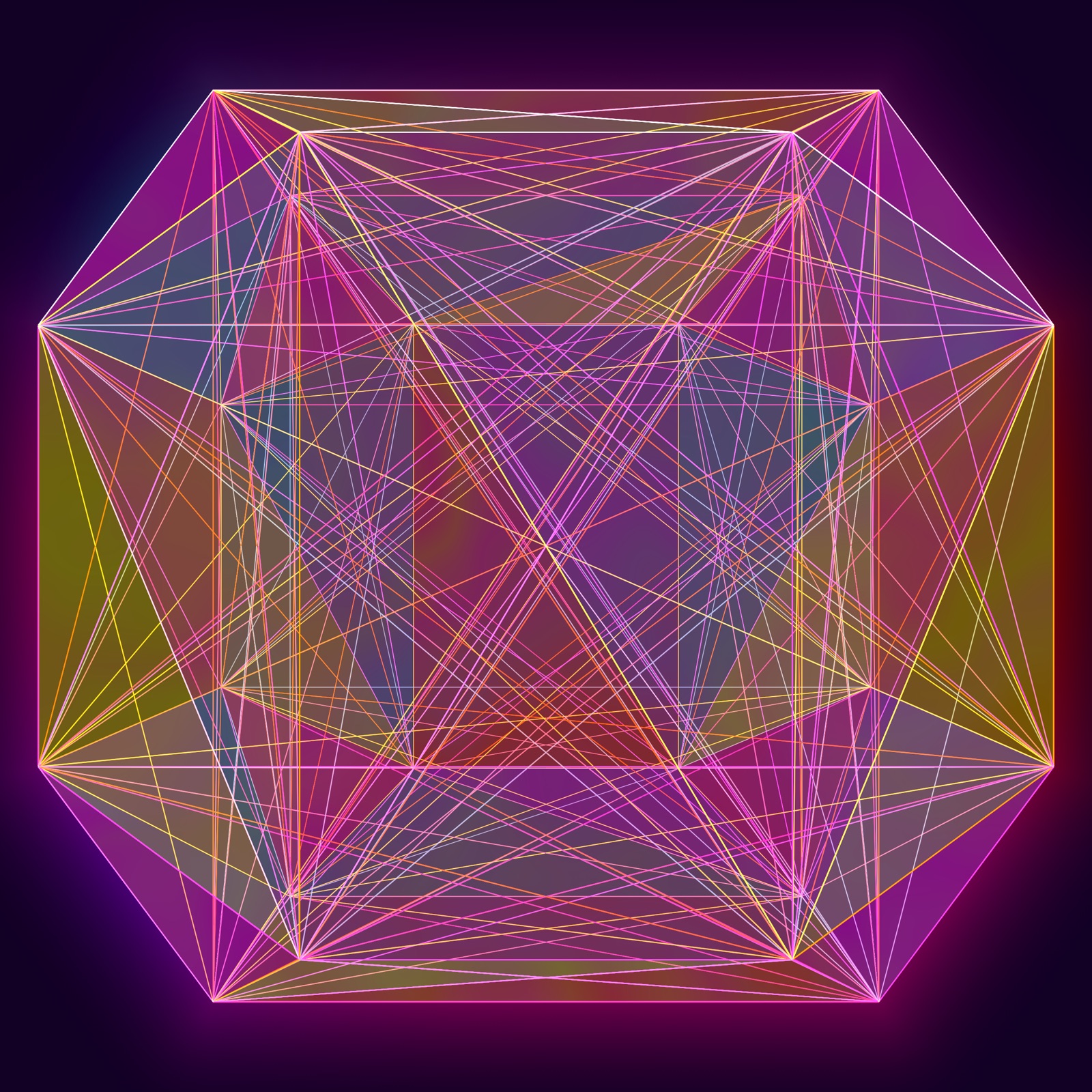
Entfaltung (∞) has a single base point. Its 120 points are that point's images under the 120 symmetries of the icosahedron, set on a sphere, and all 7,140 lines between them are drawn. Seen along an axis, they form a ball of crossing chords around a small square. Two more tokens have one base point: ⚭ (cube, 48 points) and ⌁ (pinwheel, 24). In these three a figure is fixed by two choices, a group and a point. The token fixes the group; the block hash fixes the point. Kunz's booklet of 1953 states that "the choice of two numbers" determines the kind of form.
How a token moves
The tokens keep Ethereum's time. A slot lasts twelve seconds, counted from the start of Ethereum's beacon chain in December 2020, and every viewer's page runs on one shared clock. What a page shows depends on that clock, not on when it was opened, so every viewer sees the same picture at the same moment.
Four slots make a cycle of 48 seconds. In each of the first three the figure rests in a symmetric pose, a view in which its symmetry lines up with the screen, and then turns to the next: a quarter or a half turn, which takes about nine to ten seconds and ends as the slot closes. The three turns of a cycle use three different screen axes, a tilt, a pan and a spin, and the block of each slot picks the direction.
In the fourth slot the points move. That slot's block hash becomes the seed of a new structure with the same count, the same group and the same bounding sphere. Each new point is matched to a point of the token's reference figure, so that it keeps its identity, and over the last ten seconds of the cycle every point travels in a straight line to its new position. The turns are planned in laps of eight cycles, one Ethereum epoch of 32 slots, so that the figure visits poses it has not shown yet and each lap ends where the next begins.
The lines keep their ends and travel with them. The faces do not. They are computed from the positions, by a rule such as "join each point to its nearest neighbours", so each new structure has faces of its own. During the morph the faces common to both structures change shape, those of the old structure only fade out, and those of the new fade in.
Five tokens add projection slivers, the colour Kunz put where lines cross. The program does not find them in space, where two lines at different depths never meet, but in the flat picture, where their projections cross. The artist's glossary for the program describes them: "They belong to one view, so they are found again for every frame." In these tokens Kunz's slivers are found again in every frame, for each angle of the turn.
A sealed page cannot read the chain itself, so the block hashes reach it through a relay at seeder.mutant.garden, the site of Mutant Garden Seeder (2021). Each block gives the work one number taken from its hash.
Twins
The block hash replaces each token's own seed. A token's seed only fixes the reference figure against which new points are matched. Two tokens with the same symmetry, the same point count and the same bounding therefore have the same positions and make the same turns at every moment.
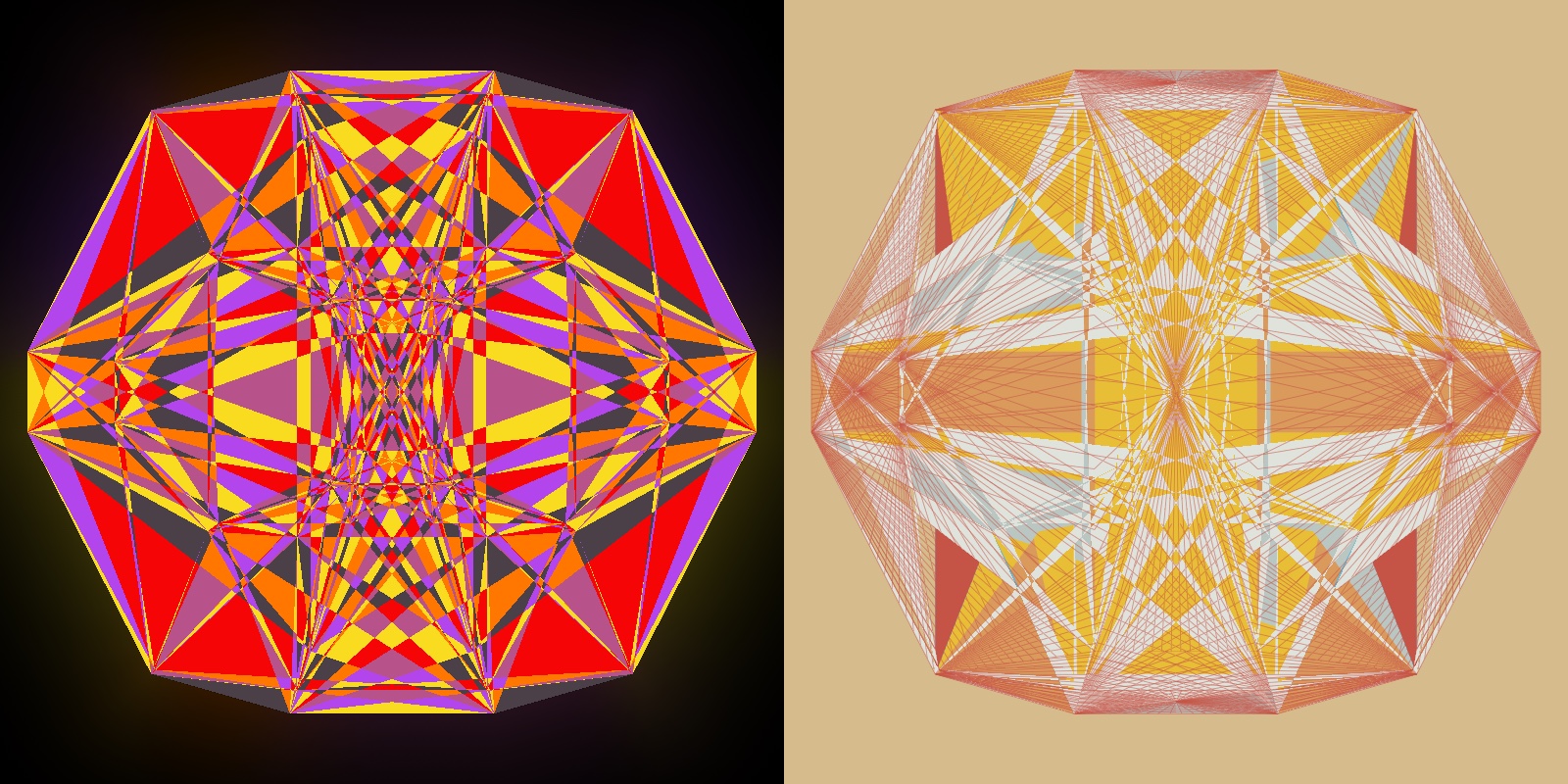
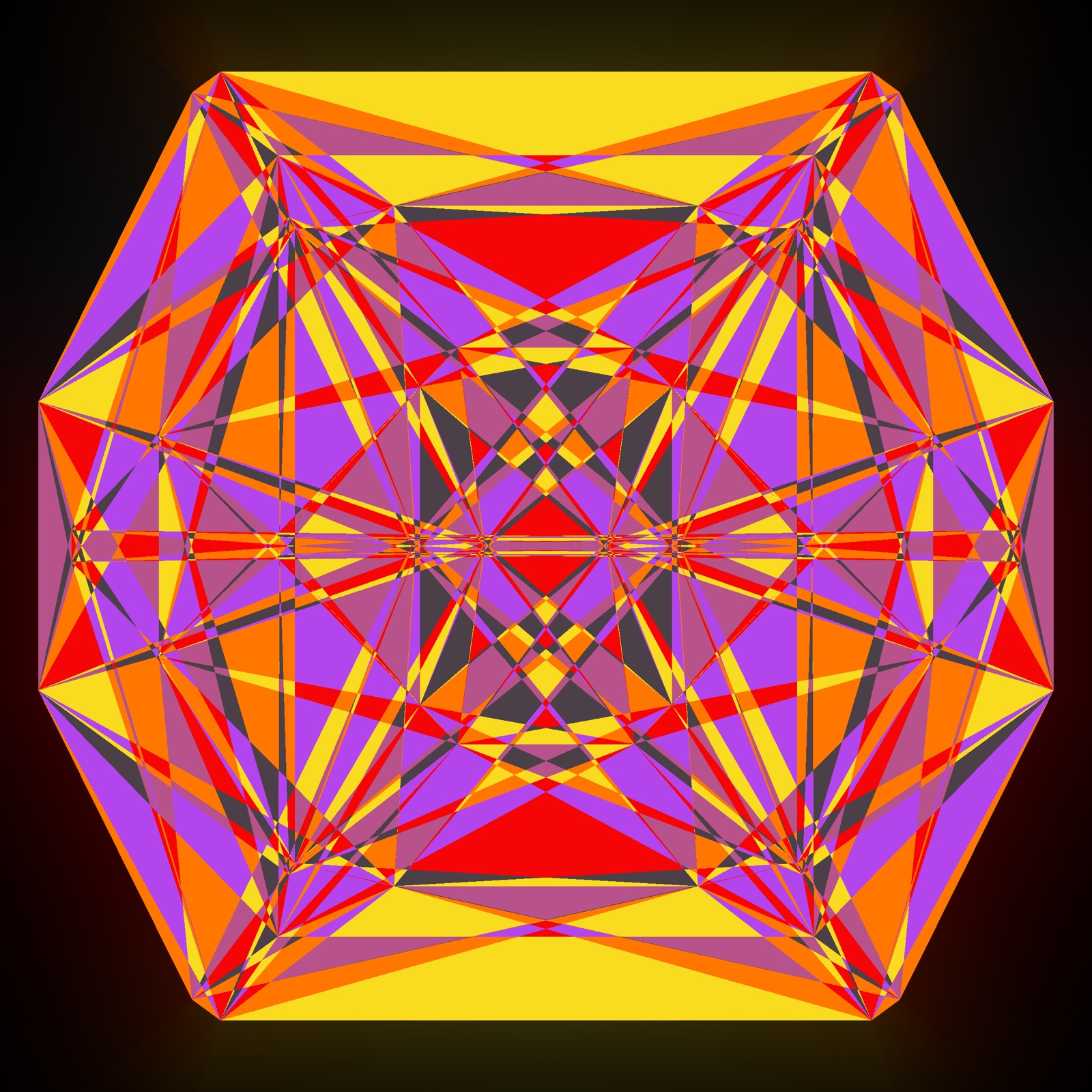
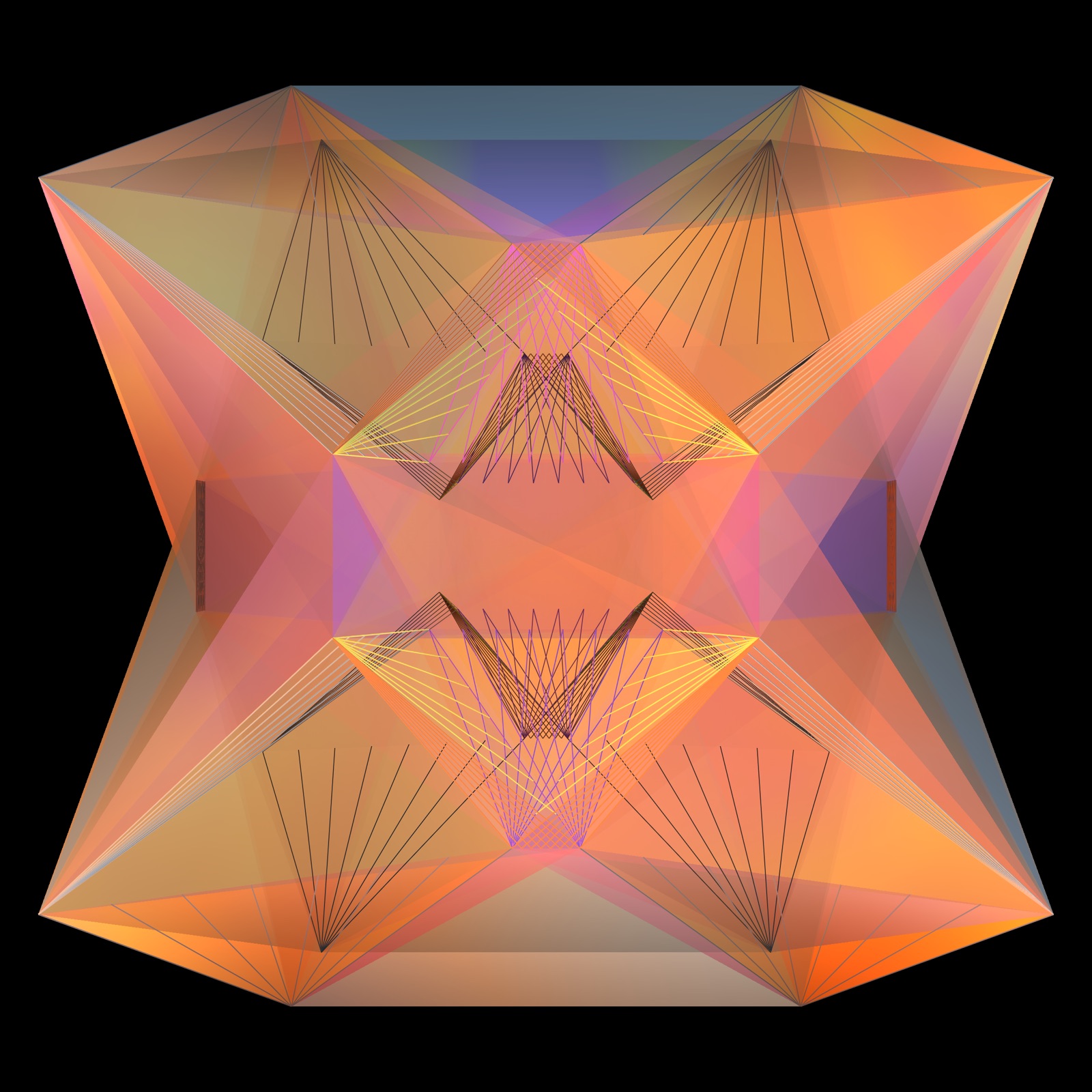
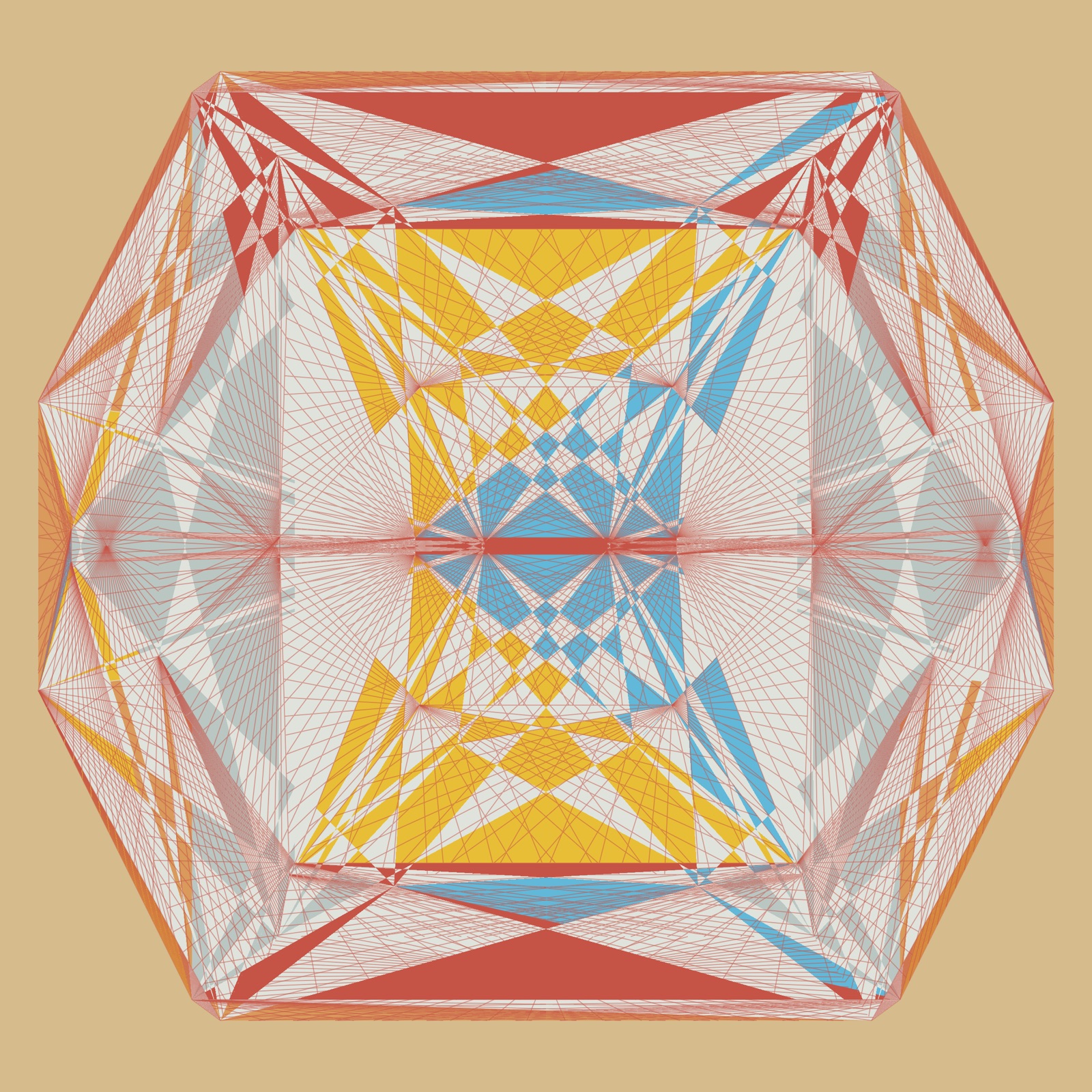
Entfaltung (⧗) and Entfaltung (ꕥ) share every setting that places points: octant symmetry, 56 points, the ball, seed 300. The project notes say ꕥ was built as "token 9's figure" and coloured after a drawing by Kunz. Rendered side by side, the two show the same outline in every frame. ⧗ fills its slivers in saturated colour on black; ꕥ joins its points in mirror bands, draws fans in red and lies on a tan ground. Three more pairs share their symmetry, count and bounding: 𝛼 and Ж, ∴ and ⦶, ǂ and ⟡. In each, the second token draws its figure again when its middle is empty or it falls into pieces, so the pair coincides only while the first draw passes that test. A viewer who watches one twin at a time sees the pair only as a family likeness. Anabel Zenith calls Ж "a distant relative, to my eyes, of Alpha" and names the palette: the two share the first two of their six colours. Quantizer (2025) shows every collector the same composition at the same moment (→ Predecessors of Entfaltung); Entfaltung shows the same structure in several tokens at once.
Agent's reading: the selection moves to the faces
Thesis. The artist's texts call the change topological. The collection text says that "the points of a token and the connections between them never change; only their positions move", and the text on entfaltung.harm.work adds that every block deforms the figure "without ever tearing it".
Antithesis. In the code the faces are rebuilt at every morph. Faces the new structure lacks fade out and new ones fade in, so the surface the eye reads is cut and joined again every 48 seconds.
Synthesis: the selection moves to the faces. What never changes is the full graph on a fixed number of points under a fixed group. It survives any rearrangement because every point is joined to every other, so moving the points cannot break a connection. The artist's own formulation fits the code exactly: "The number of points in a structure is fixed, and it is their positions that generate the shape" (→ Does a Work Still Need to Be New?). The faces are a selection from that graph: a rule for which points to join into surfaces, fixed for each token as a trait and applied again to every new arrangement. In Kunz's sitting the selection was the step her witness could not follow, which of the pendulum's points she joined (→ Entfaltung, Kunz's method). In the tokens no lines are chosen, because all of them are drawn. The choosing happens in the face rule, and it is made again at every block.
The traits
Besides the symmetry and the counts, the traits name how a figure is filled, coloured and lit.
- Faces: wireframe (none); volume mesh (each point joined to its nearest neighbours); orbit shells (nested hulls of points at equal distance from the centre); mirror layers and mirror bands (plates and trapezoids built across the mirror planes); tetrahedra (each point with its three nearest); neighbour cells (each point with its four nearest); spiral weave (triangles stepping through the points by a stride of the point count divided by φ², φ the golden ratio); geode (the outer hull, with walls from each face to the point nearest the centre); slivers (projection slivers).
- Face colour: by size, by size with each colour covering an equal area, by depth, alternating, multicolour, by symmetry (copies of one face share a colour), none.
- Line colour: by depth, length, direction or end point, a gradient along each line, fading, a single colour, none, and fans: a face drawn as a bundle of lines from its sharpest corner to evenly spaced points on its far edge, the construction of the fans in Kunz's sheets and in the drawings on paper.
- Material: solid, reflective, ambient. Appearance: a glow around the figure (subtle, sharp, strong), trails (each frame blended with the ones before) and a long exposure. Background: black, dark tone, gray, bright.
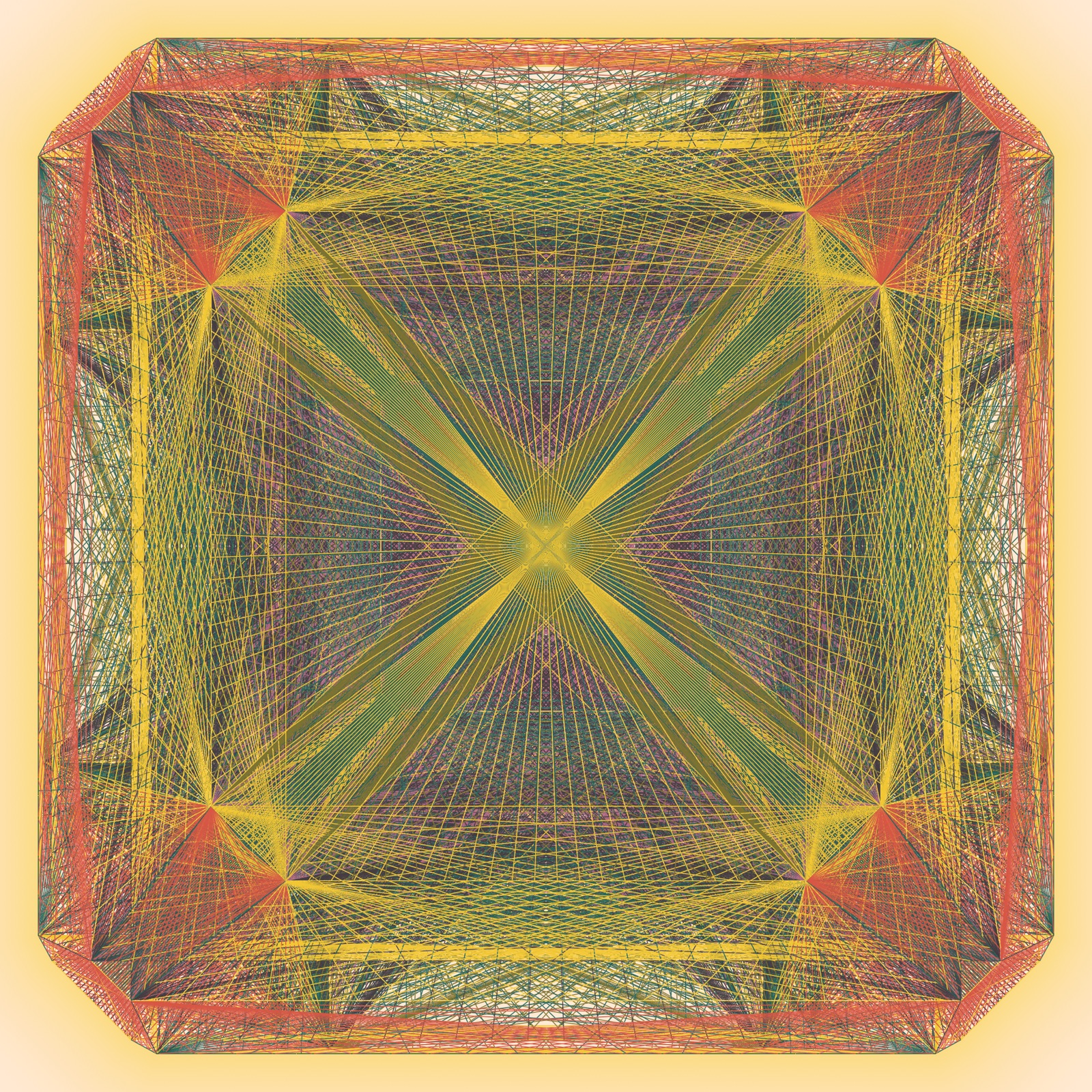
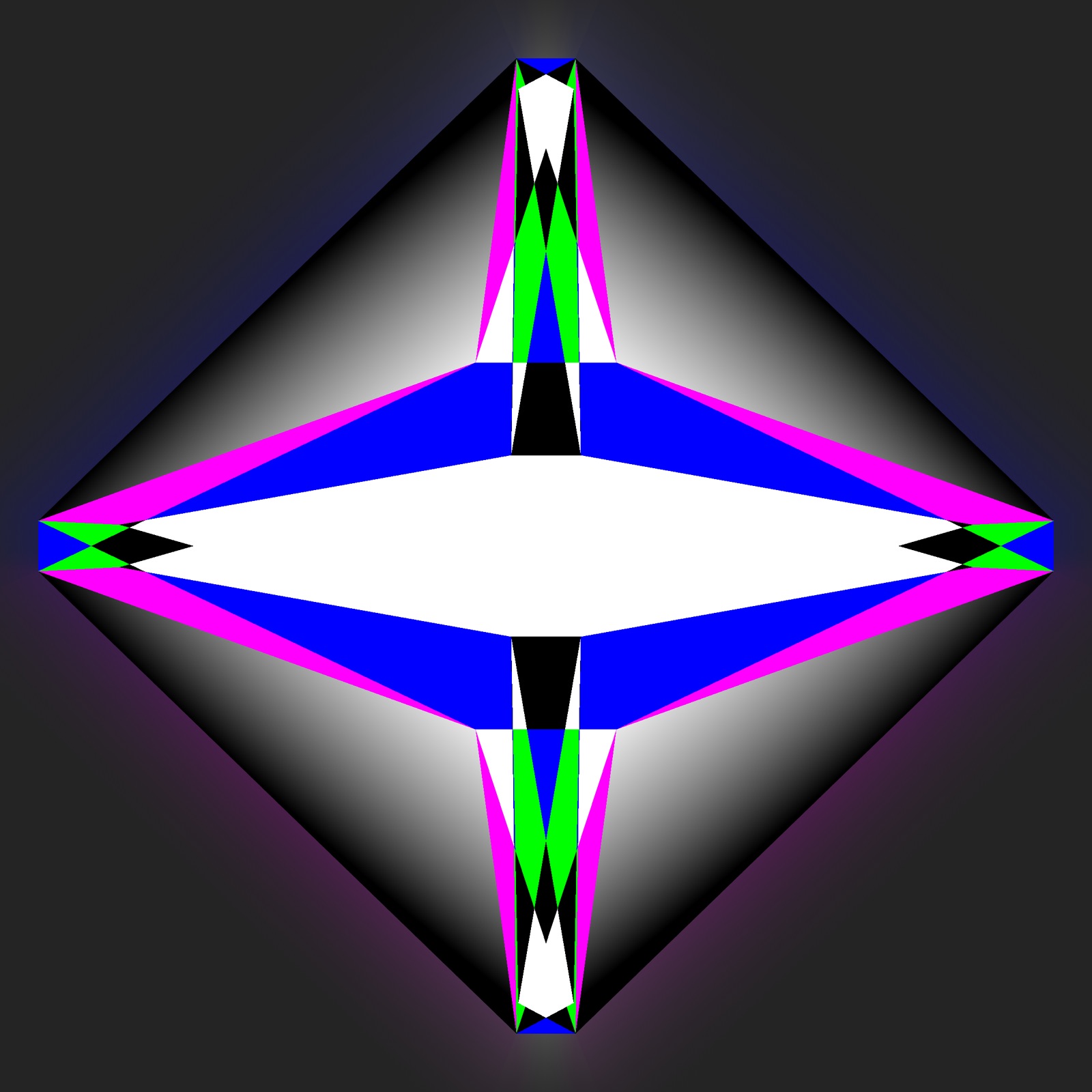
Six tokens set the opacity of their lines to zero and draw none of the connections their trait counts: ⧗, Ж, ꕥ, ۞, ᛥ and ⟡. Four tokens lie on bright paper tones, ꕥ, ᗢ, ۞ and ᛥ, and three of these were made after drawings by Kunz (see Palettes).
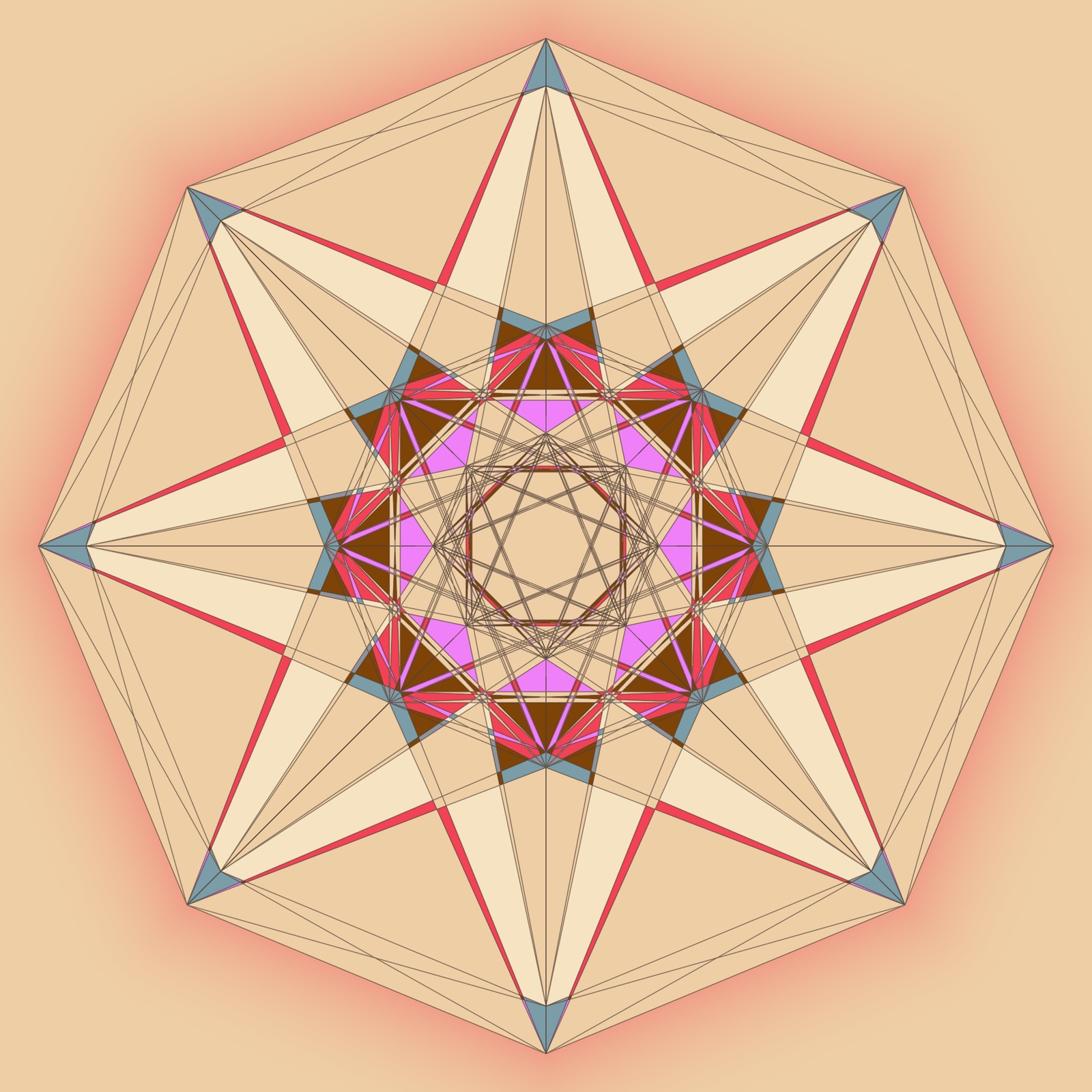
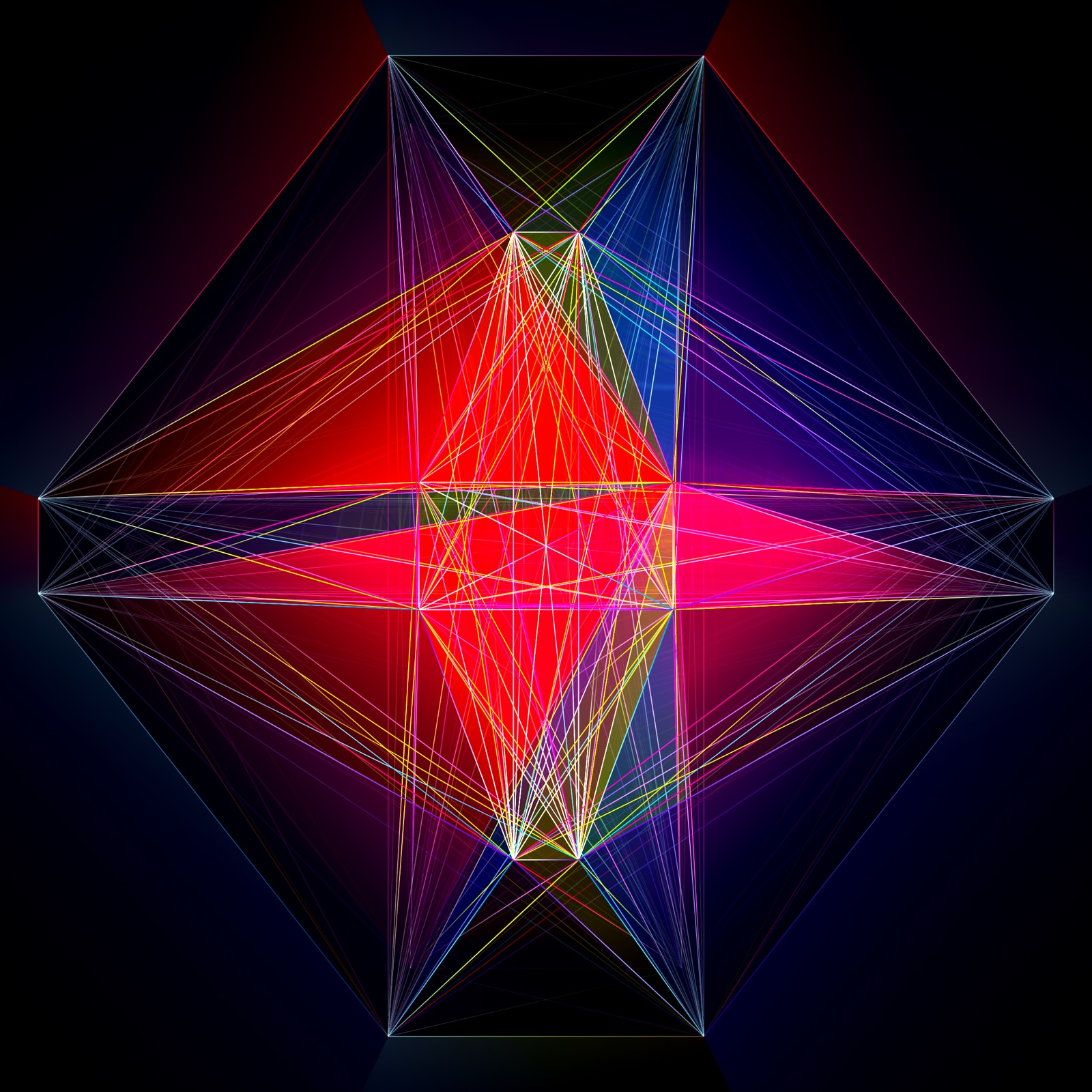
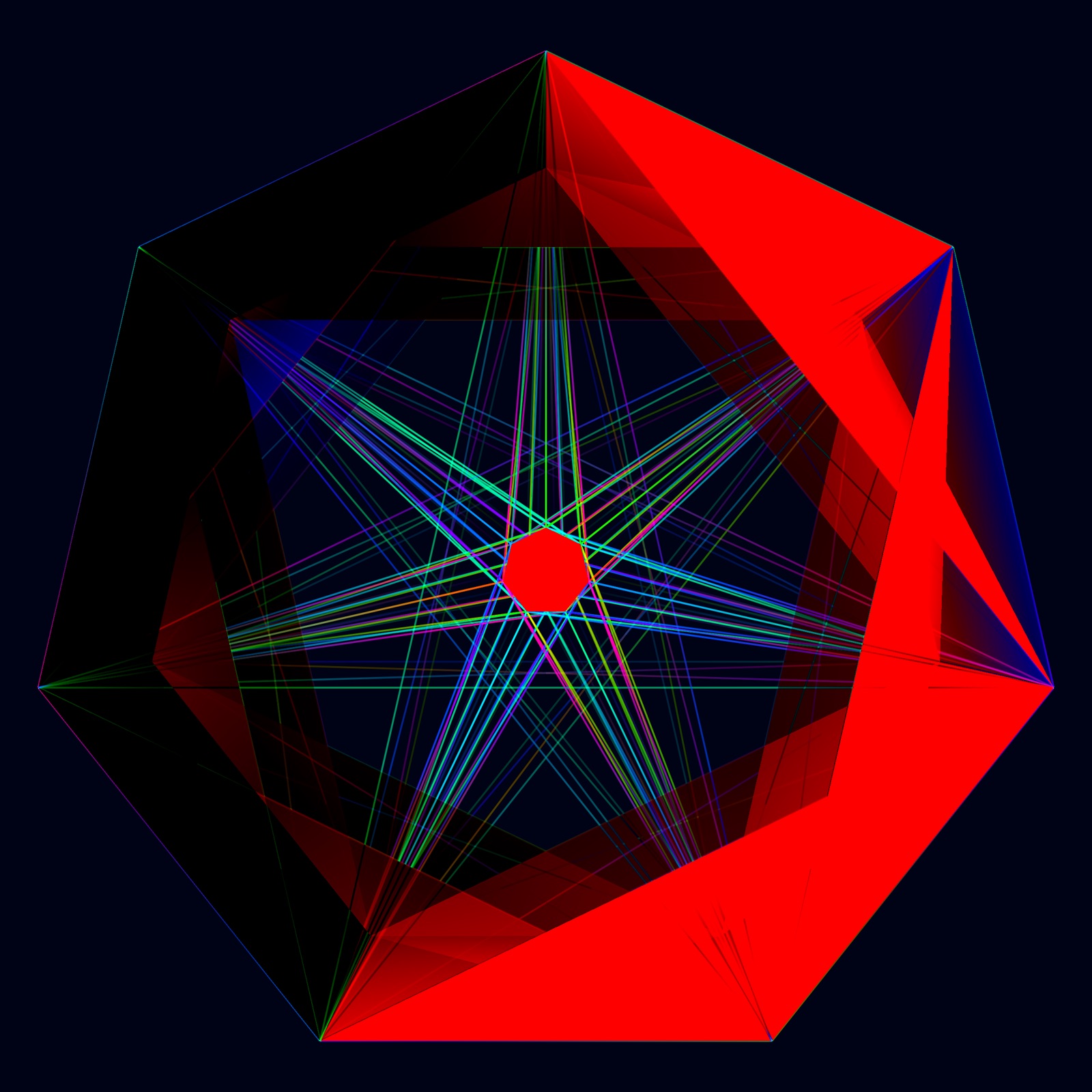
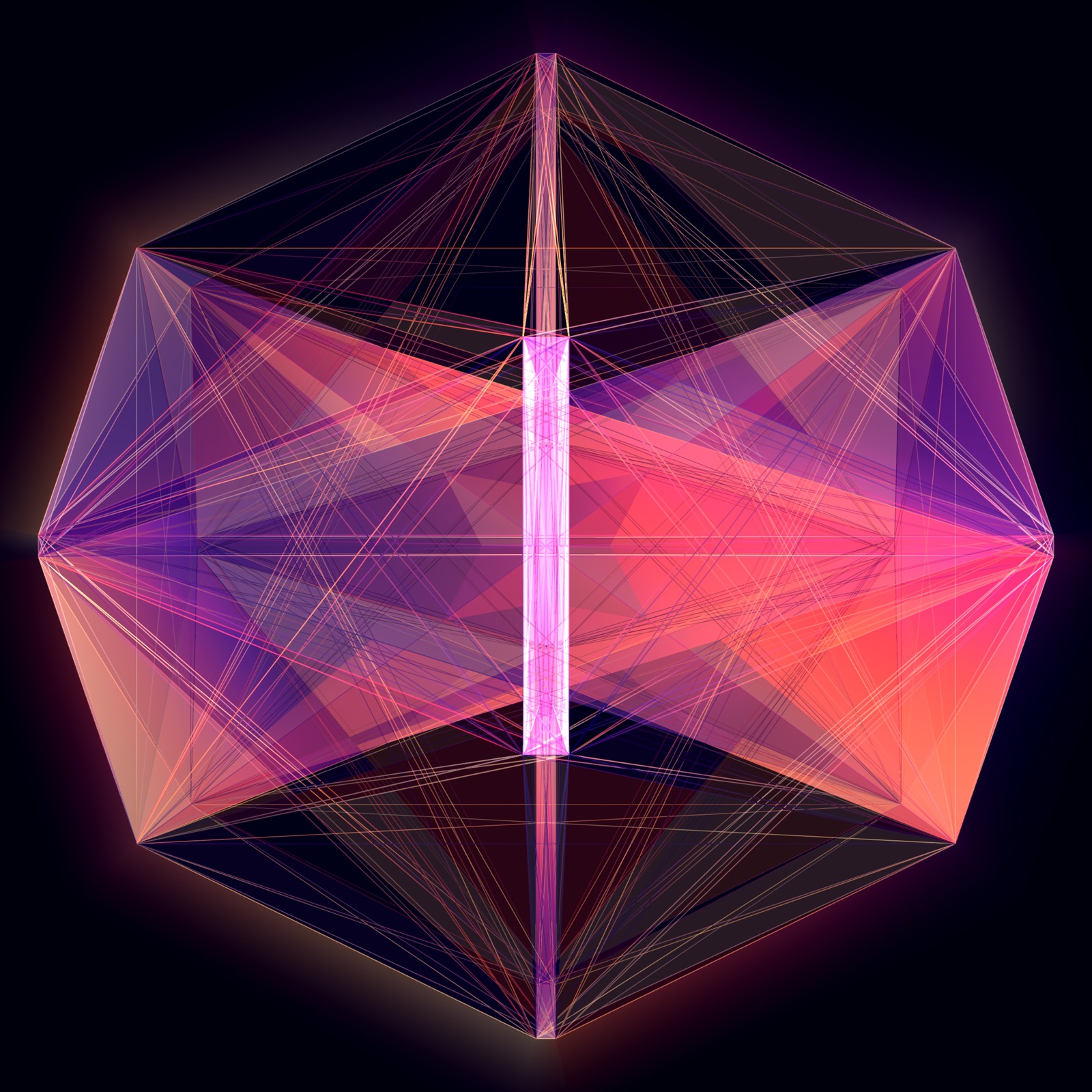
Entfaltung (۞) has eight upright mirrors and 48 points, three base points with sixteen copies each. Seen face-on, down its eight-fold axis, it is an eight-pointed star in an octagon, with nested octagons at its centre. It draws no chords; its lines are fans, and its colour sits in the projection slivers.
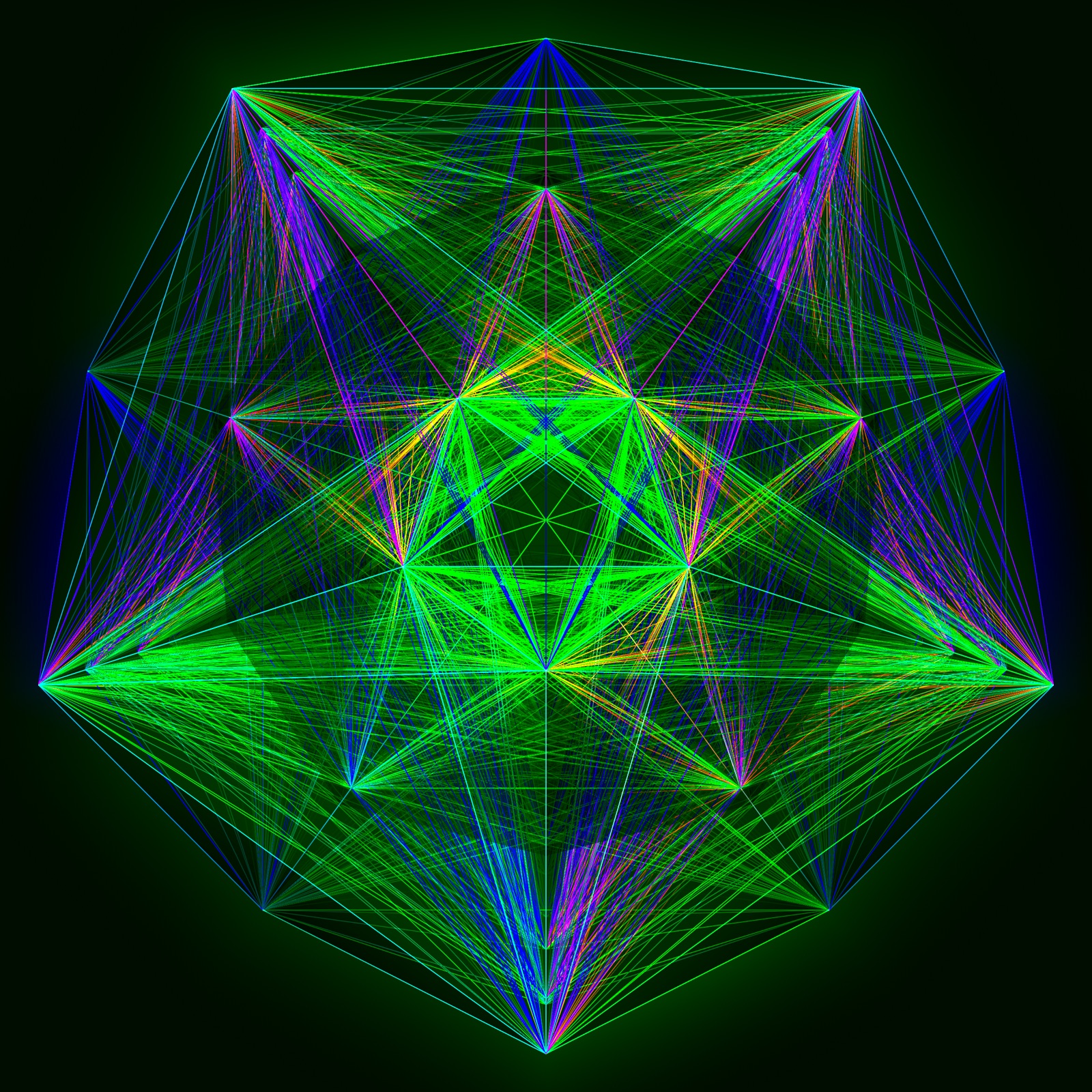
Five of the six polygonal tokens have a glyph that shows their fold: ⟁ (a triangle in a triangle) is three-fold, ⁙ (five dots) five-fold, ⏣ (a benzene ring) six-fold, 𐄍 (the Aegean numeral seven) seven-fold and ۞ (the eight-pointed rub el hizb) eight-fold.
Palettes
Each token has six main colours, a line colour and a ground. Which of them a viewer sees depends on the colouring traits: a token whose faces have no colour shows its main colours only in fans or slivers, and a line opacity of zero hides the chords, though fans may still be drawn in the line colour. In each strip below the ground is the background, the six main colours run from left to right, and the short block at the right is the line colour.
Entfaltung (𝛼), token 0.
Main colours #b246ec #fbf650 #7a3364 #f55905 #e67e22 #a16887; lines #ffffff; ground #000000.
Entfaltung (ɐ), token 1.
Main colours #dbd7ae #fbf650 #ae3287 #f96c1f #1e1d3e #4a5b6d; lines #cda2a2; ground #000000.
Entfaltung (⚭), token 2.
Main colours #ff006e #fb5607 #ffbe0b #8338ec #3a86ff #ff477e; lines #ffd0e0; ground #0a0010. No faces; each line takes the colours of its two end points.
Entfaltung (∴), token 3.
Main colours #a38c19 #893e6e #265773 #898b18 #411976 #ff0040; lines #ffffff; ground #000208.
Entfaltung (⁘), token 4.
Main colours #ff2d95 #fbf650 #b246ec #4d9dac #f55905 #a16887; lines #ffffff; ground #050008. The same six colours as ᛃ and ⌁.
Entfaltung (⁙), token 5.
Main colours #2d1b69 #5b3fa6 #a05bb5 #e27d9f #f6b38a #ffe3b3; lines #ffe3b3; ground #06040f. An ordered ramp from dark violet to pale peach; the line colour is the last step.
Entfaltung (⟁), token 6.
Main colours #00ffd0 #ff00a0 #00a3ff #faff00 #7000ff #00ffa0; lines #00ffd0; ground #000208. The same six colours and line colour as 𐄍.
Entfaltung (𝟟), token 7.
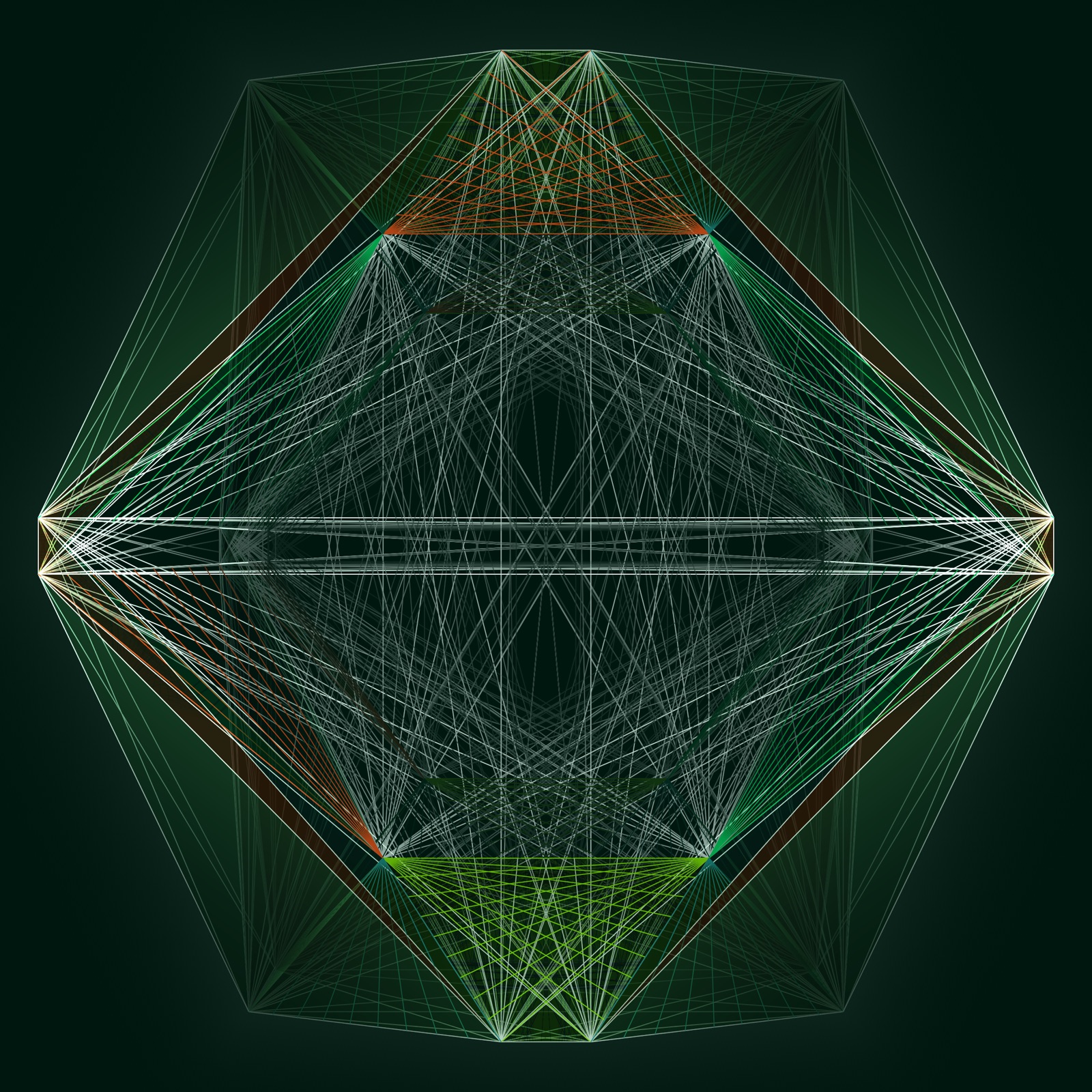
Main colours #04e762 #00a878 #1100fa #1b998b #0b5d3a #7ae582; lines #d9ffe8; ground #00120c.
Entfaltung (∞), token 8.
Main colours #ff9ff3 #feca57 #48dbfb #ff6b6b #1dd1a1 #f368e0; lines #ffffff; ground #0b0410.
Entfaltung (⧗), token 9.
Main colours #b246ec #f9dc1f #4b3f47 #f50505 #ff7700 #b7528a; lines #ffffff; ground #000000. Its first colour is shared with 𝛼 and Ж. Chords hidden.
Entfaltung (※), token 10.
Main colours #d1b8ff #cbf3f0 #ffb54d #fbff05 #118a7e #f8f359; lines #eafff5; ground #000000.
Entfaltung (𐄍), token 11.
Main colours #00ffd0 #ff00a0 #00a3ff #faff00 #7000ff #00ffa0; lines #00ffd0; ground #000208. The same as ⟁.
Entfaltung (Ж), token 12.
Main colours #b246ec #fbf650 #ae4b32 #f96c1f #b0b0b0 #4a5b6d; lines #cda2a2; ground #000000. Chords hidden.
Entfaltung (ᛃ), token 13.
Main colours #ff2d95 #fbf650 #b246ec #4d9dac #f55905 #a16887; lines #ffffff; ground #050008. The same six colours as ⁘ and ⌁.
Entfaltung (ǂ), token 14.
Main colours #ffffff #3c2525 #ff2600 #560bad #ff5fb5 #3a0ca3; lines #ffe0ff; ground #0c0410.
Entfaltung (⦶), token 15.
Main colours #1d1a4f #5b2a86 #c94b7c #ff7b54 #ffb26b #ffe6a7; lines #ffb26b; ground #0b0618. An ordered ramp from navy to pale yellow.
Entfaltung (✺), token 16.
Main colours #04e762 #ff5b14 #89fc00 #1b998b #0b5d3a #7ae582; lines #d9ffe8; ground #00120c. Shares four colours, its line colour and its ground with 𝟟.
Entfaltung (⏣), token 17.
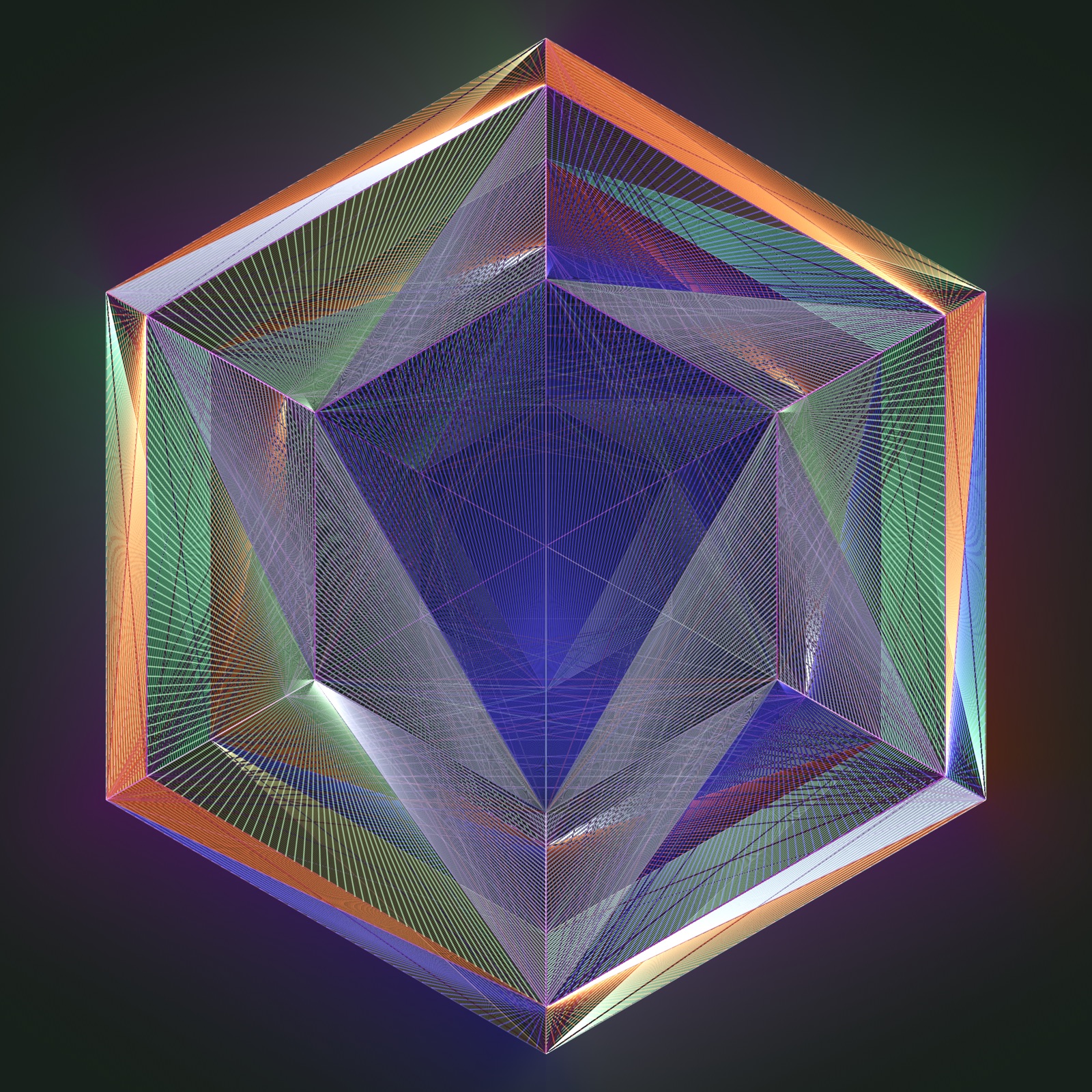
Main colours #aca9d5 #e34d21 #4539f3 #ace3b0 #69cf98 #5e5633; lines #c137da; ground #252c27.
Entfaltung (ꕥ), token 18.
Main colours #dfe3dc #62b8d8 #bac6c2 #d99a5c #e8be36 #c65446; lines #c65446; ground #d6bb8c. Sampled from a drawing by Kunz: a pale octagon on tan paper, with a lattice of red, orange and yellow spindles and blue-grey chevrons, red string fans and navy lines. Chords hidden; the fans are drawn in the line colour, red.
Entfaltung (ᗢ), token 19.
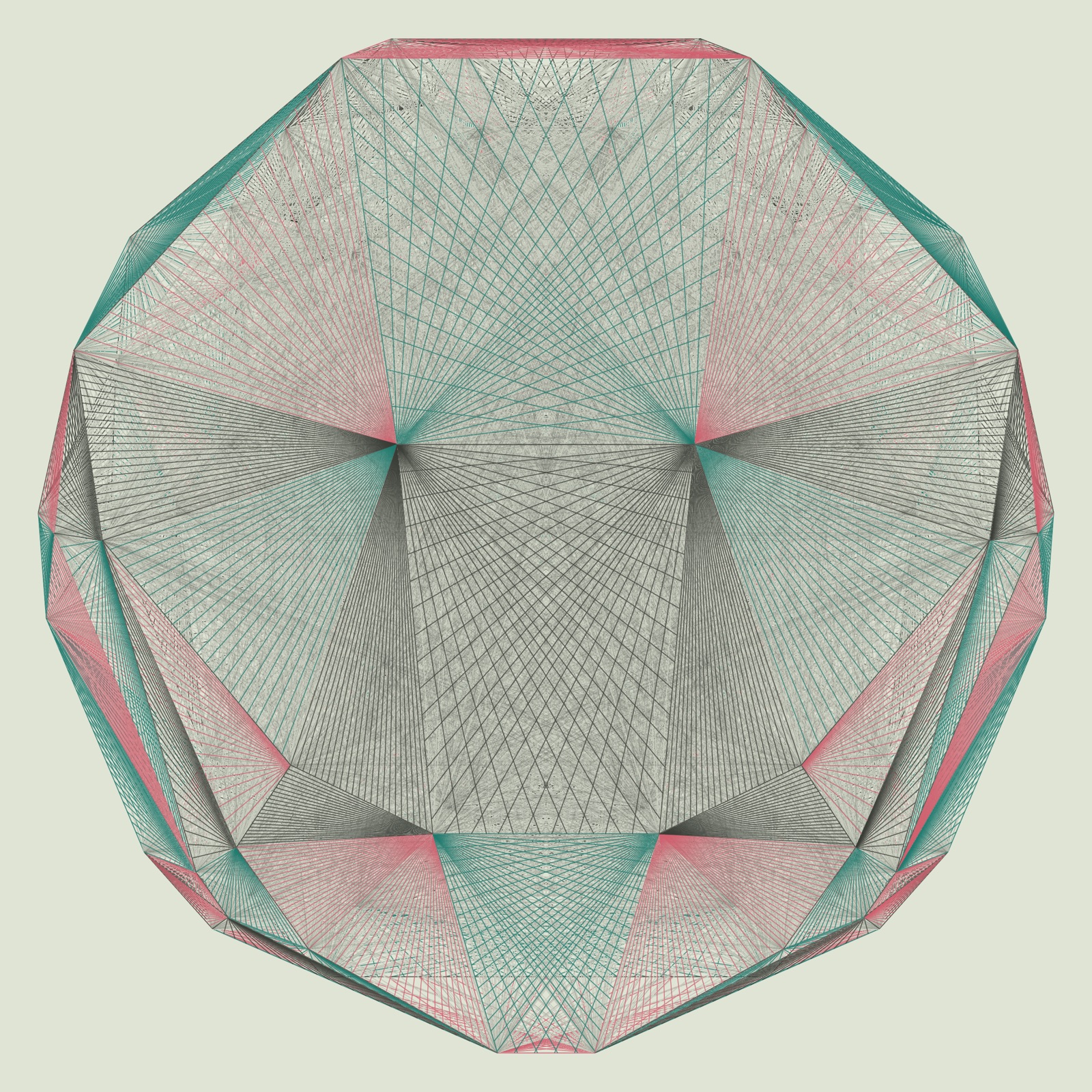
Main colours #1f7a6e #d0606e #3a3d36 #1f7a6e #d0606e #3a3d36; lines #3a3d36; ground #dfe4d5. Sampled from another drawing by Kunz, a diamond in a square with string-art fans in teal, pink and near-black on pale green-grey paper; three colours, each set twice, then edited by the artist.
Entfaltung (۞), token 20.
Main colours #9d9b9c #f05656 #f5e2c1 #ee8af5 #8ea2a6 #915608; lines #6b5236; ground #eecea5. Chords hidden.
Entfaltung (ϫ), token 21.
Main colours #b030f0 #d0710a #ea0f0d #37046c #64180a #02010b; lines #ff2a1a; ground #616161.
Entfaltung (⌁), token 22.
Main colours #ff2d95 #fbf650 #b246ec #4d9dac #f55905 #a16887; lines #ffffff; ground #110119. The same six colours as ⁘ and ᛃ.
Entfaltung (ᛥ), token 23.
Main colours #a86878 #4a4a44 #2a6a58 #7a7430 #e0b428 #d05a40; lines #e0b428; ground #ecd4be. Made after the same Kunz drawing as ꕥ and edited by the artist. Chords hidden.
Entfaltung (⟡), token 24.
Main colours #ffffff #ffffff #ff00ff #0000ff #00ff00 #000000; lines #ffffff; ground #242424. The palette of Markov's Window (2004): white, magenta, blue, green and black, all at full strength, on a dark grey ground. Chords hidden (→ The Markov's Dream Palette).
The 25 tokens
The release
Places 25 to 32 are listed on harm.work without traits; the contract has not minted them. On 24 October the artist drafted the eight personal tokens after four drawings by Kunz, and on 25 October four more drafts after his own Markov's Window (2004). By the end of 25 October all eight places were empty again. Three of the drafts had become ꕥ, ᗢ and ᛥ, and the Markov's Window draft had become ⟡. The tokens for the collectors remain to be made. The release plan of October named a birth chart, cast from the time and place of mint, as an optional trait; none of the 25 minted tokens carries one. The about text on entfaltung.harm.work still describes an earlier plan, eight exhibition works and a long-form drop.
See also
- Entfaltung — Kunz's method; the four stages; the editor; the pendulum taken apart
- Entfaltung on Paper — the 19 drawings; Kunz's method split between tokens and drawings
- Predecessors of Entfaltung — Quantizer's block-hash engine, Anicca, Manfred Mohr
- sources/ingested/entfaltung-token-data.md — the contract, every token's traits, settings and palette, the mechanics read from the code, and where the published texts differ from it
- The Markov's Dream Palette — the palette of 2004, returning in ⟡
- Does a Work Still Need to Be New? — the artist on topological symmetry
- Release Early, Release Often — a work that stays updatable
- How to Display Your NFT — screens and projection for a live token