
Revenant Series (2006–2007)
The Revenant Series is ten short Flash animations made from found photographs of people lying where they fell asleep or passed out: on office carpet, on the floor of a train, across a row of waiting-room chairs, face down in a carpeted corridor. Van den Dorpel cut the bodies out of the snapshots, animated them, and filled the place where they had lain with "some crude Photoshop work", so the body moves while the room around it stays a photograph. harm.work dates the series 2006 and its works 2007, and describes it as "Series of animated found images of collapsed peoples". It has two groups: Resurrection (i) to Resurrection (vii) and Sleepwalker (i) to Sleepwalker (iii).
His own account of the series (early series texts) names three things the animations do: they make a found body move, they sit between photograph and video, and their title carries a religious reference he took from home.
How the images were made
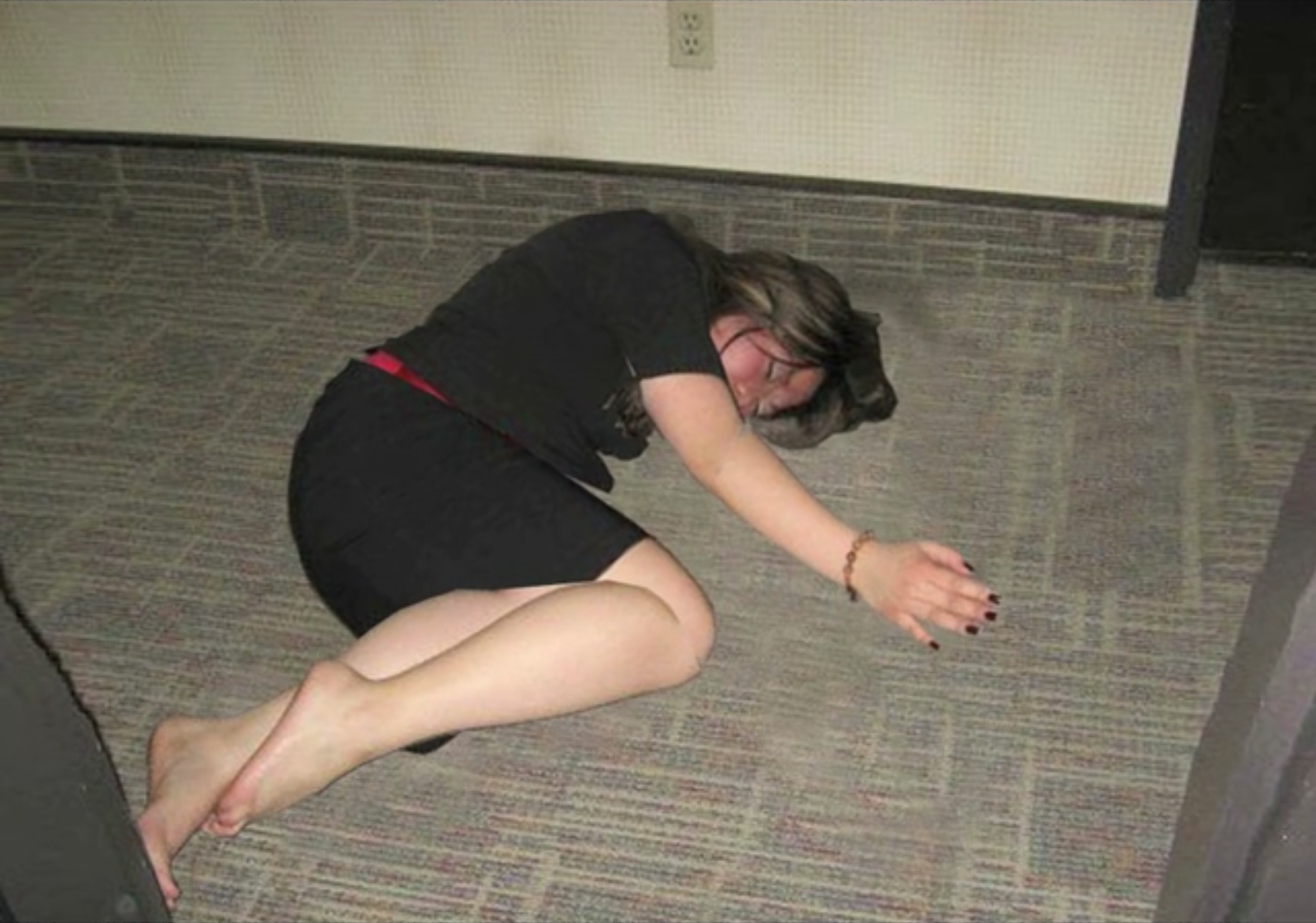
A woman in a black dress lies curled on a flecked office carpet below a wall socket, one arm stretched toward the corner. To the right of her head the carpet pattern blurs. The image harm.work uses for the series, another frame of the same animation, has her head lying there: the blur is the patch painted over the place it left.
The source images "were all found photographs", he writes, "of people who are seen sleeping (or, quite likely, passed out). In composing some of them, I simply animated the prone bodies and then filled in the space where they were lying with some crude Photoshop work." What he had not expected was the effect: "once the body parts were animated and had assembled themselves, the images gave the sensation of seeing an actual body move." The bodies became for him "animate while simultaneously being an object, capable of independent mobility, but also capable of merging - categorically - with objects like furniture."
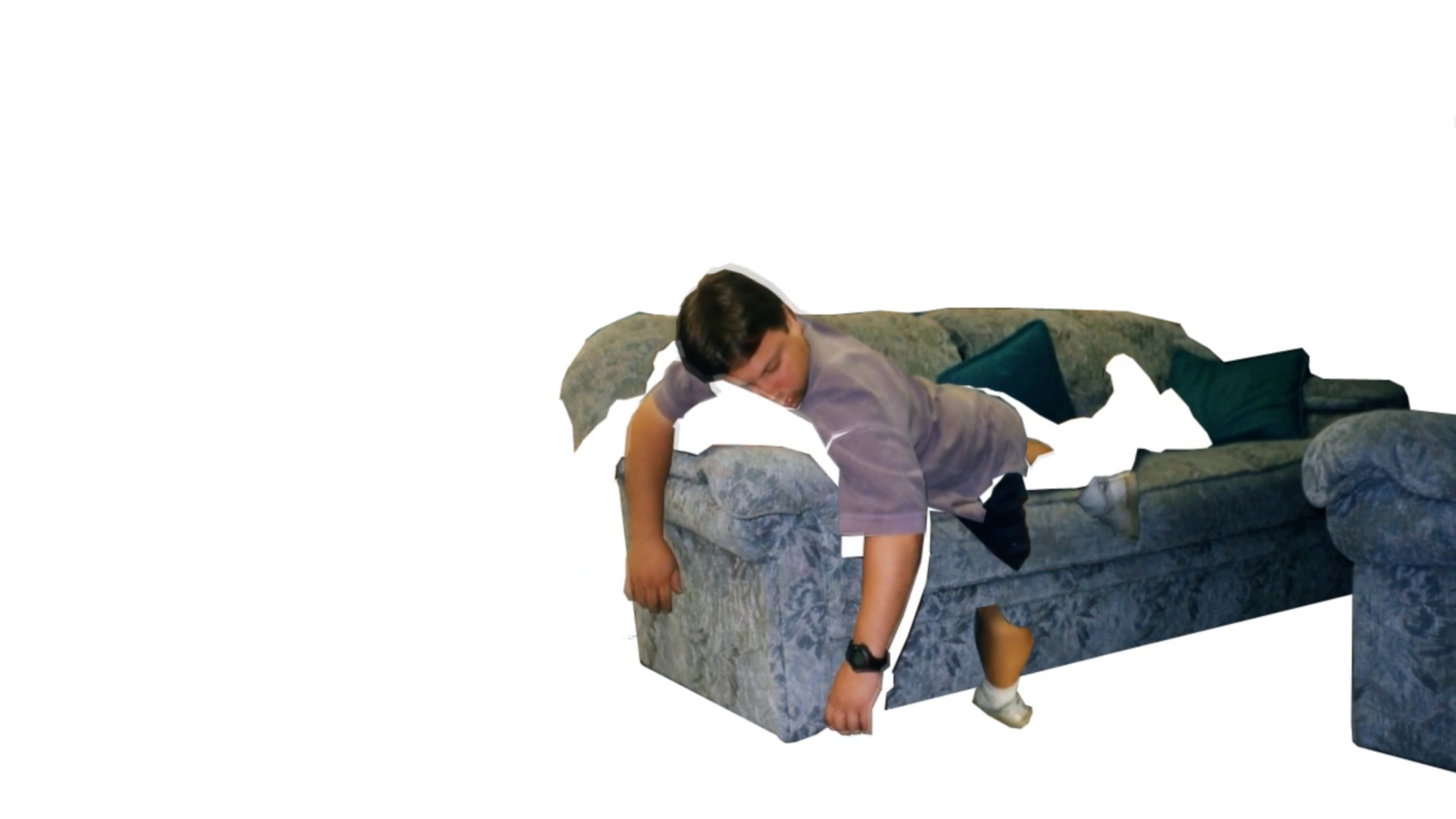
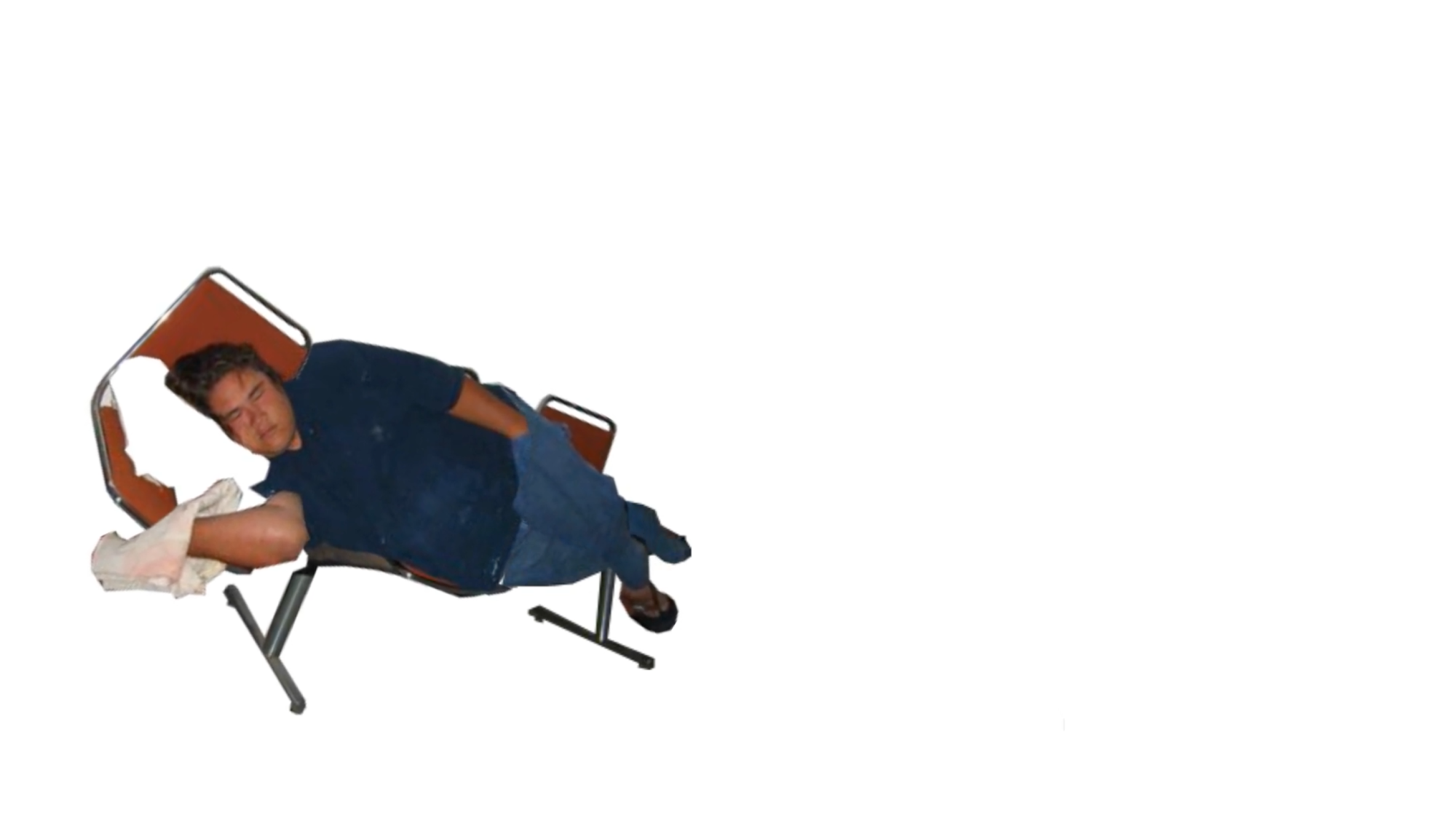
The method is visible in the stills. In the Resurrection images the snapshot keeps its whole room, and a repair can show, as in (ii), as a smudge in the carpet. In the Sleepwalker images the background has been cut away to white, and the sleeper and his furniture are cut into pieces of one collage.
On his website of the time, harmlog.nl, Resurrection is described as "animated found photo" and Lasso, made the same year, as "flash animated from manipulated found photo" (archived by the Wayback Machine; → Early Works (2007–2011)). A year before, in February 2006, the same site posted Voorlopige Deconstructies (Dutch for "provisional deconstructions"), Flash animations titled A falling horse, A falling army, A collapsing bulldozer and Deconstructing pingpong; a San Antonio blog in 2007 called the first a "deconstruction of a horse". harm.work does not list them. harmlog filed them under the same heading, "deconstruction", as the Resurrection and Sleepwalker pieces, which places the Revenant Series in a run of Flash animations in which something falls or comes apart.
Resurrection (i)–(vii)
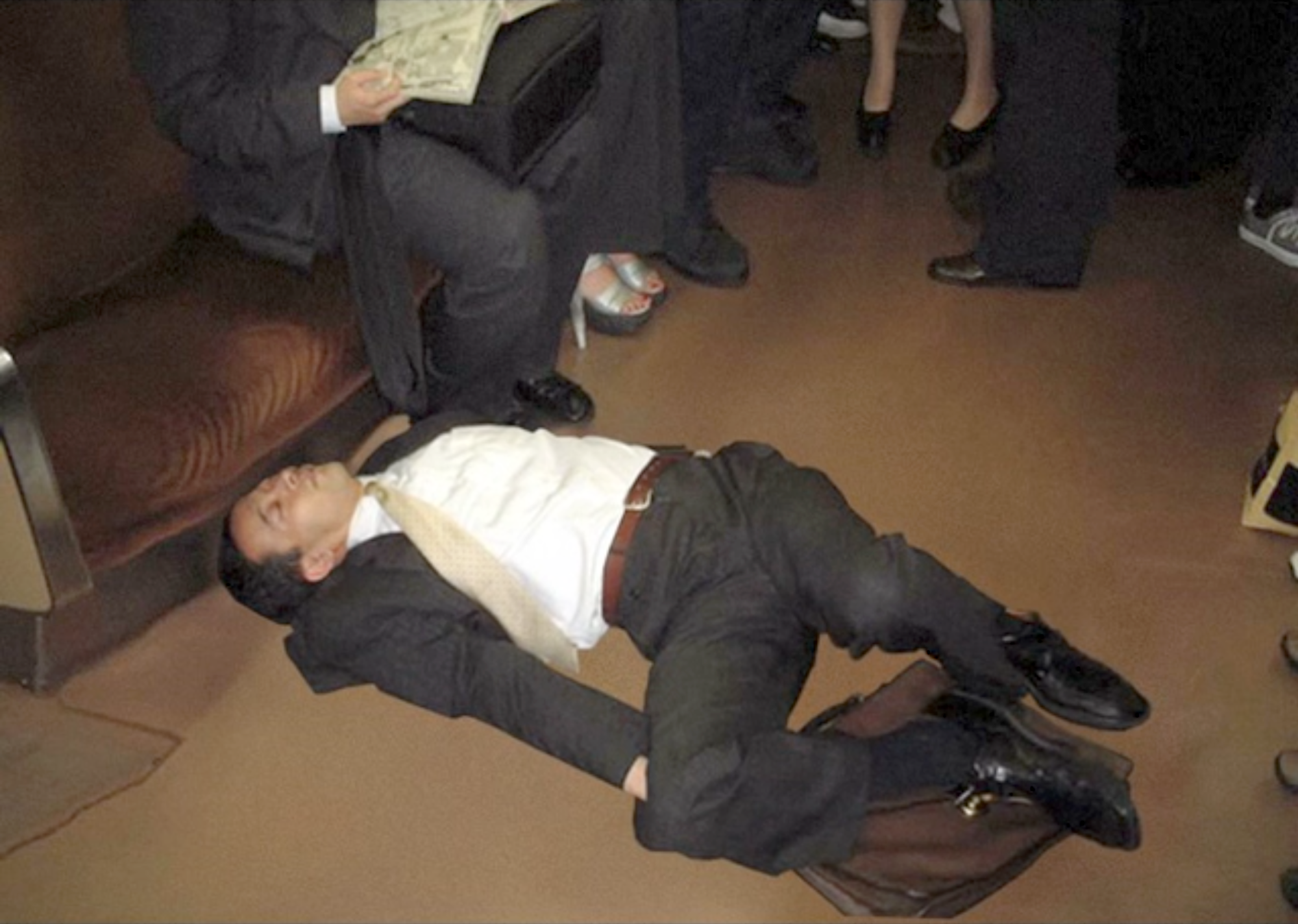
In Resurrection (iii) a man in a dark suit, white shirt and loosened yellow tie lies on his back on the brown floor of a train carriage, a briefcase under his shoes. Above him a seated man reads a newspaper; of the other passengers only legs and shoes are in the frame.
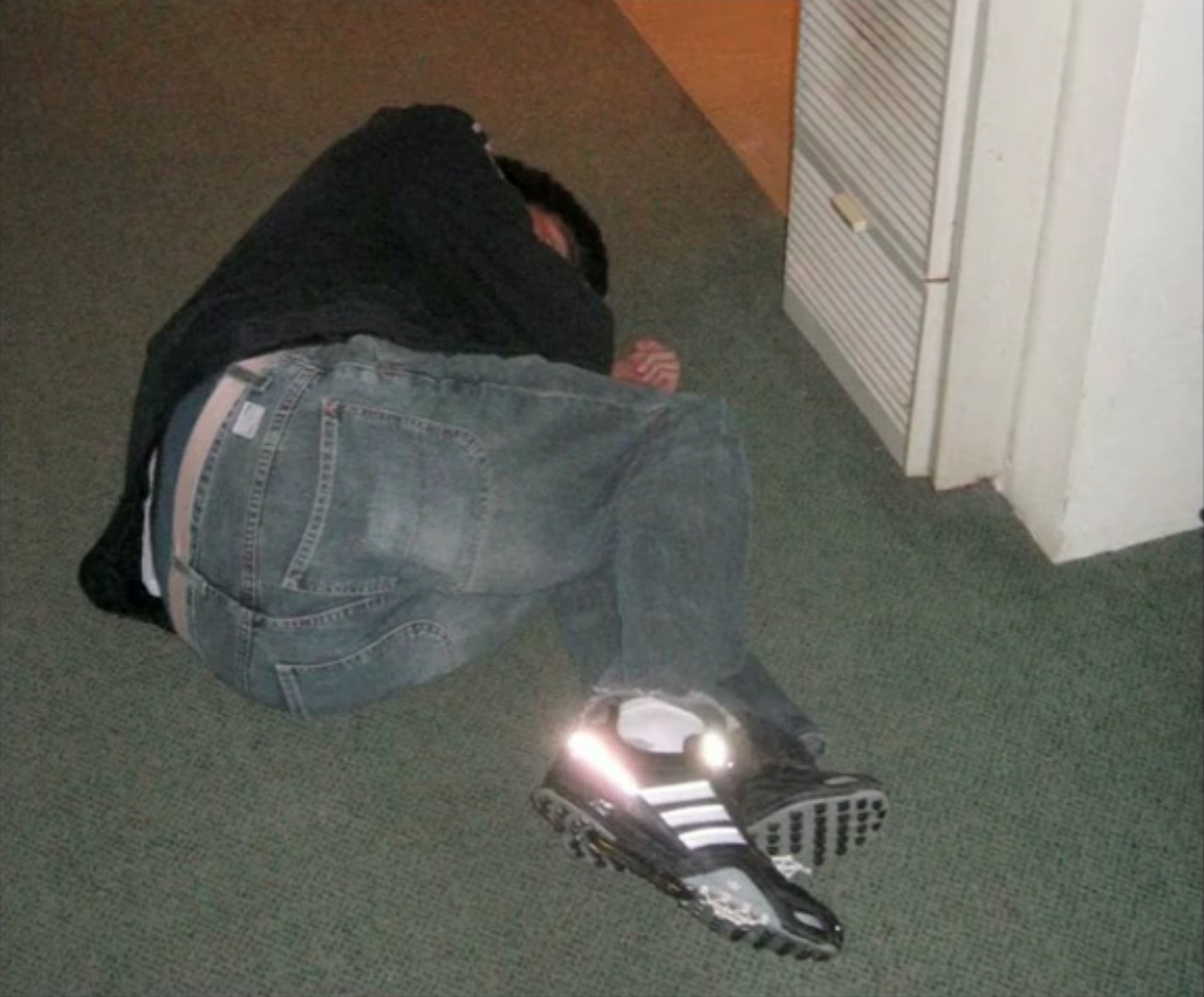
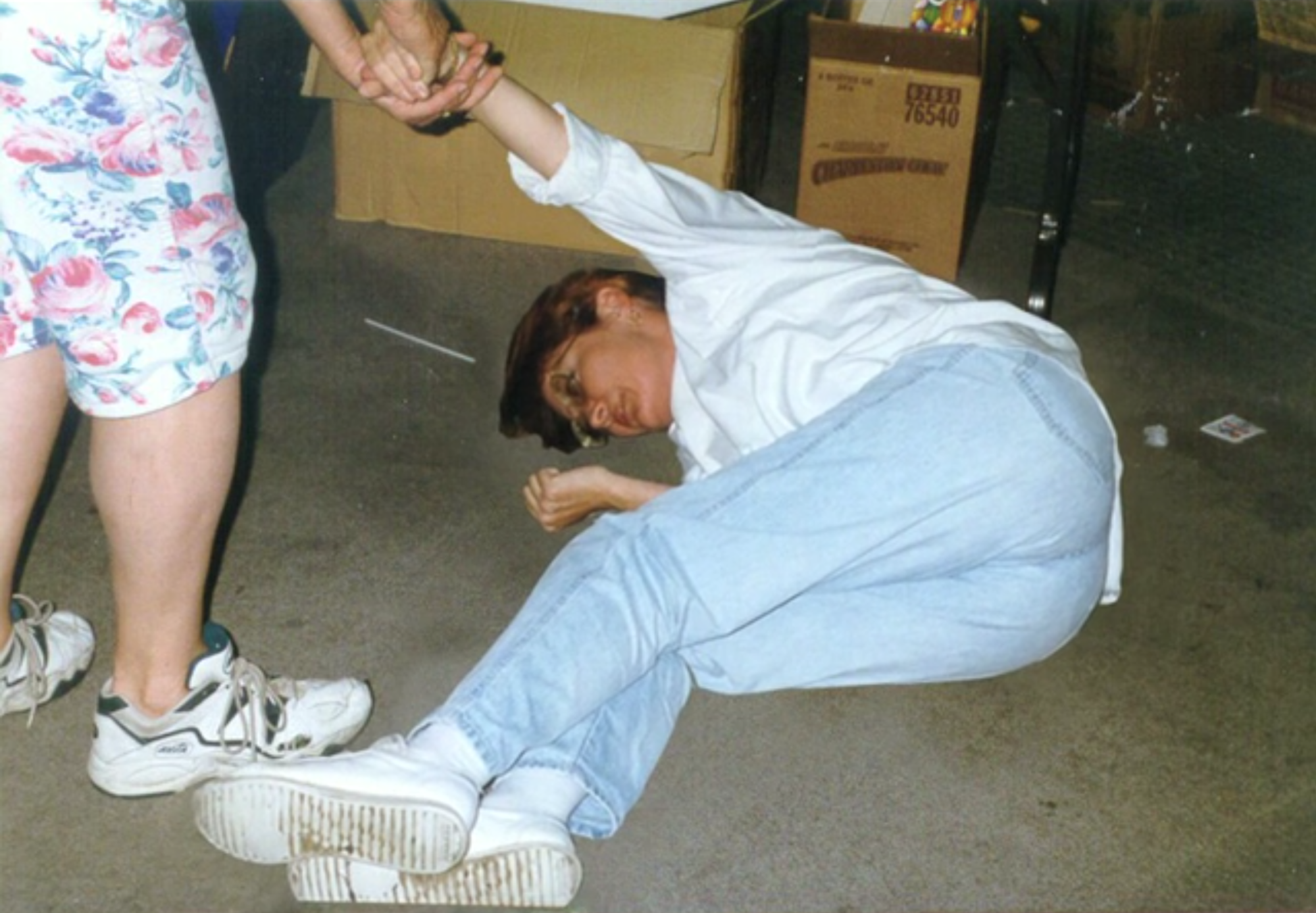
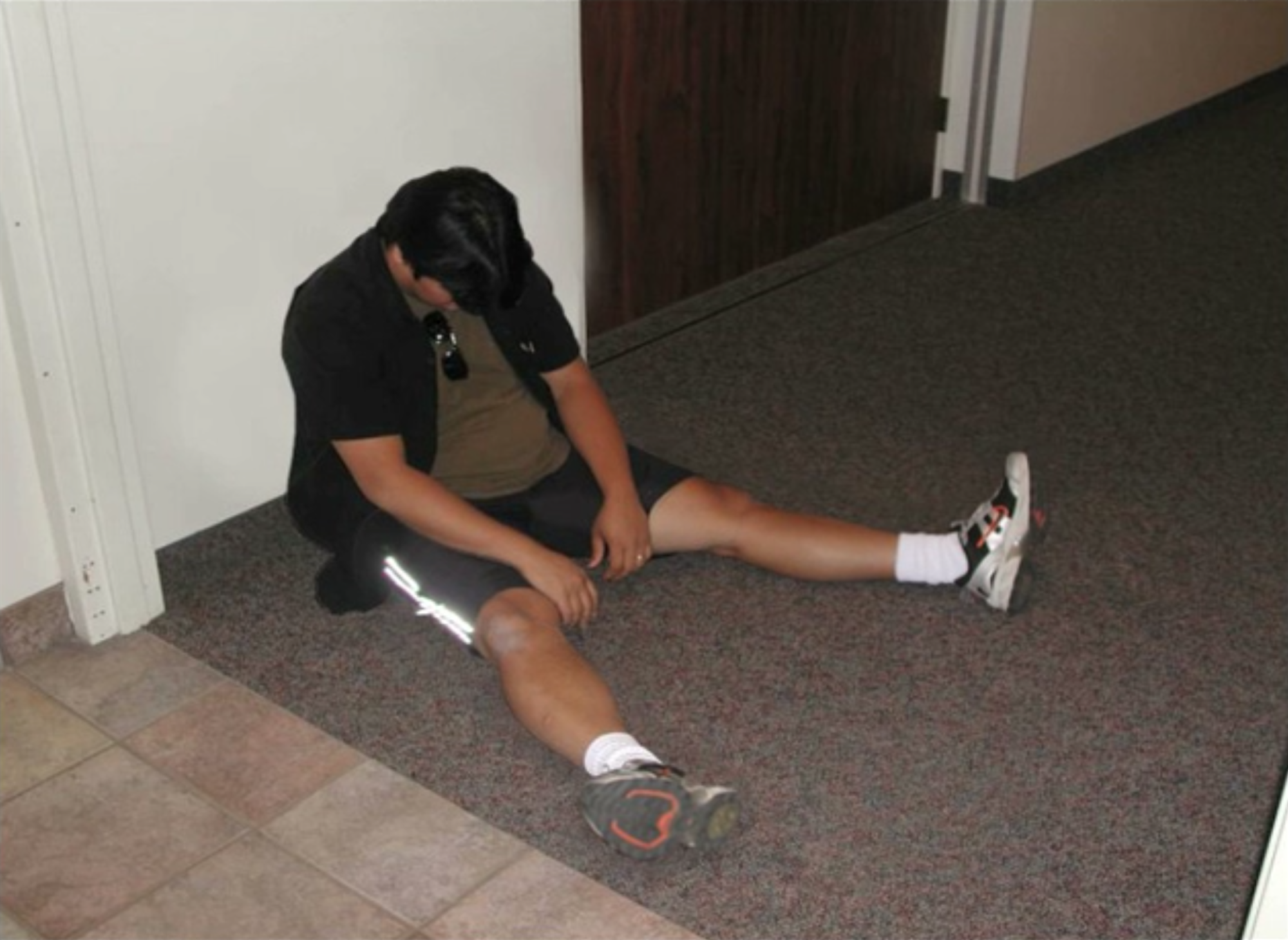
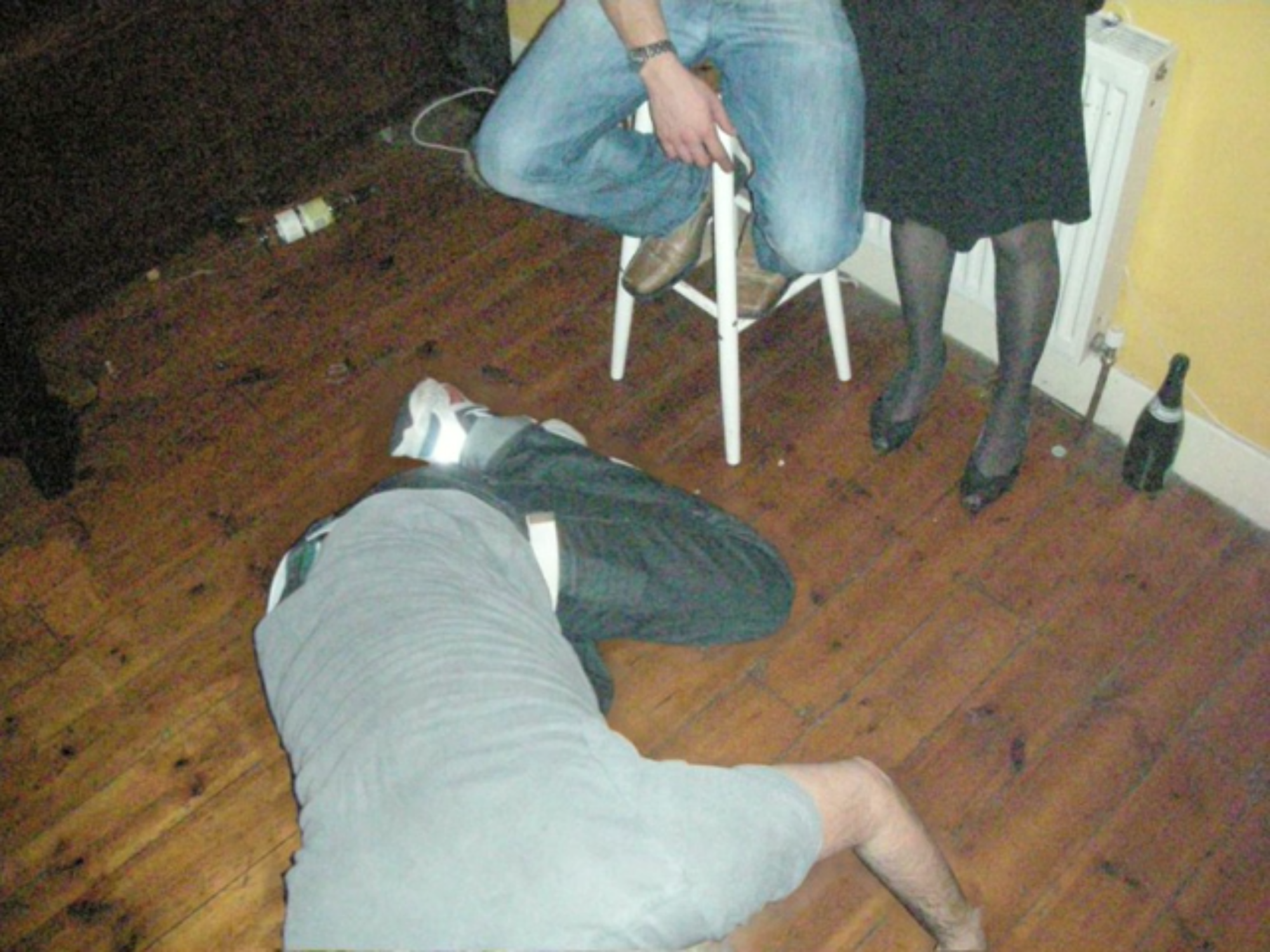
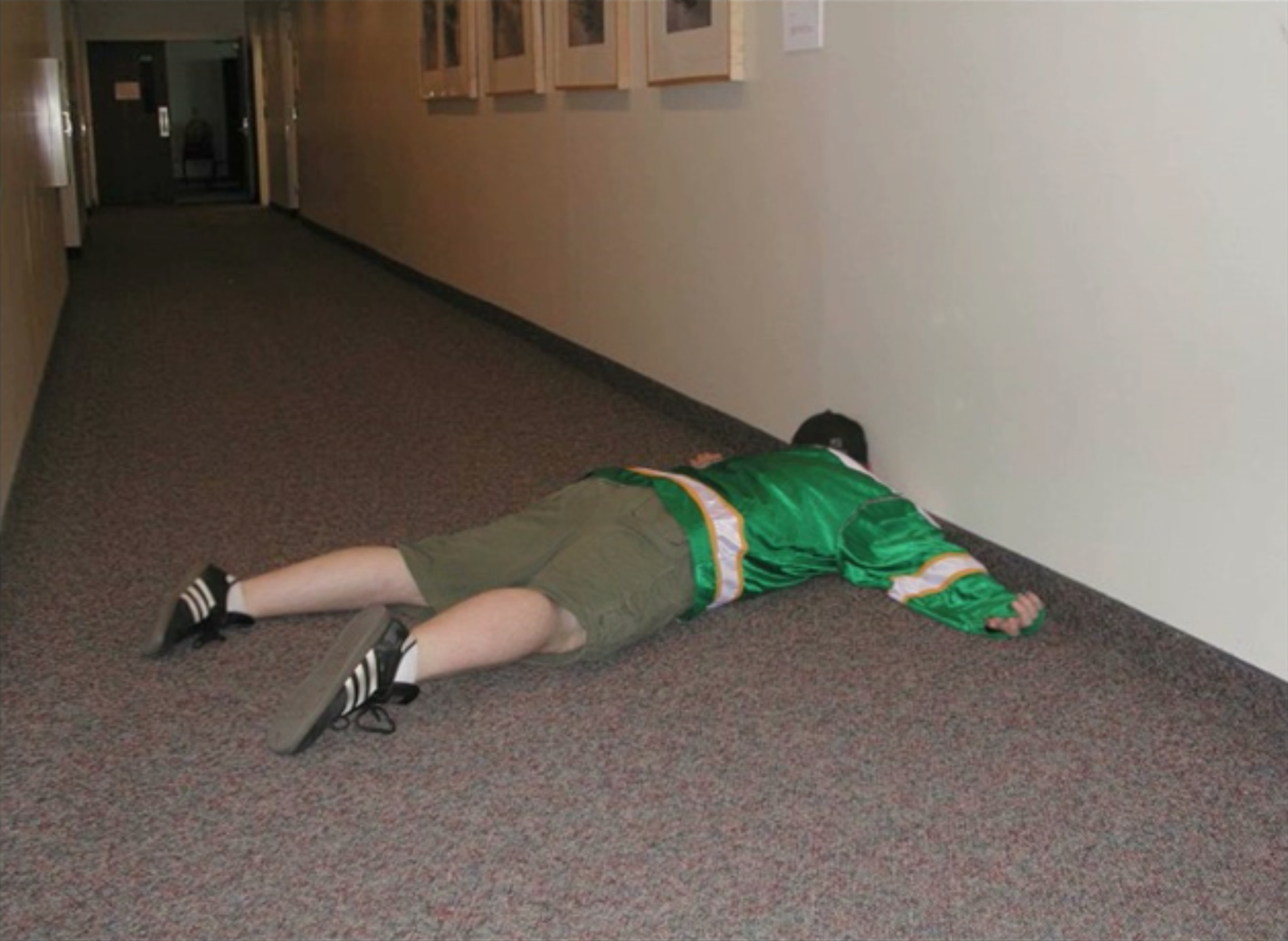
The seven Resurrection images keep the full snapshot. In Resurrection (i) a young man in jeans and a black hoodie lies curled on green carpet beside a white louvred cupboard, the camera flash catching the stripes of his trainers. Resurrection (ii) is the woman on the office carpet. Resurrection (iv) shows a woman in a white shirt and pale jeans on a concrete floor among cardboard boxes, her arm held up by someone standing out of frame but for floral shorts and trainers. In Resurrection (v) a man sits slumped against a wall in a carpeted hallway, legs spread, head down. In Resurrection (vi) a man in a grey T-shirt lies face down on wooden floorboards at what looks like the end of a party, beside a man on a white stool, a woman in black tights and an empty bottle. In Resurrection (vii) a young man in a green satin jacket lies face down at the foot of a wall in a long carpeted corridor hung with framed prints.
The sources look like office and party snapshots of someone who has dropped off. harm.work calls their subjects "collapsed peoples", and the animation gives their bodies back a few seconds of movement. The Resurrection animations were uploaded to Vimeo as videos of between 22 and 92 seconds on 1 and 3 May 2011, and the archive embeds them in 979 to 985, each marked "Added in 2012". In 979 they sit beside a still of Sleepwalker (iii) (438, whose thumbnail file is named sleepwalker3_still) and Assemblage (portrait of collector) (1064).
Sleepwalker (i)–(iii)
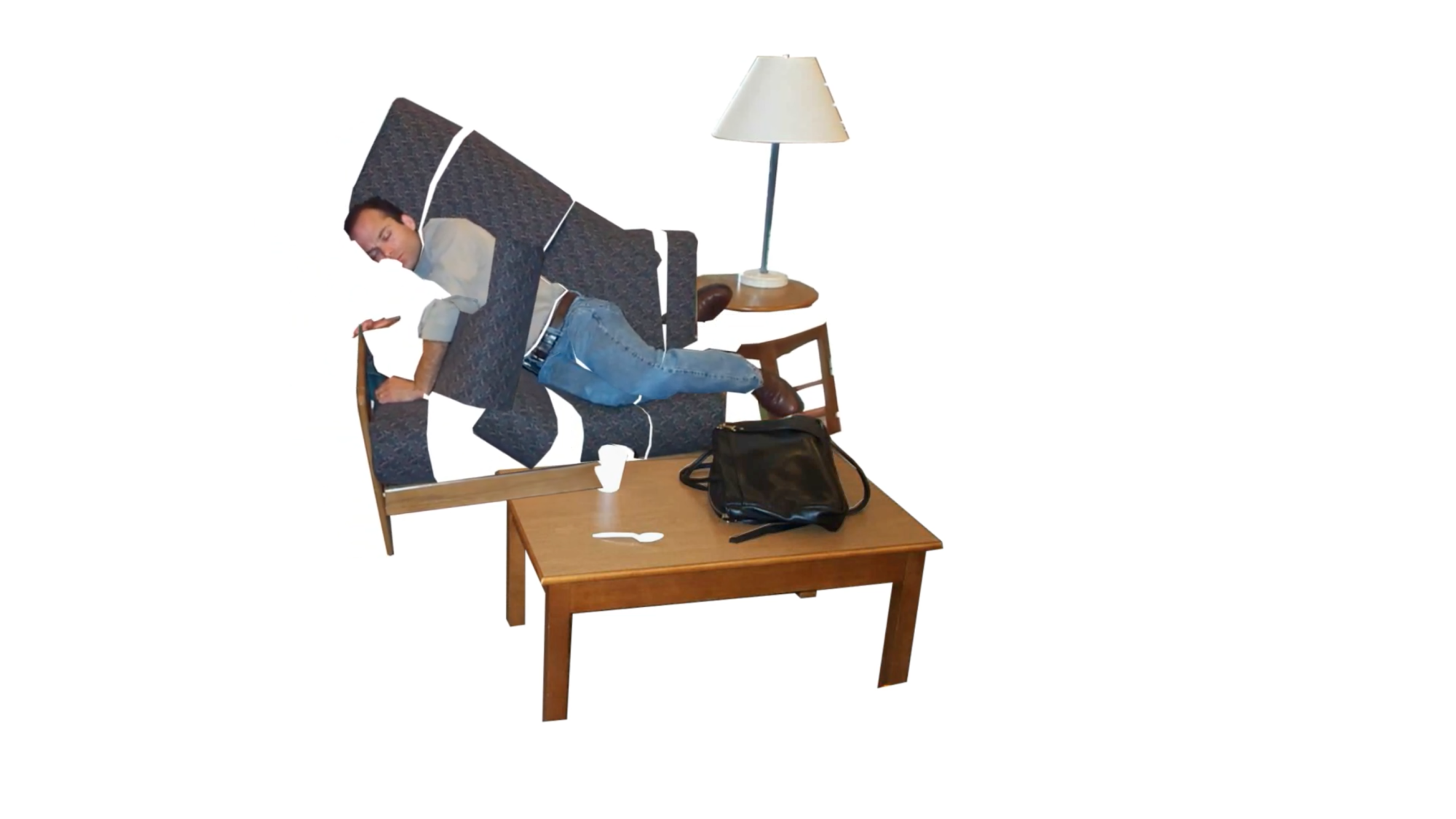
A sleeping man in a grey shirt and jeans is cut into the cushions of a patterned sofa, whose back and seat have been sliced into tilted slabs with white gaps between them. In front stands a coffee table with a paper cup, a plastic spoon and a black handbag; behind it a lamp on a side table. Everything else is white.
In the three Sleepwalker images the room is gone. Sleepwalker (i) is the man fused with his sofa. In Sleepwalker (ii) a boy in a lilac T-shirt hangs over the arm of a blue floral sofa; parts of the sofa where his body lay are cut away to white. In Sleepwalker (iii) a young man in a navy shirt sleeps across a row of orange metal waiting-room chairs with one arm on a towel, and part of the chair back is missing. These are the images where the body most clearly merges "with objects like furniture": in (i) slabs of upholstery cross the man's body, so that sofa and sleeper are cut from one piece.
harmlog.nl posted the three Sleepwalkers in April 2007; the Flash files were named couchman.swf for #1 and bencher.swf for #3. The archive embeds the Flash files in 184, 395, 438 and 457, all "Sleepwalker, 2007". 438 links to 1166, a still image dated 2007 in which a woman sitting in an armchair has had her neck stretched up the curtain behind her in repeated strips of her own hair: the same cutting of a body in a snapshot, without the motion.
Moving stills, collage without glue
Van den Dorpel has his own term for these works: "'moving still' is the term I use for them". They are "lodged in an unresolved space between video works and photographs", and he made them for a particular place:
"I originally made the works using Adobe Flash. They were intended to be seen on websites, and, therefore, become a moving image on an page of otherwise still images. That sense of the unexpected was crucial, for me to their meaning."
Their audience changed with their medium. "When I made these images, most of the people who were discussing my work came from the world of photography, but now, when they are shown, people see them as 'video art'." He rejects the second reading: "I see them as a form of collage from the Net Art age, using the found images, cutting, and recombining of traditional collage, but without gluing and with a dynamic rather than static composition."
Codec Breeze (2008; → Codec Breeze) works on the same border from the other side. There a still photograph is passed through a bad codec in the places that might be alive (leaves, smoke, water), and the compression makes them move. In the Revenant Series the moving part is the one that looks least alive, a person lying still. Both make the viewer unsure whether a picture on a web page is a photograph, and both depend on that page to surprise.
Resurrection and the father's theology
The titles are, he writes, "somewhat ironic, but they also have a personal dimension. My father is a theologian in the Netherlands, and the Christian connotations of 'resurrection' are a part of the range of references the works encompass. Perhaps that is an aspect of why they are so uncanny to me, the ways in which they gesture toward things I can apprehend but not fully comprehend." A revenant is someone who returns from the dead; the people in the snapshots are asleep or passed out, and the animation raises them for a few seconds.
The same pairing of an ordinary image with a religious word returns a year later in Codec Breeze: Baptism, where only the water poured over a woman's head is encoded, and in the 2009 conversation in which his father, then an evangelical preacher, could not find the link his son claimed (→ Codec Breeze, Two spiritualities; Apophatic Theology).
Where the works were seen
The animations first lived on his own sites. A post of 7 July 2007 on Emvergeoning, an art blog in San Antonio, Texas, set them against "the simpleton characters in repose that we find currently on display at the Bluestar", a local gallery: the artist from Amsterdam "offers an improvement upon a basic premise (make sure you roll over the person to activate the art)". So at least some of the Flash versions moved only when the cursor passed over the body: "watch the limp limbs of a sleeping man take on a life of their own" (Emvergeoning). On 10 December 2007 Rhizome's blog reposted four stills, captioned resurrection 2, sleepwalker 3, sleepwalker 1 and resurrection 1: "woah, totally amazing work by dutch artist harm van den dorpel. these are stills from found photo animations" (Rhizome).
In 2008 he showed them in the online exhibitions of Club Internet, which he had founded. The database lists two works captioned "Sleepwalker I" and "Sleepwalker III", that is Sleepwalker (i) and Sleepwalker (iii), both dated 2007, in the first show, First Selection (8 May – 14 June 2008), and a work captioned "Resurrections" (Resurrection) in the second, ORACLE (16 June – 12 July 2008). His website of 2010 lists "Resurrections, 2007" as "3 animated found photos".
After Flash
Flash brought the animations to the web and then took them off it. In the 2011 uploads to Vimeo they became fixed-length videos. In January 2019 he screen-captured Sleepwalker (iii), a 12 frames-per-second Flash animation, and had After Effects calculate the frames in between, "to make it more compatible with a 2018 attention span" (→ Mediation and the Archive, under Flash, and the score kept on-chain). Adobe withdrew the Flash player in 2020. On harm.work the works are videos.
He describes the loss and what it left:
"Now that websites are no longer such a central part of the way people interact with the internet, these works have lost a significant aspect of their context, but that alienation, I think, lends them another kind of significance."
See also
- Codec Breeze — still photographs set moving by compression, 2008
- Animal Configurations — found animal images reconfigured in software, 2007
- Early Works (2007–2011) — the other Flash pieces of these years, Pseudo Psycho, Lasso, White Rectangle
- Mediation and the Archive — Flash, its withdrawal, and the works rebuilt afterwards
- Club Internet — the online exhibitions of 2008–2010