
Modular Aesthetic Systems — are.na channel (2019–)
Harm van den Dorpel's channel Modular Aesthetic Systems on are.na, read through the are.na API on 1 November 2026. Channel description: "characters, alphabets, grids, modularity, zoom". Created 24 February 2019; 157 blocks. The artist (November 2026): he began the grid work and the research into grid systems and modularity in this channel about seven years earlier.
Most blocks are images without captions: screenshots of work in progress, and reference images. The blocks are named below in the order they were added, and each name links to the block on are.na. A gallery at the end of each section reproduces a selection at the size are.na serves them. The wiki's reading is on The Grid.
2019
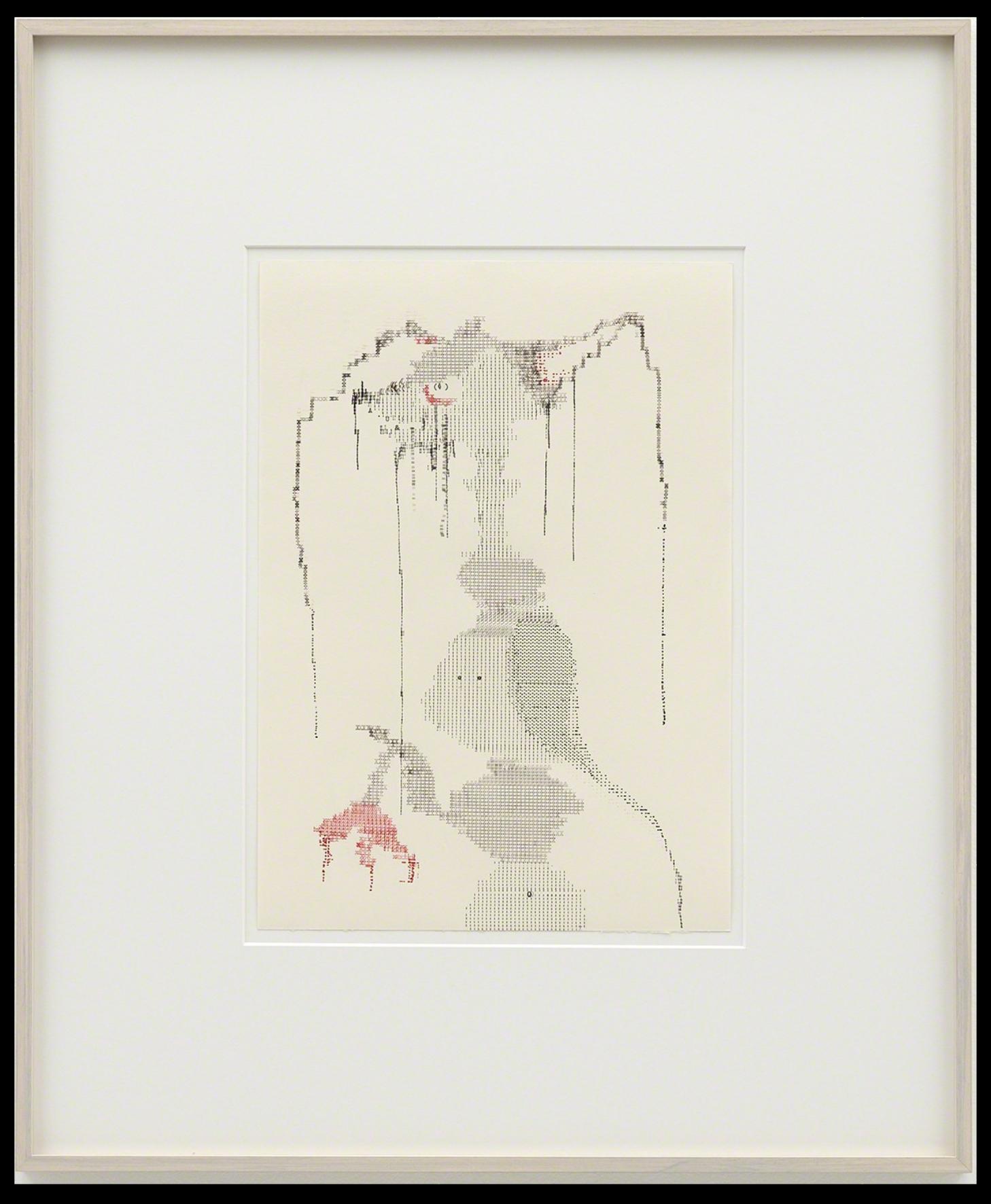
24 February. The channel opens with Gert and Uwe Tobias: a framed work on paper whose grey figure is built from rows of small typed marks, with ink running down from it, a second work, and the Hammer Museum page on the brothers' 2006 show. The same day brought Damon Zucconi's channel Automata, an image from van den Dorpel's Pattern and Presence archive (a translucent panel printed with rows of pink and yellow diamonds) and a 2017 screenshot of overlapping rounded blocks in yellow, green and brown.
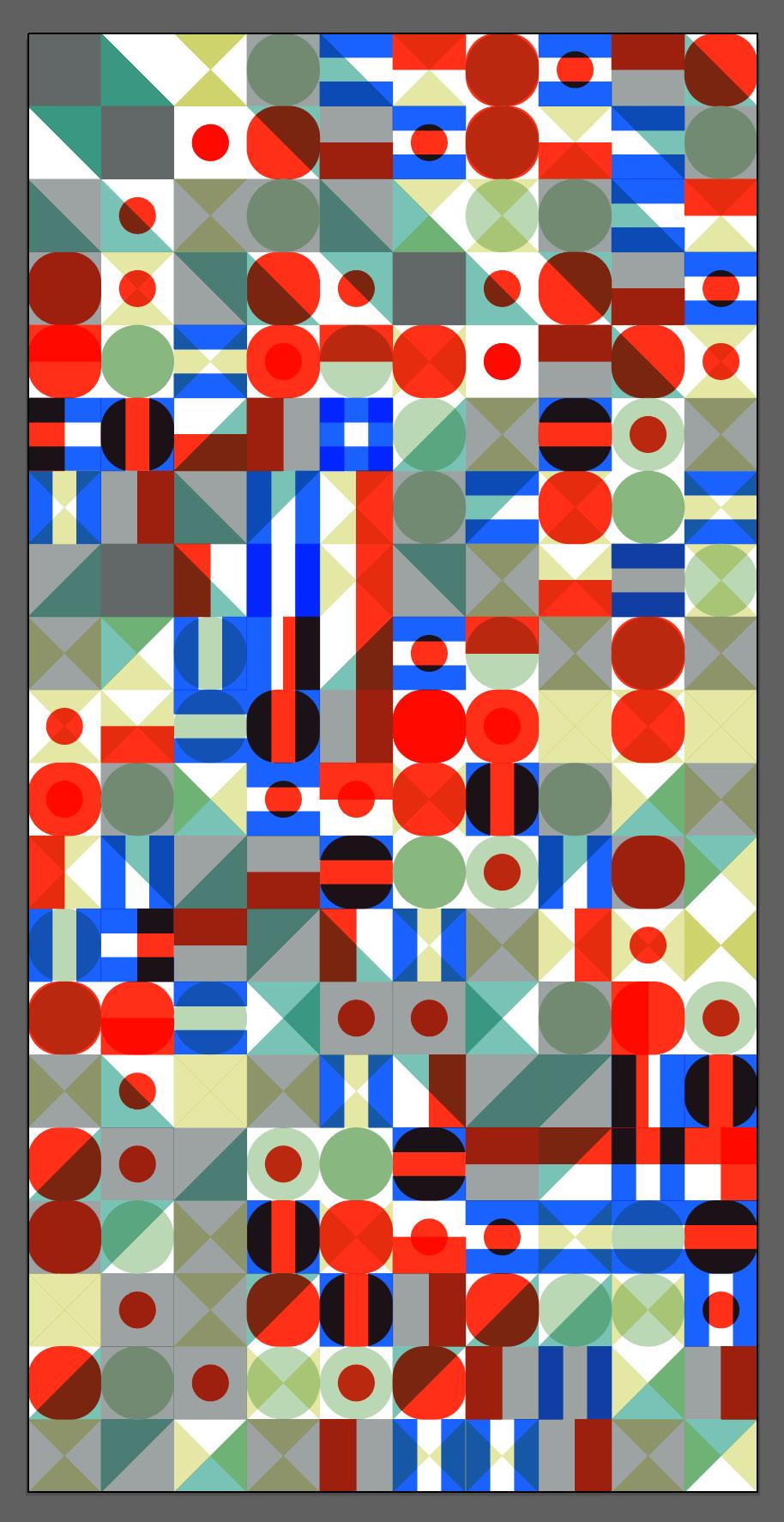
1–4 March. Letters and tiles: wooden movable type, a sheet printed in red with script and ornament set in concentric rings around a centre, and two screenshots of compositions made of square tiles (1, 2). Each tile carries one motif, a circle, half-circle, stripe or triangle, and the tiles are laid edge to edge. Then two painters: David Novros (the Paula Cooper Gallery page) and Peter Halley, The Turning, 2008.
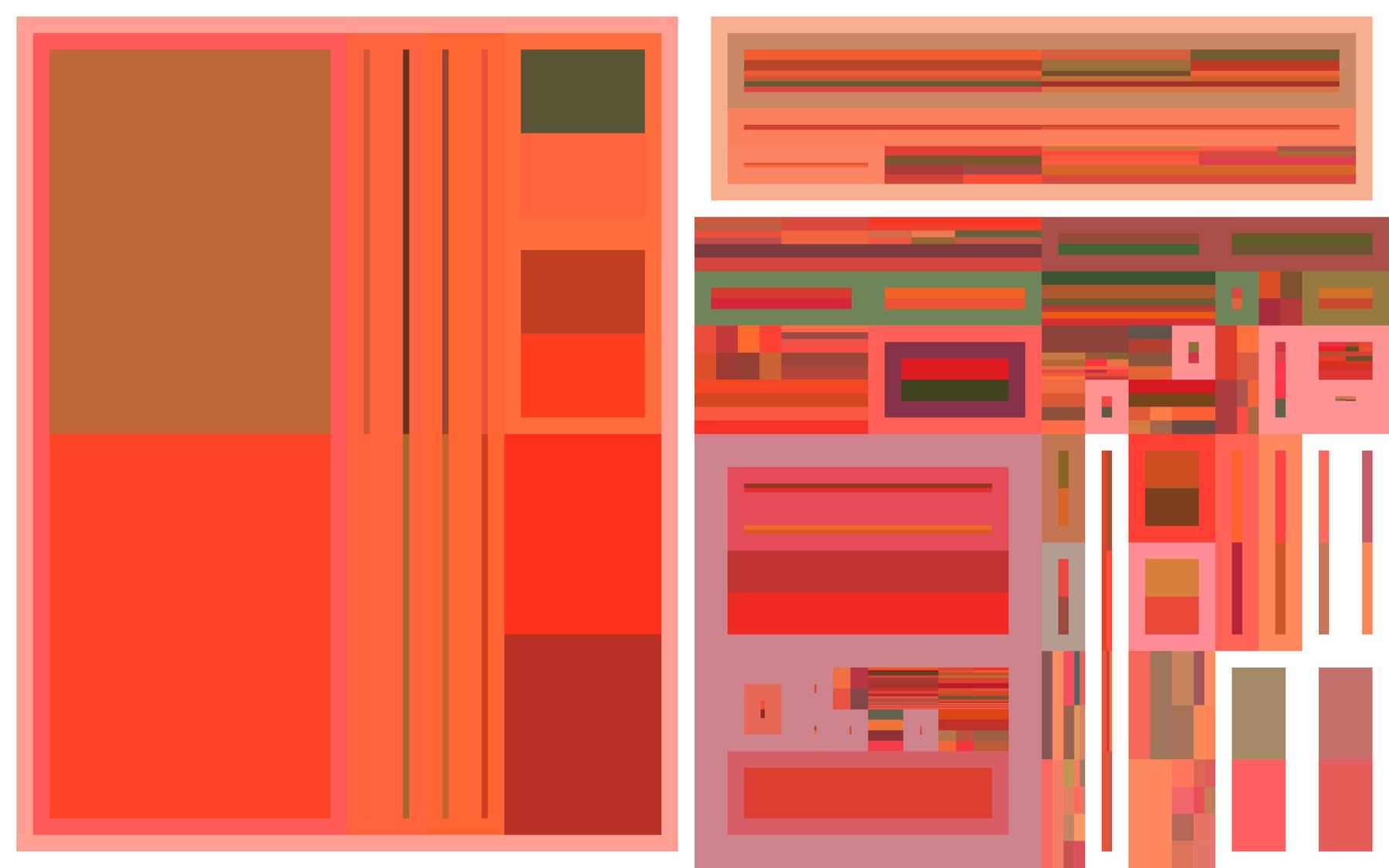
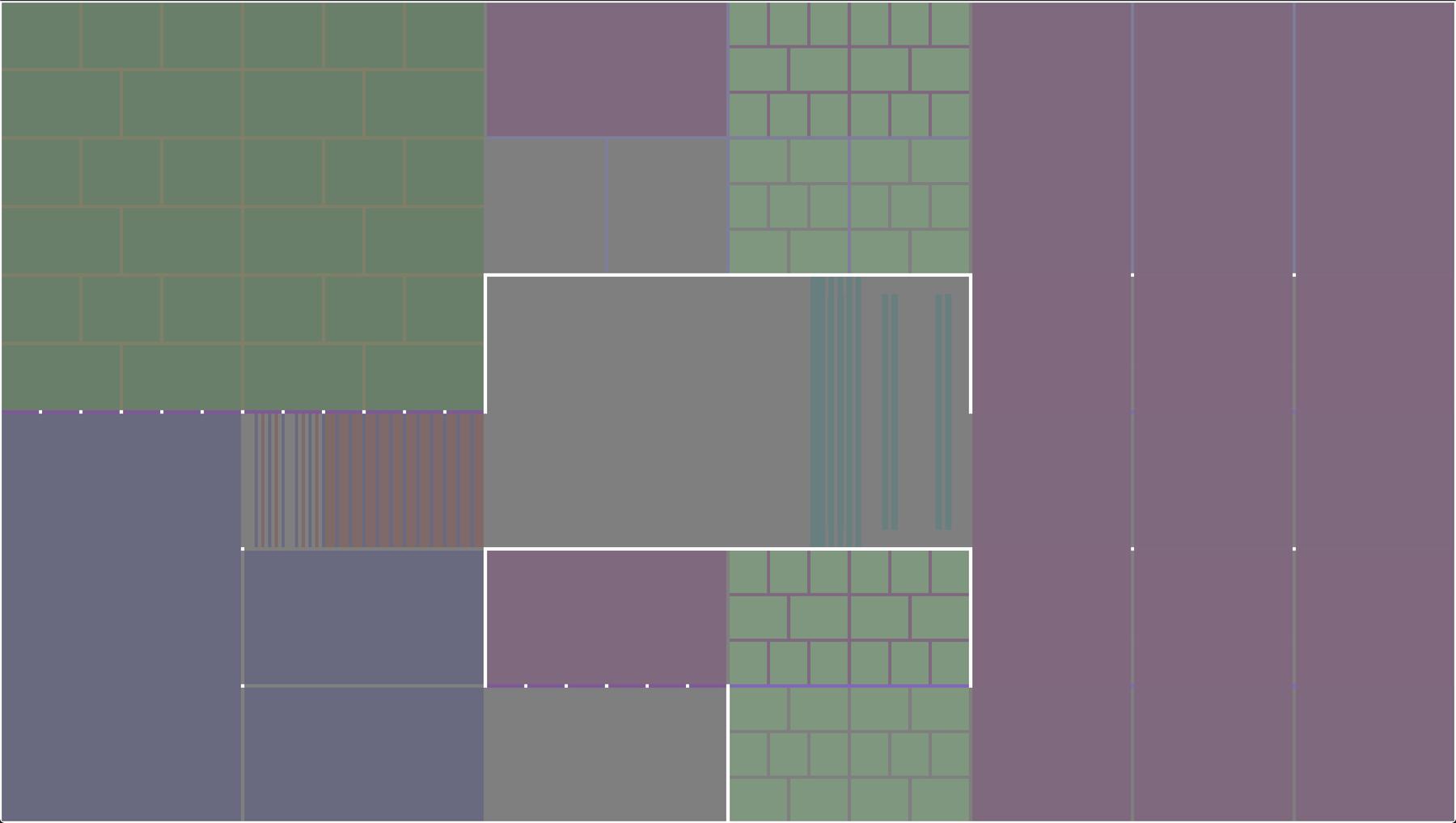
26–28 March. Two blocks titled Colour Configuration Pair (1, 2), the second captioned "Cartesian genetic programming". It sets two panels side by side, each divided into rectangles of red, orange and brown: the left panel into a few large fields, the right into many small ones. These are the first works of his own in the channel, the beginning of Colour Configurations (2019–2022); the halves of the two pairs became four of its tokens (→ Colour Configurations). Four screenshots follow the next day (1, 2, 3, 4). They show the same division into nested rectangles in greys, greens and purples, with some cells filled by a brick or lattice texture.
2020–2023
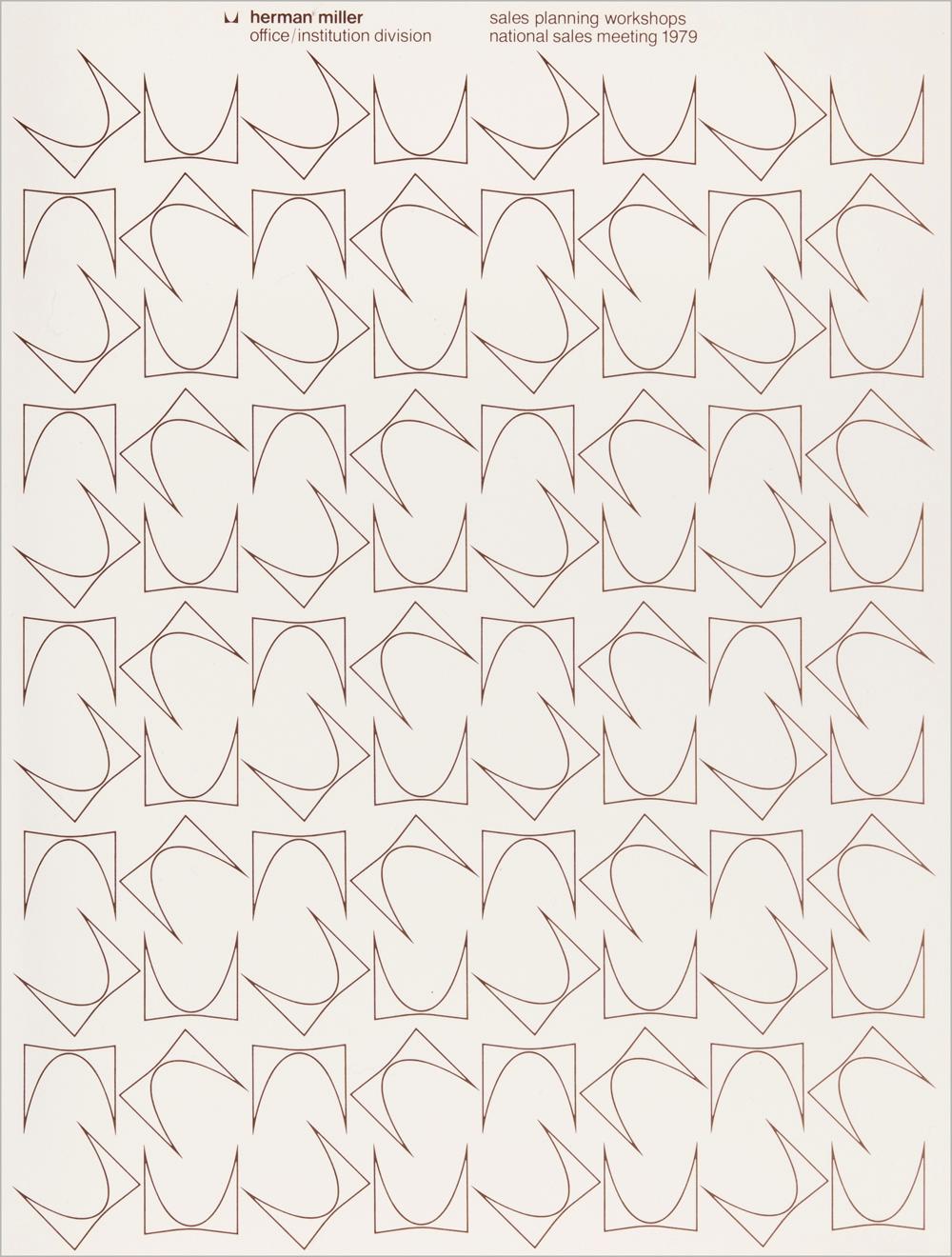
Single additions. An isometric drawing of three stacked slabs patterned with small cells (December 2020). The cover of a 1979 Herman Miller sales meeting packet designed by Barbara Loveland, on which one angular outline repeats in rows, turned a little differently each time (February 2023). Photographs by Patrick Winfield (Sunset Safari, Impossible Project film) and Bastien Pourtout.
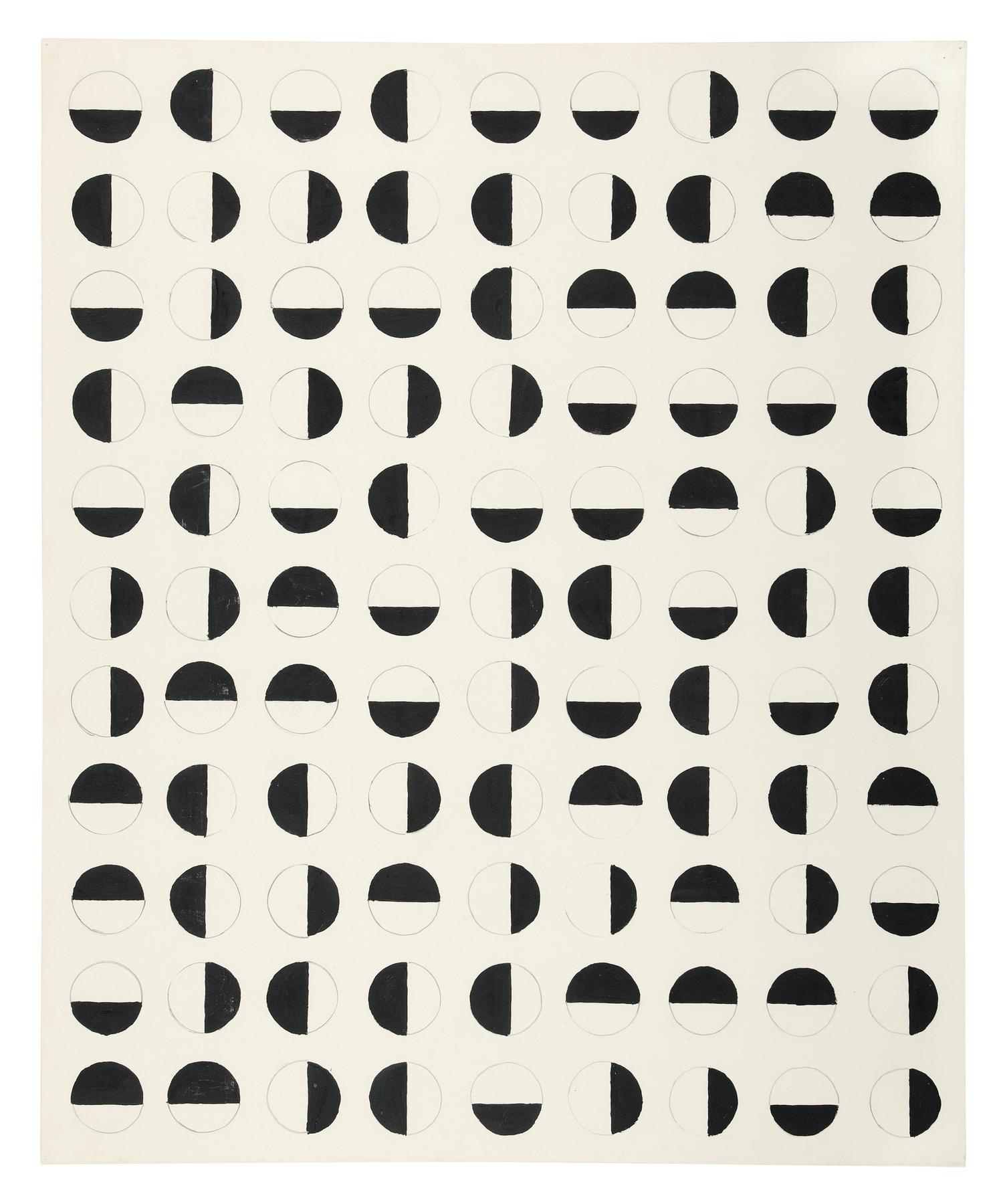
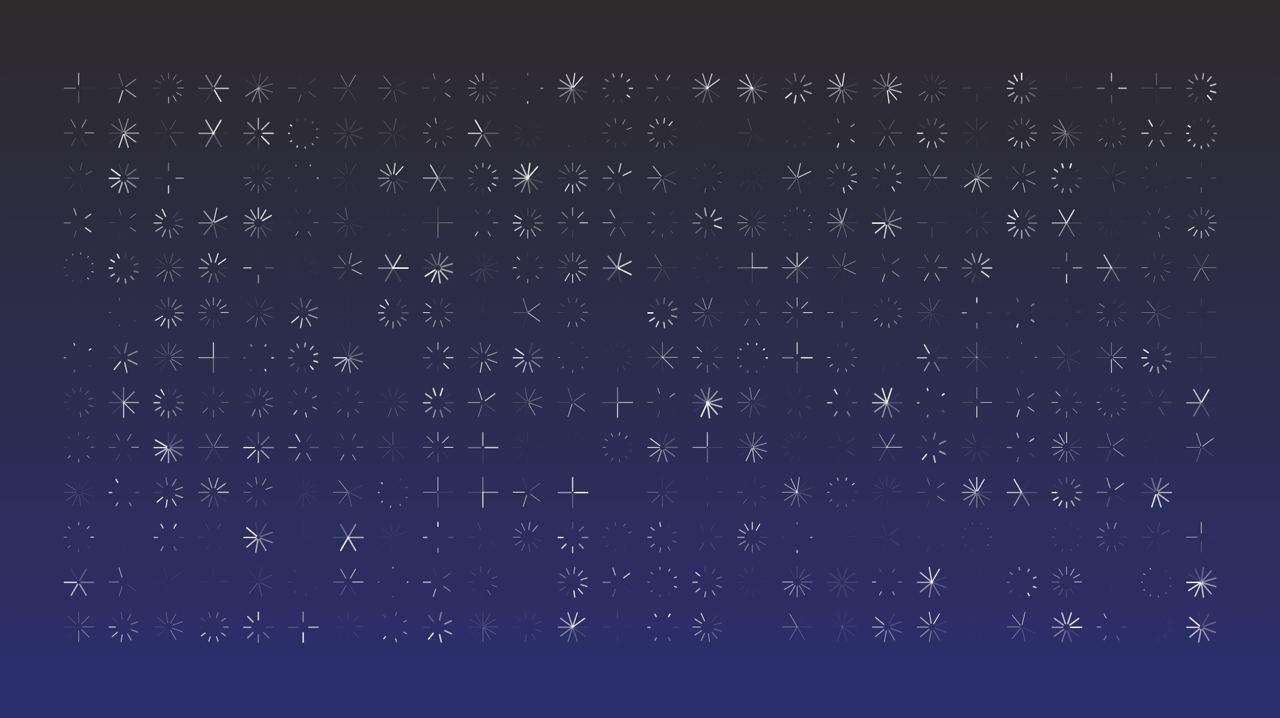
A press image from the Charlotte Posenenske retrospective Work in Progress (Kunstsammlung Nordrhein-Westfalen): black half-discs on a white sheet, set in rows and columns, each turned to face up, down, left or right. And a photo of a screen showing rows of loading-spinner icons on a dark blue ground, the motif of Field (2008, ported on-chain in 2023) (→ Field).
2024
The channel is busiest in the spring of 2024, the months in which the Anni and Pression des pairs software was written.
Weaving and textile
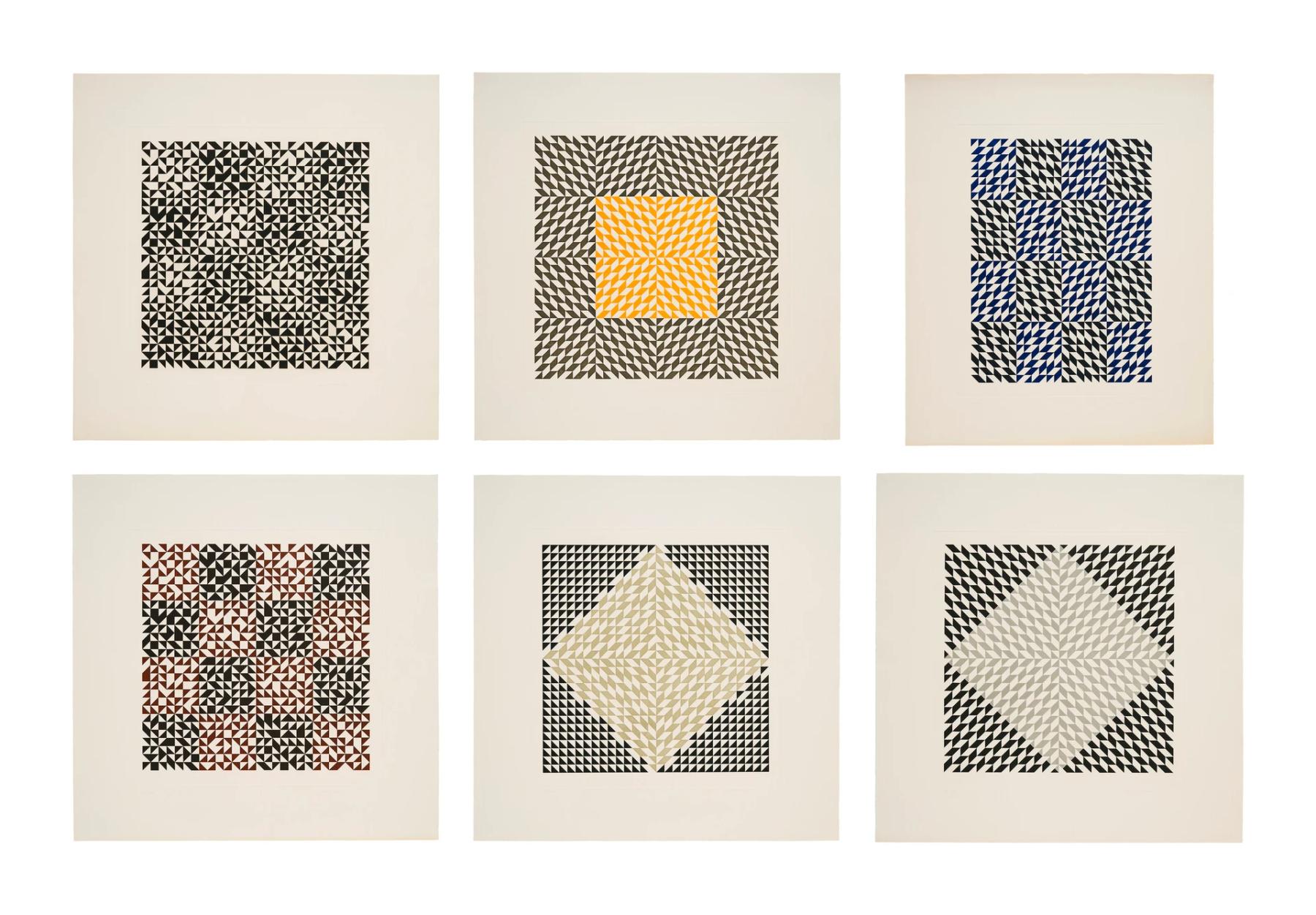
Anni Albers, Second Movement I–VI, 1978, etchings and aquatints on Arches Cover paper: six square prints, each a field of small triangles in black, grey and one colour. Other Albers blocks show a study on graph paper in red and grey triangles, a framed print of black triangles on blue and a print in red and blue.
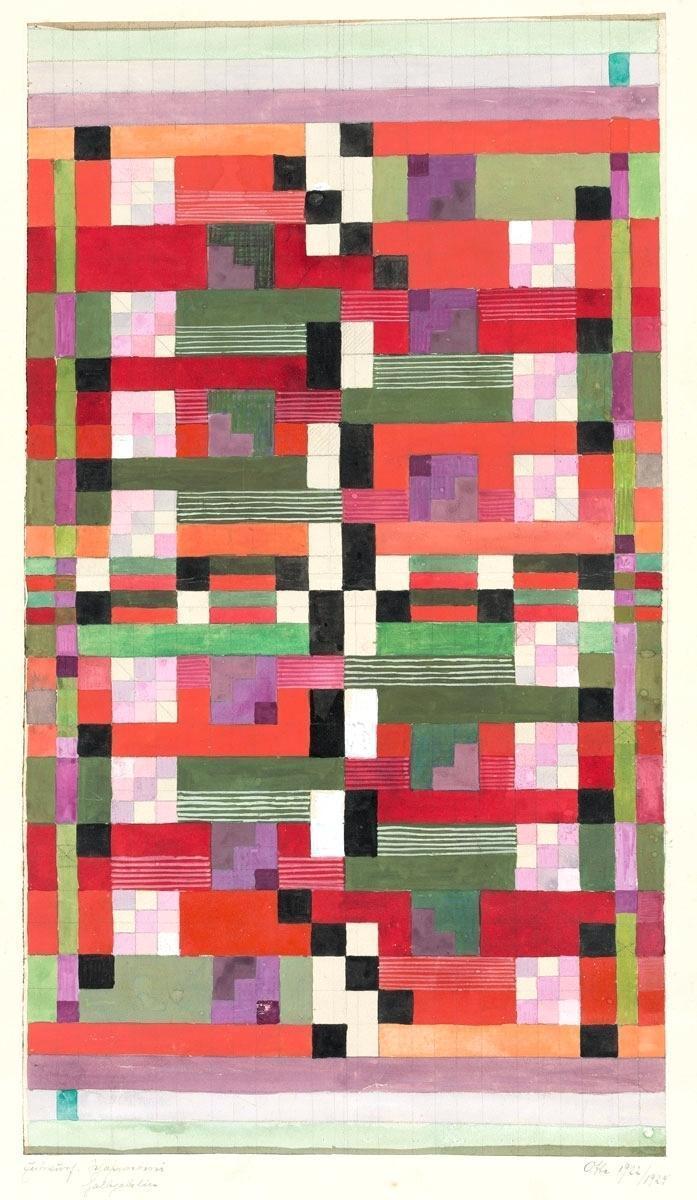
The Bauhaus weaver Benita Koch-Otte: Projet pour un tapis, 1922, watercolour, 50 × 32.4 cm (Museum Hannover), a rug design built from red, green and pink blocks and stripes on a square grid; a carpet design of 1923 in greys and ochres; and a third image.
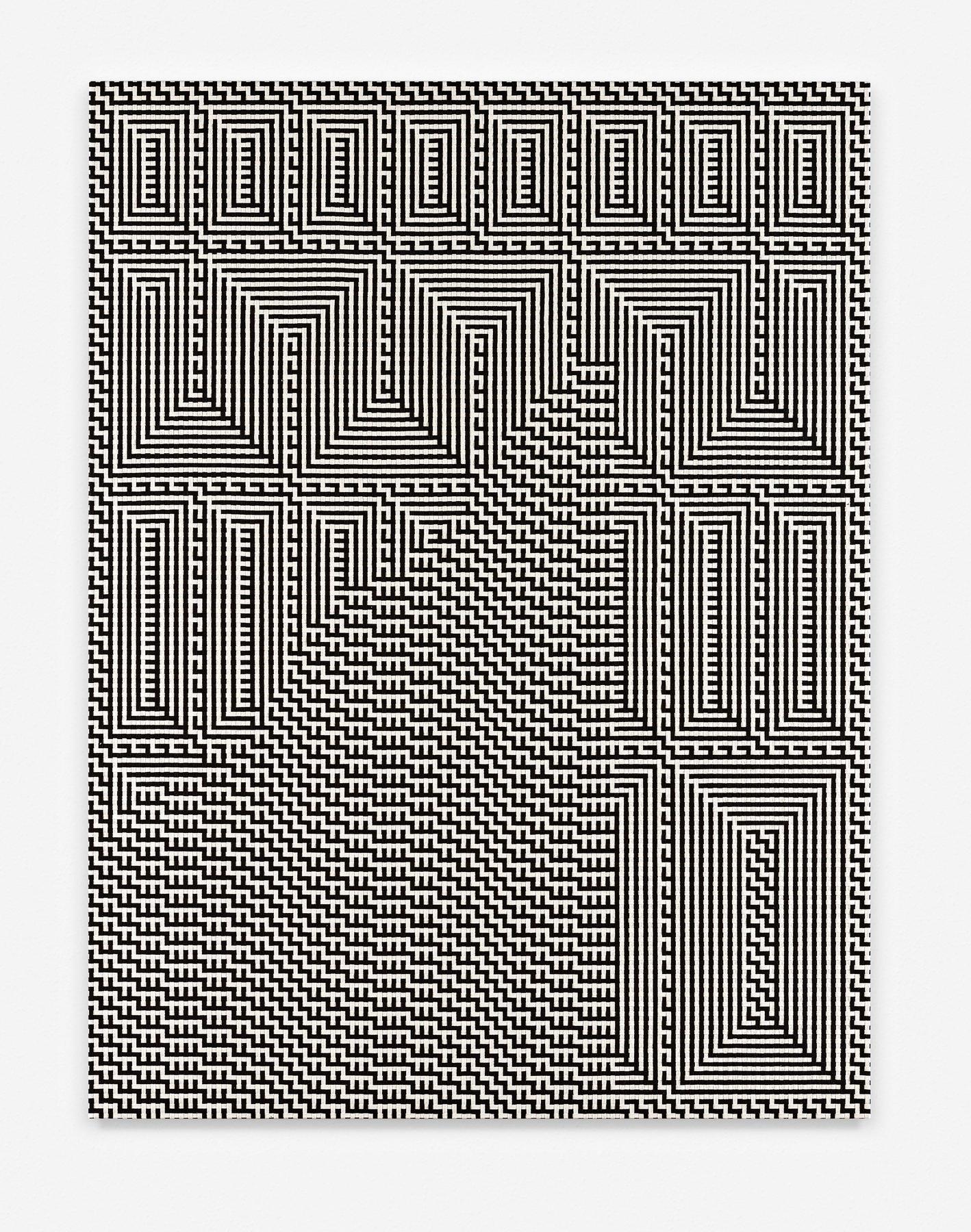
Tauba Auerbach's Shadow Weave paintings (1, 2, 3). In the first, black and white fret patterns run through a grid of square modules and change direction from module to module. Also another image and an Art21 segment on her.
Daniel Dewar & Grégory Gicquel, The Weaver and the Spoke (Antenna Space); the exhibition Hard/Soft. Textiles and Ceramics in Contemporary Art (MAK, Vienna, 2023); a video of weaving on a "Live Loom"; and Amandine David's channel Weaving Coding, which van den Dorpel connected on 24 March.
Writing
Sumerian cuneiform pressed into clay (5 March).
Rule-based and modular art
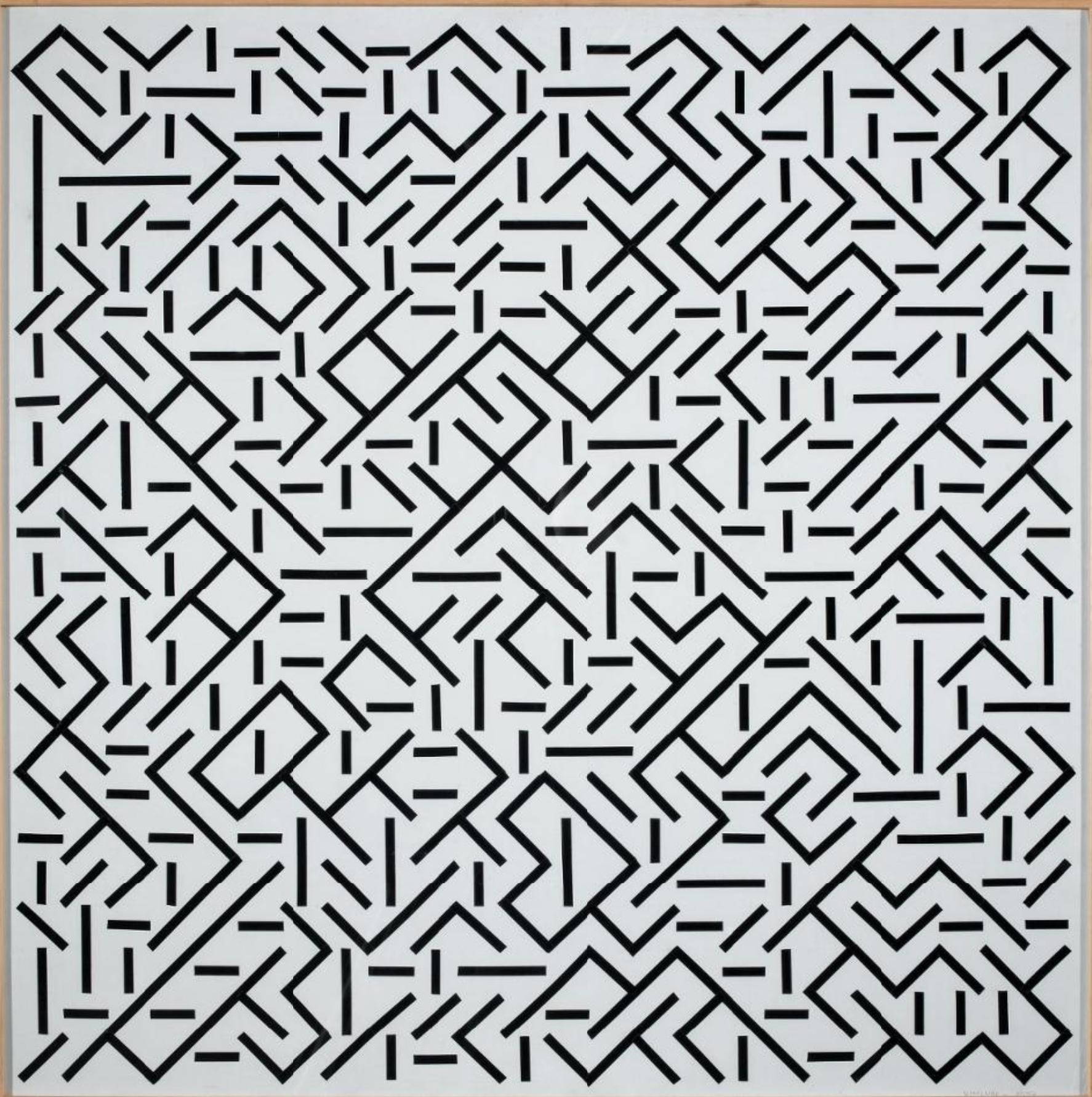
Vera Molnár (block), from the Centre Pompidou collection: short black bars on white, one to a cell, each set horizontal, vertical or diagonal, so that neighbouring bars join into a maze.
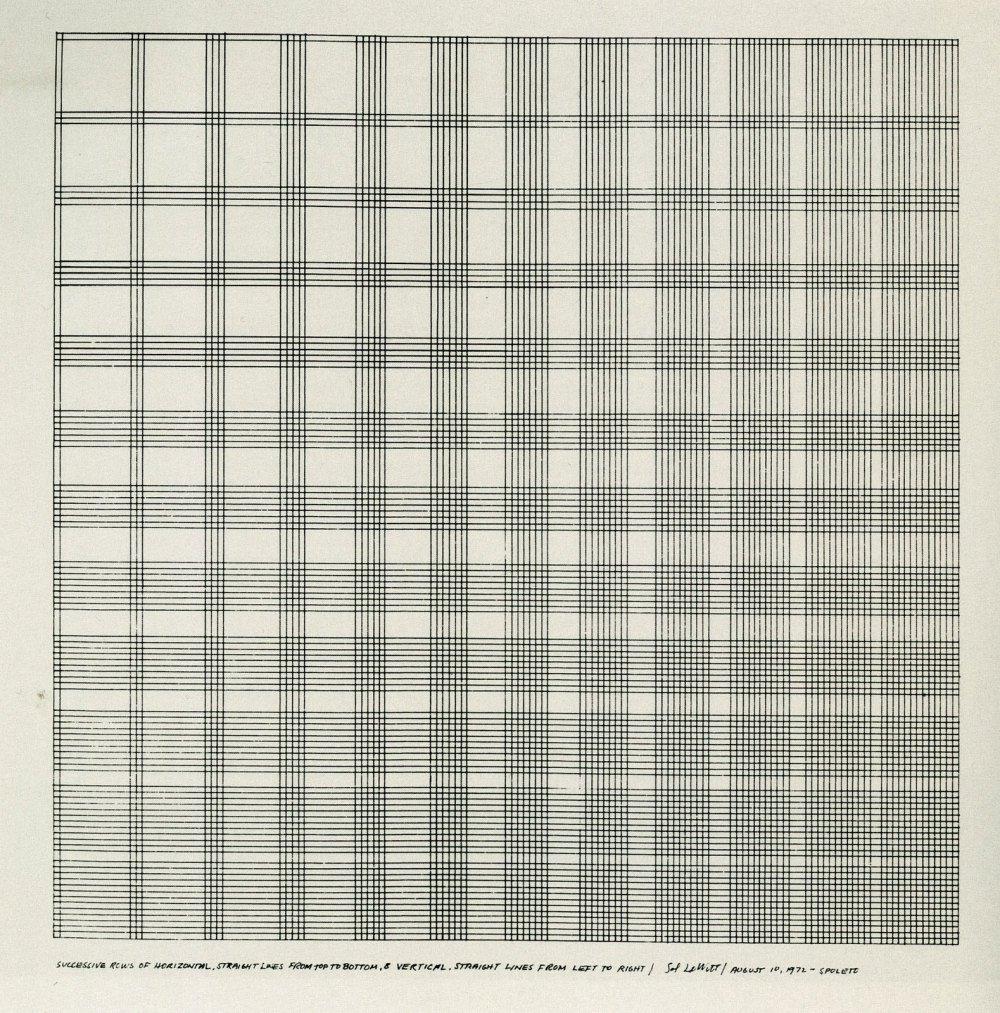
A grid by Sol LeWitt: ruled pencil lines, horizontal and vertical, at uneven intervals, with a handwritten line along the bottom edge.
Charlotte Posenenske, Ohne Titel (Rasterbild), 1957, and Ohne Titel (Spritzbild), 1965, a block also in To Exhaust a Possibility Space (→ sources/ingested/arena-to-exhaust-a-possibility-space.md), and Rasterbild Kat. CP17, 1956–57, plaka on paper, 31 × 44 cm.
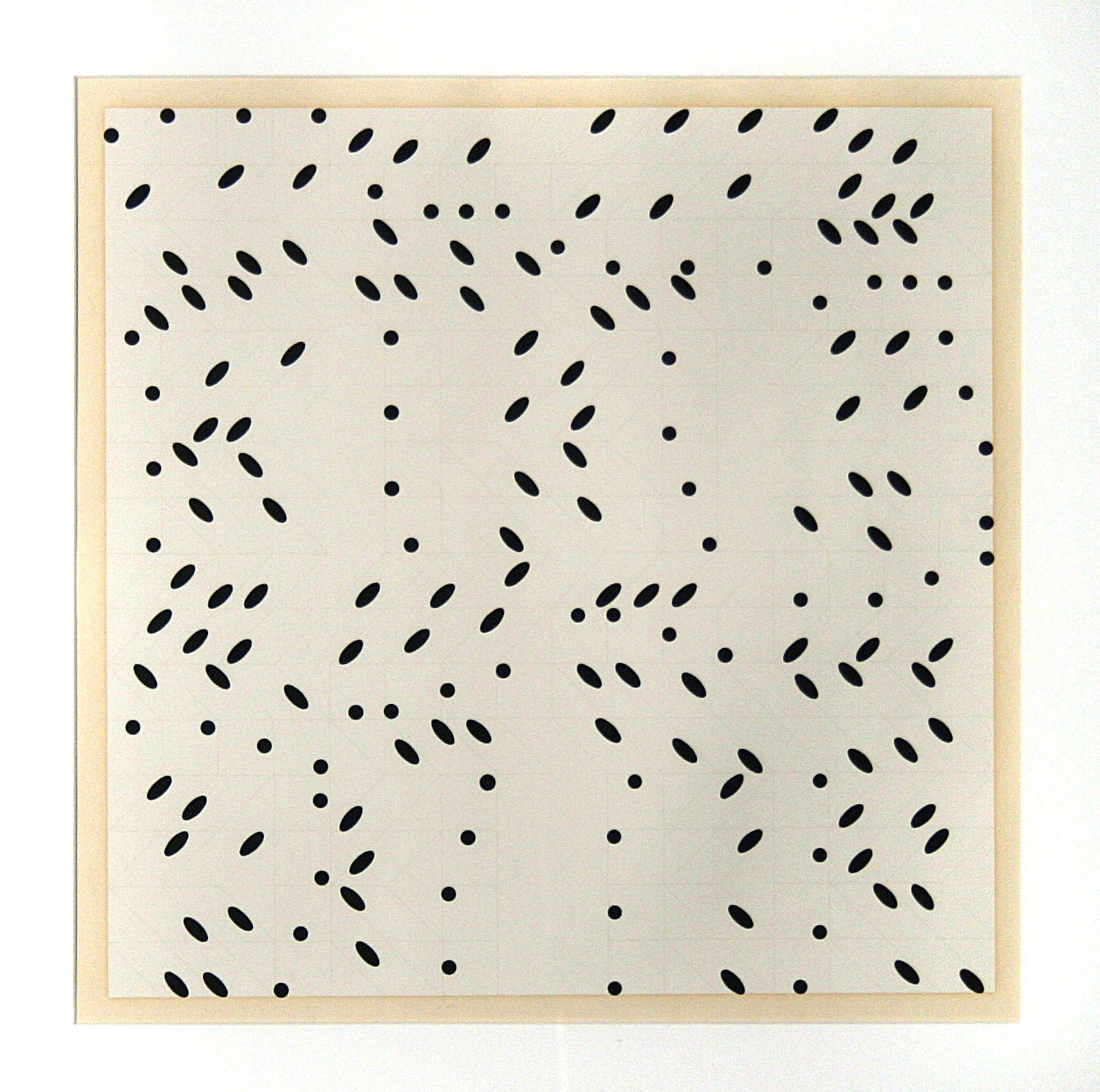
Larry Poons (block): small black ellipses scattered over a cream ground, all slanting.
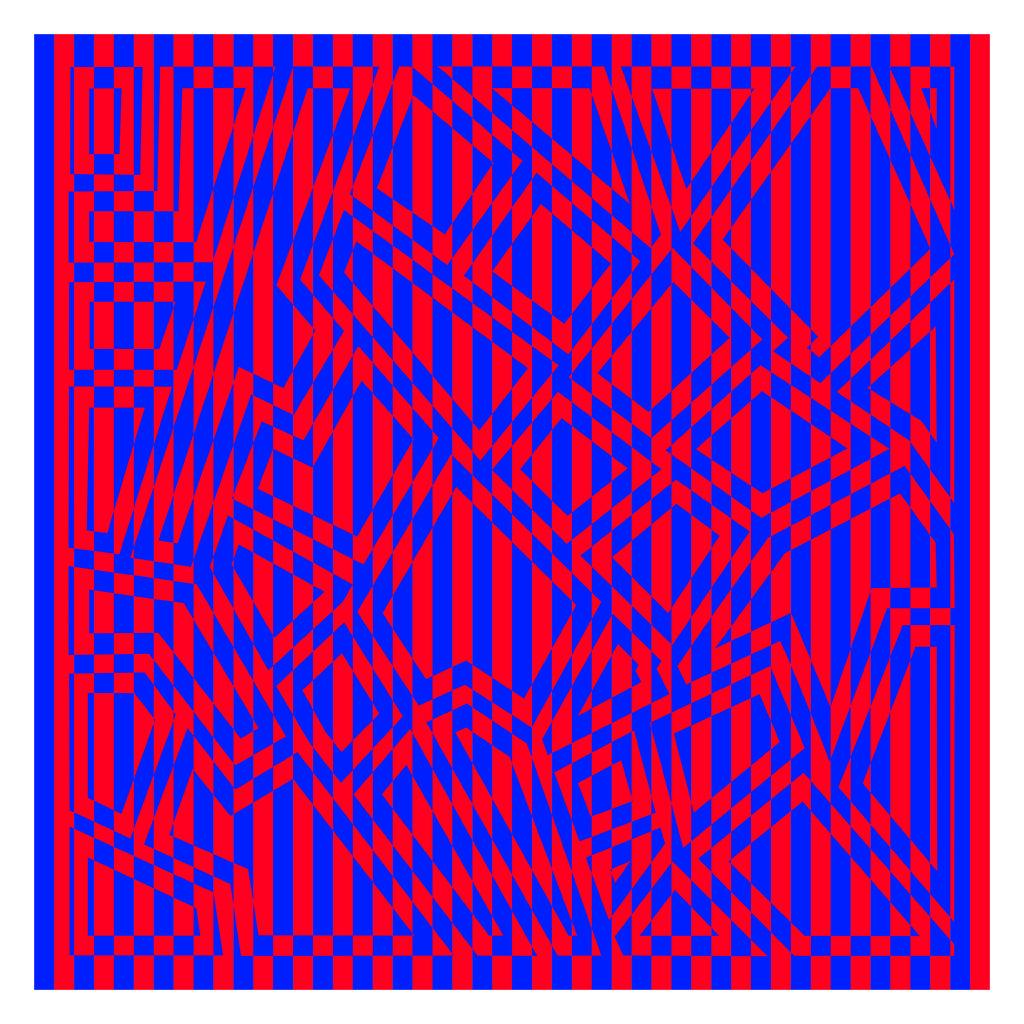
François Morellet (block): red and blue stripes in square cells. In some cells the stripes stand upright and in others they slant, and the change from cell to cell makes the surface ripple.
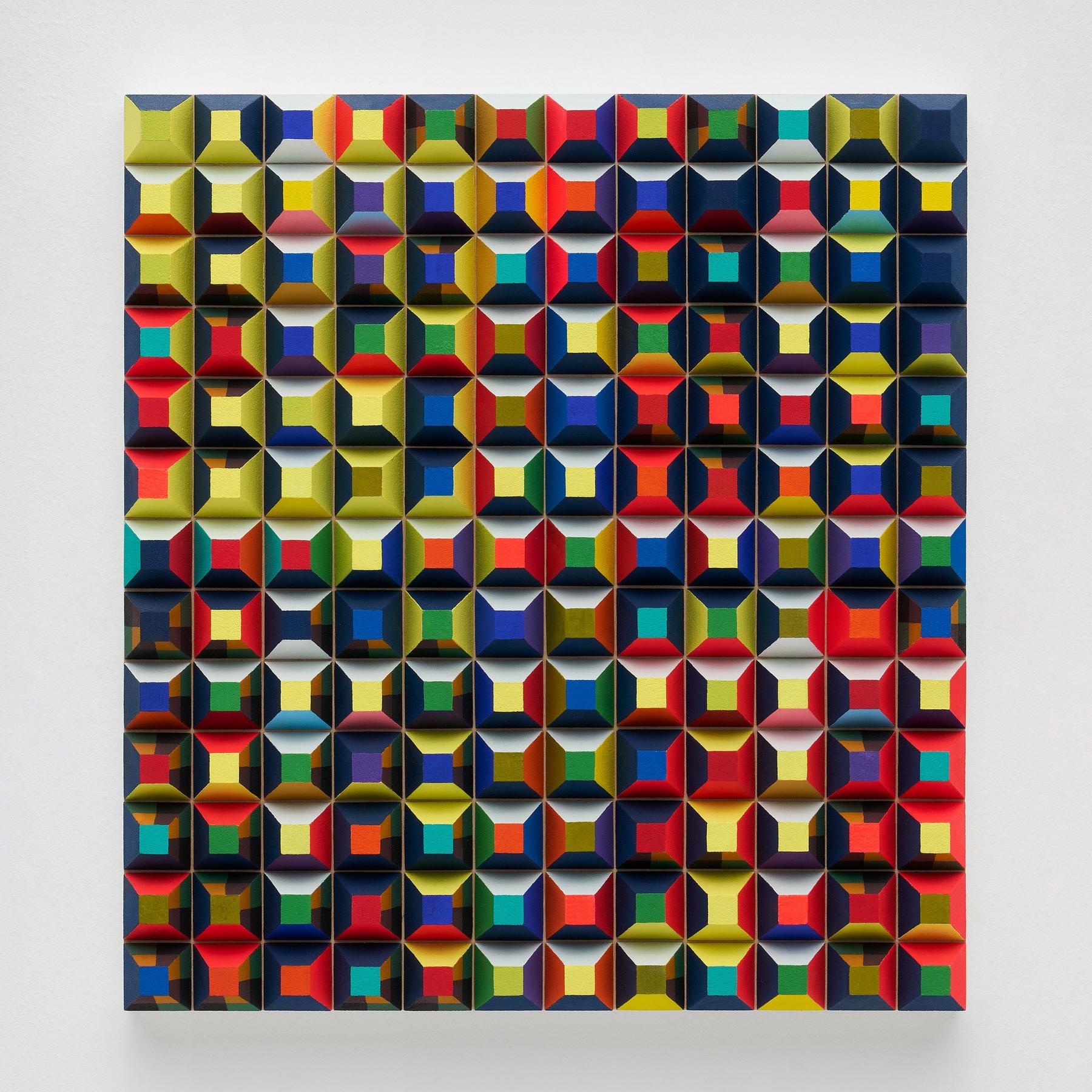
Evan Holloway, Water Tablet / King Scale, 2022: a wall relief of square cells, each sunk into a bevelled frame and painted in two colours.
Also Hanne Darboven, Konstruktion / Perforation New York, 1966/67, pencil and ballpoint on perforated paper, and a page on her Der Sand '79 (Metropol Kunstraum); Dan Walsh (block), concentric rounded squares in rows; Xylor Jane, Dancing Dogs, 2022, oil on denim over panel; Matt Hoyt, Untitled, 2022, tempera on illustration board; Ernest Edmonds, a work of 1985; and Sarah Friend's exhibition Terraforming (Nagel Draxler).
The computer as board
Christopher Strachey's draughts program (1952), shown as a board on a screen, saved as its Wikimedia Commons page (12 April).
His own work
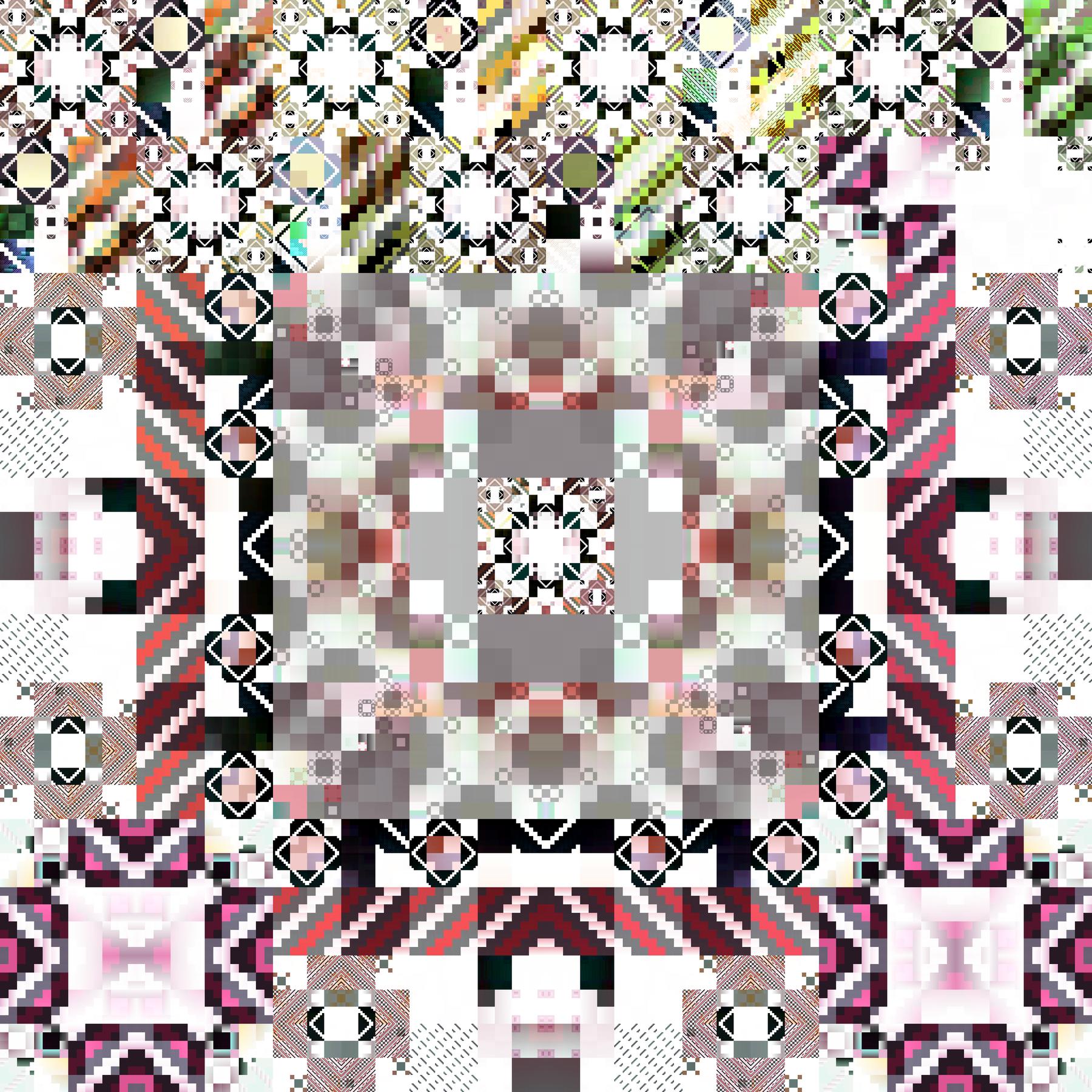
Four tokens of Struggle for Pleasure (#116, #110, #101, #2), added 11 March. #116 is a field of patterned square tiles, mirrored left to right around a grey centre.
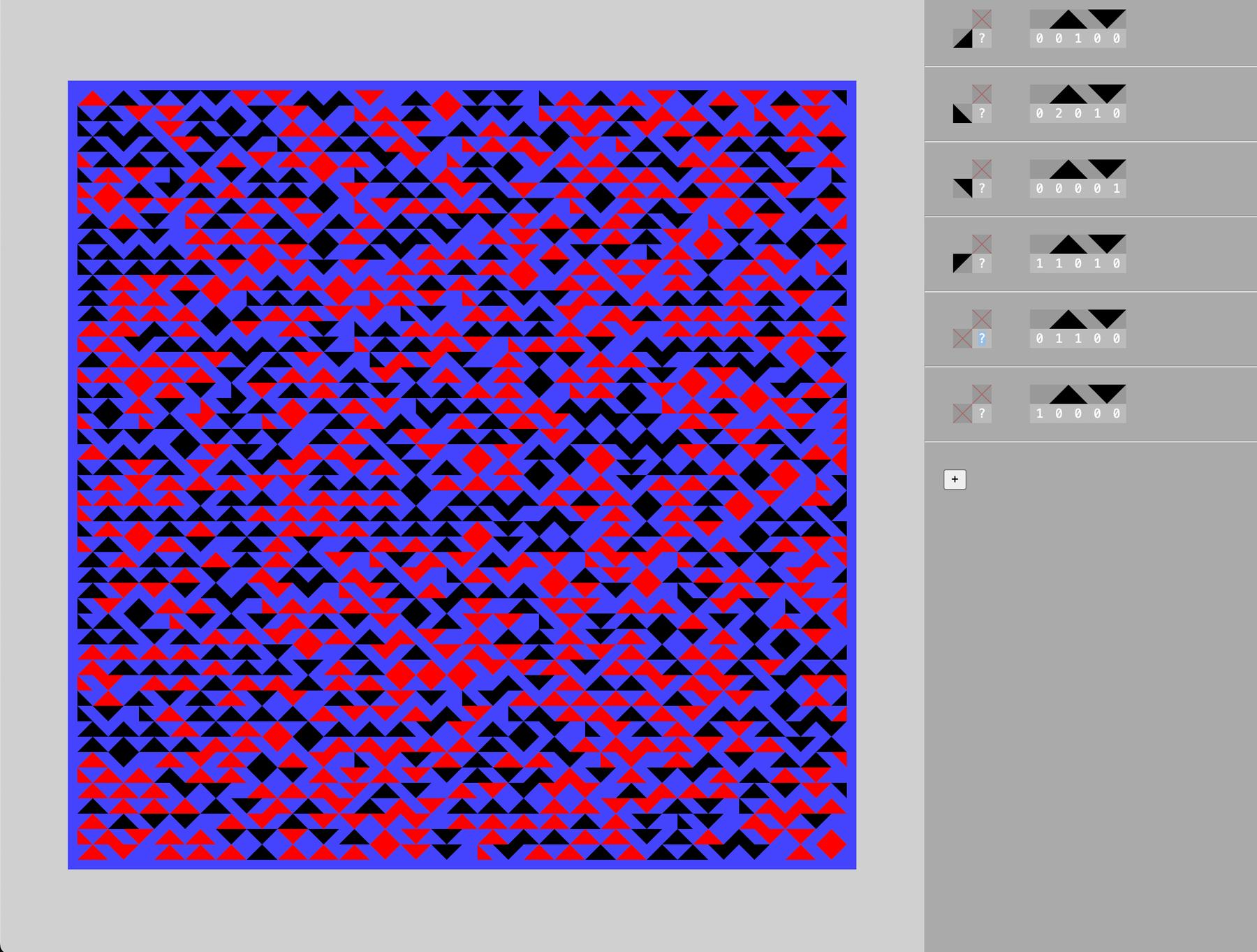
The Anni Editor (20 March): a square of small red, blue and black triangles beside a panel of controls, one row per triangle motif. Screenshots from the same week show the weave as it was being written (15 March, 20 March). The editor became Anni (→ Anni).
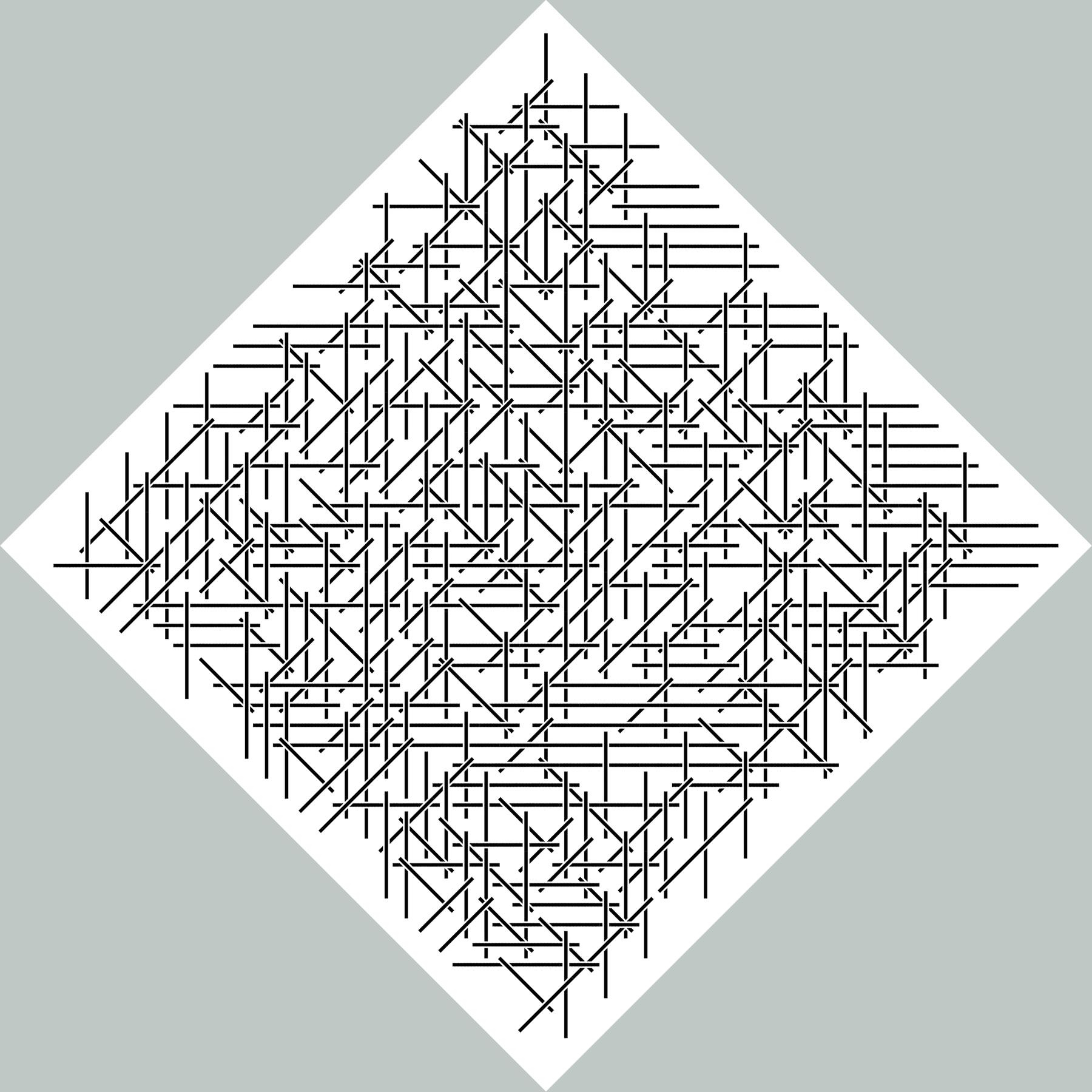
Bamboo and Bamboo (II) (25 March). The first is a diamond of black lines crossing at right angles; the second runs diagonal hatching across a square with a ragged left edge. harm.work lists a brush plotter drawing of 2025 under the same title (Bamboo).
The harm.work page of Pression des pairs (10 April), the generative animation after Vera Molnár's Quatre éléments distribués au hasard (1959) (harm.work).
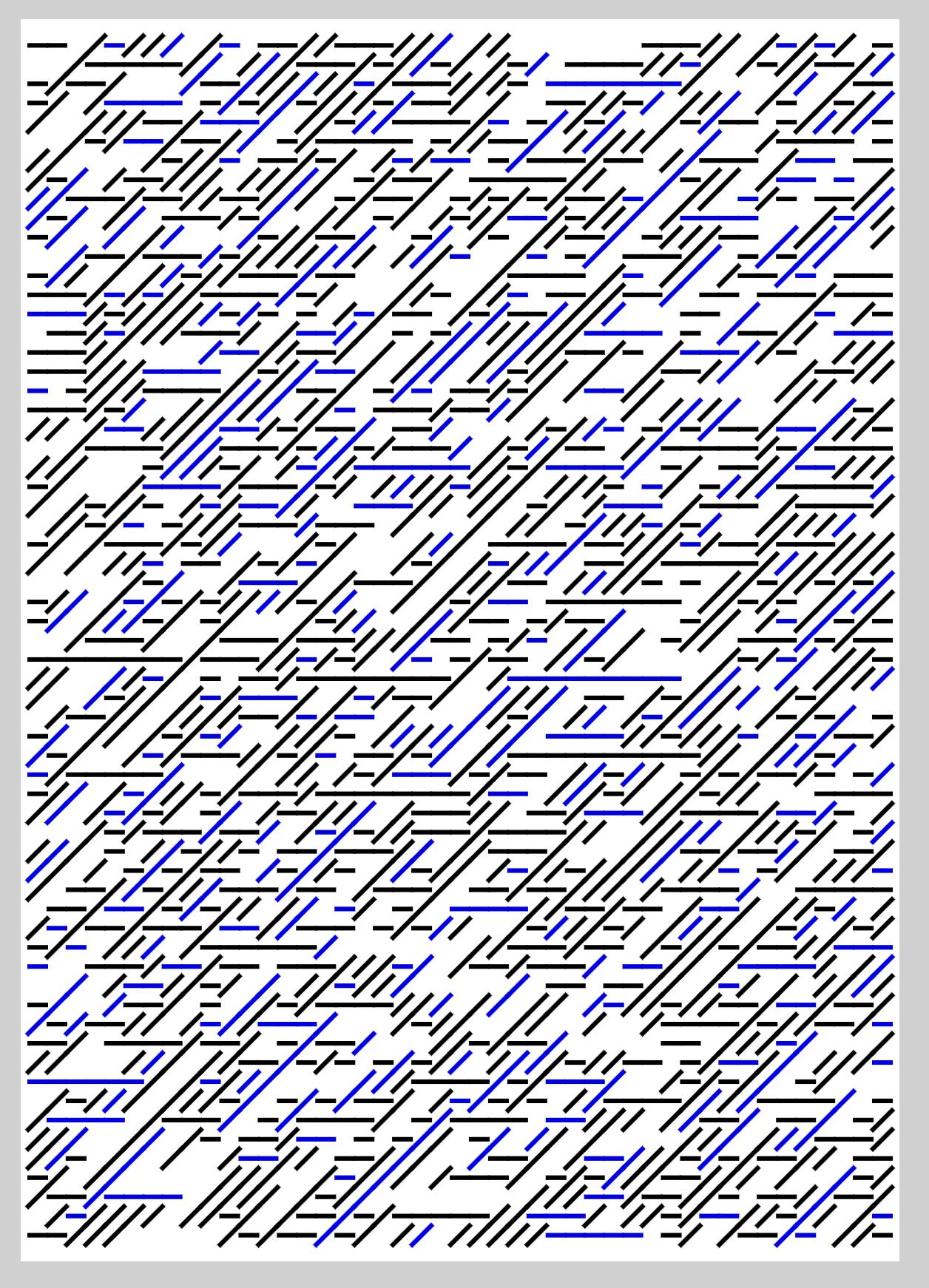
Cloud, Seagulls and Rain (13 April), three upright images of the same size. Cloud is a mass of pink, blue and white marks. Seagulls is made of rows of horizontal grey and blue lines. In Rain short black and blue dashes slant the same way across the whole sheet.
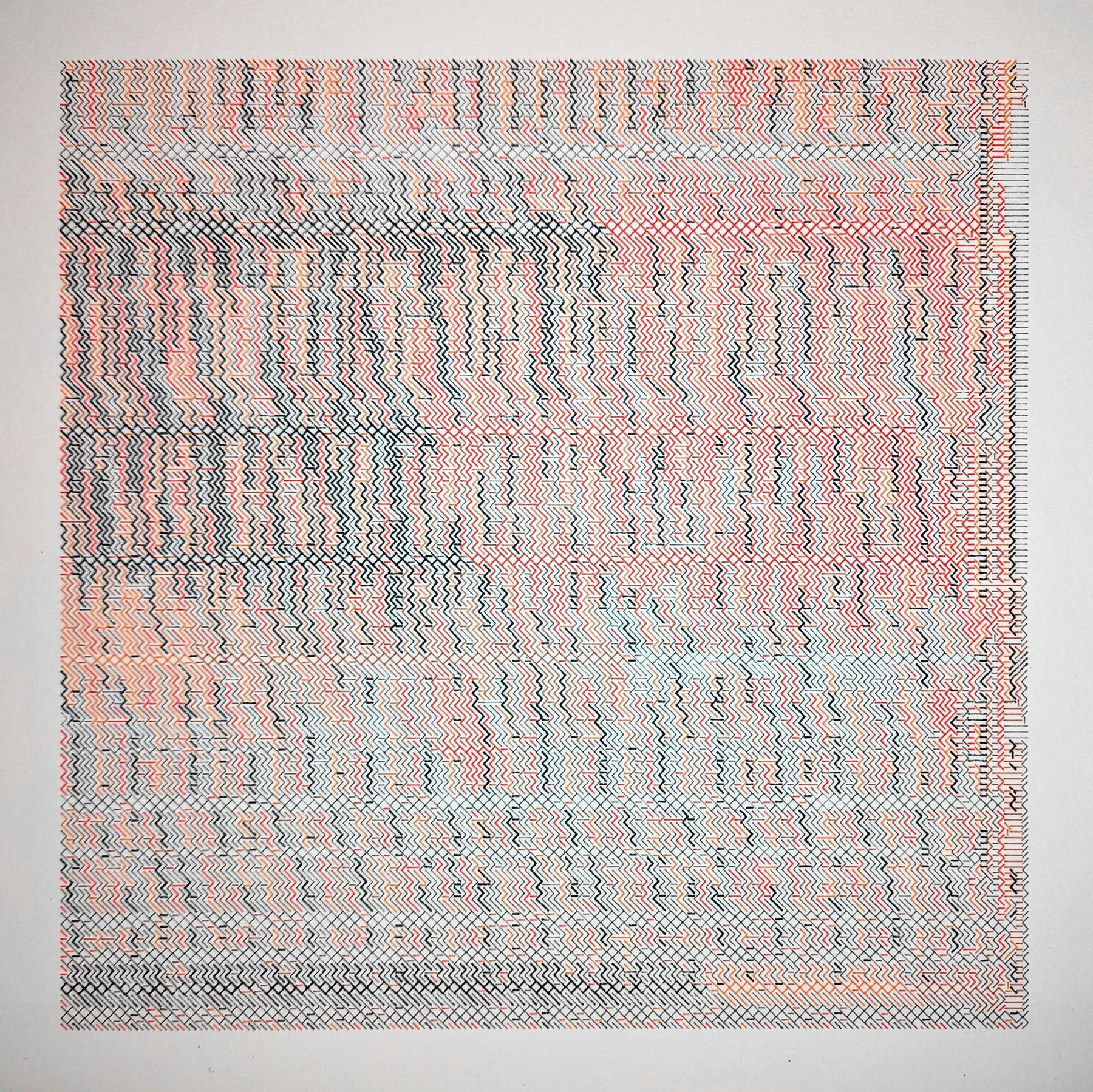
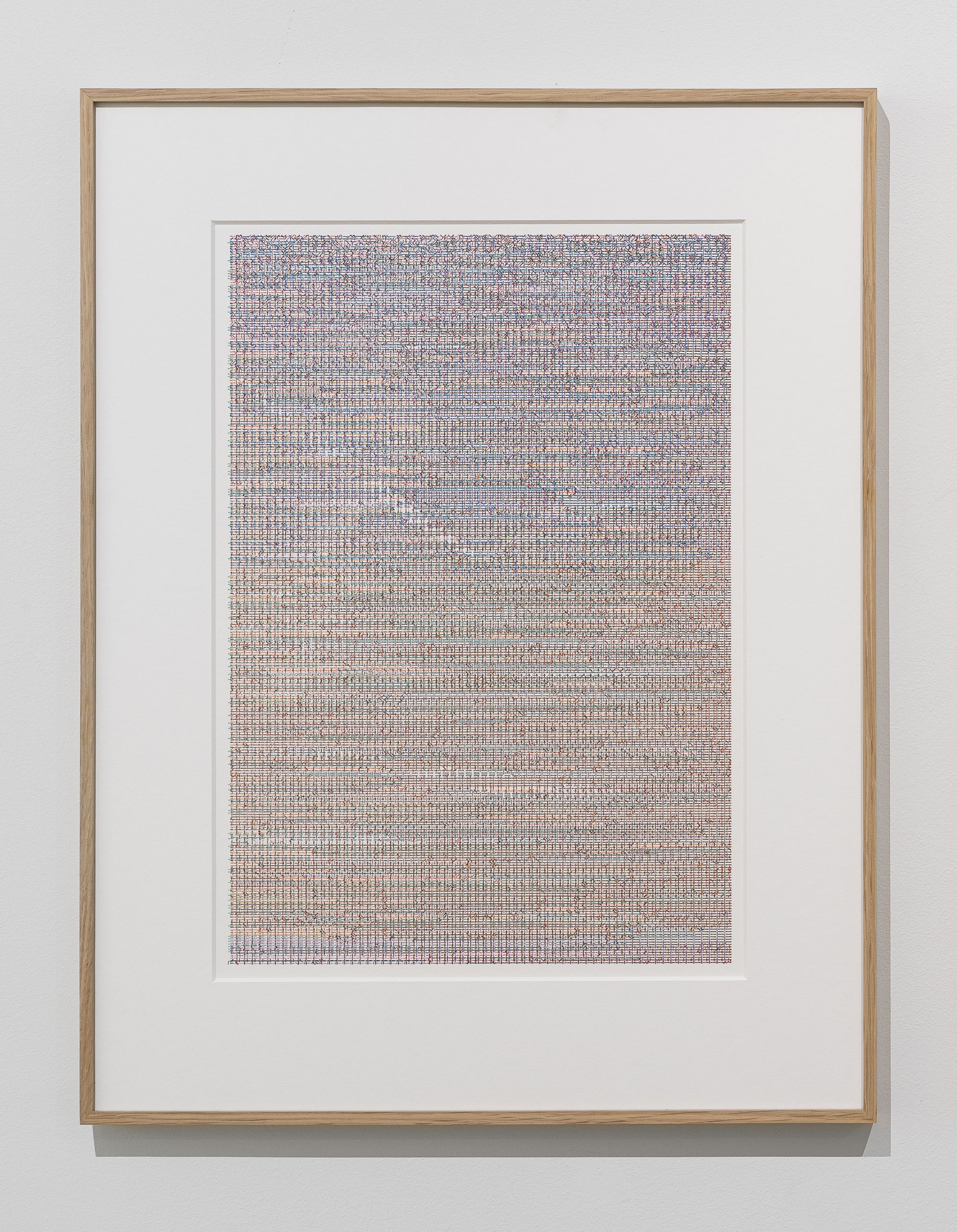
Weaving (square) (23 April), plotter drawing on Terschelling paper, 47 × 47 cm (harm.work): rows of small grey and pink marks that shift sideways from row to row, like threads pulled out of line. The same day he added the harm.work page of the Cloud Writings series (harm.work).
Five plotter drawings, each added as its harm.work page, with the artist's note where there is one: Valley, "Probabilities transition gradually based on the coordinates within the canvas (x/y)"; Shroud, "Mirrored overdrawn, creating a mild symmetry"; Mold, "Rotated overdrawn"; Pineal; and Fait Divers. Shroud (plotter drawing on Terschelling paper, 36 × 48 cm) fills the sheet with bands of short strokes in reds, blues and greys; by the note, it was drawn twice, the second pass mirrored over the first.
The exhibition Angles Morts at Lohaus Sominsky, Munich (gallery page, harm.work page) (→ Angles Morts).
Three channels of his own are connected as sub-channels: Nesting and Proto-Seeders on 7 March, and contemporary generative graphics on 18 April.
2025–2026
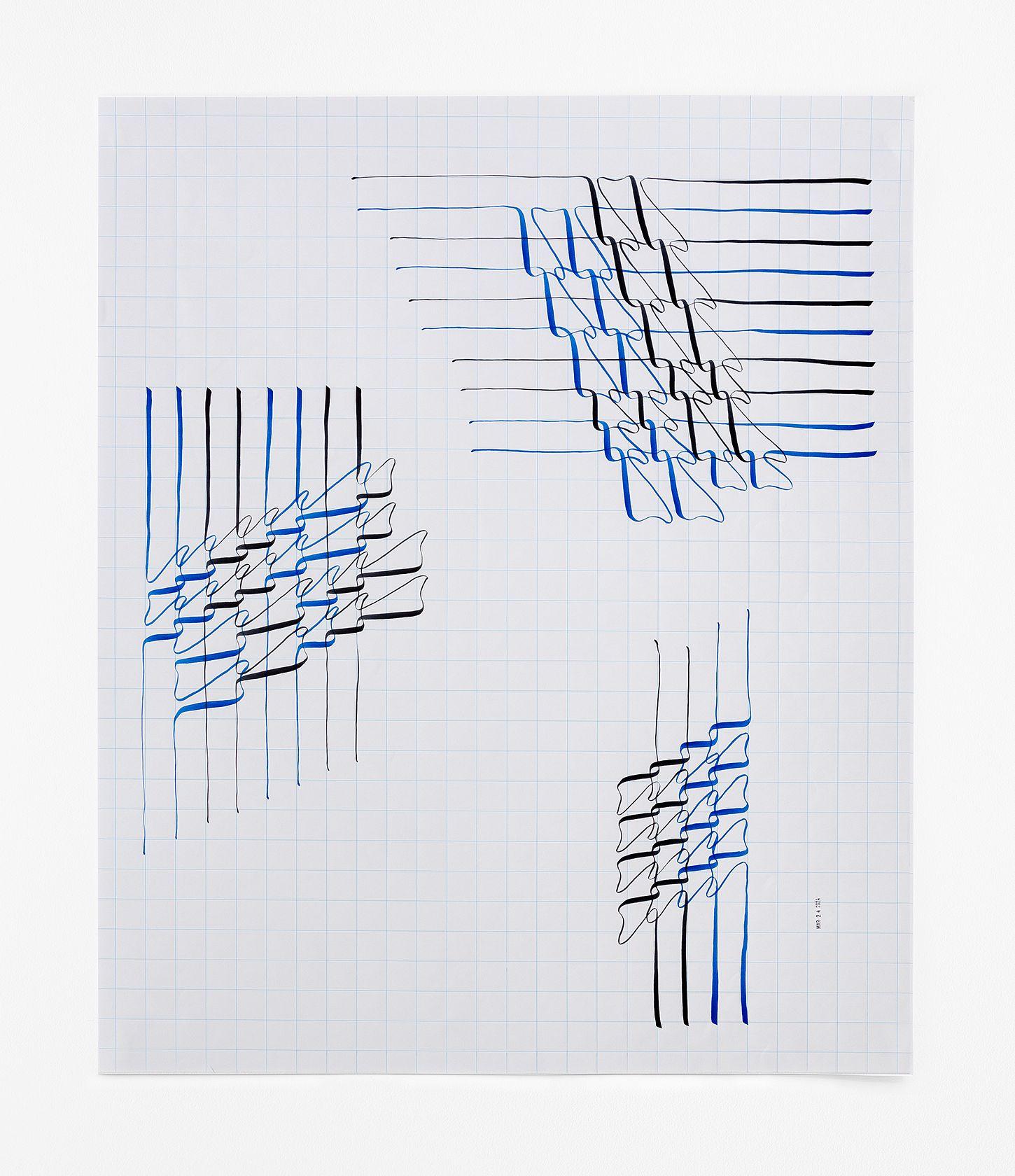
Tauba Auerbach, Ligature Drawing, 24 March 2024 (2024), ink on paper with date stamp, 64.8 × 50.8 cm: blue and black pen strokes on graph paper in three groups, each stroke twisting as it runs along the grid lines (February 2025).
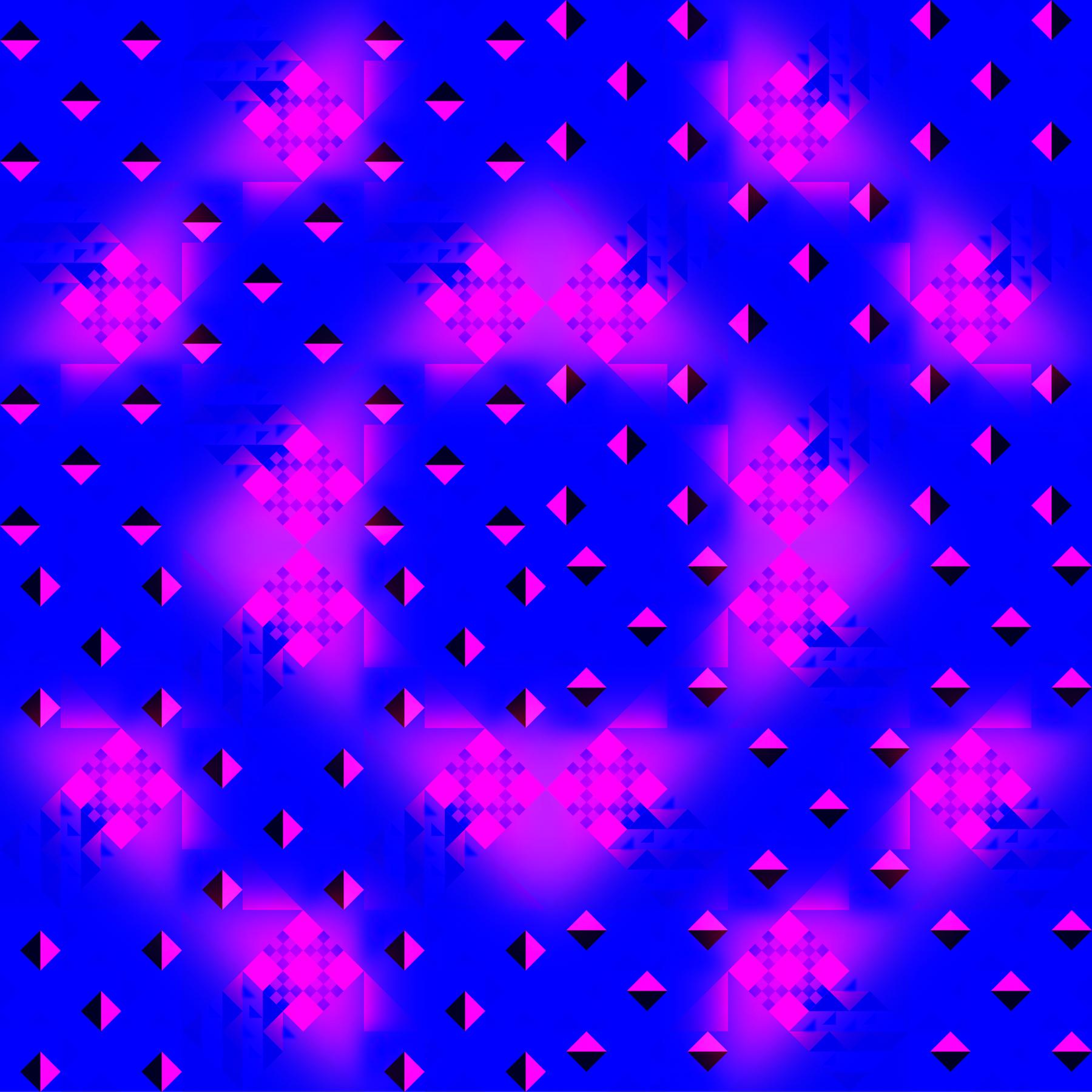
Ten screenshots of work in progress, added on 19 April 2025 and dated by their filenames from February 2024 to April 2025 (1, 2, 3, 4, 5, 6, 7, 8, 9, 10). The earliest sets small black and magenta triangles in a lattice over a blue ground with magenta glows. The last two photograph framed plotter drawings.
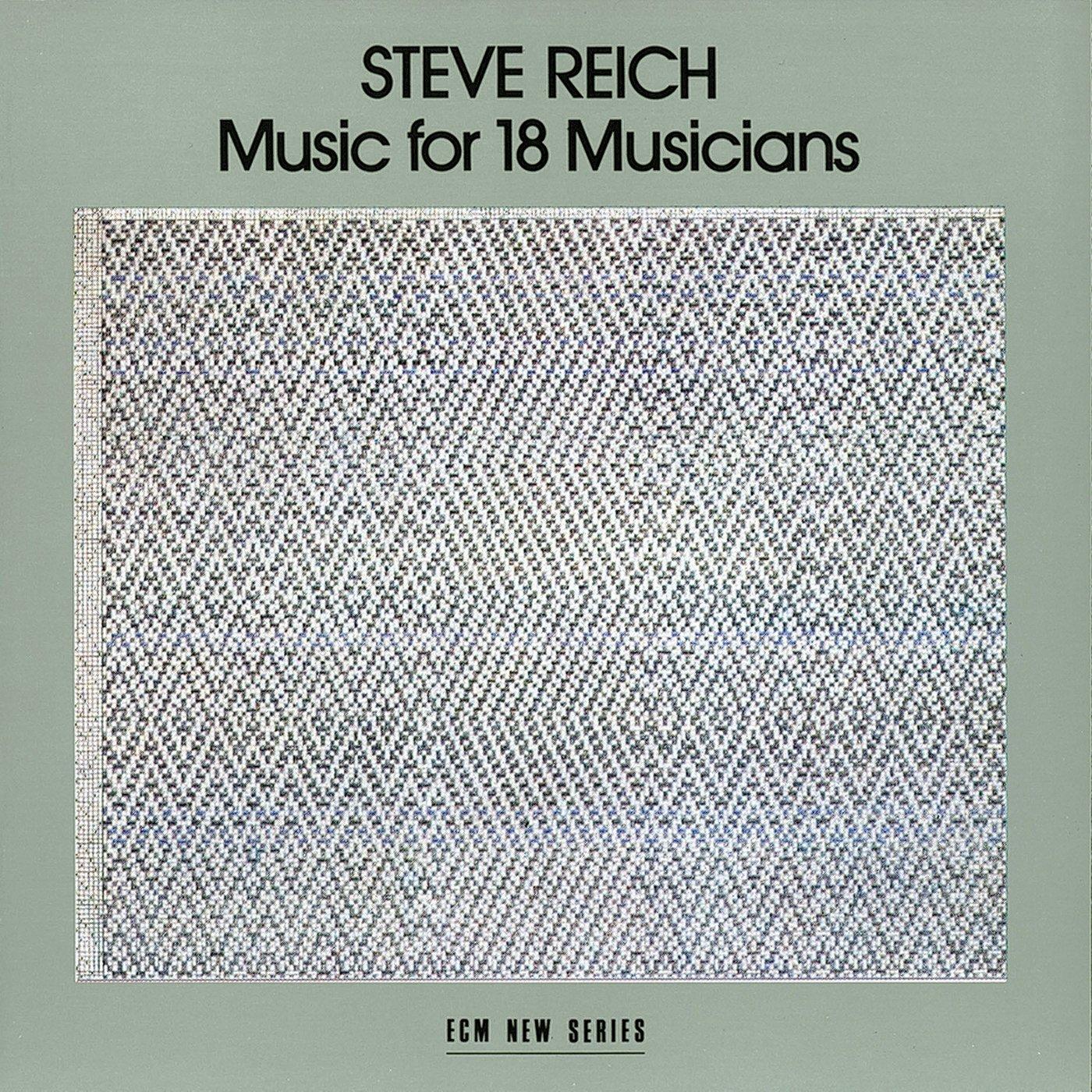
The record sleeve of Steve Reich's Music for 18 Musicians (ECM): a grey-green cover with a lattice of small diamonds filling the lower two-thirds (April 2025). rndm \\ 01.02 (August 2025), a poster for Experiments of Collaboration, dated 2024.09.20, printed with a grid of pale blue squares. On 23 February 2026, two channels: went to cutie patootie town & everyone knew you, by another are.na user, and his own Stained Unravel.
Notes
Several entries also appear in Rosalind Krauss's essay "Grids" (1979): Sol LeWitt, Larry Poons and the grid as a model of repetition, which Reich's music shares (→ sources/ingested/krauss-grids-1979.md). The channel's own interface is a grid: are.na shows a channel as rows of equal tiles.
Of the connected channels, Automata belongs to Damon Zucconi and Weaving Coding to Amandine David. An earlier version of this file listed both as sub-channels of van den Dorpel's.