
Orb (lite)
Orb (lite) (2022) is a collection of 512 tokens on Ethereum. harm.work describes it as "a fully on-chain spin-off of Markov's Dream: Orb. Colours, amount of rings, rotation speed and curvature of the rotating nested squircles are determined on mint and remain fixed." Every token carries the same description, "On-chain rotating nested squircles by Harm van den Dorpel, 2022". The image is an SVG that the contract writes itself; nothing is stored off the chain.
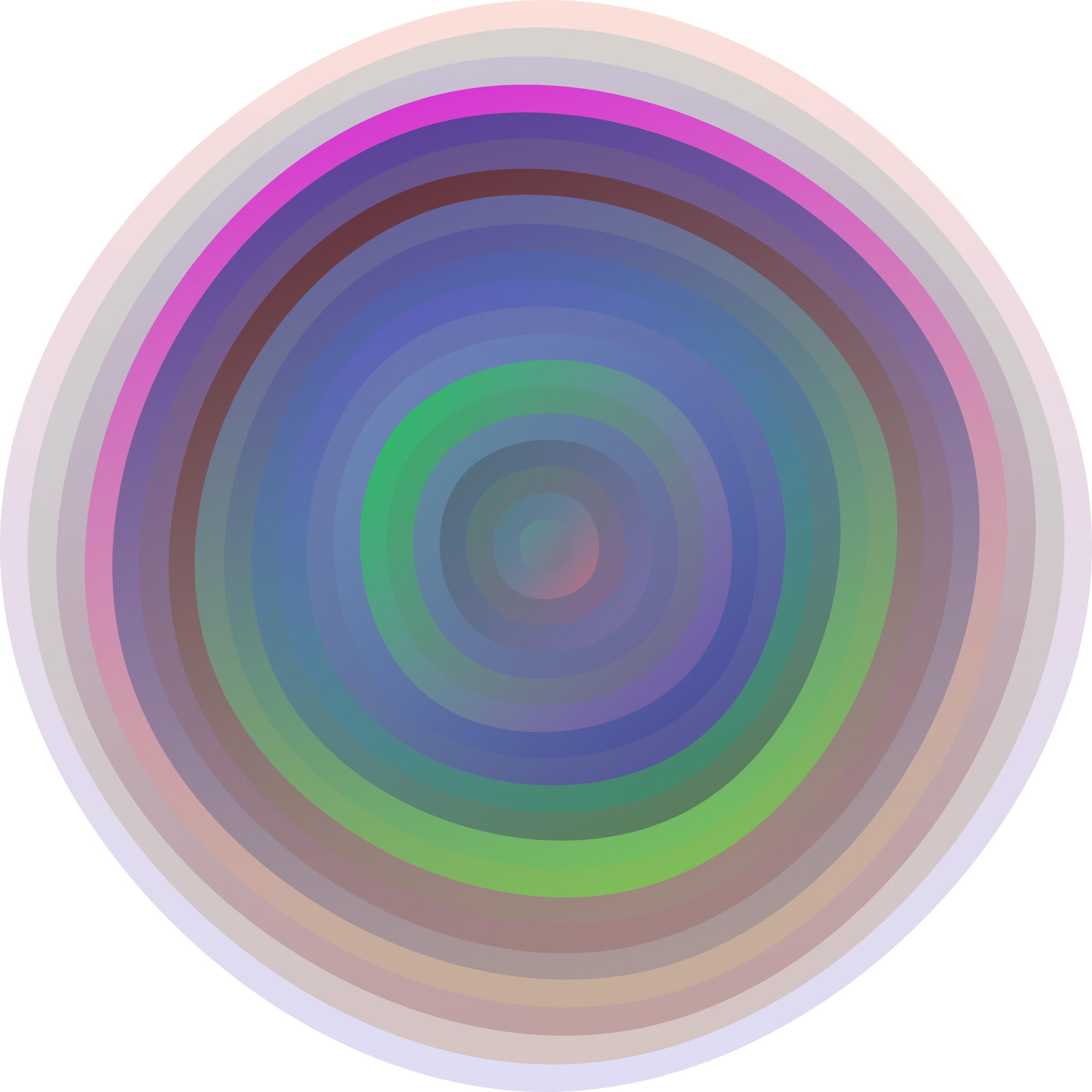
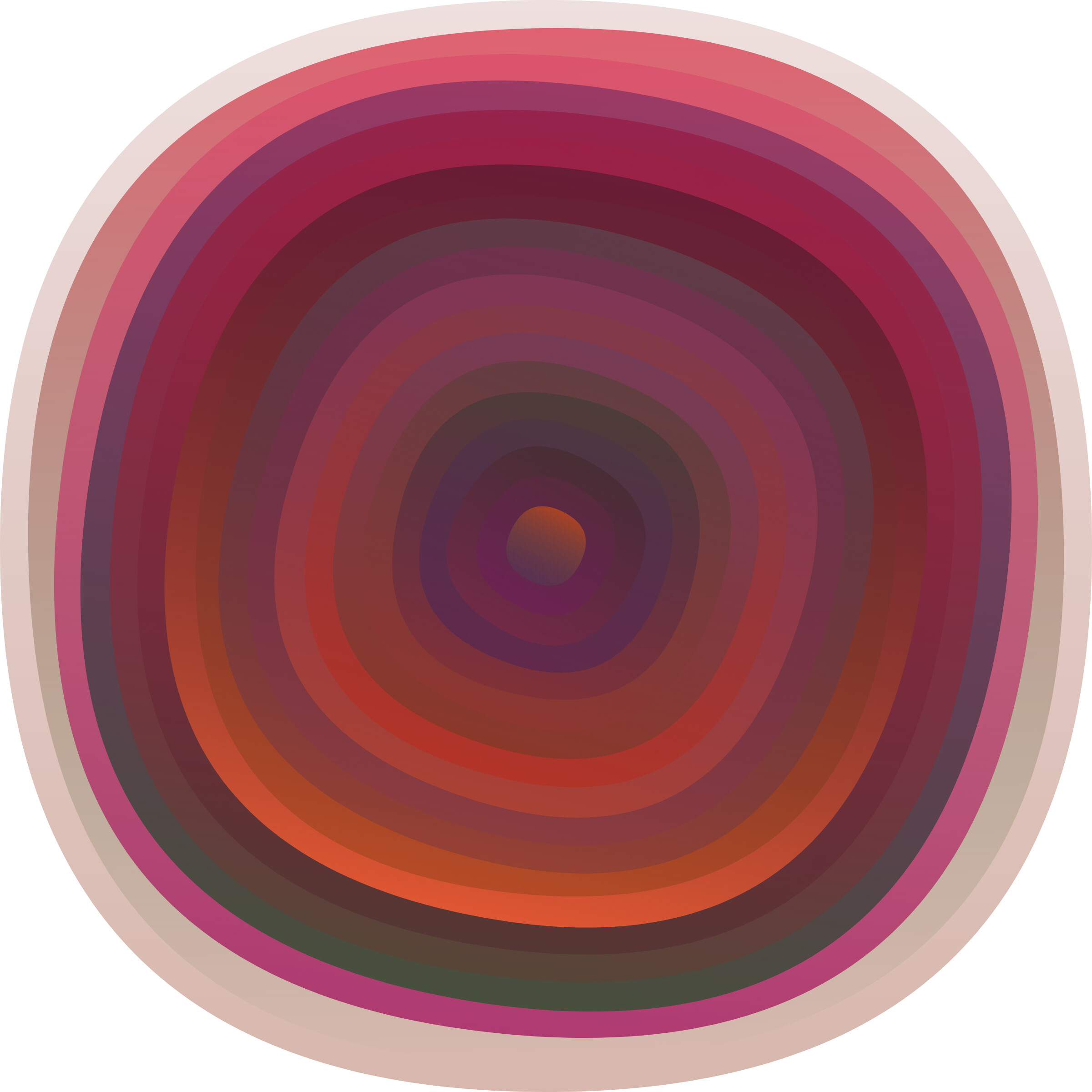
Orb (lite) #30 has the most rings the collection allows, twenty, each in its own gradient, and the lightest curve, so its rings are close to circles. The rings are translucent, each drawn over the larger ones beneath it, so the centre, where all twenty overlap, is the densest. In this frame, taken 17 seconds into the animation, the rings have turned by different amounts and their slight corners no longer line up.
From Markov's Dream: Orb
Markov's Dream (2022) is a collection of 32 animated tokens, each "a 'setting' of a computer programme" that recursively nests rounded forms. Its fifteenth token is Orb, described as "Concentric embeddings", with the traits colours "random (neutral)", fill "radial monotone gradients", behaviour "smooth rotation", "Max. nesting depth 15 (absolute padding)", breathing "volume" and outlines "never". Orb (lite) takes that one setting and opens it to 512 variations. The rings stay concentric and keep rotating; the fill becomes a vertical gradient between two colours, the number of rings drops to between ten and twenty, and the parameters that Markov's Dream sets by hand are drawn at mint. The contract's token symbol is MDO, presumably for Markov's Dream: Orb.
The shape is the one the Markov's Dream text argues with: designers rounded the square elements of the interface to make platforms feel human, and in the "dream space" the "pure Platonic forms" of Markov's Window (2004) became "impure circles or rounded squares" (→ The Squircle, about text). In Orb (lite) the rounding becomes a trait, from almost round to almost square.
How a token is drawn
The SVG is a square of 1200 × 1200 units. Its rings are nested SVG elements, each inset from its parent by an equal step: 600 divided by the number of rings, so 30 units for twenty rings and 54 for eleven. Each ring is a closed path of four cubic Bézier curves, filled with a linear gradient that runs from one colour at the top to another at the bottom. The colours are given with an alpha between almost 0 and 0.99, averaging about a third, so every ring is a veil over the ones behind it.
The outermost ring does not move; it frames the rest. Every ring inside it has its own rotation: a full turn, clockwise or counter-clockwise, in between 8 and 71 seconds. The rotation is written inside the parent's rotating group, so a ring turns at its own speed plus the speed of every ring around it. Where two neighbours turn the same way the inner one races ahead; where they turn against each other the speeds can nearly cancel, and a ring stands almost still while the rings around it move. In the 505 token SVGs checked for this page the directions are almost evenly split, 3,742 rotations clockwise against 3,825 counter-clockwise.
The four traits correspond to the code as follows:
| Trait | Values (count of 512) | What it sets in the SVG |
|---|---|---|
| Rings | 10 to 20 (between 33 and 56 tokens each) | the number of nested squircles, and so the inset step |
| Colours | 1 to 20 | how many gradients the rings cycle through: ring n takes gradient n modulo Colours |
| Curve | strong 291, extreme 162, light 59 | the length of the Bézier handles: half the radius (light), two thirds (strong), about 0.71 (extreme) |
| Temperament | horny 143, innocent 131, vivid 122, deep 116 | the palette the gradient colours are drawn from |
A circle drawn with four cubic Béziers uses handles of about 0.55 of its radius. "Light" falls a little short of that, a ring very slightly pinched towards its diagonals; "strong" and "extreme" push the curve out towards the corners and make the squircle. The temperaments are not labelled further anywhere. Counting the gradient colours of the 505 SVGs shows tendencies: "horny" tokens lean to reds and magentas and are the darkest; "deep" tokens lean to cyan and blue; "innocent" tokens spread evenly round the hue circle and are the lightest; "vivid" leans slightly to red.
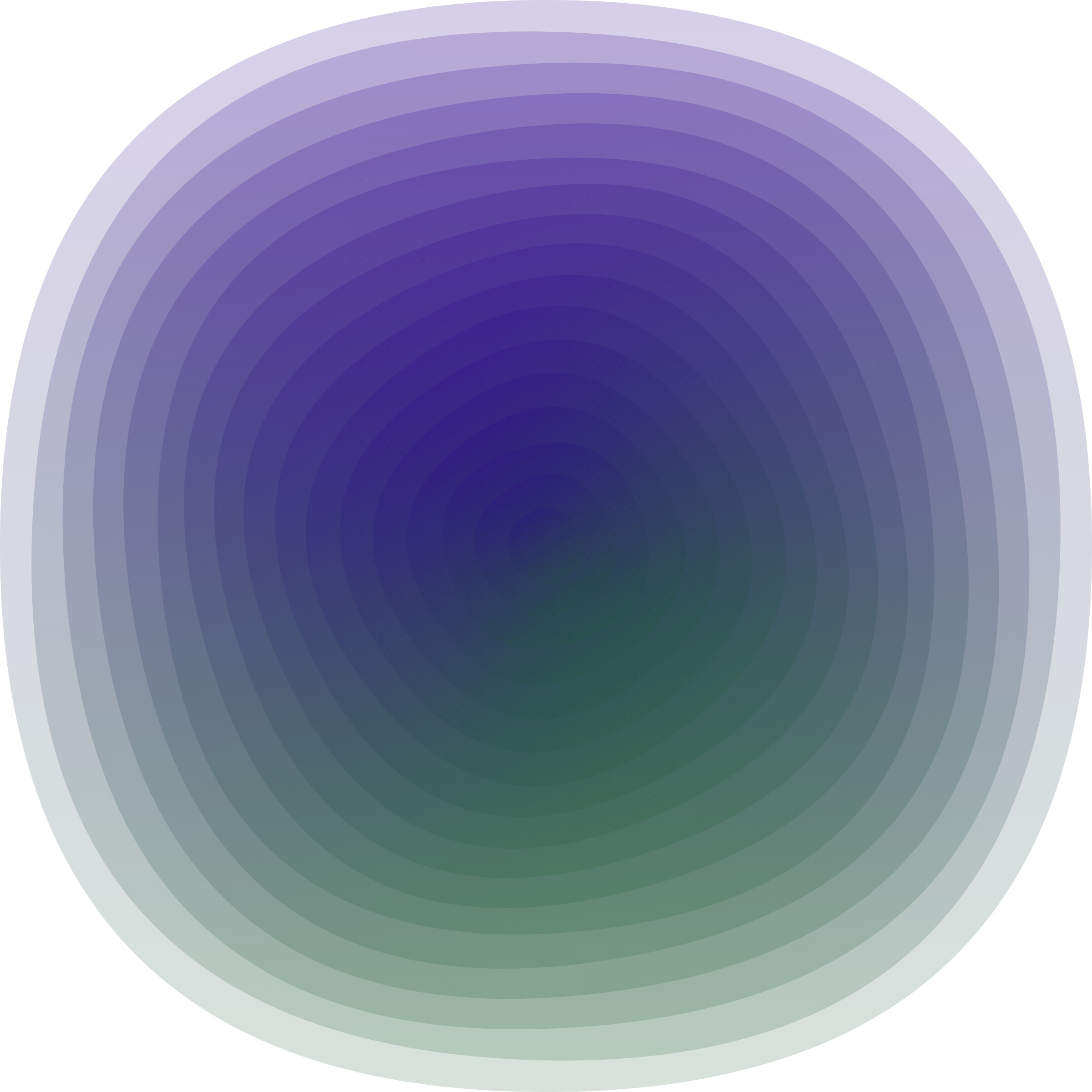
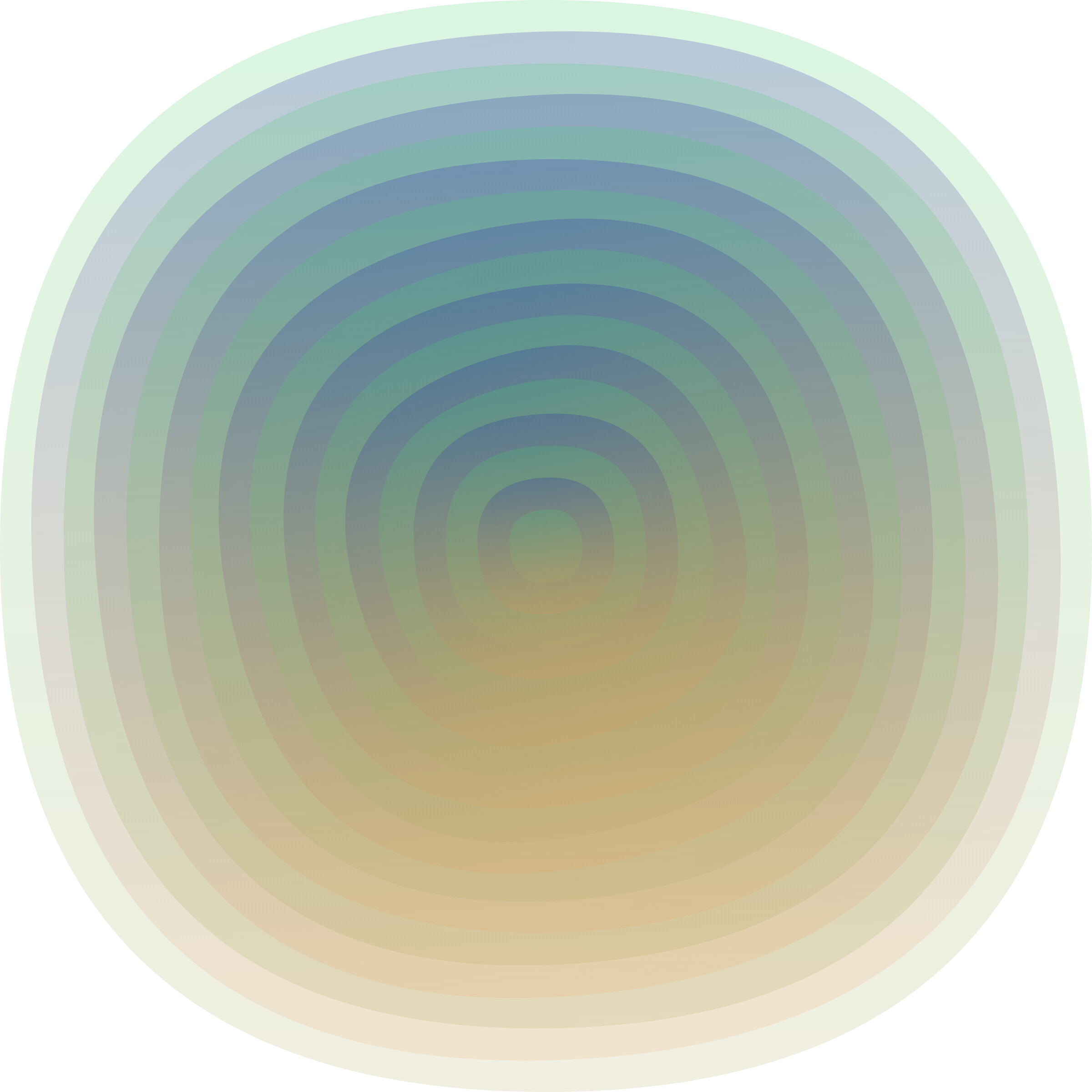
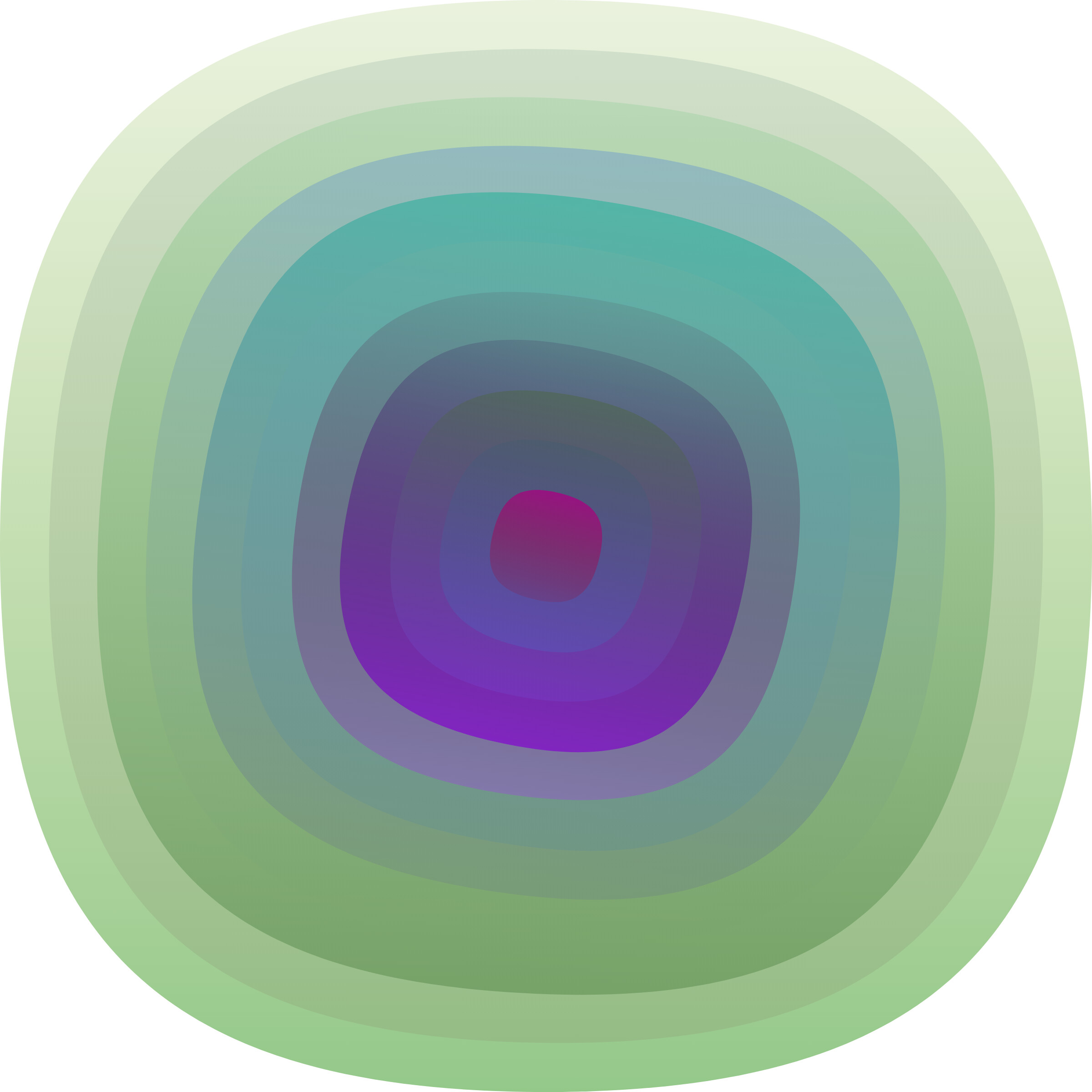
The four tokens above show one trait each. #50 has a single colour: all seventeen rings use the same violet-to-green gradient, and only the stacking of the translucent layers changes the tone, which deepens towards the centre like a tunnel. #32 has two, so its rings alternate and the stack reads as bands. #6 has the extreme curve, eleven rings and the "deep" temperament: square rings in greens and teals around a violet centre with a magenta core. #2, "horny", runs from crimson and red to orange and magenta. All four are frames at 17 seconds, rendered for this page from the token SVGs; in a browser they keep turning.
Afterwards
On 13 January 2023 van den Dorpel opened the are.na channel for Maschine (2023) with three blocks: Markov's Dream #9 Hedphelym, the market page of Orb (lite) and Marcel Duchamp's Rotoreliefs (→ Afterimage). The first blocks put the rotating discs of 2022 at the start of the collection he made with Fingerprints DAO and Mercedes-Benz NXT, in which the disc is tilted and the viewpoint moves into it. The palette and the nesting go back to Markov's Window, the 2004 Flash animation in which squares subdivide recursively (→ The Markov's Dream Palette, Recursion).
See also
- The Squircle — the rounded square as interface ideology; Markov's Dream
- Afterimage — rotation and the eye: Rotorelief, Hedphelym, Maschine
- The Markov's Dream Palette — the 2004 colours and their returns
- Recursion — nesting as the form recursion takes in the works