
Indiscreet Units (2022)
Indiscreet Units is, on harm.work, "The inaugural commission by Chemsex Benelux in 2022. Indiscreet Units consists of a selection of 266+ hue-rotating flags, stored on the Ethereum blockchain and IPFS." Each token is one flag: Afghanistan, Andorra, Antarctica, Benelux, Catalonia, Europe, Friesland, the United Nations and 258 more. Every flag's colours turn slowly through the whole colour circle and come back to where they began. harm.work announced the release in the news item NFT drop with Chemsex Benelux (11 February 2022) for 16 February, the date the tokens carry. Each has the same description: "A collection of hue-rotating flags by Harm van den Dorpel / Commissioned by Chemsex Benelux <3x".
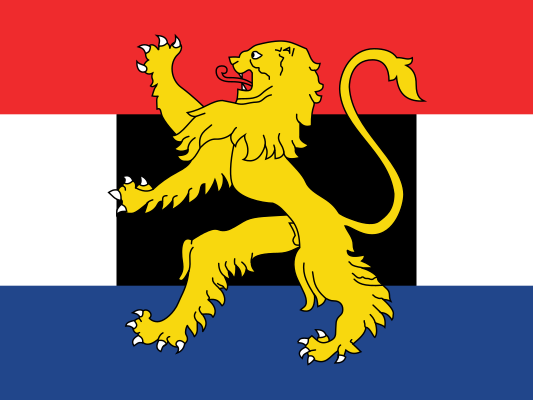
The last token, number 266, is the flag of Benelux: the bands of the Dutch tricolour, a black field in the middle and a rampant lion over it. The image above is the token file itself and turns in the browser. At the start of its cycle the lion is yellow on black and the bands red and blue; ten seconds later the lion is salmon, the upper band magenta and the lower dark green, and the white and the black have not changed.
Chemsex Benelux
Chemsex Benelux presented itself on its website, benelux.chem.sex, as "an evolving poetic entity and NFT community commissioning digital art, music, and merch." Its about page, ingested as sources/ingested/chemsex-benelux-about-2022.md, names Indiscreet Units as its "inaugural NFT drop" and credits "Indiscreet Units NFT by Harm van den Dorpel, graphic design by Enver Hadzijaj, music by Carsten Jost, strategic poetry by Victoria Ivanova." Asked whether it advocates chemsex or Benelux, it answers with the passage the artist kept in note 3005: it wants "to induce a state of pleasant disorientation when confronted with an unknown but uncannily familiar territory. We offer souvenirs to help you integrate the limit-experiences you never had." The note adds that the project "was heavily inspired by" Jonas Čeika's video essay on Bataille and Hellraiser; what that essay argues, and the notes the artist reads beside it, are on Limit Experience.
The site's history is in the Internet Archive. On 30 January 2022 its whole homepage was one flag, Benelux, filling the window on a dark grey ground and turning through its hues every twenty seconds. By 16 February it listed all 266 flags by name, with a red dot beside those already minted; "A limited amount of tokens were distributed in advance to close collaborators and early adopters." In March 2023 the homepage named a second release, Phantom Crush, as "upcoming", with first access for holders of Indiscreet Units (→ Phantom Crush). A later version of the about page calls Chemsex Benelux an "NFT platform" and opens its credits with "Founded by Harm van den Dorpel"; there Carsten Jost's contribution is an "Indiscreet Units mint mix". The commissioner of Indiscreet Units was a project the artist founded, with the collaborators the credits name.
What hue rotation does
The about page explains the term:
Whereas we generally tend to categorise colours as discrete units (i.e. 'red', 'blue', etc.) physicists define them as wavelengths on a continuum. On a computer screen, one method for describing a colour is by using 'hue', 'saturation' and 'lightness' as defining parameters. Hue can be thought of as an angle on a circular spectrum dial. By gradually rotating the dial, each tone cycles through all available positions on the spectrum, eventually arriving where it began.
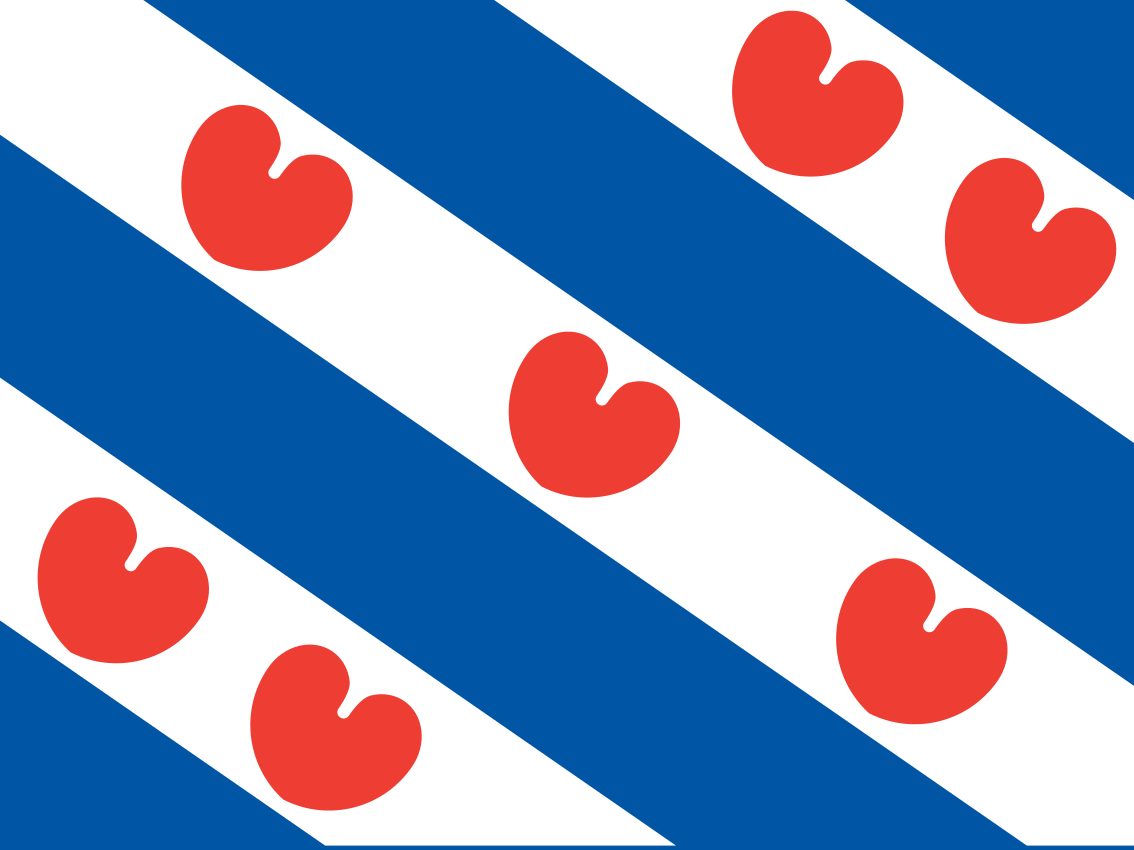
The mechanism is one rule added to each flag's SVG file: a style that turns a hue-rotation filter from 0 to 360 degrees in twenty seconds and repeats it without end. Nothing else in the drawing changes. Every coloured area turns by the same angle at the same moment, so the distances between the flag's colours on the colour circle are, roughly, kept while every colour itself changes. Greys, white and black have no hue, and the filter leaves them as they are. A flag of white and red, such as Japan's, keeps its white field and sends only the disc round the circle. The Frisian flag, blue and white diagonal bands with red water-lily leaves, passes through a state with brown bands and teal leaves.

Discrete units and indiscreet ones
The title takes its noun from the about page's sentence: colours are usually treated "as discrete units", red and blue, and the flags are where that treatment is strictest. A national flag is a fixed set of named colours, often with official values and an official meaning for each. Indiscreet Units keeps every flag's design and lets the named colours go. The flag stays recognisable by its layout, its white and black, its emblem, while for most of the twenty seconds it is in none of its own colours. The adjective plays on both senses: not discrete, because the colours run on a continuum; and not discreet, from a project named after chemsex. The pun is the wiki's reading of the title; the sentence it rests on is the project's.
The page on Colour argues that in this practice meaning sits in combinations of colours, not in single colours. Hue rotation is a test of that claim on the most codified combinations there are: the relations inside each flag are kept, the individual colours are not, and what the viewer recognises is the relation. The about page's "unknown but uncannily familiar territory" describes the effect: a familiar flag in colours it never has.
The 266 flags
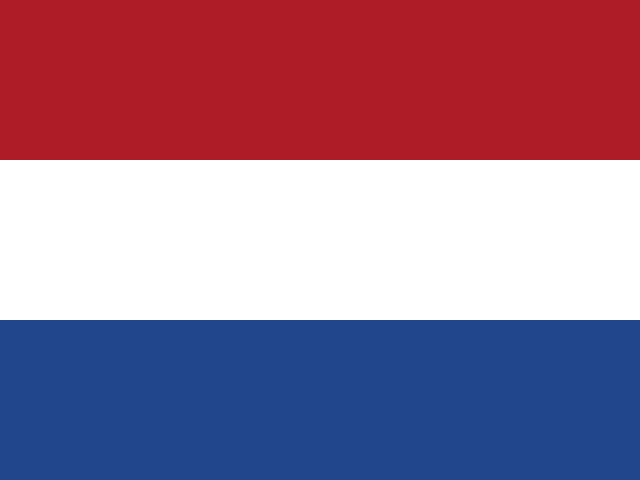
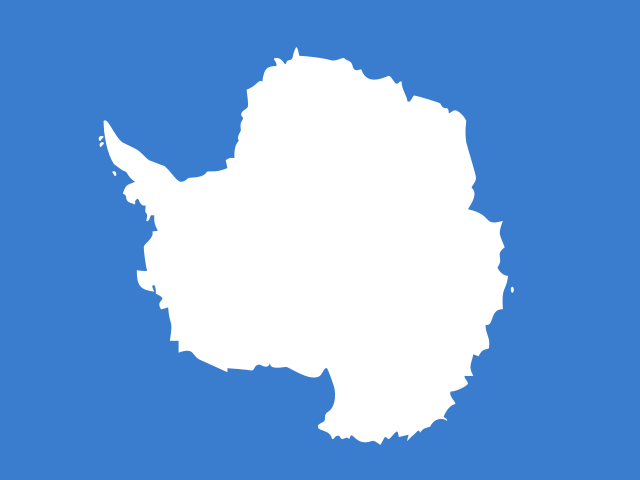
Most of the flags are states and territories under their two-letter country codes, drawn from the open-source flag-icons set (each file keeps its identifier, such as "flag-icons-nl"). The list is not limited to states. It has remote territories (Bouvet Island, Clipperton Island, Heard Island and McDonald Islands, Diego Garcia, Antarctica), the four nations of the United Kingdom, Catalonia and Galicia, the regional flag of Friesland, the flags of Europe and the United Nations, and, as the last token, Benelux, the union in the commissioner's name. The flags of Friesland and Benelux were drawn separately; their files are not from the set. Belgium (21), Luxembourg (146) and the Netherlands (178) are in the list as well as their union.
In the practice
The collection's single rule, one parameter turned through its full range, is the plainest of the systems in the practice. Its nearest relatives are the palettes of Stained Unravel and Quantizer, where the same structure is shown in several colour sets (→ Colour), and Markov's Dream, whose palette returns in work after work (→ The Markov's Dream Palette). In Indiscreet Units the structure is not his: it is the world's flags, taken as found, as many notes in the archive take other writers' sentences.
In the summer of 2022 the flags ran on a cathode-ray television in Sammeln, an exhibition about collecting at Villa Schöningen, Potsdam, whose text read the work as one that "deals with dissolving identities" (→ Sammeln).
See also
- Limit Experience — Chemsex Benelux, Bataille and the about-text
- Chemsex Benelux — About (2022) — the project's own account, in full
- Colour — meaning in combinations of colours
- The Markov's Dream Palette — one palette across many works