
Lexachast
Live audio-visual performance and persistent web work; Harm van den Dorpel with Bill Kouligas (PAN) and Amnesia Scanner; premiered Unsound Kraków 2016, subsequent appearances at CTM and transmediale 2017 and Unsound Adelaide 2017. Persistent web version at lexachast.com; vinyl on PAN at amnesiascanner.bandcamp.com/album/lexachast.
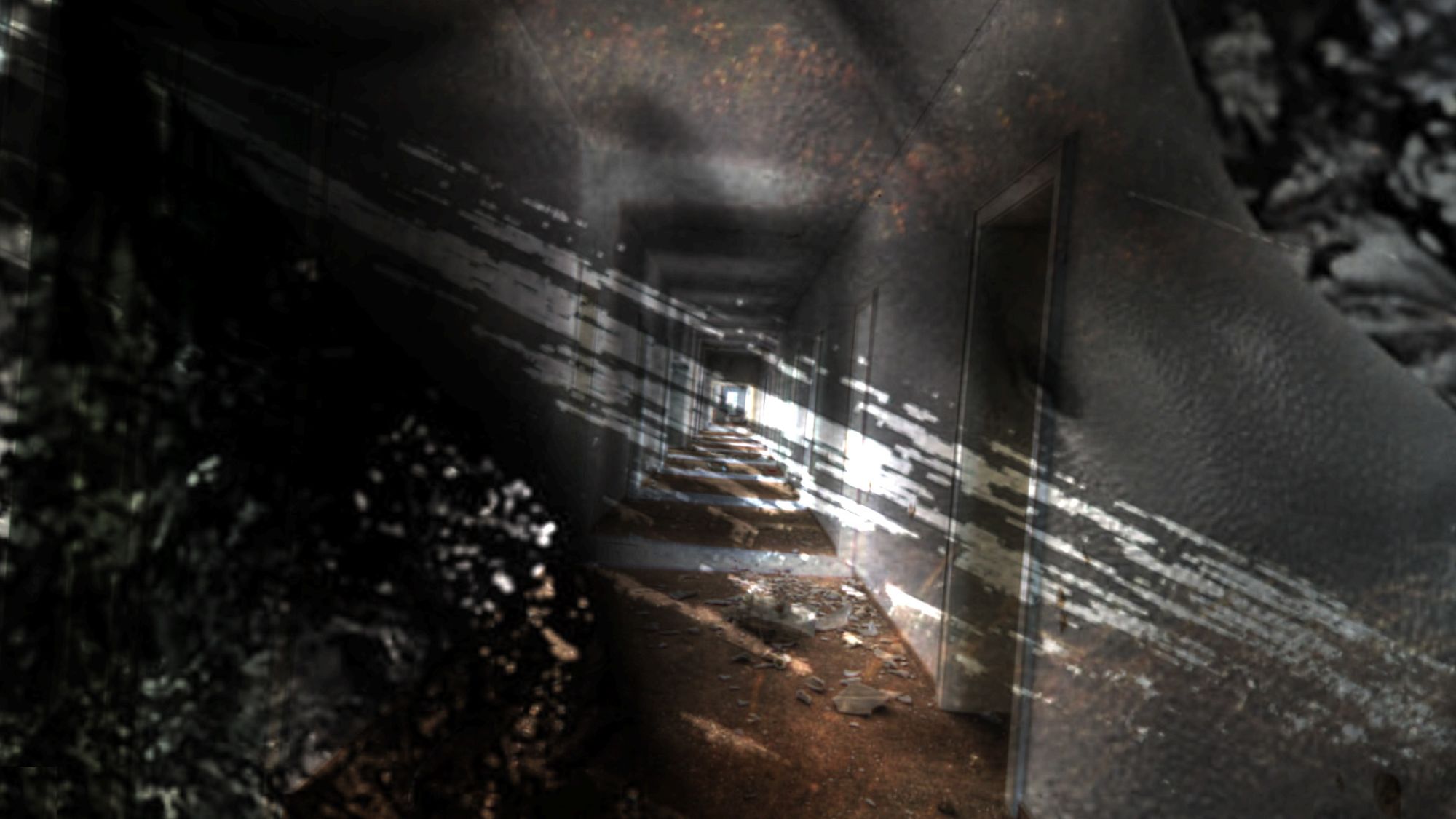
Lexachast is the wiki's clearest case of two structurally distinct moves the rest of the catalogue tends to keep apart: filter-mode subconscious computation, and combination operating at the summed-multitude limit rather than at the chord-scale.
The pipeline
The visuals are produced by a two-stage filter over the existing image-pool of the internet:
- open_NSFW — a binary classifier originally released by Yahoo, returning a probability that an image is NSFW. Here used as the inclusion criterion: imagery selected for NSFW probability, rather than against it.
- word2vec — semantic vector neighbourhoods over tag clouds, used to extend the draw beyond exact tag matches into adjacent semantic territory.
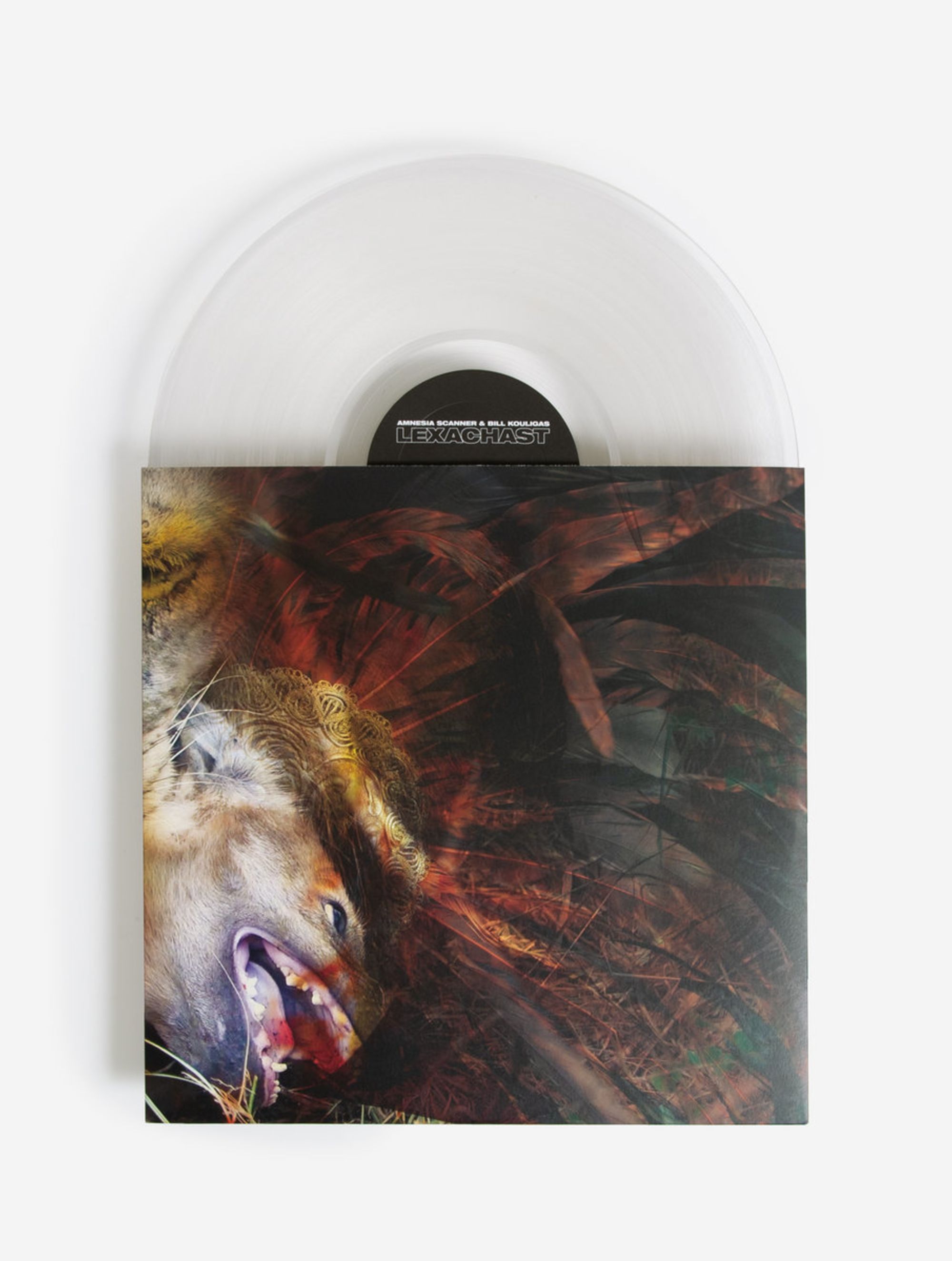
The filtered stream is mixed live in performance under MIDI control through self-programmed OpenGL software. The cadence is described in the 2017 Ableton text as "a Ken Burns effect on steroids" — rapid cross-fades, no held frame; the visual unit is the interval of becoming between images rather than any single image.
Nothing is synthesised. The system selects and weights from imagery that already exists. This is the inverse mode of the generative practice that dominates the rest of the wiki's account of van den Dorpel's algorithms: there, conditions produce outputs; here, conditions filter outputs.
Filter mode — the unconscious of the network
The wiki's account of subconscious computation runs largely through the generative lineage: rules the artist designs produce outputs the artist could not have specified, and the maker is positioned as bystander to their own system. Lexachast realises the same bystander/creator structure through filtering rather than generation.
Two consequences. First, the unconscious surfaced is different: not the unconscious of the maker (which the generative system externalises) but the unconscious of the network — the underlying image-distribution of the indexed internet, sieved by what NSFW and tag-cloud-adjacency together resolve. Second, the bystander posture is made literal: it is realised in real time, on stage, at a MIDI console. The ZORA ZINE formulation ("you cannot fully prepare yourself for what is coming out of this algorithm… you're also a bystander") is here a performance role rather than a posture toward an offline generative system.
The affective destination also differs from the generative lineage. The Murayama Q&A names the latter's telos as Jung's mandala-as-individuation; Lexachast tends in the opposite direction, toward the "dystopian" summed unity described below. Same structural relation between rule-setter and output; opposite destinations.
Full development at Subconscious Computation Filter mode.
The summed-multitude limit
The fragment's most structurally consequential claim — the one that does load-bearing work elsewhere in the wiki — concerns what happens when combination passes beyond the chord-scale into the all:
"If you, for example, mix all colors together as paint, the result is this particular dark brown/grey color. Also, I used to cycle daily past a dump as a child, and it struck me that if you put all trash together, all of their smells combined create one quite specific and particular smell. This also happens with Lexachast. When 'all' images are put together, from this multitude and randomness, somehow a 'one-ness' emerges, or unity. A particular feeling."
Three analogies, one structure: pushed past a threshold of multitude, summation does not produce noise — it produces one specific quality. A particular brown-grey for paint; a particular smell for the dump; "a particular feeling" (described in the same text as "quite dystopian") for the summed-NSFW image-pool. The sum is not aggregated diversity preserved — it is the quality the summation collapses to.
The smell-as-analogue-for-visual-experience is itself a synesthetic move — the structure of one sense borrowed to explain the operation of another. The same cross-sense traffic runs through the chord-scale claim at Colour Colour as scent; Lexachast applies it at the opposite end of the same axis.
Boundary condition on the finite chord
The wiki's account of colour reads palette as proposition: meaning lives in finite combinations of values held in tension. Lexachast is the boundary case: combination at the all limit, where the chord collapses to one particular brown-grey. The two are now read as endpoints of one axis — finitude and exhaustion as alternative methods toward the same end (a particular thing the body recognises). The finite chord is the productive avoidance of the summed-multitude limit; Lexachast is the one collaboration in which the artist instead lets the collapse be the content.
Second resolution to the Spike #70 boredom
The wiki's account of randomness and pattern had carried one resolution to the Spike #70 critique of pure randomness ("always different… also always the same… you get bored, as there's no direction or growth"): the fitness function, which gives randomness direction upstream by formalising taste. Lexachast gives the complementary resolution downstream: past a threshold of multitude, randomness produces a particular quality without requiring direction at all. The dialectic gains a third state alongside pattern and randomness-without-accumulation. The Cloud On Title / mise en abyme mode of local uncertainty (chord-scale, artist arbitrating) and the Lexachast mode of delegated summation (multitude-scale, collapse-quality as content) are alternative ways of working with the same operation at different scales.
The three formats
Lexachast exists in three primary formats, each realising the filter pipeline differently:
Live performance. The original mode. MIDI-controlled mixing of the algorithmic stream in front of an audience, synchronised with Kouligas and Amnesia Scanner's set. Premiered Unsound Kraków October 2016; subsequent appearances at CTM and transmediale (Berlin, February 2017) and Unsound Adelaide (April 2017).
Persistent web work. lexachast.com carries the filter logic into the browser. A different draw from the same image-pool on each refresh. The page-refresh acts as the equivalent of the performer's MIDI gesture — a single instance from the underlying distribution.
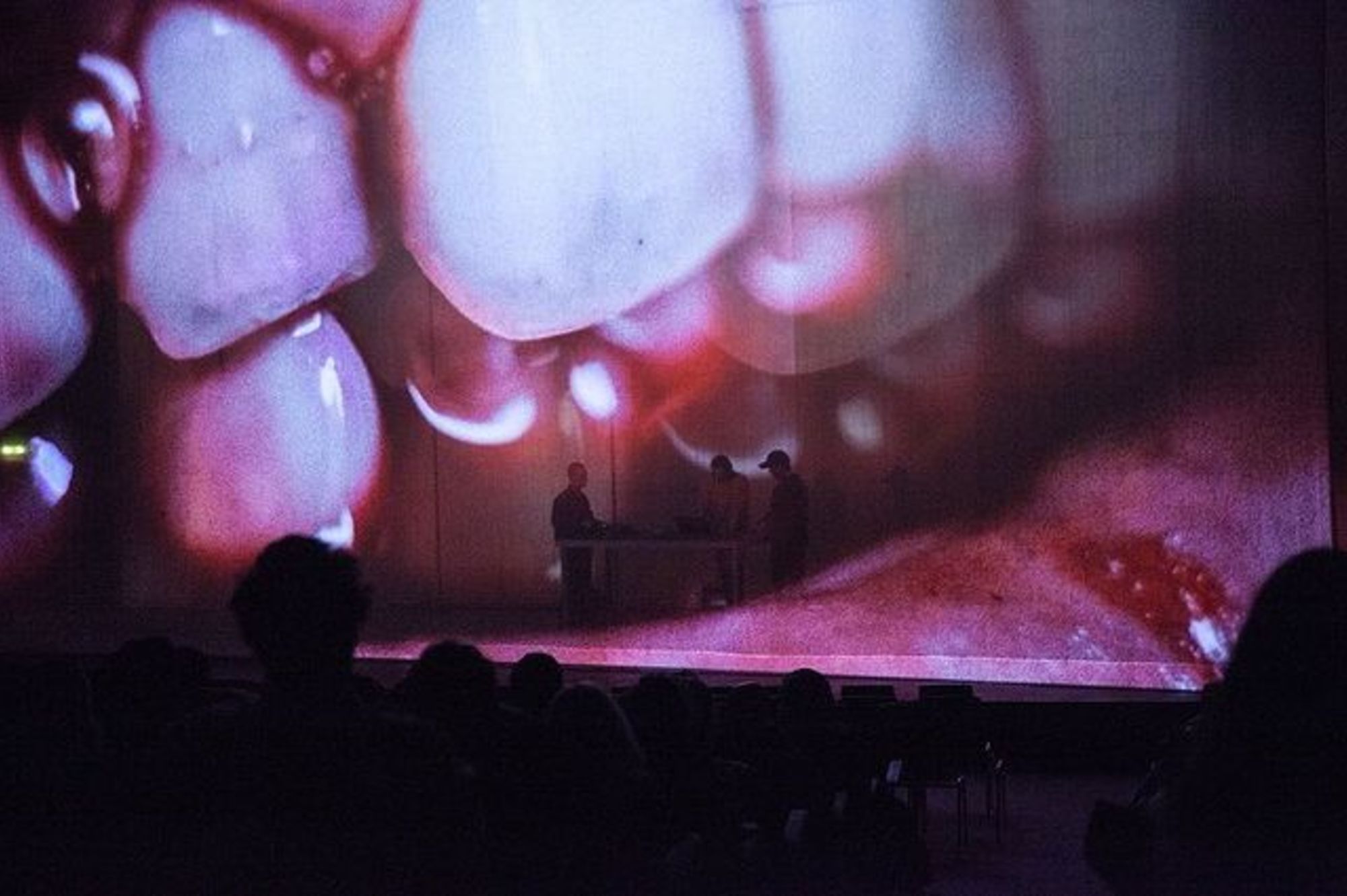
Vinyl record on PAN. amnesiascanner.bandcamp.com/album/lexachast. The audio half of the collaboration in fixed form. Kouligas's PAN was the long-running home for both Kouligas's own releases and Amnesia Scanner's; the Lexachast record sits in that catalogue rather than as a stand-alone release.
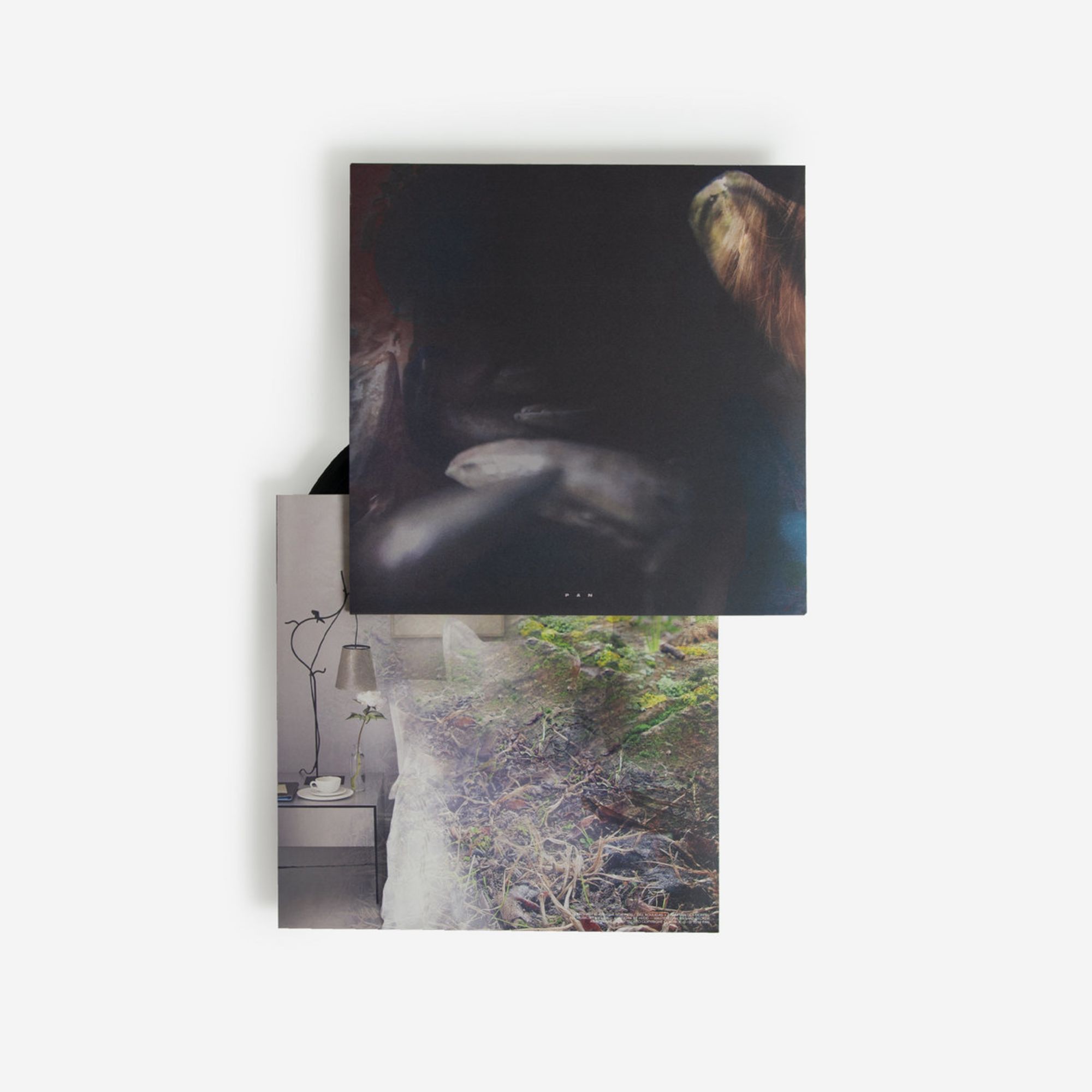
The collaboration. Lexachast brings together Bill Kouligas (PAN), Amnesia Scanner, and Harm van den Dorpel — audio, performance, and the filtering software as one work.
Source
The account on this page is drawn from a short fragment in the Ableton blog post Performing Music with Visuals (5 September 2017), ingested in full at sources/ingested/ableton-lexachast-2017. The fragment is short — a single paragraph of artist-voice — but it carries the only first-person account of the filter pipeline and the summed-multitude analogies, and is therefore the wiki's primary source for the project.
See also
- Colour — The summed-multitude limit (Lexachast 2017): the boundary condition on the finite-chord logic of palette
- Randomness and Pattern — The summed-multitude threshold — Lexachast (2017): the second resolution to the Spike #70 boredom, complementary to the fitness function
- Subconscious Computation — Filter mode — Lexachast (2017): the inverted counterpart to the generative lineage; the unconscious of the network rather than of the maker
- sources/ingested/ableton-lexachast-2017 — the 2017 Ableton fragment in full